


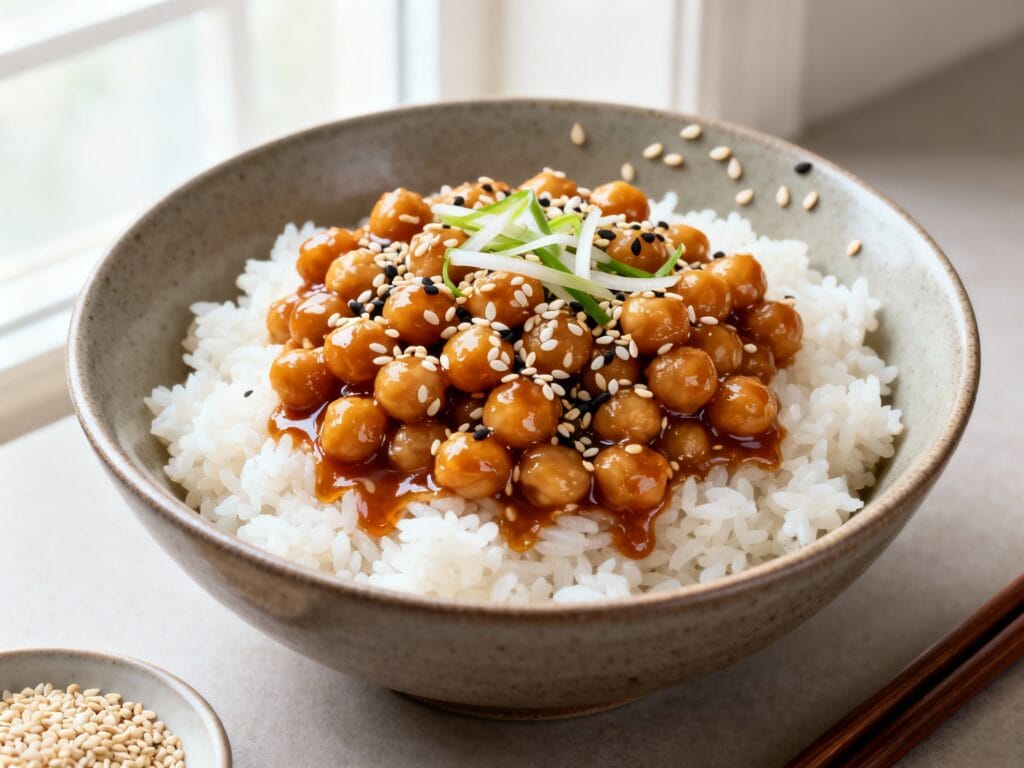
Viral Sticky Sesame Chickpeas for Easy Vegan Dinners
If you’ve been chasing that glossy, sticky-sweet sesame sauce that clings to every bite (aka the one all over your feed), this is your sign. These sticky sesame chickpeas hit the same craveable notes as takeout—sweet, savory, a little tangy, and deeply cozy—without leaving your kitchen.
It’s fast enough for a weeknight, budget-friendly, and honestly kind of magical over rice with a pile of crunchy veggies. Bonus: chickpeas make it hearty, not “sad salad” energy.
Why You’ll Love This
These sticky sesame chickpeas are quick, pantry-friendly, and big on flavor: a glossy sauce, crisp-tender chickpeas, and that toasted sesame finish that makes it feel like a legit dinner (not just a snack pretending to be a meal).
Ingredients
- 2 (15-ounce) cans chickpeas, drained and rinsed
- 1 tablespoon neutral oil (avocado, canola, or grapeseed)
- 3 cloves garlic, minced
- 1 teaspoon fresh ginger, grated (or 1/2 teaspoon ground ginger)
- 1/4 cup low-sodium soy sauce (or tamari for gluten-free)
- 3 tablespoons maple syrup (or brown sugar)
- 2 tablespoons rice vinegar
- 1 tablespoon toasted sesame oil
- 1 tablespoon gochujang or sriracha (optional, for heat)
- 2 teaspoons cornstarch
- 3 tablespoons water
- 2 tablespoons sesame seeds (toasted if you have them)
- 2 scallions, thinly sliced (optional, for topping)
- Black pepper, to taste
- To serve: cooked jasmine rice, brown rice, quinoa, noodles, or lettuce cups; steamed broccoli, cucumbers, shredded carrots, or edamame
How to Make It
- Dry the chickpeas: After rinsing, pat chickpeas very dry with a clean towel or paper towels. This helps them brown and keeps the sauce from getting watery.
- Mix the sauce base: In a small bowl, whisk soy sauce, maple syrup, rice vinegar, toasted sesame oil, and gochujang/sriracha (if using). Set aside.
- Make the slurry: In a second small bowl, stir cornstarch with water until smooth. (No lumps = glossy sauce.)
- Brown the chickpeas: Heat neutral oil in a large nonstick skillet over medium-high heat. Add chickpeas and cook 6–8 minutes, stirring occasionally, until lightly golden and a bit crisp in spots.
- Add aromatics: Lower heat to medium. Add garlic and ginger and cook 30–60 seconds, stirring, until fragrant. Don’t let the garlic burn—burnt garlic is the fastest way to ruin a vibe.
- Pour in the sauce: Add the sauce base and stir to coat the chickpeas. Let it bubble for about 1 minute so the flavors wake up.
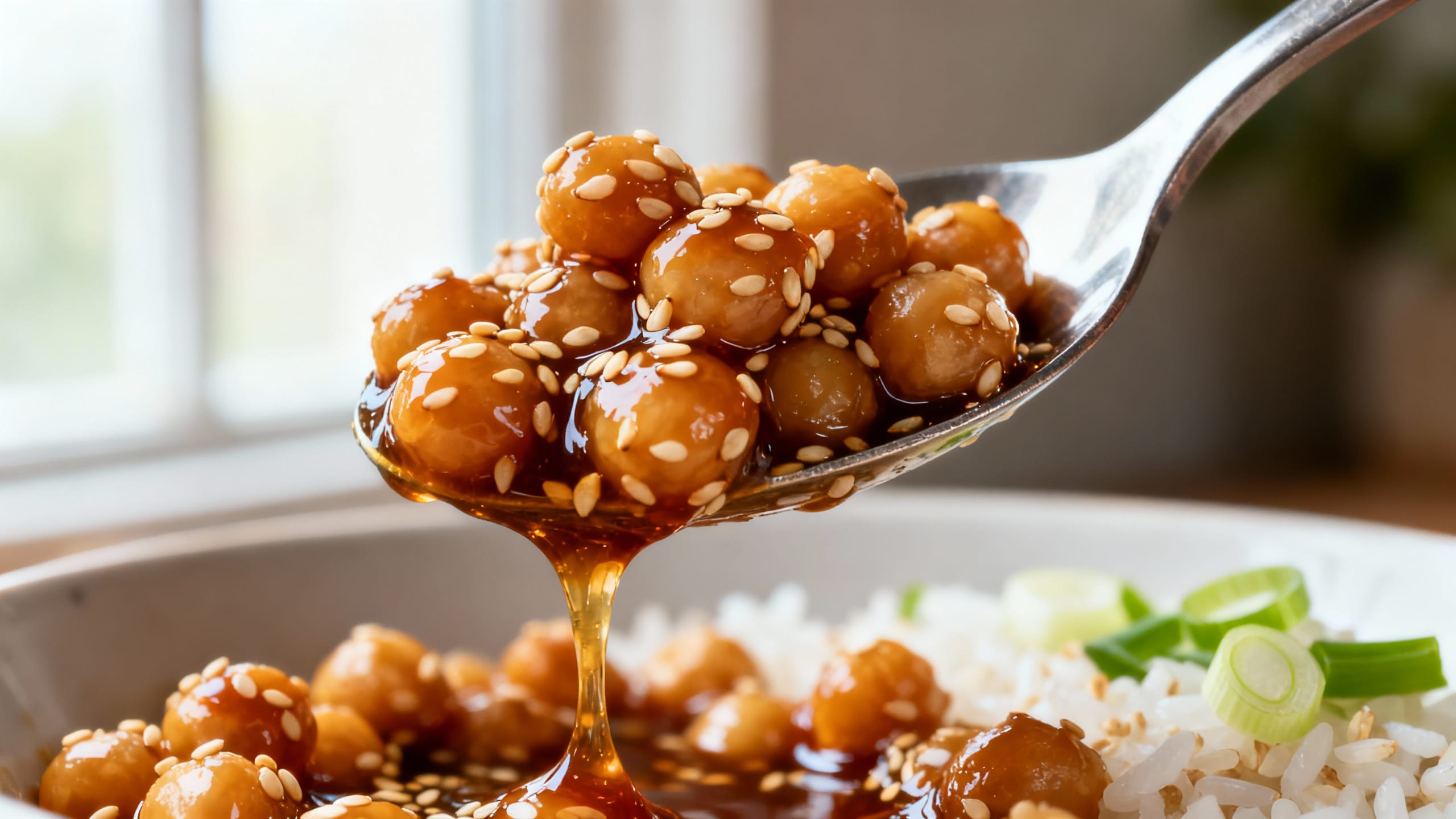
- Thicken: Stir the cornstarch slurry again, then pour it into the pan while stirring constantly. Cook 1–2 minutes until the sauce turns thick, shiny, and sticky enough to cling to the chickpeas.
- Finish + serve: Turn off heat. Stir in sesame seeds and a few cracks of black pepper. Serve immediately over rice/noodles with your favorite veggies, and top with scallions.
Tips for the Best Results
- Dry chickpeas = better texture. If they’re wet, they’ll steam instead of brown.
- Use a wide skillet so the chickpeas can actually toast instead of piling up.
- Whisk the cornstarch with cold water first; adding dry cornstarch straight to hot sauce can clump.
- Don’t walk away during thickening—cornstarch goes from “thin” to “glaze” fast.
- For extra sesame flavor, toast the sesame seeds in a dry pan for 1–2 minutes first.
- If the sauce gets too thick, splash in 1–2 tablespoons water and stir until glossy again.
- Balance to taste: more vinegar for tang, more maple for sweetness, more soy for salt.
Variations
- Extra crispy chickpeas: Bake or air-fry chickpeas at 400°F for 12–18 minutes (shake halfway), then toss with the hot sauce in a skillet for 1–2 minutes.
- Protein swap: Use cubed tofu, tempeh, or cauliflower florets instead of chickpeas (cook until golden, then sauce).
- Peanut-sesame moment: Whisk 1–2 tablespoons peanut butter into the sauce for a richer, slightly creamy glaze.
- Veggie-loaded skillet: Add broccoli florets, snap peas, or bell peppers after browning chickpeas; stir-fry 3–5 minutes, then sauce everything together.
- Gluten-free: Use tamari and confirm your gochujang is gluten-free (some aren’t).
- Low-sugar: Reduce maple syrup to 2 tablespoons and add 1–2 teaspoons grated orange zest for bright flavor without extra sweetness.
Storage & Reheating
Store sticky sesame chickpeas in an airtight container in the fridge for up to 4 days. Reheat in a skillet over medium-low with a splash of water to loosen the sauce, or microwave in 30-second bursts, stirring between. The chickpeas soften over time, but the flavor stays elite—especially for meal prep bowls.
FAQ
Can I make viral sticky sesame chickpeas without cornstarch?
Yes. Cornstarch gives that glossy, “sticky” finish, but you can swap in arrowroot starch (same amount) or reduce the sauce longer on low heat until it thickens naturally. If you reduce, keep stirring so the sugars don’t scorch.
How do I keep the chickpeas from turning mushy?
Dry them well, use a hot pan, and let them brown before adding any liquids. Also, don’t simmer them in the sauce for too long—once thickened and coated, you’re done.
Is this recipe spicy?
Only if you want it to be. Skip the gochujang/sriracha for a mild version, or start with 1 teaspoon and work up. You can also add chili flakes at the end for a more controlled heat.
What should I serve with sticky sesame chickpeas for an easy vegan dinner?
Classic move: rice plus something crunchy. Try jasmine rice with cucumbers and shredded carrots, or brown rice with steamed broccoli. It’s also great in lettuce cups, over noodles, or stuffed into wraps with slaw.
Can I freeze sticky sesame chickpeas?
You can, but the texture changes: chickpeas soften and the sauce may separate slightly. If you freeze, cool completely, then freeze up to 2 months. Thaw overnight in the fridge and reheat gently in a skillet with a splash of water, stirring until smooth and glossy again.