


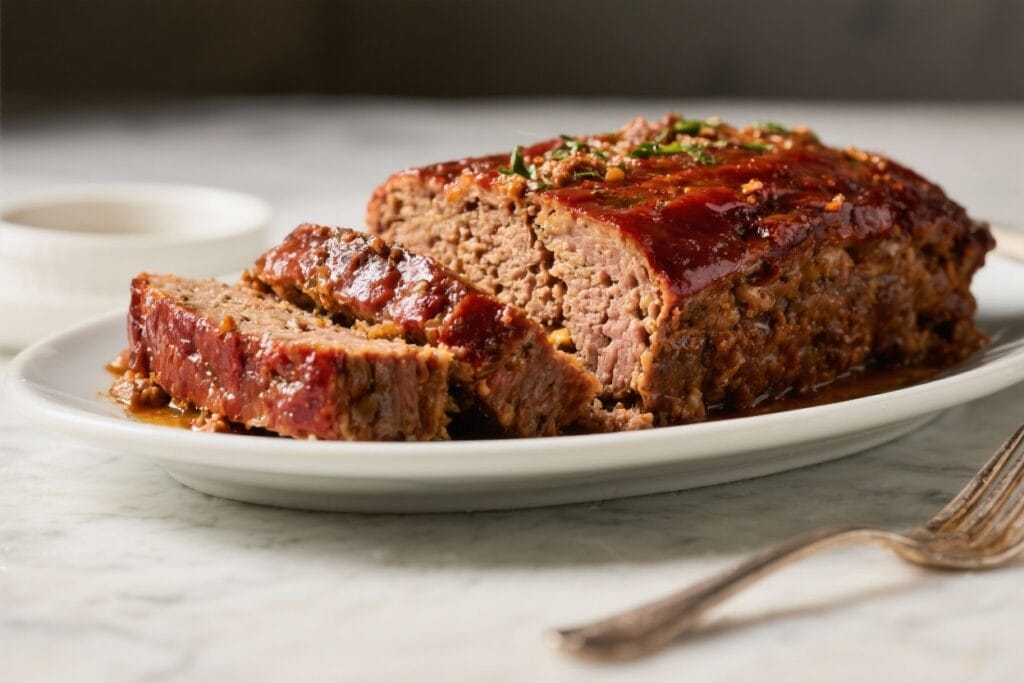
Meatloaf is the kind of dinner that makes the whole kitchen feel warm and inviting. It’s nostalgic, budget-friendly, and endlessly customizable. The challenge is getting it tender, juicy, and full of flavor every single time.
This guide lays out a go-to meatloaf formula you can trust, with smart tips that prevent dryness and blandness. You’ll also find variations, storage tips, and answers to common questions so your meatloaf turns out great on the first try.
What Makes This Recipe So Good
Great meatloaf is all about texture and flavor. The secret lies in a panade—a simple blend of breadcrumbs and milk that keeps the meat moist.
Using a mix of ground meats adds depth and richness without greasiness. A savory base of onions, garlic, and umami boosters like Worcestershire sauce rounds out the flavor. Baking the loaf free-form on a sheet pan, not packed into a tall pan, helps it cook evenly and develop a tasty crust.
Shopping List
- Ground meat: 1 lb ground beef (80–85% lean) + 1/2 lb ground pork or ground veal
- Breadcrumbs: 3/4 cup plain or panko
- Milk: 1/2 cup (or buttermilk for extra tang)
- Eggs: 2 large
- Onion: 1 small, finely minced (or grated)
- Garlic: 2–3 cloves, minced
- Worcestershire sauce: 1–2 tablespoons
- Tomato paste: 2 tablespoons
- Fresh parsley: 2 tablespoons, chopped (optional but nice)
- Salt and pepper: 1 1/2 teaspoons kosher salt, 1 teaspoon black pepper
- Smoked paprika: 1 teaspoon (or regular paprika)
- Dried thyme or Italian seasoning: 1 teaspoon
- Glaze: 1/2 cup ketchup + 1 tablespoon brown sugar + 1 teaspoon Dijon or apple cider vinegar
- Olive oil or butter: for sautéing onions and garlic
Step-by-Step Instructions
- Prep the panade: In a bowl, mix breadcrumbs and milk.
Let it sit for 5–10 minutes until the breadcrumbs plump up. This is what keeps the meatloaf tender.
- Sauté aromatics: Warm a little oil in a skillet over medium heat. Cook the onion with a pinch of salt until soft and translucent, 5–7 minutes.
Add garlic and cook 30 seconds more. Let cool slightly.
- Make the glaze: In a small bowl, stir together ketchup, brown sugar, and Dijon or vinegar. Set aside.
- Combine the meat mixture: In a large bowl, add the ground beef and pork, panade, eggs, cooled onion and garlic, tomato paste, Worcestershire, parsley, salt, pepper, paprika, and thyme.
Mix gently with your hands or a fork until just combined. Do not overmix or the loaf can turn dense.
- Shape the loaf: Line a sheet pan with foil and lightly oil it. Shape the meat into a loaf about 8–9 inches long and 2–3 inches tall. A free-form loaf cooks more evenly and browns better than one packed into a loaf pan.
- Add glaze and bake: Brush half the glaze over the loaf.
Bake at 350°F (175°C) for 45 minutes. Brush on the remaining glaze and bake another 15–25 minutes, or until the center reaches 160°F.
- Rest before slicing: Let the meatloaf rest for 10–15 minutes. This step keeps the juices in and helps the slices hold together.
- Serve: Slice with a sharp knife.
Pair with mashed potatoes, buttered green beans, a crisp salad, or roasted carrots.
How to Store
Let leftovers cool to room temperature, then wrap tightly or store in an airtight container.
- Refrigerator: Up to 4 days.
- Freezer: Up to 3 months. Wrap slices individually for easy meals.
- Reheat: Warm in a 300°F oven, covered, until hot. For a quick option, microwave in short bursts with a damp paper towel to prevent drying.
Benefits of This Recipe
- Moist and tender texture: The panade and egg balance moisture and structure.
- Big flavor, simple steps: Everyday pantry items build layered flavor without fuss.
- Flexible and forgiving: Works with beef and pork alone or in combination, and you can swap spices.
- Meal prep-friendly: Makes great leftovers for sandwiches, bowls, or quick dinners.
- Family favorite: Familiar, comforting, and budget-friendly.
Pitfalls to Watch Out For
- Overmixing the meat: This compacts the proteins and makes the loaf tough.
Mix just until combined.
- Skipping the panade: Dry breadcrumbs alone will pull moisture from the meat and dry it out.
- Using very lean meat: Go for 80–85% lean. Too lean, and your loaf will be dry.
- Overbaking: Use a thermometer and pull at 160°F. Residual heat will carry it a few degrees further.
- Not resting: Slicing too soon releases juices and crumbles the loaf.
- Loaf pan traps grease: If you use a loaf pan, consider a rack or pour off fat halfway through to avoid sogginess.
Variations You Can Try
- Italian-style: Add grated Parmesan, chopped basil, and a pinch of red pepper flakes.
Swap the glaze for warm marinara.
- BBQ bacon: Add chopped cooked bacon to the mix. Brush with your favorite BBQ sauce instead of ketchup glaze.
- Mushroom umami boost: Sauté finely chopped mushrooms with the onions to add moisture and savory depth.
- Turkey meatloaf: Use ground turkey (93% lean). Add an extra tablespoon of olive oil and don’t skip the panade to keep it moist.
- Veggie-studded: Fold in grated carrot or zucchini (squeeze out moisture first) for extra tenderness and nutrition.
- Gluten-free: Use gluten-free breadcrumbs or quick oats, and confirm your Worcestershire is gluten-free.
- Spicy kick: Mix in chipotle in adobo or hot sauce, and top with a smoky chipotle-ketchup glaze.
FAQ
Can I make this meatloaf ahead?
Yes.
Shape the loaf and refrigerate, covered, for up to 24 hours. Let it sit at room temperature for 20–30 minutes before baking, or add a few extra minutes to the bake time.
What if I don’t have breadcrumbs?
Use crushed saltine crackers, quick oats, or finely crushed cornflakes. Keep the same volume and still hydrate with milk to create a panade.
How do I keep my meatloaf from falling apart?
Use the right ratio of binders: eggs plus a well-hydrated panade.
Don’t skimp on resting time, and slice with a sharp knife. If you add lots of vegetables, squeeze out extra moisture first.
Is it safe to eat at 160°F?
Yes. For ground beef and pork, 160°F is the recommended internal temperature.
Use an instant-read thermometer inserted into the center of the loaf.
Can I cook meatloaf in a loaf pan?
You can, but it may steam in its own juices. For best texture, use a sheet pan and shape a free-form loaf. If you prefer a loaf pan, drain excess fat halfway through and broil briefly at the end for a bit of crust.
How do I prevent a mushy texture?
Measure liquids carefully, sauté onions to remove excess water, and avoid overmixing.
If your mixture seems too wet, add a tablespoon or two more breadcrumbs to balance it.
What’s the best way to reheat without drying?
Cover slices with foil and warm in a 300°F oven until just hot. A splash of broth in the pan helps. For the microwave, use 50–60% power with a damp paper towel on top.
In Conclusion
This meatloaf hits all the marks: tender, juicy, and deeply savory with a glossy, tangy glaze.
The method is simple, the ingredients are easy, and the results are reliable. Use the base recipe as your template, then riff with the variations to keep dinner interesting. Serve it with your favorite sides and enjoy a comforting, crowd-pleasing meal any night of the week.