


The BEST Cinnamon Roll Recipe That Tastes Like a 5-Star Bakery
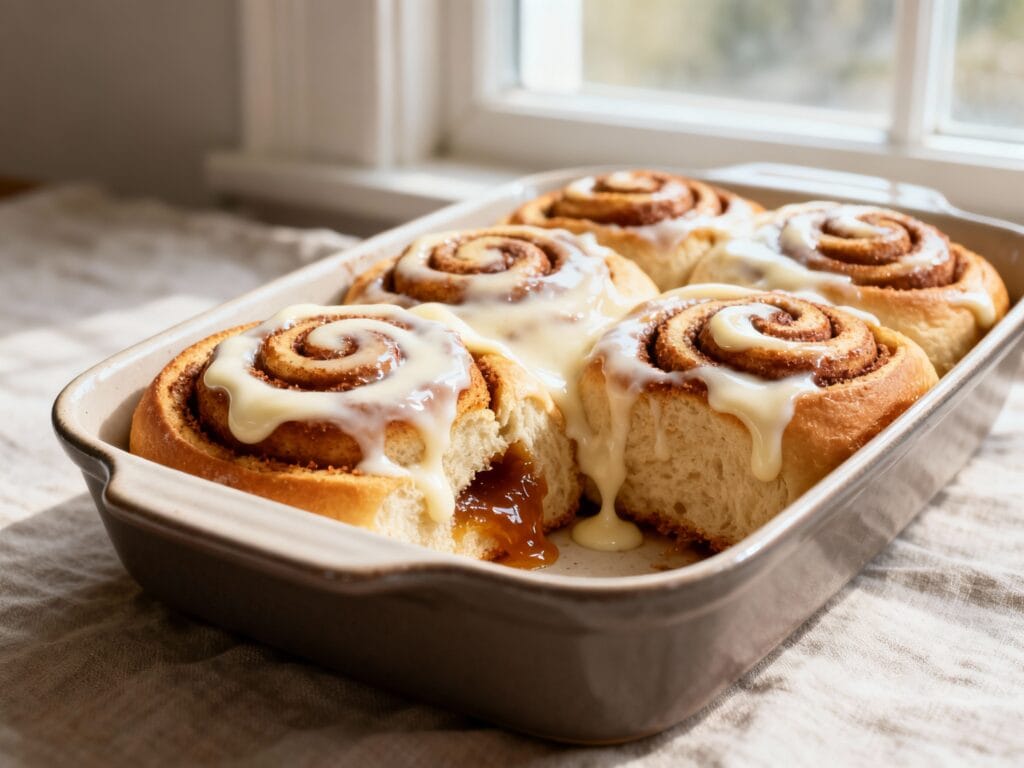
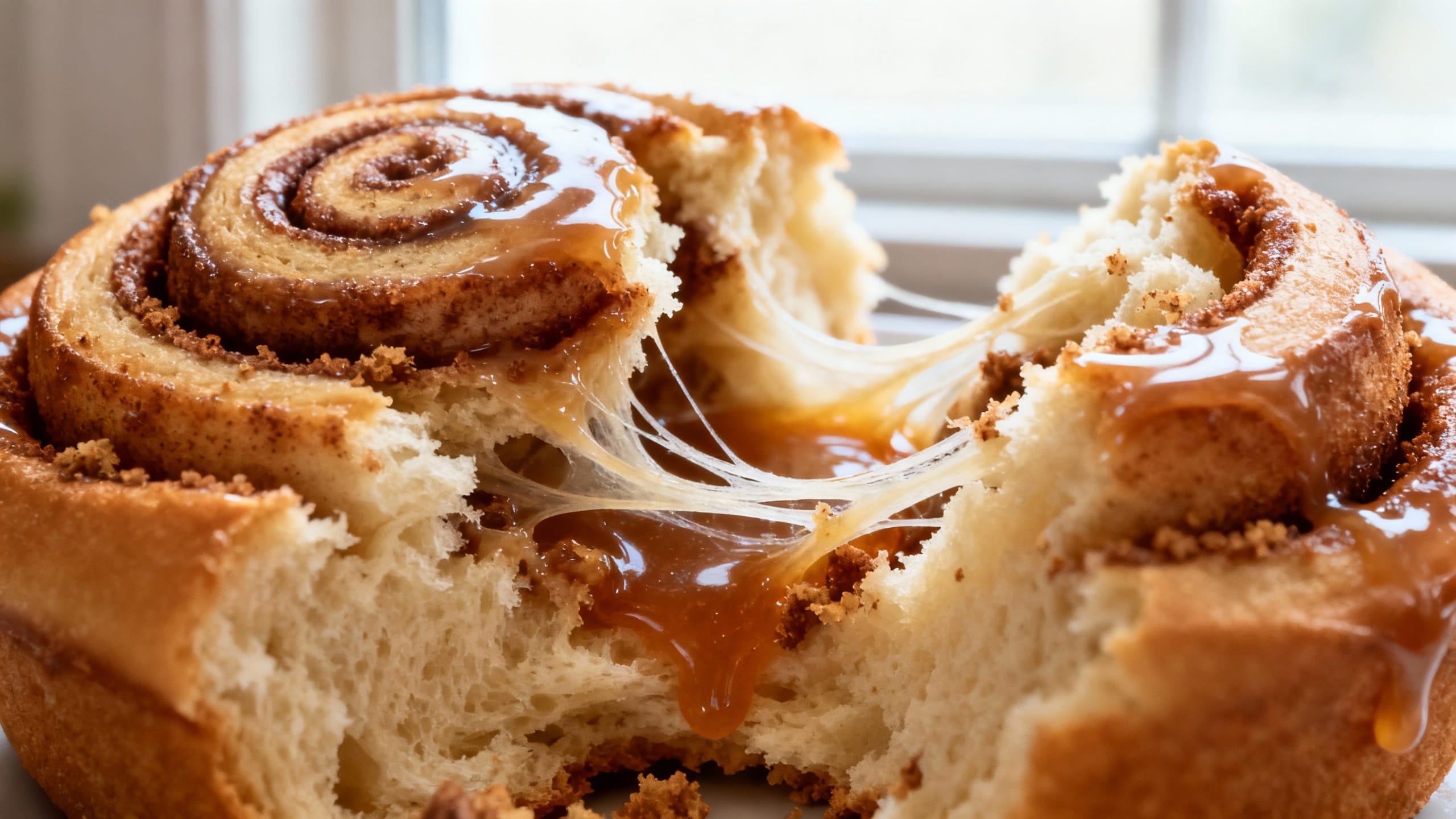
If you’ve ever bitten into a bakery cinnamon roll and thought, “Wait… how is this so pillowy and gooey at the same time?” this is your moment. These rolls bake up tall, soft, and swirly, with a buttery cinnamon-sugar center that melts into that glossy, caramel-y vibe you only get from the good places.
And yes, we’re finishing with a swoosh of cream cheese frosting that sinks into the warm spirals just enough. It’s cozy. It’s dramatic. It tastes like you paid $8 per roll (but you didn’t).
Why You’ll Love This
This recipe is the sweet spot: enriched dough for that bakery-soft crumb, a cinnamon filling that stays gooey (not gritty), and a frosting that’s tangy-sweet instead of sugar-bomb. Plus, the steps are totally doable—even if you’re not a “bread person.”
Ingredients
- Whole milk: 1 cup, warmed to about 105–110°F
- Active dry yeast: 2 1/4 teaspoons (1 packet)
- Granulated sugar: 1/3 cup
- Unsalted butter: 6 tablespoons, melted and slightly cooled (plus more for the pan)
- Large eggs: 2, room temperature
- Vanilla extract: 2 teaspoons
- Salt: 1 teaspoon
- All-purpose flour: 4 to 4 1/2 cups (start with 4)
- Heavy cream: 1/2 cup (for pouring over before baking)
- For the cinnamon filling:
- Unsalted butter: 6 tablespoons, very soft
- Brown sugar: 1 cup, packed
- Ground cinnamon: 2 1/2 tablespoons
- Salt: pinch
- For the cream cheese frosting:
- Cream cheese: 6 ounces, softened
- Unsalted butter: 4 tablespoons, softened
- Powdered sugar: 1 1/2 cups, sifted if lumpy
- Vanilla extract: 1 teaspoon
- Salt: pinch
- Milk or heavy cream: 1–2 tablespoons (to loosen, optional)
How to Make It
- Activate the yeast: In a large bowl (or stand mixer bowl), whisk warm milk, 1 tablespoon of the sugar, and yeast. Let sit 5–10 minutes until foamy and alive-looking.
- Build the dough: Whisk in remaining sugar, melted butter, eggs, vanilla, and salt. Add 4 cups flour and mix until a shaggy dough forms. Knead 6–8 minutes (mixer with dough hook or by hand), adding up to 1/2 cup more flour only if needed. Dough should be soft and slightly tacky, not dry.
- First rise: Place dough in a buttered bowl, cover, and let rise in a warm spot until doubled, about 1 to 1 1/2 hours.
- Make the filling: In a small bowl, mix brown sugar, cinnamon, and a pinch of salt. Keep butter very soft so it spreads easily without tearing the dough.
- Roll + fill: Butter a 9×13-inch baking dish. Roll dough into a rectangle about 16×12 inches. Spread soft butter evenly over the dough, then sprinkle the cinnamon-sugar mixture across the top. Press lightly so it sticks.
- Shape the rolls: Starting from the long side, roll tightly into a log. Cut into 12 even rolls (unflavored dental floss is the clean-cut hack). Arrange in the pan with a little space between.
- Second rise: Cover and let rise 30–45 minutes until puffy and touching. Meanwhile, heat oven to 350°F.
- Bakery trick: Warm the heavy cream until just barely warm (not hot) and pour evenly over the risen rolls right before baking. It sounds extra because it is. It also makes them ridiculously soft and gooey.
- Bake: Bake 22–28 minutes until lightly golden on top and set in the center (internal temp around 190°F if you’re a thermometer person). Don’t overbake—soft is the goal.
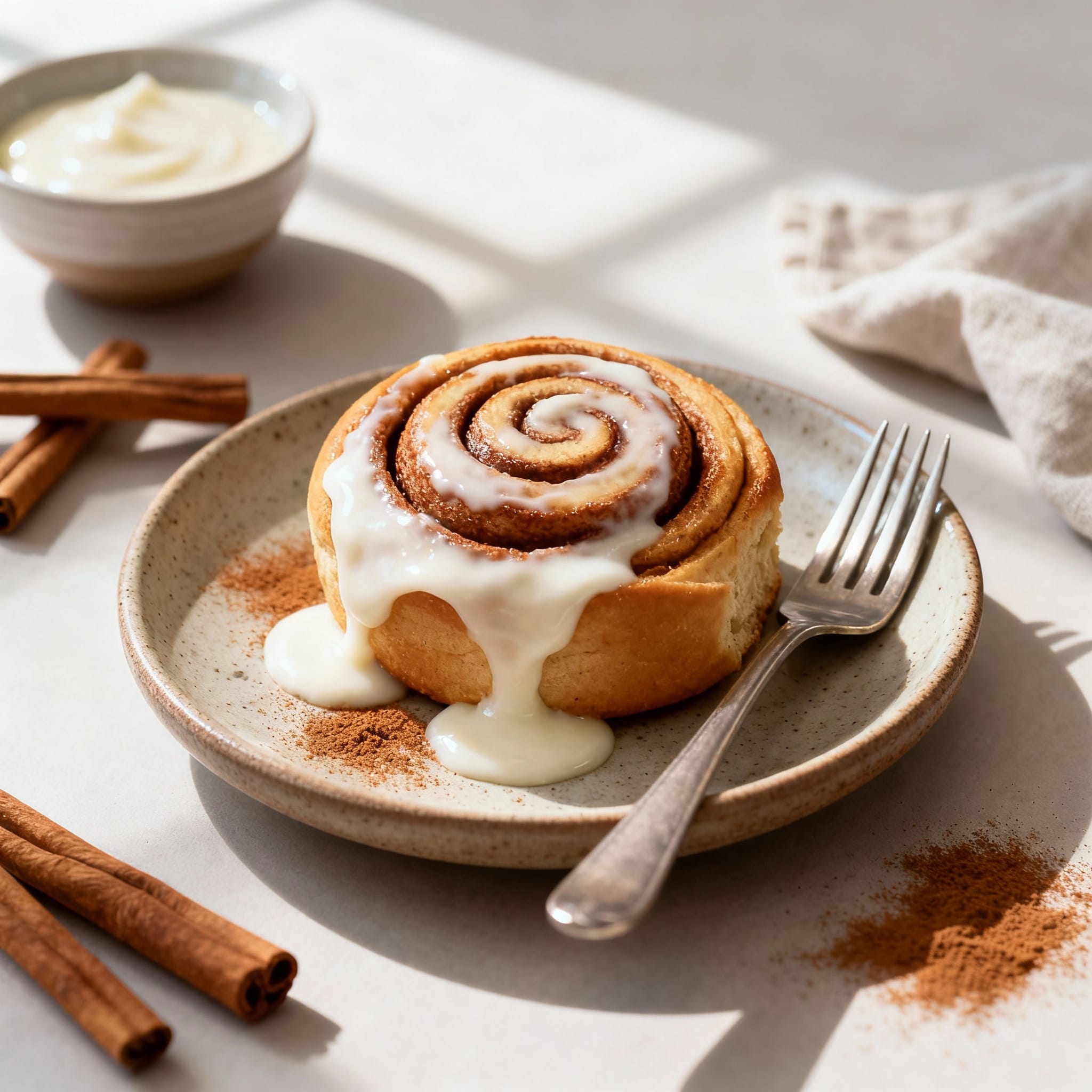
- Frost: Beat cream cheese and butter until smooth. Mix in powdered sugar, vanilla, and salt. Add a splash of milk/cream if you want it looser. Spread over warm rolls (not piping hot) so it melts into the swirls.
Tips for the Best Results
- Use warm milk, not hot: If it’s too hot, the yeast taps out. Aim for warm bathwater vibes (105–110°F).
- Don’t over-flour: A soft, slightly sticky dough = tender rolls. Too much flour = dry, bready spirals.
- Roll tight, cut clean: A tight log gives you those pretty defined swirls. Dental floss keeps the rolls from squishing.
- Watch the bake time: Pull when the tops are pale golden and the centers are set. Overbaked cinnamon rolls are basically a personal tragedy.
- Salt matters: A pinch in the filling and frosting keeps the sweetness balanced and “bakery-level.”
- Frost while warm: Warm rolls + cream cheese frosting = that signature glossy melt without disappearing completely.
Variations
- Maple glaze moment: Swap vanilla in the frosting for 1–2 tablespoons maple syrup (reduce powdered sugar slightly to taste).
- Pecan sticky-bun style: Sprinkle 3/4 cup chopped toasted pecans over the filling, or add a thin layer of caramel sauce in the pan before placing rolls.
- Orange bakery vibe: Add 1 tablespoon orange zest to the filling and 1–2 teaspoons orange juice to the frosting.
- Extra-spiced: Add 1/4 teaspoon cardamom or nutmeg to the cinnamon filling for a more “fancy café” flavor.
- Mini rolls: Cut into 18–20 smaller pieces and start checking for doneness around 16–18 minutes.
Storage & Serving
Serve warm for maximum gooey-factor. Store leftovers covered at room temp for 1 day or in the fridge up to 4 days; reheat individual rolls 15–25 seconds in the microwave to bring back the soft, melty center. For a just-baked feel, add a tiny swipe of butter before reheating.

FAQ
How do I make these cinnamon rolls ahead of time?
Assemble and cut the rolls, place in the baking dish, cover tightly, and refrigerate overnight. In the morning, let them sit at room temp 45–75 minutes until puffy, then pour on the warm cream and bake as directed.
Why didn’t my dough rise?
Most commonly: the milk was too hot (yeast didn’t survive) or too cold (yeast never woke up), or the yeast was old. Also make sure your rising spot is warm-ish—an off oven with the light on is a great cozy zone.
Can I use instant yeast instead of active dry?
Yes. Use the same amount (2 1/4 teaspoons). You can mix it directly into the dry ingredients, but you still want warm milk for a smooth dough. Rise times may be slightly faster, so go by “doubled” and “puffy,” not the clock.
How do I keep cinnamon rolls soft and not dry?
Don’t add too much flour, don’t overbake, and don’t skip the warm cream pour if you love an ultra-tender texture. When storing, keep them tightly covered so they don’t lose moisture.
My filling leaked out—what happened?
A little leak is normal (and honestly delicious), but big leaks usually mean the butter was melted instead of soft, or the roll wasn’t rolled tightly enough. Use very soft butter, press the sugar mixture in lightly, and roll the dough into a snug log before slicing.