


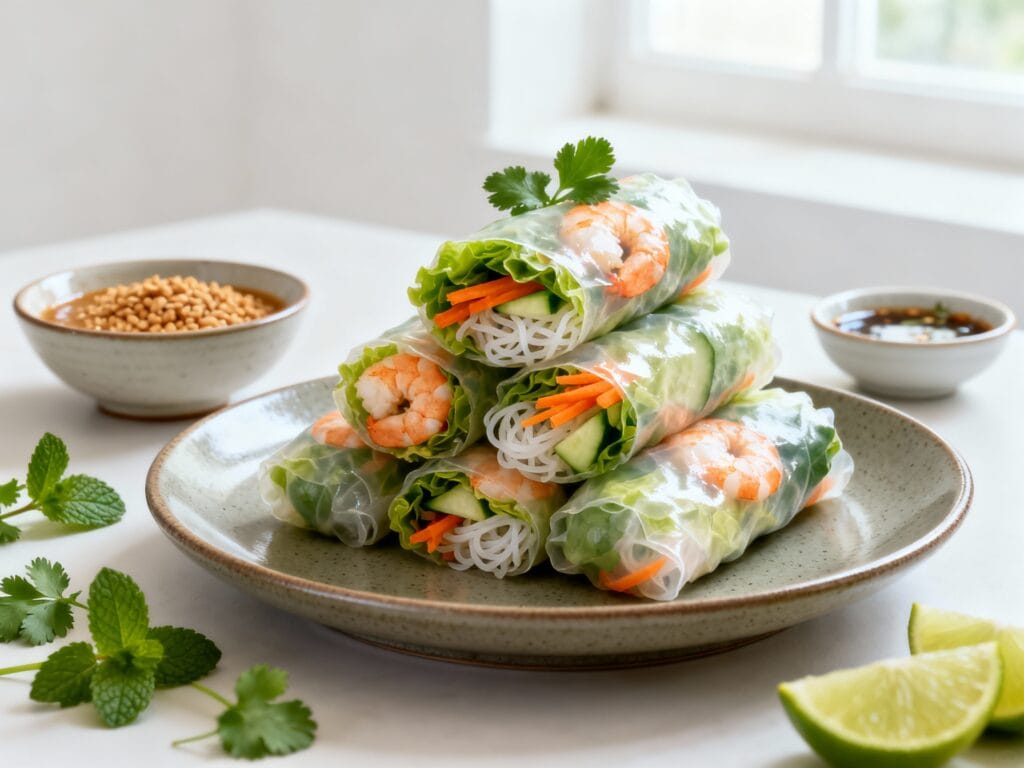
Meal-prepping fresh spring rolls sounds like a wellness flex… until day two hits and they’re dry, cracked, and weirdly chewy. The good news: you can absolutely prep them ahead and keep them soft, bouncy, and snack-ready.
This spring rolls recipe meal prep guide walks you through a simple build (veggie-forward with optional protein) plus the real secret: how to store spring rolls so they don’t dry out. No sad fridge rolls on my watch.
Why You’ll Love This
These fresh spring rolls are crunchy, colorful, and super customizable, and they’re one of the easiest “grab-and-go” lunches once you nail the storage method—aka keeping the rice paper hydrated without turning it into a sticky mess.
Ingredients
- 10–12 rice paper wrappers (8.5–9 inch)
- 4 oz rice noodles (vermicelli), cooked and rinsed cold
- 1 cup shredded carrots
- 1 cup thinly sliced cucumber (seeded if watery)
- 1 cup shredded red cabbage
- 1 ripe avocado, thinly sliced
- 2 cups leafy greens (butter lettuce, romaine, or baby spinach)
- 1/2 cup fresh mint leaves
- 1/2 cup fresh cilantro (optional)
- 1 cup cooked shrimp, tofu, or shredded rotisserie chicken (optional)
- For serving: peanut sauce, hoisin sauce, or sweet chili sauce
How to Make It
- Prep your fillings. Slice and shred everything before you start rolling. Pat watery veggies (like cucumber) dry with a paper towel so your wrappers don’t get soggy.
- Cook the noodles. Cook rice noodles according to the package, then rinse under cold water until fully cool. Drain well and lightly toss with a few drops of oil to prevent clumping (optional).
- Set up a rolling station. Fill a wide bowl or pie dish with warm water. Lay out a damp (not dripping) clean kitchen towel or cutting board as your work surface.
- Soften one wrapper. Dip one rice paper wrapper into warm water for about 8–12 seconds, then lay it flat on your work surface. It will keep softening as it sits.
- Layer smart. Place a small lettuce leaf or a few spinach leaves first (this helps protect the wrapper), then add noodles, carrots, cucumber, cabbage, herbs, avocado, and protein if using. Keep the filling in a compact log about 2 inches from the bottom edge.
- Roll tightly. Fold the bottom edge up and over the filling, fold in both sides, then roll upward into a snug cylinder. Aim for tight but not so tight that the wrapper tears.
- Repeat. Continue with remaining wrappers and fillings, keeping finished rolls under a slightly damp towel while you work so they don’t dry out mid-assembly.
- Serve or meal-prep. Enjoy right away with sauce, or move straight into the storage method below for next-level meal prep.
Tips for the Best Results
- Don’t over-soak the wrapper. A quick dip is enough—over-soaking makes rice paper fragile and sticky.
- Use lettuce as a “moisture buffer.” Greens between the wrapper and juicy fillings help prevent both drying and tearing.
- Keep fillings dry-ish. Pat cucumber, shrimp, and tofu dry so you don’t create a slip-and-slide inside the roll.
- Go smaller than you think. Overfilling is the #1 reason rolls burst, then dry out faster in storage.
- Work with warm water, not hot. Hot water makes wrappers too soft too fast, which leads to sticking.
- Prevent sticking while prepping. Keep finished rolls separated (not touching) under a damp towel until you pack them.
Variations
- Spicy salmon: Add cooked flaked salmon plus a little sriracha mayo (go light so it doesn’t leak).
- Tofu crunch: Use baked tofu and add thin strips of bell pepper for extra snap.
- Mango mint: Add mango strips and extra mint for a sweet, fresh vibe.
- Peanut-free: Serve with sweet chili sauce or a soy-lime dipping sauce instead of peanut.
- Extra protein: Double the shrimp/chicken and slightly reduce noodles to keep rolls easy to bite.
Storage & Reheating
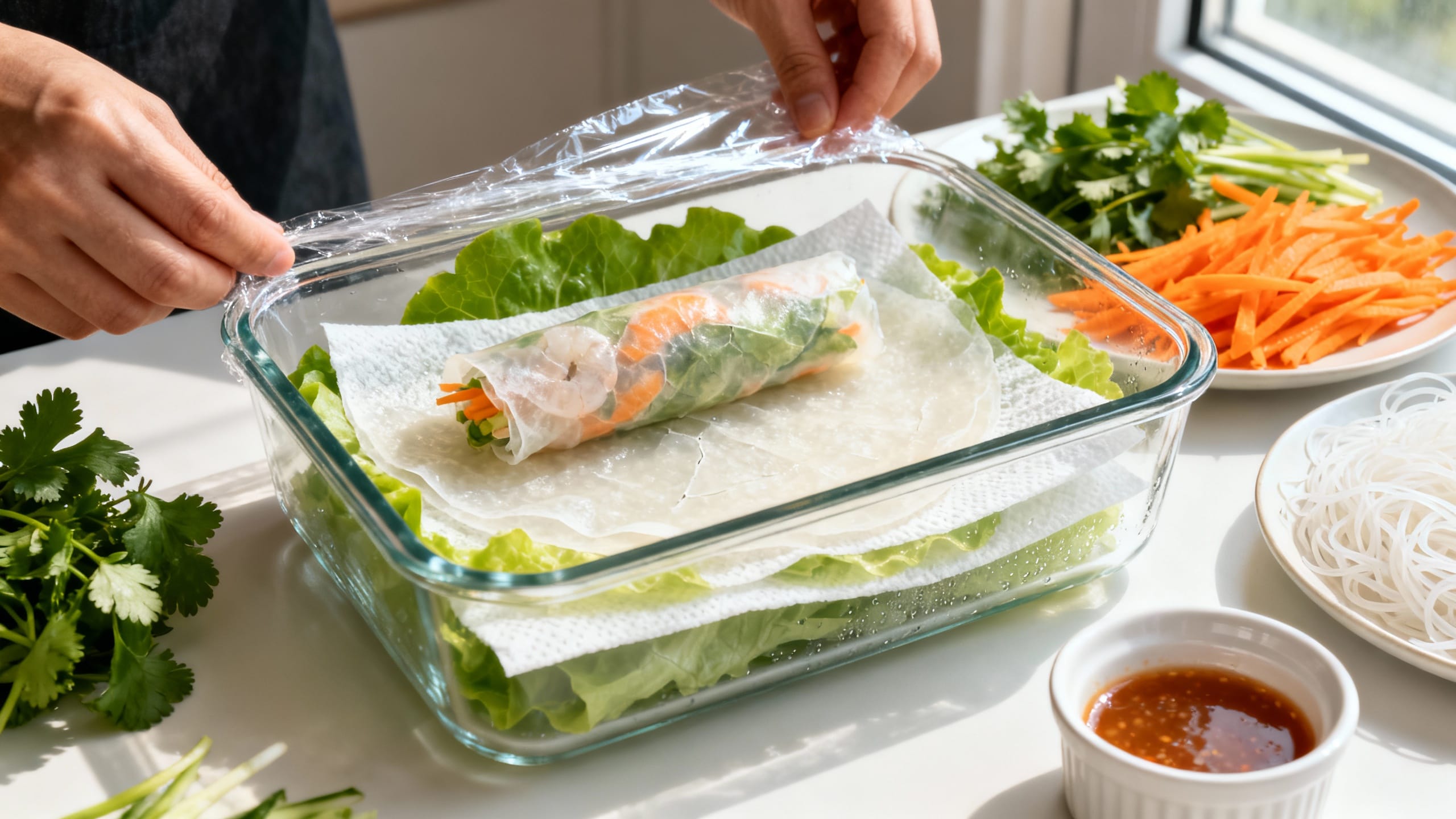
Fresh spring rolls don’t reheat (they’re meant to be chilled/room temp), so storage is everything: wrap each roll individually in plastic wrap or parchment, then place in an airtight container with a barely damp paper towel on top (not underneath). This keeps the rice paper from drying out without making it soggy. Store up to 2–3 days for best texture, and keep dipping sauce separate.
FAQ
How do you store spring rolls so they don’t dry out?
Wrap each roll individually (plastic wrap works best for preventing moisture loss), then place them in a single layer in an airtight container. Add a barely damp paper towel on top of the wrapped rolls and seal the lid. The combo of individual wrapping + airtight container is what keeps rice paper soft.
Why do my spring rolls stick together in the fridge?
Rice paper gets tacky when it sits, especially if rolls touch. Individual wrapping prevents contact, or you can separate rolls with parchment squares. Avoid stacking unwrapped rolls; they’ll basically glue themselves together.
Can I meal prep spring rolls the night before for lunch?
Yes—this is the sweet spot. Make them, wrap individually, refrigerate, and pack sauce separately. For the best bite, let them sit at room temp for 10 minutes before eating (cold rice paper can feel firmer).
How long do fresh spring rolls last in the fridge?
They’re best within 24–48 hours, but they can last up to 2–3 days if wrapped well. Avocado can brown over time, so if you’re prepping multiple days, consider skipping avocado or using it only in day-one rolls.
Can I freeze fresh spring rolls?
Not recommended. Rice paper changes texture after freezing and thawing, usually turning chewy or brittle, and the veggies lose their crunch. If you want a freezer-friendly option, go with fried spring rolls/egg rolls instead.