


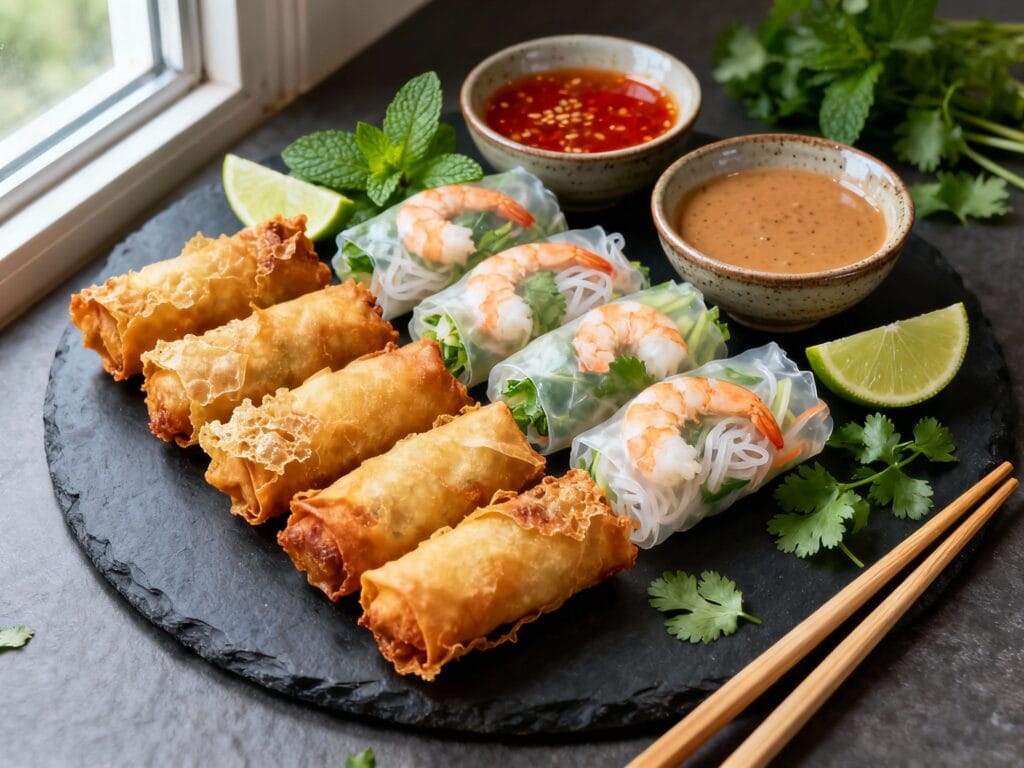
If spring rolls have been living rent-free in your takeout order, it’s time to bring them home. The real debate: fried vs fresh. Fried spring rolls are crispy, golden, and snacky in the best way. Fresh spring rolls are light, crunchy, and super customizable (aka perfect for a “use what you have” fridge clean-out).
This post walks you through both styles with one core filling idea, plus the little tricks that make each version actually work. Pick your vibe—or make both and let your friends decide.
Why You’ll Love This
You’re getting two spring roll wins in one recipe: crunchy fried rolls that stay crisp and fresh rice-paper rolls that don’t tear or turn gummy, plus flexible fillings and simple dipping sauce options.
Ingredients
- 2 cups shredded cabbage (green or Napa)
- 1 cup shredded carrots
- 1 cup bean sprouts (optional but very classic)
- 1 cup cooked rice noodles or vermicelli (for fresh rolls; optional for fried)
- 1 cup cooked shrimp, shredded chicken, tofu, or extra veggies (optional)
- 3 green onions, thinly sliced
- 2 cloves garlic, minced
- 1 tablespoon grated fresh ginger (or 1 teaspoon ground ginger)
- 2 tablespoons soy sauce (or tamari)
- 1 tablespoon rice vinegar
- 1 teaspoon sesame oil
- 1–2 teaspoons sugar (optional, balances the sauce)
- 1 tablespoon cornstarch + 2 tablespoons water (slurry for fried filling)
- 10–14 spring roll wrappers (for fried) OR 10–14 rice paper wrappers (for fresh)
- Neutral oil for frying (canola, peanut, or vegetable)
- For serving: sweet chili sauce, peanut sauce, hoisin, or soy + lime
How to Make It
- Mix a quick seasoning: In a small bowl, stir together soy sauce, rice vinegar, sesame oil, and sugar (if using). Set aside.
- Cook the filling (best for fried rolls): Heat a large skillet over medium-high. Add 1 teaspoon oil, then garlic and ginger for 30 seconds. Add cabbage, carrots, sprouts, and green onion. Stir-fry 3–5 minutes until slightly softened but still crisp. Add the seasoning and cook 1 minute.
- Thicken so it doesn’t leak: Stir the cornstarch slurry, then pour it into the pan. Cook 30–60 seconds until the filling looks glossy and not watery. Spread on a plate to cool completely (this part matters).
- For fresh rolls, prep a no-cook filling: Skip the skillet and instead toss cabbage, carrots, sprouts, green onion, and protein with 1–2 tablespoons of the seasoning. Keep everything dry-ish (pat shrimp/tofu, drain noodles well).
- Assemble fried spring rolls: Place a wrapper like a diamond. Add 2–3 tablespoons cooled filling near the bottom third, shape into a short log, fold bottom up and sides in, then roll tight. Seal the tip with a dab of water (or cornstarch slurry). Repeat and keep covered with a barely damp towel.
- Fry: Heat 1 to 1 1/2 inches oil to 350°F. Fry in batches 3–5 minutes, turning, until deep golden. Drain on a rack (best) or paper towels. Cool 2 minutes so the inside isn’t lava.
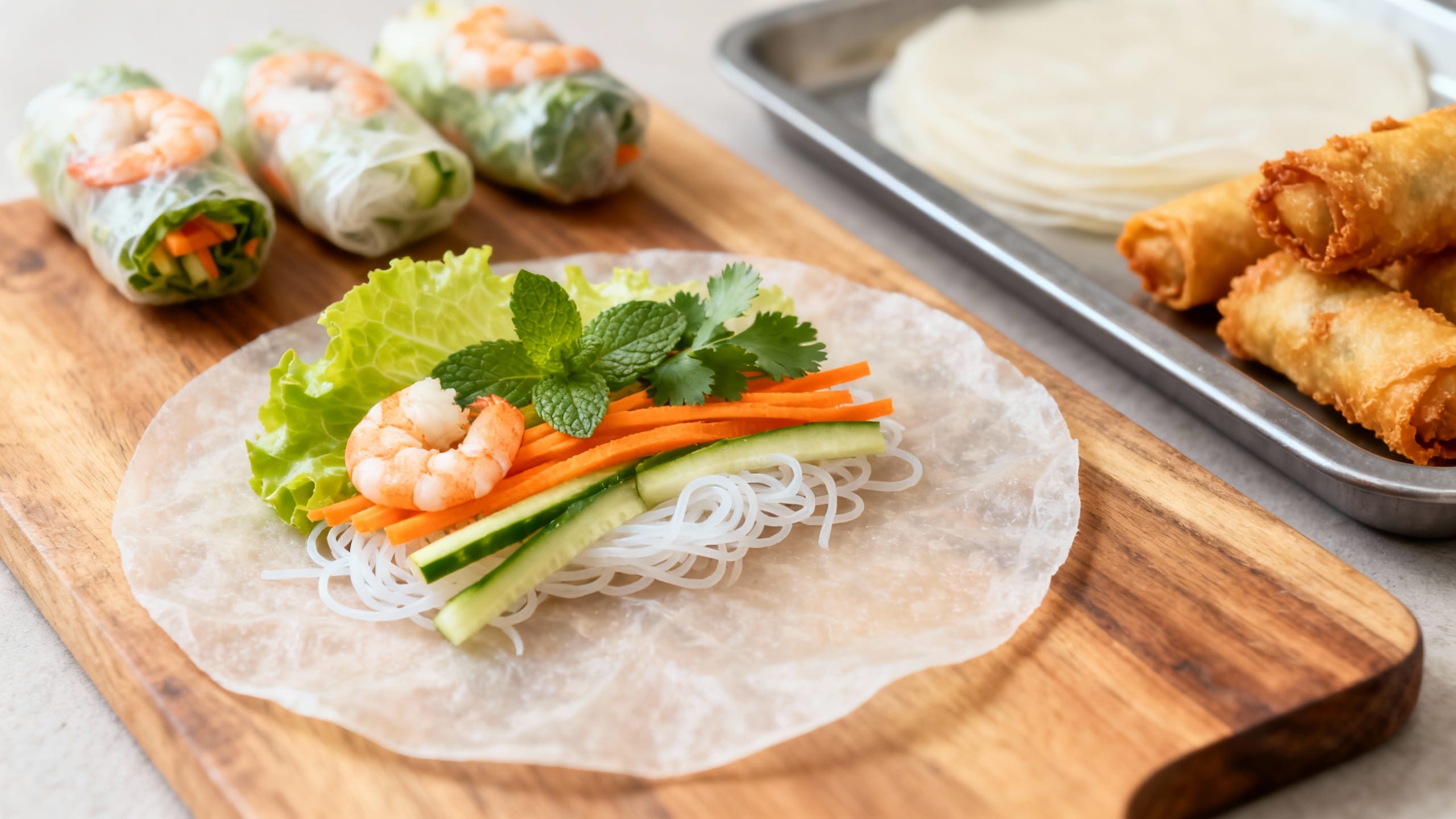
- Assemble fresh spring rolls: Fill a wide dish with warm water. Dip one rice paper wrapper for 5–10 seconds (it should still feel a little firm). Lay it on a damp cutting board or plate. Add noodles (if using), veggies, and protein. Fold bottom up, fold sides in, roll snug.
- Serve: Fried rolls love sweet chili sauce or soy + vinegar. Fresh rolls are iconic with peanut sauce or hoisin + lime. Either way: dip generously.
Tips for the Best Results
- Cool the cooked filling fully before wrapping fried rolls—steam is the enemy of crispiness and tight seals.
- Don’t overfill. If you’re fighting the wrapper, you used too much. Aim for compact, tight rolls.
- Seal like you mean it. Press the final edge firmly; a little water goes a long way.
- Oil temp = everything. Too low = greasy. Too high = brown outside, raw wrapper vibes inside. Shoot for 350°F.
- For fresh rolls, under-soak the rice paper. It softens as it sits; if it’s floppy in the water, it’ll tear on the board.
- Keep fresh roll ingredients dry. Wet noodles and juicy veggies can make the wrapper slippery and more likely to split.
- Use a damp surface for rice paper. A lightly damp cutting board helps prevent sticking without turning the wrapper mushy.
Variations
- Vietnam-inspired fresh rolls: Add mint, cilantro, and basil; use shrimp + vermicelli; dip in peanut sauce.
- Extra crispy fried rolls: Double-fry: fry once until pale gold, rest 10 minutes, fry again 1–2 minutes until deep golden.
- Vegetarian/vegan: Use tofu or mushrooms; swap soy sauce for tamari if needed; skip shrimp.
- Spicy: Add sriracha or chili garlic sauce to the seasoning, or serve with spicy sweet chili.
- Peanut-free dip: Try sweet chili sauce, hoisin + lime, or a simple soy + rice vinegar + sesame combo.
Storage & Reheating
Fried spring rolls store best: refrigerate in an airtight container up to 3 days. Reheat in an air fryer at 375°F for 6–8 minutes or in the oven at 400°F for 10–12 minutes until crisp (microwave makes them soft). Fresh spring rolls are best same-day; if you must store, wrap each roll in damp paper towel and place in a container for up to 24 hours.
FAQ
Which one should I make: fried or fresh spring rolls?
Make fried spring rolls if you want crunchy, party-snack energy and something you can reheat. Make fresh spring rolls if you want light, herby, and super customizable (and you’re serving them right away). If you’re hosting, fried holds up better on a table.
Why are my fried spring rolls soggy or greasy?
Usually it’s oil temp or wet filling. Keep oil around 350°F and don’t overcrowd the pan (that drops the temperature fast). Also make sure the filling is cooled and thickened—if it’s watery, it steams the wrapper from the inside.
How do I stop rice paper fresh rolls from tearing?
Don’t soak too long—5 to 10 seconds in warm water is enough. Assemble on a damp (not wet) surface, and keep sharp items (like raw carrots cut into needles) tucked inside the noodles or greens so they don’t poke through.
Can I prep spring rolls ahead of time?
Fried: yes. You can assemble and refrigerate the uncooked rolls for up to 8 hours (covered so they don’t dry out), then fry when ready. Fresh: prep all components ahead, but roll close to serving; rice paper can dry out or get sticky if it sits too long.
What wrappers should I buy for fried vs fresh spring rolls?
For fried spring rolls, use wheat-based spring roll wrappers (often in the refrigerated or freezer section at Asian markets). For fresh spring rolls, use round rice paper wrappers (usually shelf-stable in the international aisle). They’re not interchangeable: rice paper won’t fry the same way, and wheat