


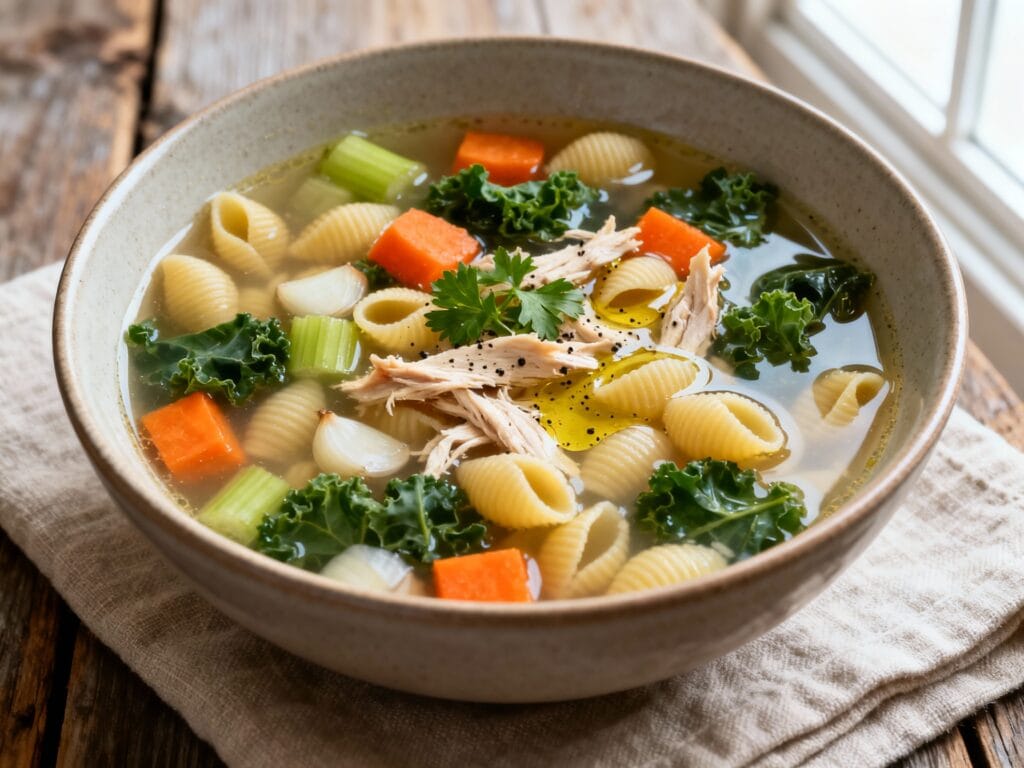
Nothing ruins a cozy soup moment like pasta that turns from cute and chewy to sad and mushy. The fix isn’t complicated—you just need the right pasta shapes and the right timing.
This soup is designed to stay delicious even after leftovers. It’s a tomato-y, veggie-packed, Italian-ish vibe with smart pasta strategy (aka: cook it like you mean it).
Why You’ll Love This
You get a hearty, weeknight-friendly soup with tender veggies, cozy broth, and pasta that actually holds its shape—plus simple options for when you want to meal prep without sacrificing texture.
Ingredients
- 2 tablespoons olive oil
- 1 medium yellow onion, diced
- 2 carrots, diced
- 2 celery stalks, diced
- 3 cloves garlic, minced
- 1 teaspoon Italian seasoning
- 1/2 teaspoon kosher salt, plus more to taste
- 1/4 teaspoon black pepper
- 1 tablespoon tomato paste
- 1 (14.5 oz) can diced tomatoes (with juices)
- 6 cups low-sodium chicken or vegetable broth
- 1 (15 oz) can cannellini beans, rinsed and drained
- 2 cups chopped zucchini or green beans (optional but great)
- 2 cups chopped baby spinach or kale
- 1 tablespoon lemon juice or 1 teaspoon red wine vinegar
- 1/3 to 1/2 cup small pasta (see notes below)
- Optional for serving: grated Parmesan, fresh basil or parsley, extra olive oil
How to Make It
- In a large pot or Dutch oven, warm the olive oil over medium heat. Add onion, carrots, and celery and cook for 6–8 minutes, stirring occasionally, until softened.
- Add garlic, Italian seasoning, salt, and pepper. Cook for 30–60 seconds, just until fragrant.
- Stir in tomato paste and cook for 1 minute to deepen the flavor. Add diced tomatoes and stir to combine.
- Pour in the broth and bring to a gentle boil. Reduce heat to a steady simmer and cook for 10 minutes.
- Add cannellini beans and zucchini/green beans (if using). Simmer for 8–10 minutes, until the veggies are tender.
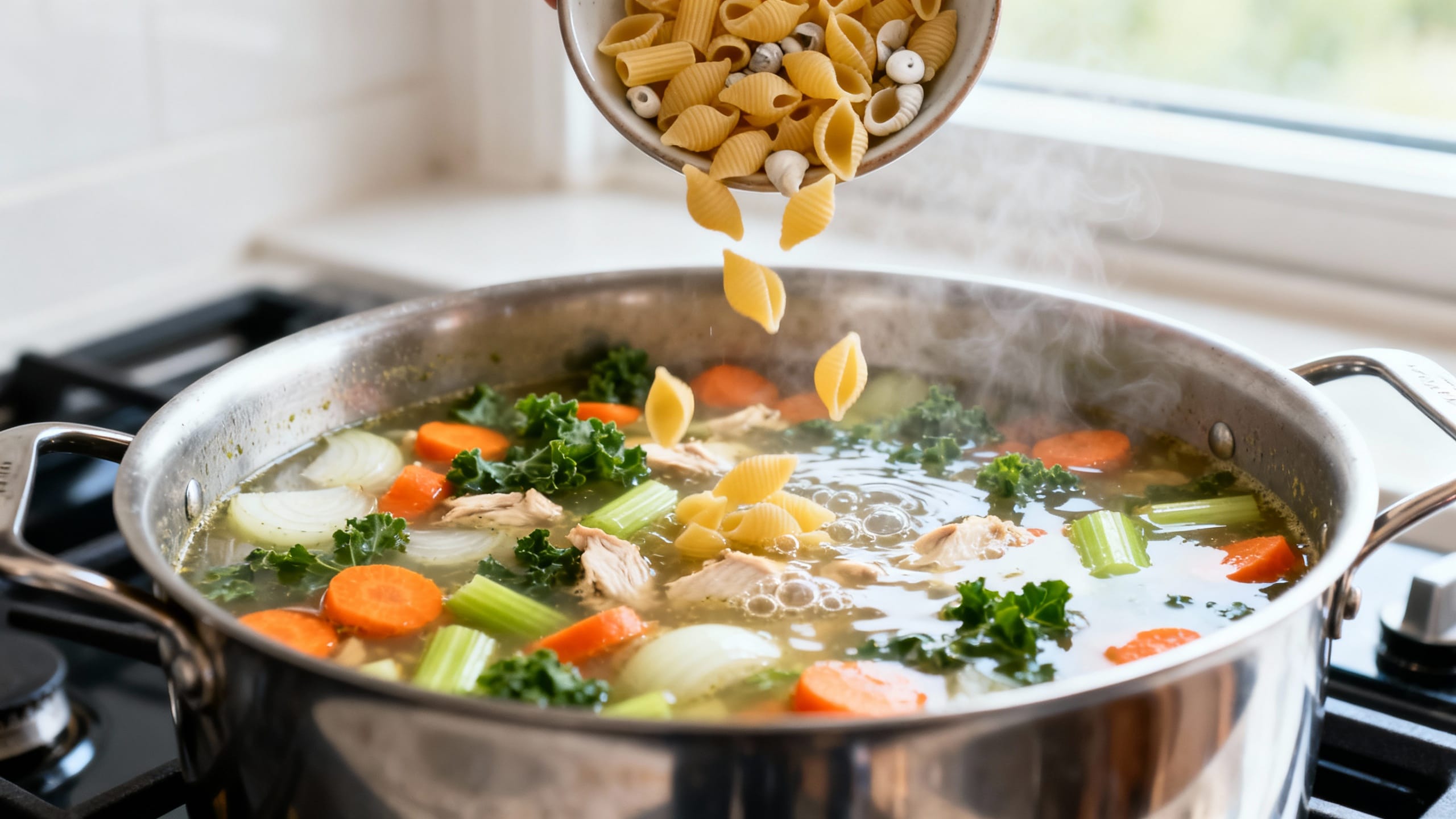
- Decide your pasta method (pick one): (A) Cook pasta separately to guarantee zero mush, then add to bowls when serving; or (B) Add pasta directly to the pot near the end (best if you’re eating it right away).
- If cooking pasta in the soup: stir it in now and simmer until just barely al dente (usually 6–9 minutes depending on shape). Stir often so it doesn’t stick.
- Stir in spinach/kale and cook 1–2 minutes until wilted. Turn off heat and add lemon juice (or vinegar). Taste and adjust salt.
- Serve hot with Parmesan and herbs. If you cooked pasta separately, add a scoop of pasta to each bowl and ladle soup over top.
Tips for the Best Results
- Best pasta shapes that don’t get mushy: ditalini, small shells, orecchiette, farfalle (broken if you want smaller bites), cavatelli, and radiatori. They’re sturdier and less likely to collapse.
- Shapes that go mush fast: thin noodles (like spaghetti pieces), angel hair, and very tiny pastas cooked too long (acini di pepe can be risky if you’re storing leftovers).
- The #1 anti-mushy move: cook pasta separately and store it separately. Add to bowls right before eating. This is the meal-prep cheat code.
- If you cook pasta in the pot, undercook it slightly. Pull it when it’s just shy of perfect; it will keep softening as it sits.
- Use enough liquid. Pasta drinks broth like it’s its job. If you add pasta to the soup, keep extra broth or water nearby to loosen things up.
- Salt timing matters. Broth reduces slightly as it simmers, so start with a moderate amount of salt and adjust at the end.
- Stir while the pasta cooks. Especially for small shapes—sticking to the bottom is real and ruins the vibe.
Variations
- Classic chicken: Add 2 cups shredded cooked chicken in the last few minutes to warm through.
- Sausage version: Brown 8 oz Italian sausage first, remove, then sauté veggies in the drippings (add a splash of oil if needed). Stir sausage back in before serving.
- Creamy upgrade (without cream): Mash 1/2 cup of the beans and stir them back into the soup for a thicker, silkier broth.
- Spicy: Add 1/4 to 1/2 teaspoon crushed red pepper with the garlic.
- Gluten-free: Use your favorite gluten-free short pasta, but definitely cook it separately—GF pasta can soften quickly.
- More veggies: Add chopped cabbage, diced sweet potato, or frozen peas (peas go in at the very end).
Storage & Reheating
Store soup in an airtight container in the fridge for up to 4 days. For best texture, store pasta separately and combine in bowls when reheating. Warm soup on the stove over medium-low (or microwave in bursts), adding a splash of broth or water if it thickened. If pasta is already in the soup, reheat gently to avoid overcooking it further.
FAQ
What are the best pasta shapes for soups that won’t turn mushy?
Go for sturdier small shapes like ditalini, small shells, orecchiette, cavatelli, or radiatori. They’re thicker and hold up better in hot broth, especially for leftovers.
When should I add pasta to soup so it doesn’t get mushy?
If you’re eating immediately, add pasta during the last 6–9 minutes and cook it just to al dente. If you want leftovers that stay perfect, cook the pasta separately and add it to each bowl right before serving.
Can I make soup with pasta ahead of time for meal prep?
Yes—just keep the pasta and soup in separate containers. The pasta will absorb broth and soften as it sits, so separating them is the easiest way to keep that chewy, just-cooked texture all week.
My soup got too thick after adding pasta. How do I fix it?
Add more broth (or water) a little at a time while reheating until it’s back to your preferred consistency. Taste and re-season if needed, since extra liquid can dilute salt and acidity.
Should I rinse pasta before adding it to soup?
Usually no. A little starch helps the soup feel cozy and slightly thicker. The only time rinsing helps is if you cooked pasta separately and it’s sticking badly—then a quick rinse can stop the clumping, but drain well and toss with a tiny bit of oil.