


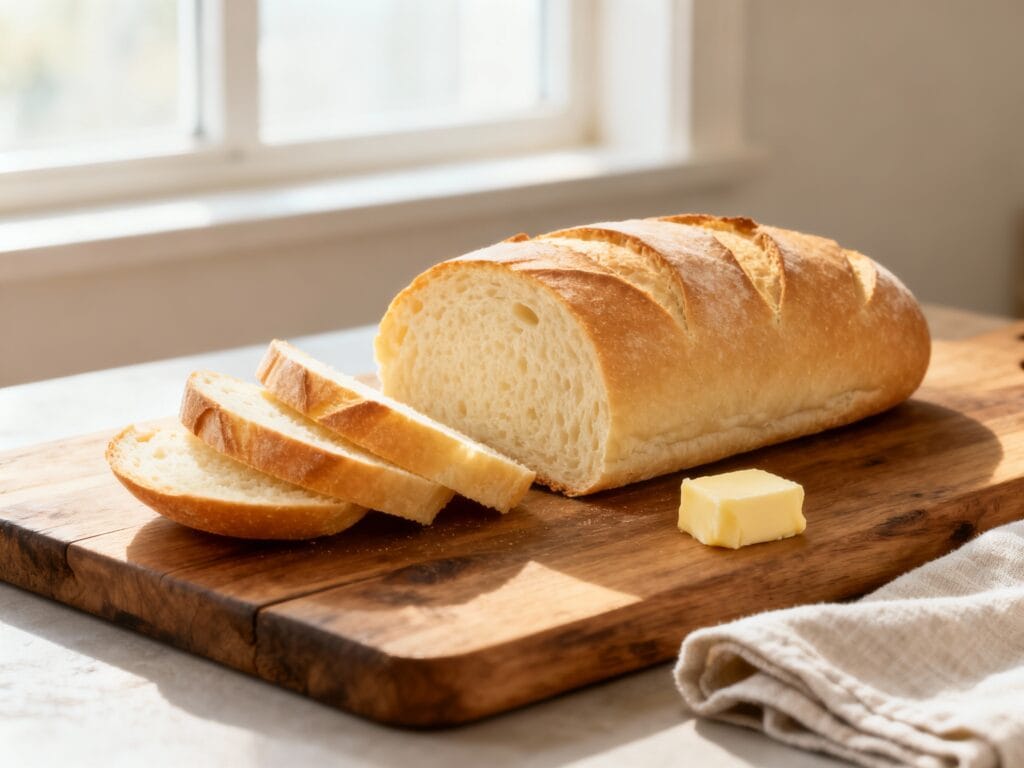
There’s something about a warm, soft bakery-style French loaf that makes any meal feel instantly upgraded. The kind with a tender crumb, a lightly golden crust, and that “wait…you made this?” energy.
This soft homemade French bread recipe is your go-to when you want classic French bread vibes without the stress. It’s straightforward, forgiving, and perfect for sandwiches, soup dunking, or tearing into while it’s still a little warm (no judgment).
Why You’ll Love This
It bakes up fluffy and tender with that signature French bread shape, but with a softer crust and crumb—aka perfect for everyday eating, picky eaters, and anyone who loves bakery bread without a bakery trip.
Ingredients
- 4 cups all-purpose flour (plus a little extra for dusting)
- 2 1/4 teaspoons active dry yeast (1 packet)
- 2 teaspoons granulated sugar
- 1 1/2 teaspoons fine salt
- 1 1/4 cups warm water (about 105–110°F)
- 2 tablespoons olive oil (or neutral oil)
- 1 tablespoon melted butter (optional, for brushing after baking)
- 1 egg white + 1 tablespoon water (optional, for a slightly shinier crust)
How to Make It
- Activate the yeast: In a large bowl (or stand mixer bowl), stir warm water and sugar together. Sprinkle yeast on top and let it sit 5–10 minutes until foamy. If it doesn’t foam, your water may be too hot/cold or the yeast is old.
- Mix the dough: Add salt, olive oil, and 3 cups of flour. Mix until a shaggy dough forms. Add remaining flour 1/4 cup at a time until the dough pulls away from the bowl and feels soft but not sticky.
- Knead: Knead 8–10 minutes by hand on a lightly floured surface (or 6–8 minutes with a dough hook). The dough should be smooth, elastic, and spring back when gently pressed.
- First rise: Place dough in a lightly oiled bowl, cover, and let rise in a warm spot for 60–90 minutes, or until doubled in size.
- Shape the loaves: Punch down the dough and turn it out onto the counter. Divide into 2 equal pieces. Flatten each into a rectangle, then roll up tightly from the short side into a log. Pinch the seam and ends to seal and tuck slightly underneath.
- Second rise: Place shaped loaves seam-side down on a parchment-lined baking sheet (or a lightly greased one). Cover loosely and let rise 30–45 minutes until puffy.
- Prep for baking: Preheat oven to 375°F. If using egg wash, whisk egg white with 1 tablespoon water and gently brush over loaves. Use a sharp knife or bread lame to score 3–4 diagonal slashes on each loaf.
- Bake: Bake 20–25 minutes until golden and the loaves sound hollow when tapped. For extra accuracy, the center should read about 190–200°F on an instant-read thermometer.
- Finish and cool: Optional but highly recommended: brush warm loaves with melted butter for a softer, bakery-style crust. Cool at least 20 minutes before slicing (it finishes setting inside).
Tips for the Best Results
- Measure flour the right way: Spoon flour into the measuring cup and level it off. Too much flour = dense bread.
- Warm water matters: Aim for 105–110°F so the yeast wakes up without getting “cooked.”
- Don’t over-flour the counter: A lightly floured surface is plenty. Extra flour during kneading can dry the dough.
- Tight shaping = pretty loaf: Roll the dough snugly and pinch the seam well so it doesn’t unroll in the oven.
- Score with confidence: Quick, shallow slashes help the loaf expand where you want it.
- Want it even softer? Brush with butter right after baking and cool under a clean kitchen towel for 10 minutes.
Variations
- Single large loaf: Keep the dough whole and shape into one big loaf. Bake 25–30 minutes, checking for doneness.
- Garlic herb French bread: Mix 1 teaspoon garlic powder and 1 teaspoon Italian seasoning into the flour. Brush with garlic butter after baking.
- Sesame or poppy top: Brush with egg wash, then sprinkle seeds on top before baking.
- Chewy crust version: Skip the butter finish and place a small metal pan on the bottom rack while preheating. Add 1/2 cup hot water to the pan right when the bread goes in (carefully) for more steam.
- Whole wheat blend: Swap in 1 cup whole wheat flour for 1 cup all-purpose. Add an extra tablespoon of water if the dough feels dry.
Storage & Reheating
Store cooled bread in a bread bag or loosely wrapped at room temp for up to 2 days (tight plastic can soften the crust too much, but this recipe is meant to stay on the softer side). For longer storage, freeze slices or whole loaves tightly wrapped for up to 2 months. Reheat slices in a toaster, or warm a whole loaf at 350°F for 8–12 minutes (wrap in foil for super-soft, unwrap for a slightly crisper outside).
FAQ
Why is my French bread dense instead of soft and fluffy?
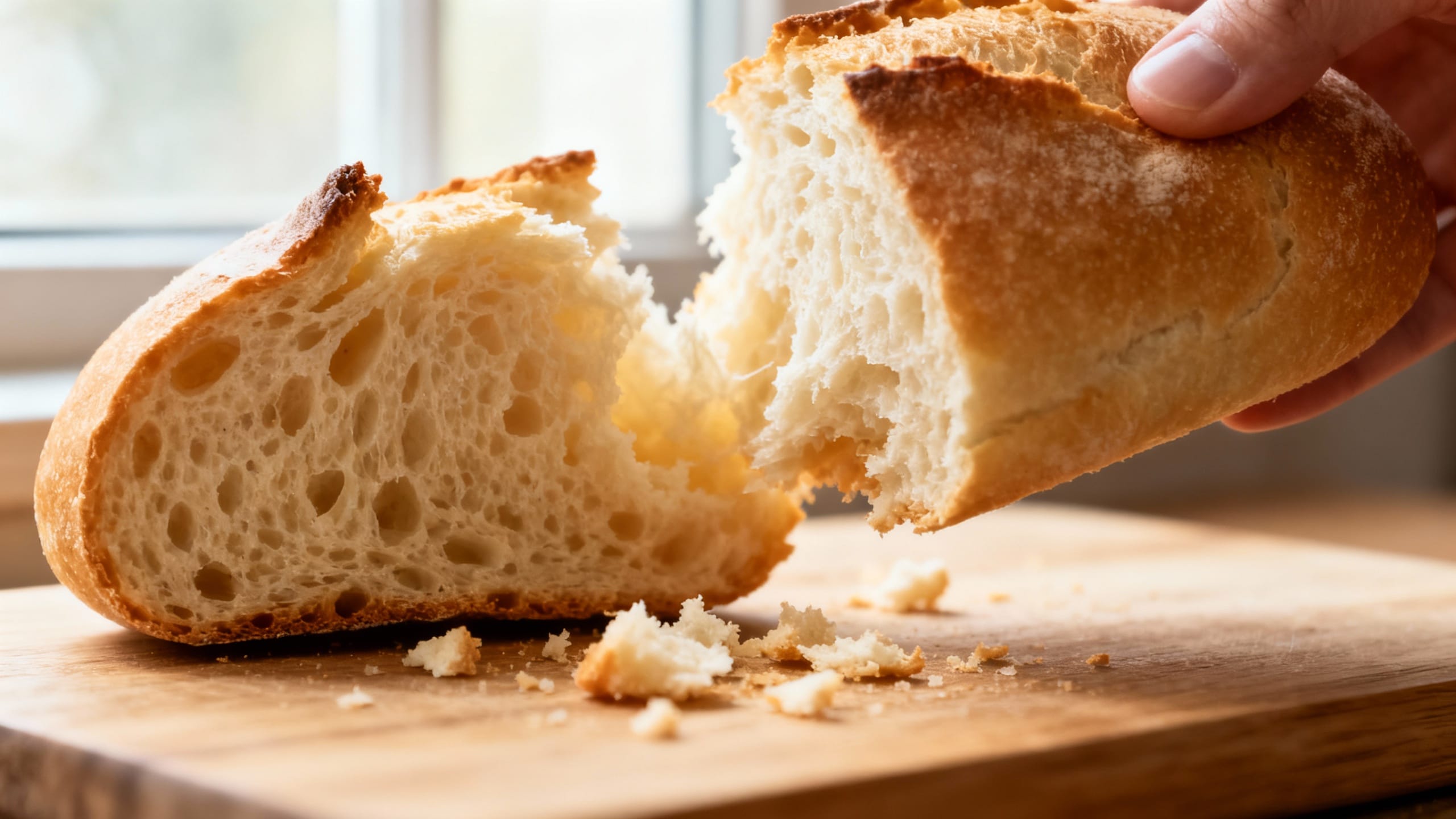
The most common reasons are too much flour, under-kneading, or not letting it rise long enough. The dough should feel soft and slightly tacky, not dry. Also make sure your yeast is active (foamy after blooming) and give the dough time to fully double on the first rise.
Can I make this recipe with instant yeast?
Yes. Use the same amount (2 1/4 teaspoons). You can skip the blooming step and mix it into the dry ingredients, then add warm water and oil. Rising times may be slightly shorter, so watch the dough (double in size) instead of the clock.
How do I get that bakery-style soft crust?
Brush the loaf with melted butter right after it comes out of the oven. For an extra-soft finish, loosely cover the bread with a clean towel while it cools for the first 10–15 minutes. That traps a bit of steam and keeps the crust tender.
Can I prep the dough ahead and bake later?
Yes. After the first rise, shape the loaves, place on a baking sheet, cover well, and refrigerate up to 12–16 hours. Let the loaves sit at room temp 30–60 minutes until puffy, then score and bake as directed.
What’s the best way to slice French bread without squishing it?
Let it cool at least 20 minutes so the crumb sets, then use a serrated bread knife with a gentle sawing motion. If you want super clean slices for sandwiches, cool completely before slicing.