


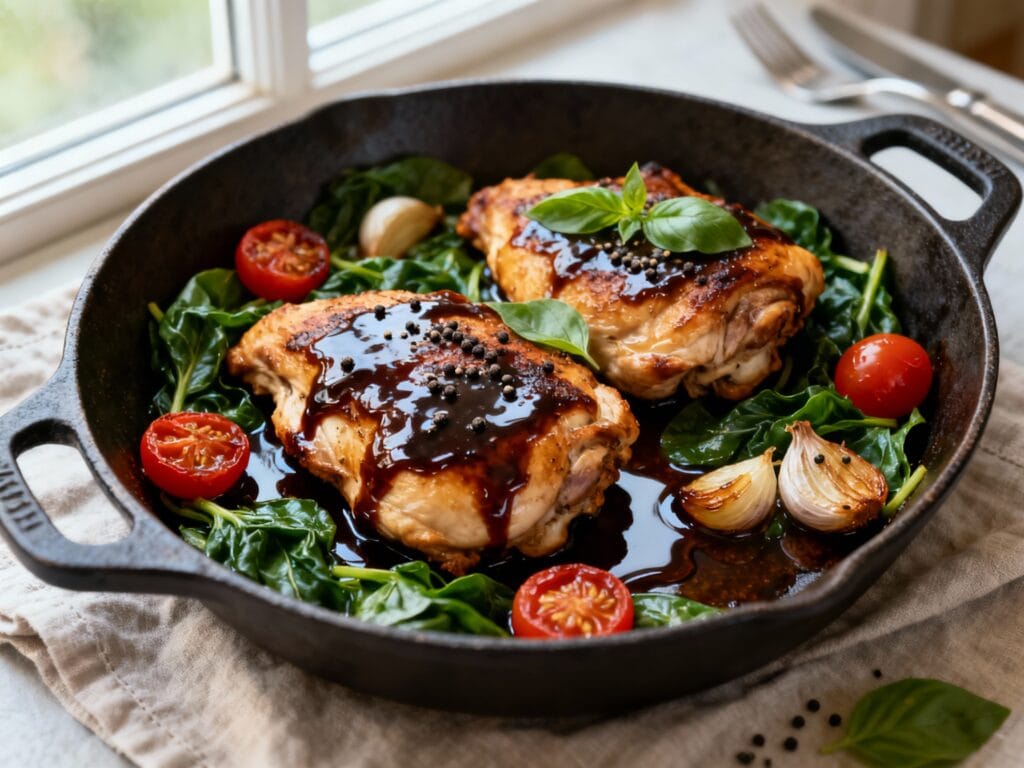
If you love that glossy, savory-sweet balsamic chicken you get at restaurants (the kind that tastes like it took all day), this is your at-home version—made in one pan, on a regular weeknight, without a pile of dishes.
We’re talking juicy chicken, a silky balsamic glaze, and tender veggies all hanging out together in the same skillet. It’s simple, but it eats like you ordered it.
Why You’ll Love This
It’s restaurant-style flavor with minimal effort: you get golden seared chicken, a bold balsamic glaze, and a full dinner cooked in one pan—fast enough for weeknights, impressive enough for guests.
Ingredients
- 4 boneless, skinless chicken breasts (or 5–6 chicken thighs)
- 1 teaspoon kosher salt, plus more to taste
- 1/2 teaspoon black pepper
- 1 teaspoon Italian seasoning
- 2 tablespoons olive oil
- 2 tablespoons butter (optional, but very restaurant)
- 8 oz cremini or baby bella mushrooms, sliced
- 1 pint cherry or grape tomatoes
- 3–4 cups baby spinach
- 3 cloves garlic, minced
- 1/2 cup balsamic vinegar
- 3/4 cup low-sodium chicken broth
- 2 tablespoons honey (or brown sugar)
- 1 tablespoon Dijon mustard
- 1 tablespoon cornstarch + 2 tablespoons cold water (slurry, optional for thicker glaze)
- Fresh basil or parsley, for serving (optional)
How to Make It
- Prep the chicken. Pat chicken dry. Season both sides with salt, pepper, and Italian seasoning. If using breasts and they’re thick, lightly pound to an even thickness so they cook evenly.
- Sear until golden. Heat olive oil in a large skillet over medium-high heat. Add chicken and sear 4–6 minutes per side (depending on thickness) until nicely browned. The chicken doesn’t need to be fully cooked yet. Transfer to a plate.
- Sauté the mushrooms. Reduce heat to medium. Add butter (if using), then mushrooms. Cook 4–5 minutes until they release moisture and start browning. Scrape up the browned bits from the pan as they cook.
- Add garlic and tomatoes. Stir in garlic for 30 seconds (just until fragrant), then add tomatoes. Cook 2–3 minutes until tomatoes begin to soften and look a little blistered.
- Make the balsamic sauce. Pour in balsamic vinegar and chicken broth. Stir in honey and Dijon. Bring to a lively simmer, scraping the bottom of the skillet to dissolve all that flavor into the sauce.
- Return chicken to the pan. Nestle the chicken (and any juices on the plate) back into the sauce. Reduce heat to medium-low and simmer 6–10 minutes, flipping once, until chicken reaches 165°F in the thickest part.
- Add spinach. Sprinkle spinach into the skillet in handfuls, stirring until wilted, about 1–2 minutes. Taste sauce and adjust with a pinch of salt or an extra drizzle of honey if you want it sweeter.
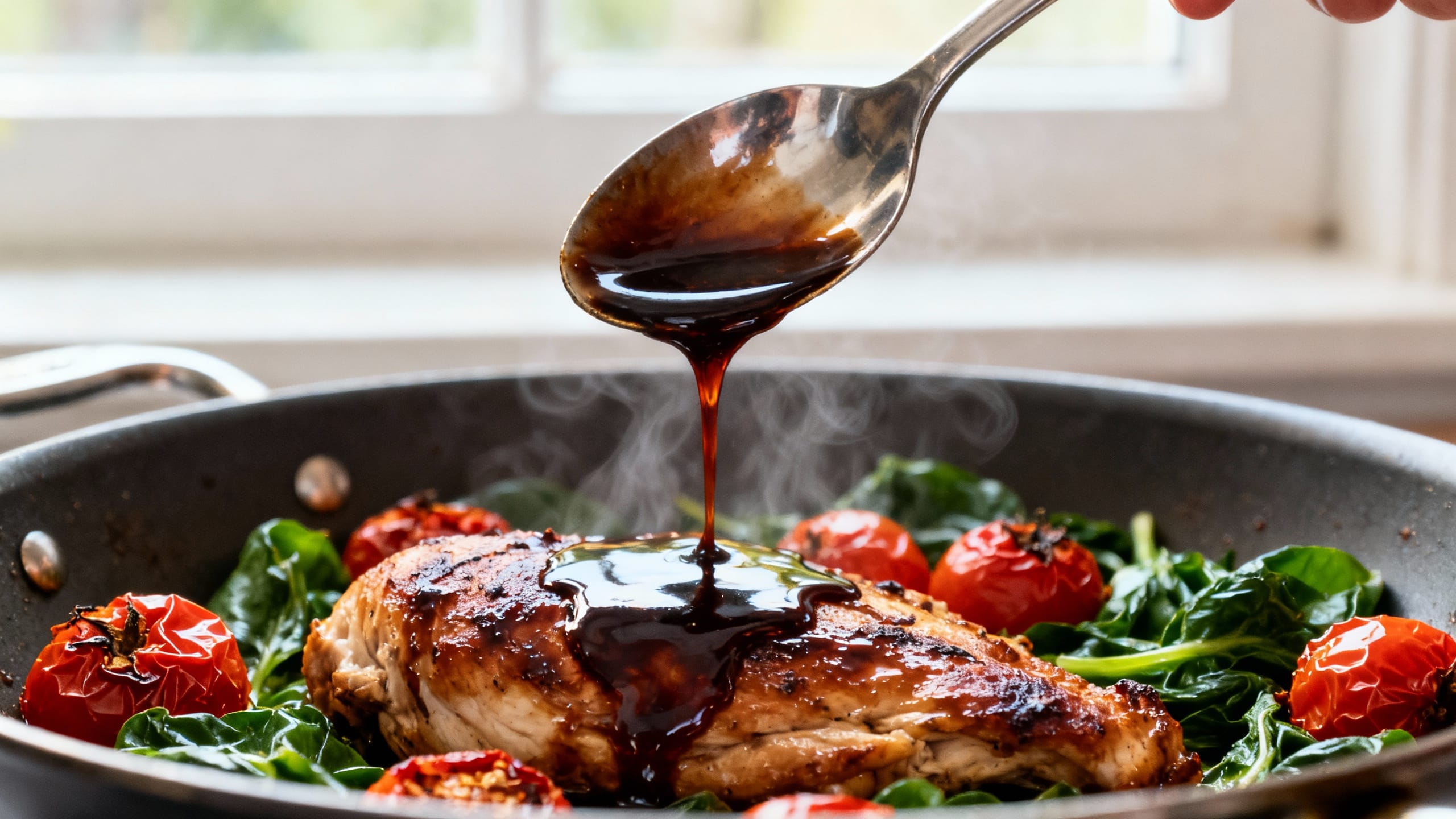
- Thicken (optional) and finish. If you want a thicker, glossy glaze, stir in the cornstarch slurry and simmer 1–2 minutes until the sauce coats the back of a spoon. Top with basil or parsley and serve.
Tips for the Best Results
- Use a big skillet. Crowding steams the chicken instead of searing it. A 12-inch skillet is perfect.
- Don’t skip the sear. That golden crust is the “restaurant” part—plus it flavors the sauce when you deglaze.
- Control the sweetness. Balsamic brands vary. Start with 2 tablespoons honey, then adjust at the end.
- Watch the heat. Boiling hard can reduce the sauce too fast and overcook the chicken. Keep it at a steady simmer.
- Check doneness with a thermometer. Pull chicken at 165°F. If using thighs, they’re great up to 175–185°F for extra tenderness.
- Want extra glossy sauce? The cornstarch slurry gives that shiny, clingy finish you usually get in restaurants.
Variations
- Balsamic chicken thighs: Swap in boneless thighs for juicier results. Add a couple extra minutes of simmer time if needed.
- Add mozzarella: Turn off heat, top chicken with fresh mozzarella, cover for 2 minutes to melt, then add basil for a caprese vibe.
- Make it spicy: Add 1/4 teaspoon red pepper flakes with the garlic, or finish with a pinch on top.
- More veggies: Add sliced zucchini or asparagus in step 4 (cook until just tender before returning chicken).
- Lower sugar: Use 1 tablespoon honey and add an extra splash of broth. You’ll still get tangy, bold flavor.
Storage & Reheating
Store leftovers in an airtight container in the fridge for up to 4 days. Reheat gently in a skillet over medium-low with a splash of broth (best for keeping the sauce silky), or microwave in 30-second bursts until warmed through. If the sauce thickens too much in the fridge, loosen it with a little water or broth.
FAQ
Can I make Restaurant-Style One Pan Balsamic Chicken at Home with chicken thighs instead of breasts?
Yes—boneless, skinless thighs work beautifully and stay extra juicy. Sear them the same way, then simmer until they reach at least 165°F (many people prefer thighs closer to 175°F for that super tender bite).
My balsamic sauce tastes too sharp. How do I fix it?
Add sweetness and a little richness: stir in an extra teaspoon or two of honey, and consider the butter if you skipped it. You can also simmer the sauce an extra minute to mellow the vinegar bite, but don’t over-reduce it.
How do I get that thick, glossy “restaurant” glaze?
Two ways: reduce the sauce longer at a gentle simmer, or use the optional cornstarch slurry. The slurry is the fastest route to a shiny, clingy glaze—just simmer for 1–2 minutes after adding it so it fully thickens.
What should I serve with one pan balsamic chicken?
Anything that soaks up sauce is a win: mashed potatoes, buttery rice, couscous, or pasta. For lighter sides, go with roasted broccoli, a simple arugula salad, or crusty bread and extra tomatoes on the side.
Can I prep this ahead for a weeknight dinner?
Yes. Slice mushrooms, mince garlic, and whisk the sauce ingredients (balsamic, broth, honey, Dijon) up to 24 hours ahead. When it’s time to cook, you’ll basically just sear, simmer, and toss in spinach—done.