


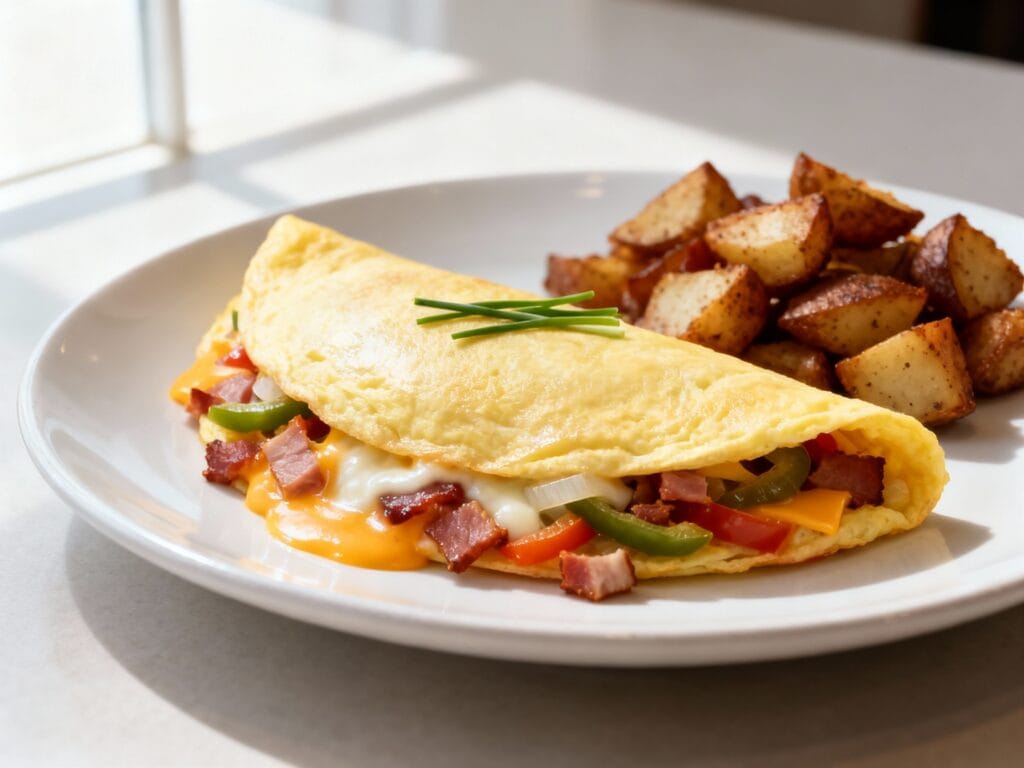
Omelette Recipe With Fillings That Don’t Make It Tear (Cheese, Veggies, Meat)
A torn omelette is usually not a “you” problem. It’s a “too much wet filling + wrong heat + rushed flip” problem. The good news: you can absolutely load your omelette with cheese, veggies, and meat and still get that smooth, foldable, diner-style finish.
This recipe is built around one simple idea: cook and dry out your fillings first, then let the eggs set gently so they can actually hold everything together. No stress, no scramble-in-disguise.
Why You’ll Love This
It’s quick, high-protein, and super customizable—but the method keeps the eggs tender and the fillings cozy (not watery), so your omelette folds cleanly instead of ripping like thin paper.
Ingredients
- 3 large eggs
- 1 tablespoon water or milk (optional, for a softer texture)
- 1/4 teaspoon kosher salt
- 1/8 teaspoon black pepper
- 1 tablespoon butter, divided (or 2 teaspoons butter + 1 teaspoon oil)
- 1/4 cup shredded cheese (cheddar, mozzarella, Swiss, or Monterey Jack)
- 1/4 cup diced veggies (bell pepper, mushrooms, spinach, onion, or zucchini)
- 1/4 cup cooked meat (ham, crumbled sausage, bacon, or diced chicken)
- 1 tablespoon chopped herbs (optional: chives, parsley, dill)
How to Make It
- Prep the fillings. Dice veggies small and keep amounts modest so the omelette can still fold. If using spinach, roughly chop it so it doesn’t clump.
- Cook the veggies first. Heat a nonstick 8- or 9-inch skillet over medium heat. Add 1/2 tablespoon butter. Sauté the veggies 2–4 minutes until softened and any moisture has cooked off (mushrooms should look dry, not glossy). Transfer to a bowl.
- Warm the meat. Add the meat to the same skillet for 30–60 seconds just to warm it through and drive off any extra grease. Transfer to the bowl with the veggies. If there’s excess fat in the pan, wipe it out quickly with a paper towel.
- Whisk the eggs like you mean it. In a bowl, whisk eggs with salt, pepper, and water or milk (if using) until the whites and yolks are fully combined and slightly foamy, about 20 seconds.
- Set up the pan for gentle cooking. Reduce heat to medium-low. Add the remaining 1/2 tablespoon butter and swirl to coat the bottom and sides. Pour in the eggs.
- Let the base form. Cook 20–30 seconds until the edges begin to set. Use a silicone spatula to gently pull set egg from the edges toward the center while tilting the pan so uncooked egg flows into the gaps. Do this 2–3 times only—don’t over-stir or you’ll lose the smooth omelette sheet.
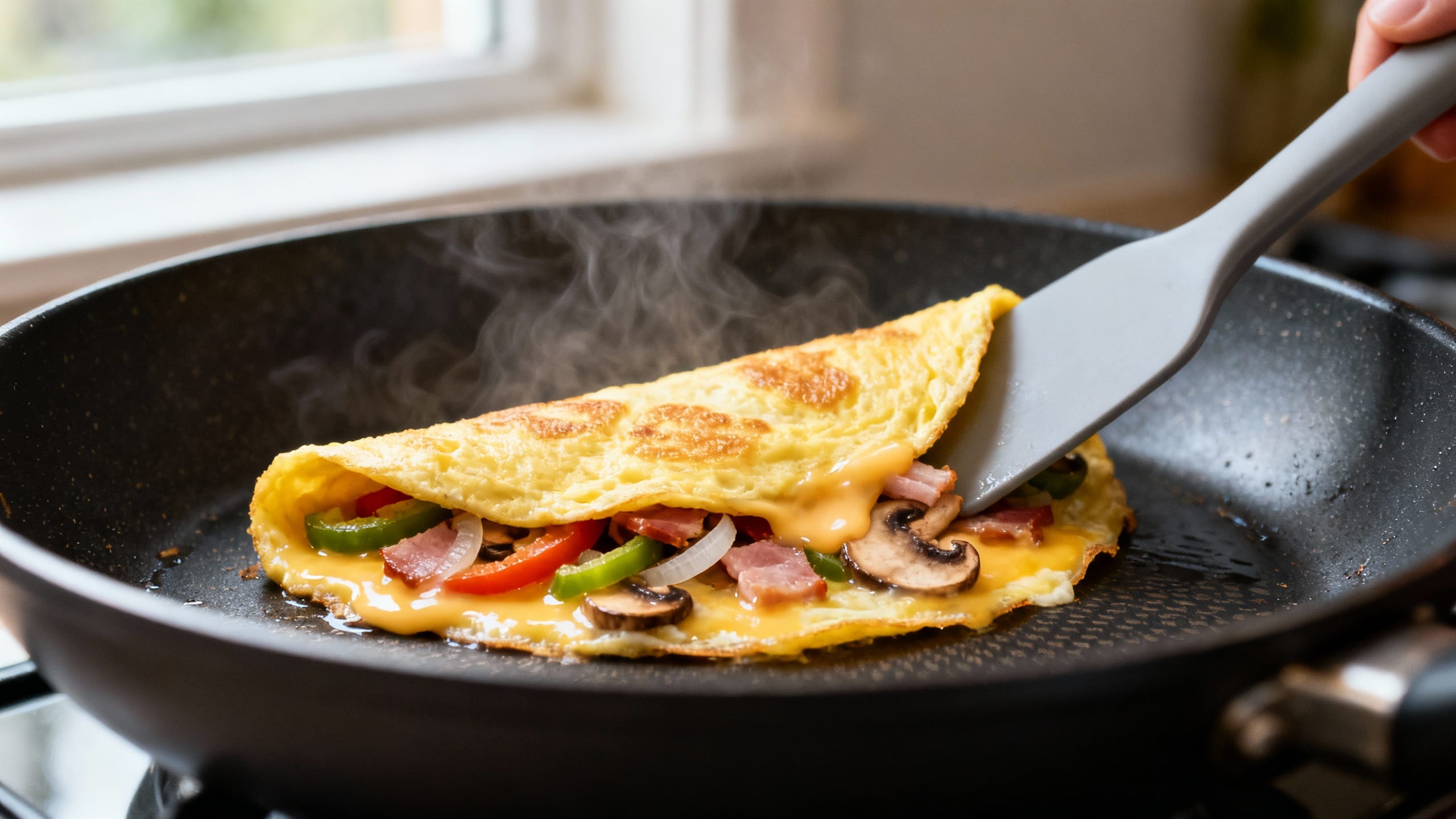
- Add fillings at the right time. When the top is still slightly wet but not liquid (think: glossy, not runny), sprinkle cheese over one half, then add the veggie-meat mix over the cheese. Keep the filling in a line, not a mound.
- Cover and finish. Cover with a lid for 30–60 seconds until the cheese melts and the top is just set. If needed, lower the heat—tearing often comes from cooking too hot.
- Fold, don’t fight it. Slide the spatula under the unfilled side and fold it over the filling. Turn off the heat and let it sit 10 seconds, then slide onto a plate. Add herbs on top if you’re feeling fancy.
Tips for the Best Results
- Dry fillings = strong omelette. Cook veggies until the pan looks mostly dry. Watery fillings are the #1 reason omelettes rip.
- Use the right pan size. A 3-egg omelette wants an 8–9 inch nonstick skillet. Too big = thin eggs that tear; too small = overstuffed fold.
- Go medium-low for the eggs. High heat makes the bottom brown fast while the top stays wet, which leads to tearing when you fold.
- Cheese goes down first. It melts into the eggs and acts like “glue” that helps hold chunky fillings in place.
- Keep fillings to about 1/2 cup total. You can add more, but that’s when omelettes start acting dramatic.
- Wait for the glossy stage. Add fillings when the top is shiny but not sloshy. Too early and the filling sinks; too late and it cracks.
- Cover to finish. A lid (or even a sheet pan) traps steam so the top sets without overcooking the bottom.
Variations
- Cheese + veggie: Skip meat and do sautéed mushrooms + Swiss, or spinach + feta (squeeze spinach dry after cooking).
- Meat lover’s: Bacon + cheddar + a spoonful of diced tomatoes that you’ve patted dry.
- Southwest: Cooked chorizo + pepper/onion + pepper jack; serve with salsa on the side (not inside if you hate tearing).
- Breakfast deli: Ham + Swiss + sautéed onions; add a little Dijon on the plate, not in the fold.
- Leftover-friendly: Use leftover roasted veggies or steak, but chop small and warm in the pan to evaporate moisture first.
Storage & Reheating
Omelettes are best fresh, but you can store leftovers in an airtight container in the fridge for up to 2 days. Reheat gently in a nonstick skillet over low heat with a tiny bit of butter and a lid, or microwave at 50% power in 20-second bursts to avoid rubbery eggs.
FAQ
Why does my omelette tear when I fold it?
Usually it’s one of three things: the eggs are too thin (pan too large or too many fillings), the fillings are wet (especially mushrooms, spinach, tomatoes), or the heat is too high so the bottom sets hard while the top stays undercooked. Cook fillings first, use medium-low heat, and fold when the top is glossy but mostly set.
What fillings are most likely to cause tearing?
Anything watery: raw tomatoes, salsa, uncooked spinach, and undercooked mushrooms. If you want them, cook them down first and pat dry. Also watch oily meats—excess grease can make the egg layer slippery, so warm the meat and drain if needed.
How much filling can I add without it falling apart?
For 3 eggs, aim for about 1/2 cup total filling (including cheese). If you want extra, keep it compact and chopped small, and consider making a second omelette instead of overstuffing one.
Should I add milk or water to omelette eggs?
Optional. A tablespoon of water can make the eggs a little lighter; a tablespoon of milk makes them slightly softer. Neither fixes tearing on its own—dry fillings and gentle heat matter more—but both can help you get a tender fold.
What’s the best pan and spatula for a no-tear omelette?
Use an 8–9 inch nonstick skillet with a flat, flexible silicone spatula. The nonstick surface lets the egg sheet slide, and the flexible spatula helps you lift and fold without scraping or ripping.