


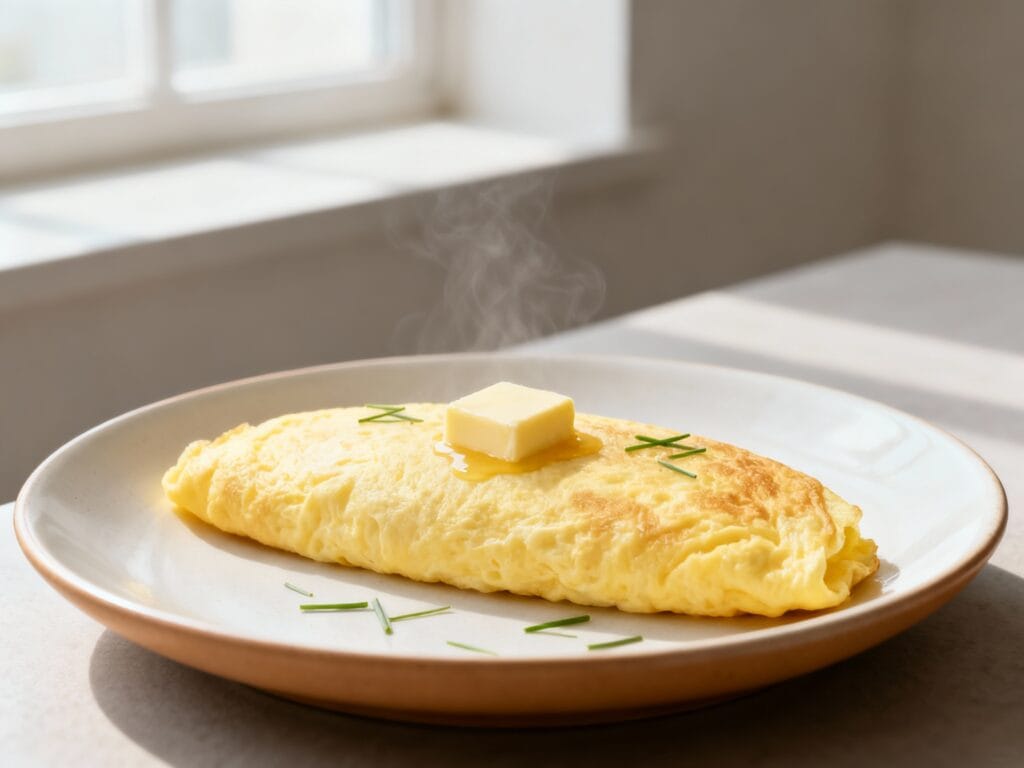
Omelette Recipe: The “No-Brown, Super Fluffy” Technique Chefs Use
If your omelettes keep coming out browned, dry, or weirdly flat, this is your sign to switch techniques. The chef-y secret isn’t fancy ingredients—it’s gentle heat, steam, and a little patience.
This method gives you that pale, tender, cloud-soft omelette that looks like it belongs in a hotel breakfast spread (in the best way). No browning, no tough edges—just fluffy, silky eggs you can fold around your favorite fillings.
Why You’ll Love This
It’s fast enough for weekdays, but the results feel extra: a soft, evenly cooked omelette with zero browned spots, a plush interior, and a clean fold that doesn’t crack or leak everywhere.
Ingredients
- 3 large eggs
- 1 tablespoon milk or water (for extra lift)
- 1/4 teaspoon kosher salt (plus more to taste)
- 1/8 teaspoon white pepper or black pepper (optional)
- 1 tablespoon unsalted butter (divided)
- 1/4 cup finely shredded cheese (Gruyère, cheddar, or mozzarella), optional
- 2–3 tablespoons soft fillings (pick one or mix): sautéed mushrooms, spinach, diced ham, smoked salmon, herbs, or scallions
How to Make It
- Prep your fillings first. If using veggies like mushrooms or spinach, quickly sauté and let any extra moisture cook off. Cold, wet fillings can make your omelette watery.
- Whisk like you mean it. Crack eggs into a bowl, add milk (or water), salt, and pepper. Whisk 20–30 seconds until fully blended and slightly foamy—no streaks of egg white.
- Warm the pan gently. Place a small nonstick skillet (8–9 inches) over low heat for 1 minute. Add 1/2 tablespoon butter and let it melt slowly—no sizzling, no browning.
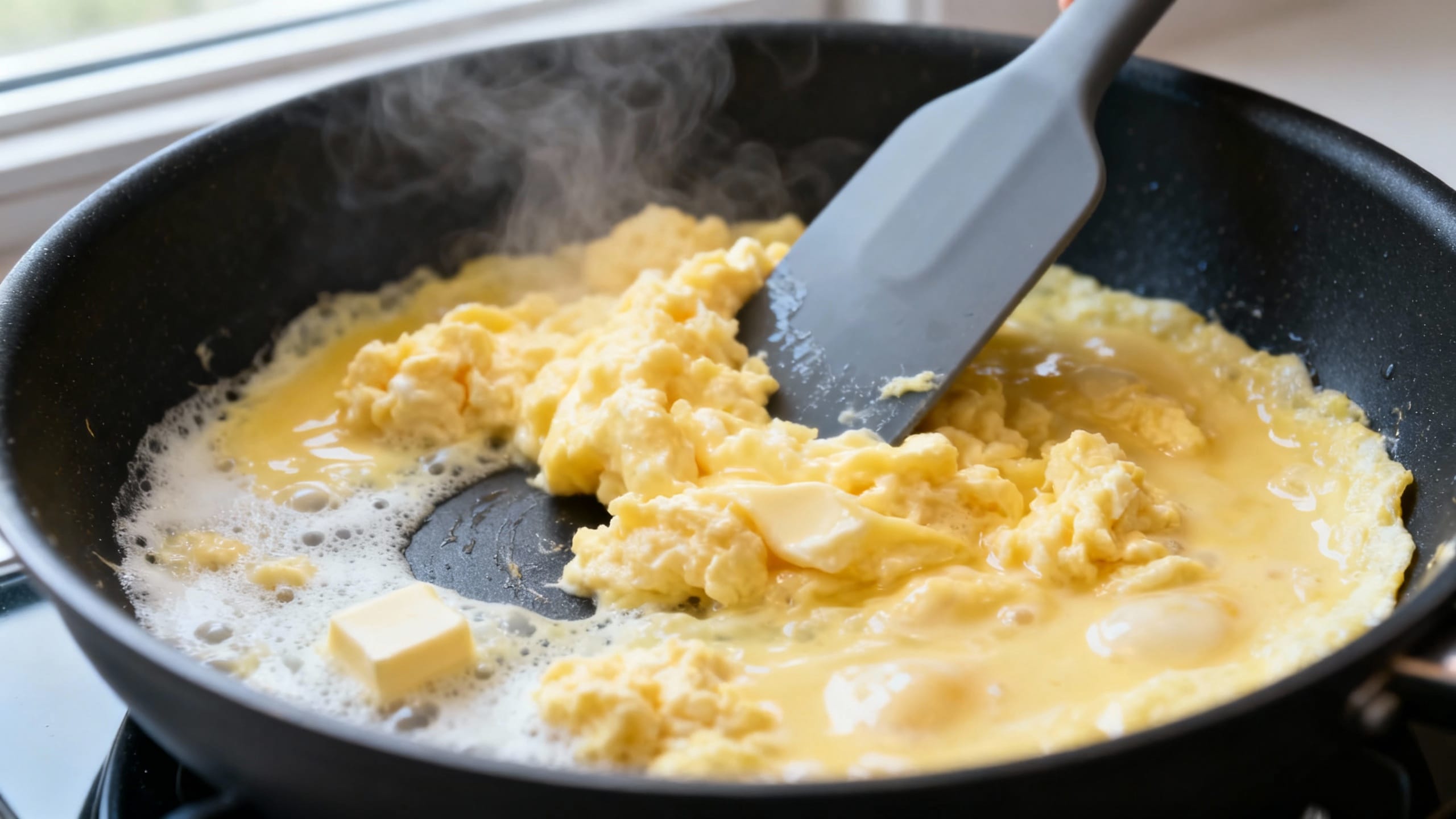
- Pour and stir for small curds. Pour in the eggs. Using a silicone spatula, stir in small circles for about 20–30 seconds, scraping the bottom and moving the soft curds around. You’re building fluff without letting the base set hard.
- Level it out. Stop stirring when the eggs look mostly set but still glossy on top. Gently shake the pan to level the surface and let the omelette settle into an even layer.
- Steam to set (the no-brown move). Add the remaining 1/2 tablespoon butter around the edge. Cover with a lid for 45–90 seconds on low. The trapped steam cooks the top softly so you don’t need high heat (aka no browning).
- Add fillings at the right moment. When the top looks just barely set (still a little shiny, not wet), sprinkle cheese and add fillings on one half. If it looks too wet, cover for 15 more seconds.
- Fold, glide, and serve. Use the spatula to fold the omelette in half. Let it sit 10 seconds to seal, then slide onto a plate. Taste and finish with a pinch of salt or herbs.
Tips for the Best Results
- Low heat is non-negotiable. Browning happens fast. If your butter sizzles loudly or turns tan, your pan is too hot.
- Use a lid. The lid creates gentle steam that sets the top without flipping or blasting heat.
- Nonstick helps. This technique is easiest with a good nonstick skillet so you can keep the heat low and still release cleanly.
- Salt early, but lightly. A small amount in the whisked eggs seasons evenly without drawing out too much moisture.
- Keep fillings warm and dry. Cold cheese and watery veggies cool the eggs and can cause tears or puddles.
- Pull it sooner than you think. Residual heat finishes the job. Slight shine is your friend.
- For extra fluff: whisk a little longer and use water instead of milk (steam = lift).
Variations
- French-style herb omelette: Skip cheese, add chopped chives/parsley, and finish with a tiny pat of butter on top.
- Protein-packed: Add diced turkey, ham, or crumbled cooked sausage plus cheddar.
- Veggie + feta: Sauté spinach and mushrooms, then add feta and a pinch of oregano.
- Smoked salmon + cream cheese: Spread a thin layer of cream cheese inside, add salmon and dill.
- Spicy breakfast: Pepper jack, sliced jalapeño (cooked), and a little hot sauce after plating.
Storage & Reheating
Omelettes are best fresh, but you can refrigerate leftovers in an airtight container for up to 2 days. Reheat gently in a covered nonstick pan on low (or microwave at 50% power in short bursts) to keep it soft and avoid rubbery eggs.
FAQ
Why is my omelette browning even on low heat?
Your “low” might still be too hot, or the pan is thin and overheating. Preheat briefly, then melt butter slowly—if it sizzles aggressively or browns, lower the heat and start again. Also, keep the eggs moving early so they don’t set into a browned base.
What’s the point of covering the pan with a lid?
The lid traps steam, which gently cooks the top of the omelette without needing higher heat. That’s the main “no-brown” trick: the surface sets softly, so you don’t have to flip or blast the burner.
Milk or water—what makes it fluffier?
Water usually gives a lighter, fluffier result because it turns to steam and lifts the eggs. Milk adds a little richness, but too much can make the texture heavier. Stick to about 1 tablespoon total for 3 eggs.
How do I know when it’s ready to fold?
Look for edges that are set and a top that’s mostly set but still slightly glossy. If the top is wet and runny, cover for another 10–20 seconds. If it looks dry and matte, you’ve gone a little far (still tasty, just less silky).
Can I do this without a nonstick pan?
Yes, but it’s trickier. Use a well-seasoned cast iron or a quality stainless pan with enough butter, and keep the heat very low. Stir gently at the start and don’t rush the set—sticking usually happens when the pan is too hot or the eggs sit too long without movement.