


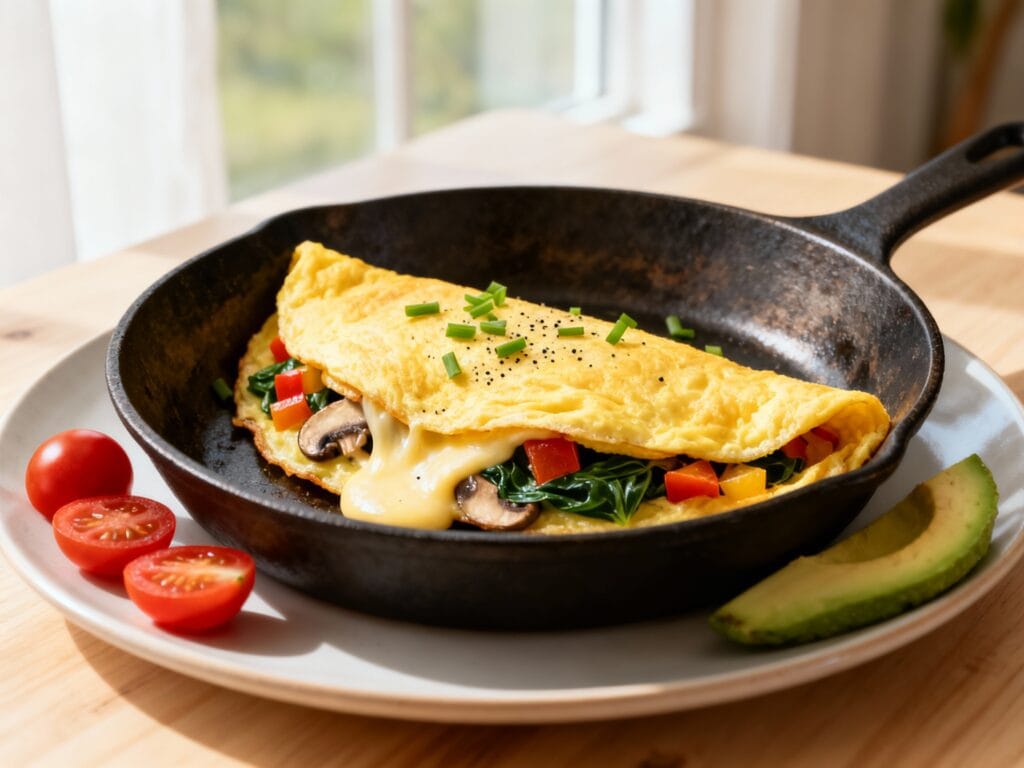
If you want a one-pan breakfast that feels like you have your life together (even if you’re still half-asleep), an omelette is the move. It’s fast, customizable, and somehow makes a random Tuesday morning feel a little more put-together.
This omelette recipe is your base method, plus 10 flavor combos you can rotate so you don’t get bored. Same pan, same vibe, new breakfast every time.
Why You’ll Love This
It’s a flexible, one-pan breakfast that’s ready in about 10 minutes, uses simple ingredients, and gives you endless ways to switch up flavors without learning a whole new recipe.
Ingredients
- 2 large eggs
- 1 tablespoon milk, water, or cream (optional, for a softer texture)
- 1/8 teaspoon kosher salt (plus more to taste)
- Freshly ground black pepper
- 1 teaspoon butter or 2 teaspoons olive oil
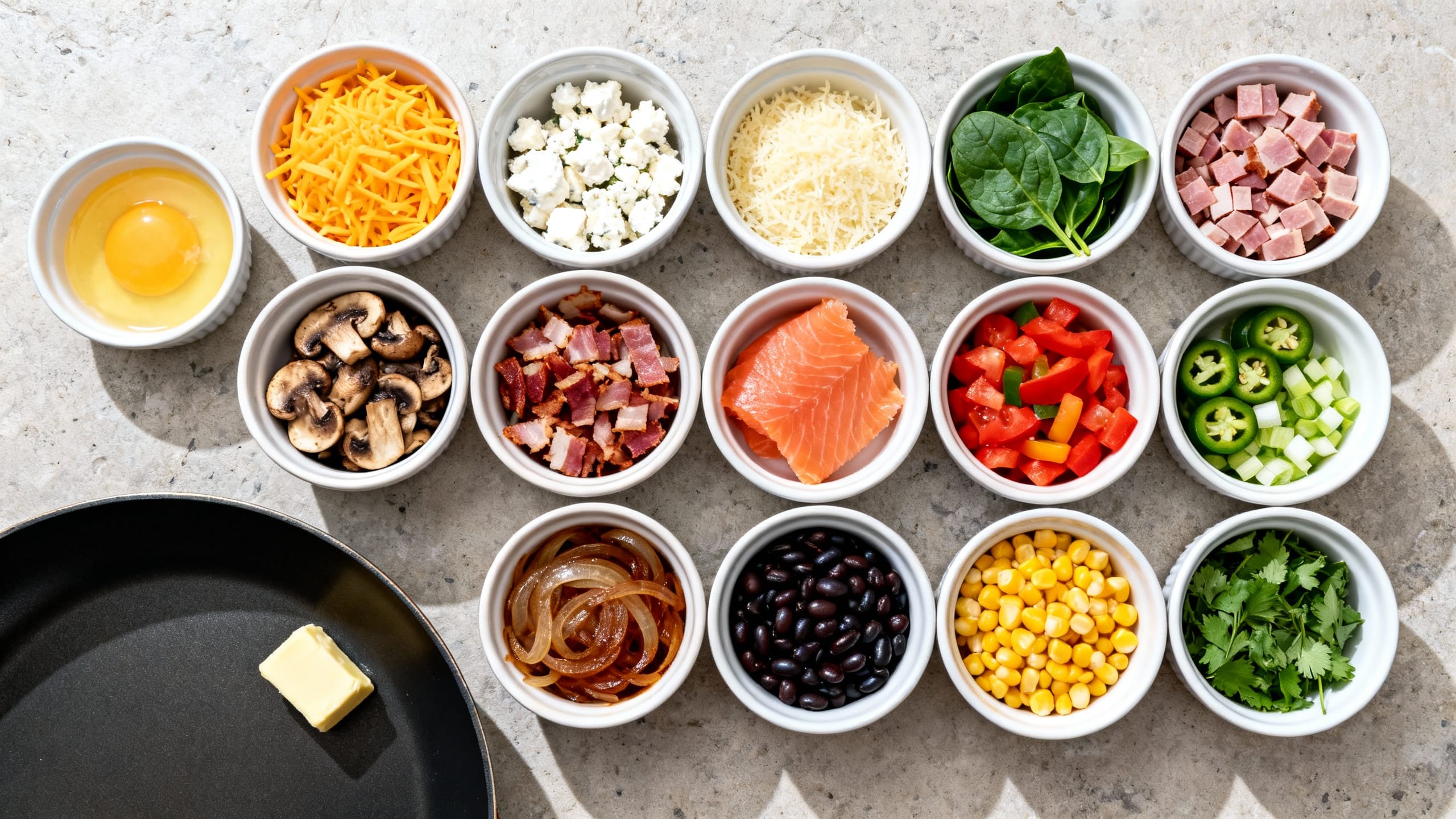
- 1/3 to 1/2 cup fillings total (choose one of the combos below)
- 1/4 cup shredded cheese (optional but highly encouraged)
- Optional finishing: chopped herbs, hot sauce, salsa, chili crisp, or a squeeze of lemon
How to Make It
- Prep your fillings first. Chop veggies, warm leftover meat, and have cheese ready. Omelettes cook fast, so you want everything within reach.
- Whisk the eggs in a bowl with salt, pepper, and milk/water/cream if using. Whisk until the eggs look uniform and slightly frothy.
- Heat an 8-inch nonstick skillet over medium to medium-low heat. Add butter (or oil) and swirl to coat the pan.
- Pour in the eggs. Tilt the pan so the eggs spread into an even layer. Let them sit for 15–30 seconds until the edges start to set.
- Use a silicone spatula to gently push the set edges toward the center while tilting the pan so uncooked egg flows into the open spaces. Do this a few times until the top is mostly set but still looks slightly glossy.
- Add fillings on one half of the omelette. Keep the layer light so it folds easily. If using cheese, sprinkle it on top of the fillings.
- Fold the omelette: slide the spatula under the plain side and fold it over the filling side. Press gently to seal.
- Cook 30–60 seconds more, just until the cheese melts and the center is set to your liking. For a softer omelette, pull it earlier; it will finish cooking from residual heat.
- Slide onto a plate, season to taste, and add your finishing touch (herbs, hot sauce, salsa, or chili crisp).
Tips for the Best Results
- Use medium-low heat. High heat makes eggs tough and browned; low-and-slow keeps them tender.
- Don’t overload fillings. Stick to about 1/3 to 1/2 cup total so the omelette folds without breaking.
- Cook watery veggies first (mushrooms, zucchini, spinach). Excess moisture can make the omelette weepy.
- Shred your own cheese if you can. Pre-shredded melts fine, but freshly shredded melts smoother.
- Pull it off the heat when it still looks slightly glossy on top. Carryover heat will finish the job.
- If your omelette tears, call it “rustic” and keep going. It still tastes amazing.
Variations
- Caprese: diced cherry tomatoes + mozzarella + basil + balsamic drizzle.
- Ham & Swiss: chopped ham + Swiss + Dijon mustard (tiny swipe inside before folding).
- Spinach Feta: sautéed spinach + feta + pinch of oregano + lemon zest.
- Mushroom Gruyère: sautéed mushrooms + Gruyère + thyme.
- Southwest: black beans + corn + pepper jack + salsa (add after cooking to keep eggs firm).
- Smoked Salmon: smoked salmon + cream cheese (small dollops) + chives + cracked pepper.
- Breakfast Sausage: cooked crumbled sausage + cheddar + scallions.
- Pesto Chicken: shredded cooked chicken + mozzarella + 1 teaspoon pesto (swirl on the inside).
- Greek-ish: chopped olives + tomatoes + feta + cucumbers (add cucumbers raw after cooking for crunch).
- Chili Crisp Veg: sautéed bell pepper + onions + a little chili crisp + cheddar.
Storage & Reheating
Omelettes are best fresh, but you can store leftovers in an airtight container in the fridge for up to 2 days. Reheat gently in a nonstick pan over low heat (best texture) or microwave in 15–20 second bursts until just warm to avoid rubbery eggs.
FAQ
What’s the best pan size for a one-pan omelette?
An 8-inch nonstick skillet is ideal for 2 eggs. If you use a 10-inch pan, the egg layer gets thinner and can overcook faster, so keep the heat a touch lower and move quickly.
Should I add milk or water to omelette eggs?
Either works, and it’s optional. A tablespoon of water can make the eggs a bit lighter; milk or cream makes them slightly softer and richer. The biggest texture upgrade is low heat and not overcooking.
How do I keep my omelette from browning?
Use medium-low heat, preheat the pan briefly (not screaming hot), and cook with butter or oil so the eggs glide instead of sticking. Browning usually means the pan is too hot or the omelette sat too long.
Can I make these flavor combos with leftovers?
Yes, and it’s honestly the point. Leftover roasted veggies, cooked rice, taco meat, or rotisserie chicken all work. Just warm cold fillings in the pan first, set them aside, wipe the pan, then cook the eggs.
What’s the best way to meal prep omelettes for busy mornings?
For true grab-and-go, prep the fillings ahead (chop veggies, cook sausage, shred cheese) and store them in the fridge. In the morning, the omelette itself still takes about 5–7 minutes and tastes way fresher than fully cooked, reheated eggs.