


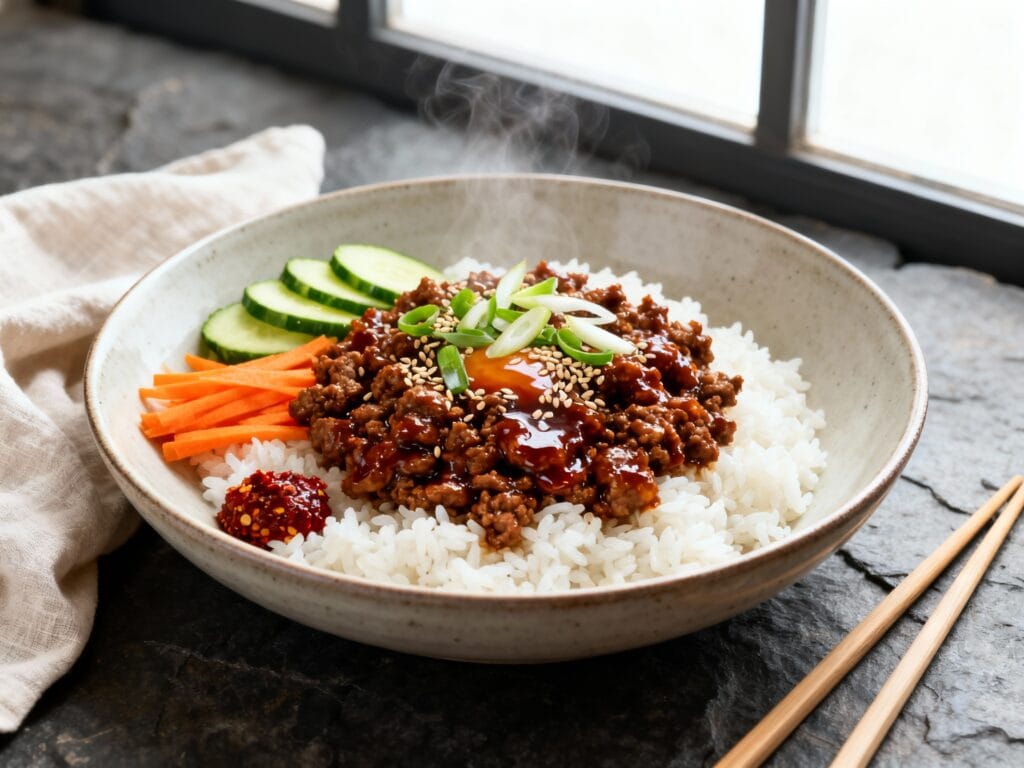
If you love that sweet-spicy Korean BBQ vibe but don’t want to babysit a marinade all day, these Korean Beef and Rice Bowls are your weeknight hero. Think saucy, caramelized ground beef, fluffy rice, crisp cucumbers, and a glossy sauce that hits salty-sweet with just enough heat.
Everything comes together in about 30 minutes, and it’s the kind of meal that feels like takeout—but smarter, faster, and way more customizable.
Why You’ll Love This
This recipe is quick, pantry-friendly, and big on flavor: the sweet-spicy sauce clings to the beef, the rice soaks up every drop, and you can top it with whatever’s in your fridge (hello, “clean out the produce drawer” dinner).
Ingredients
- 1 cup uncooked jasmine rice (or short-grain rice), rinsed
- 1 1/2 cups water (or per your rice package directions)
- 1 tablespoon neutral oil (avocado, canola, or grapeseed)
- 1 pound ground beef (85/15 or 90/10)
- 3 cloves garlic, finely minced
- 1 teaspoon fresh ginger, grated (or 1/2 teaspoon ground ginger)
- 1/4 cup low-sodium soy sauce
- 2 tablespoons brown sugar (light or dark)
- 2 tablespoons honey (or maple syrup)
- 1 tablespoon gochujang (Korean chili paste), more to taste
- 1 tablespoon rice vinegar
- 1 teaspoon toasted sesame oil
- 2 teaspoons cornstarch + 2 tablespoons water (slurry, optional but recommended)
- 2 green onions, sliced
- 1 tablespoon toasted sesame seeds
- 1 small cucumber, thinly sliced (for topping)
- 1 cup shredded carrots (for topping)
- Optional toppings: fried egg, kimchi, quick pickled radish, extra gochujang, sriracha, or nori strips
How to Make It
- Cook the rice: Add rinsed rice and water to a saucepan. Bring to a boil, cover, reduce to low, and cook until tender (about 12–15 minutes for jasmine). Turn off heat and let it steam, covered, for 5 minutes. Fluff with a fork.
- Mix the sweet-spicy sauce: In a small bowl, whisk soy sauce, brown sugar, honey, gochujang, rice vinegar, and sesame oil. If you want a glossy, clingy sauce, whisk cornstarch with water in a separate small cup and set aside.
- Brown the beef: Heat oil in a large skillet over medium-high heat. Add ground beef and cook, breaking it up, until mostly browned (about 5–7 minutes). Carefully spoon off excess fat if needed.
- Add aromatics: Stir in garlic and ginger. Cook for 30–60 seconds, just until fragrant (don’t let the garlic scorch).
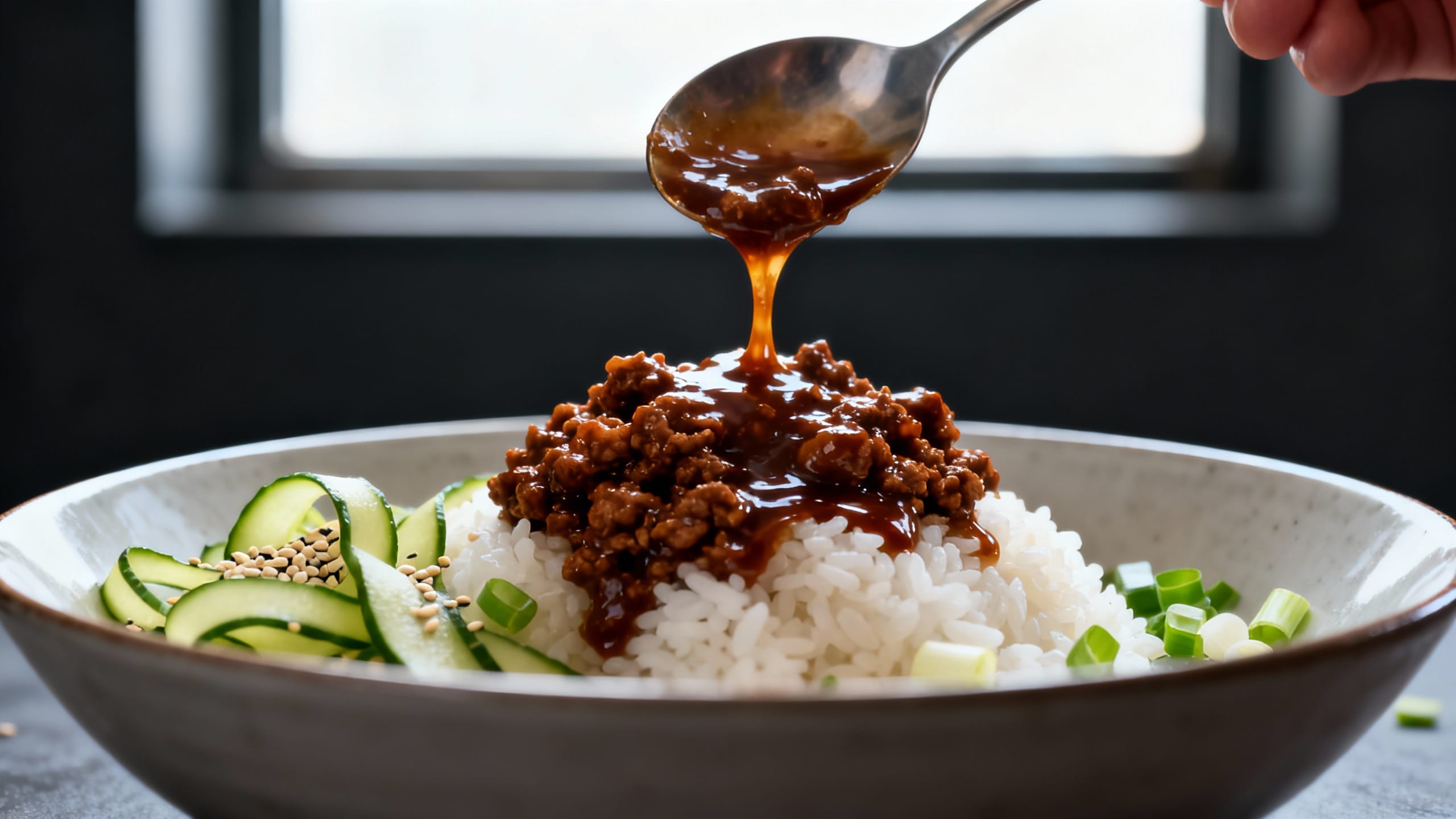
- Simmer with sauce: Pour the sauce into the skillet and stir to coat. If using the cornstarch slurry, add it now and simmer for 1–2 minutes, stirring, until thickened and glossy. Taste and adjust: more gochujang for heat, a splash of vinegar for tang, or a drizzle of honey for sweetness.
- Prep toppings: While the beef simmers, slice cucumbers, grab shredded carrots, and slice green onions. If you’re adding a fried egg, cook it now.
- Assemble bowls: Divide rice between bowls. Spoon the saucy beef over the top.
- Finish and serve: Top with cucumbers, carrots, green onions, sesame seeds, and any extras like kimchi or a fried egg. Serve immediately while everything’s warm and saucy.
Tips for the Best Results
- Rinse your rice: It’s the easiest way to keep it fluffy instead of sticky-gummy.
- Use low-sodium soy sauce: The sauce reduces slightly, and regular soy sauce can push it too salty fast.
- Don’t skip the sesame oil at the end: It adds that signature toasted, “Korean BBQ” aroma.
- Cornstarch slurry = takeout-style sauce: It’s optional, but it gives you that shiny, cling-to-the-beef finish.
- Balance the heat: Gochujang varies by brand. Start with 1 tablespoon, then level up if you want more spice.
- Add crunch: Fresh cucumber and carrots make the bowls feel bright and not heavy.
- Make it meal-prep friendly: Keep rice, beef, and cold toppings separate until serving for the best texture.
Variations
- Swap the protein: Use ground turkey, ground chicken, or crumbled tofu. (If using turkey/chicken, add an extra teaspoon of oil for richness.)
- Make it extra veggie: Sauté sliced mushrooms, bell peppers, or shredded cabbage with the beef.
- Spicy-sweet pineapple twist: Add a handful of diced pineapple at the end for a sweet pop.
- Gluten-free option: Use tamari or coconut aminos in place of soy sauce.
- Low-sugar version: Cut the brown sugar to 1 tablespoon and use 1 tablespoon honey; lean on rice vinegar and sesame for flavor.
- Rice alternatives: Serve over cauliflower rice, brown rice, or even noodles for a Korean-inspired “bowl-meets-noodle” situation.
Storage & Reheating
Store cooked beef and rice in separate airtight containers in the fridge for up to 4 days. Reheat beef in a skillet with a splash of water (or microwave in 30-second bursts, stirring), and warm rice with a tablespoon of water to bring back softness. Keep cucumbers/carrots and other fresh toppings cold and add them after reheating.
FAQ
Can I make these Korean beef and rice bowls in advance for meal prep?
Yes—this is a great meal-prep recipe. Cook the rice and beef, then portion them into containers. Store fresh toppings (cucumber, carrots, green onion) separately so they stay crisp. Assemble right before eating for the best texture.
How spicy is the sweet-spicy sauce with 1 tablespoon gochujang?
With 1 tablespoon, it’s usually a mild-to-medium warmth, more “cozy heat” than fire. If you’re sensitive to spice, start with 2 teaspoons. If you want it hotter, add another teaspoon or two, or finish with a little extra gochujang on top.
What can I use if I don’t have gochujang?
Gochujang is pretty unique (sweet, fermented, spicy), but you can fake the vibe: mix 1 tablespoon sriracha with 1 teaspoon miso (or a tiny splash of soy sauce) plus an extra teaspoon of honey. It won’t be identical, but it will still be delicious and spicy-sweet.
How do I keep the beef from getting greasy?
Choose 90/10 ground beef if you prefer it leaner, and drain excess fat after browning. Also, don’t add the sauce until the beef is fully cooked—sauce plus excess fat can feel heavy instead of glossy.
Can I use leftover rice, and what’s the best way to reheat it?
Leftover rice works perfectly. To reheat, sprinkle 1–2 tablespoons of water over the rice, cover (microwave-safe lid or damp paper towel), and microwave until hot. The steam brings back that just-cooked softness.