


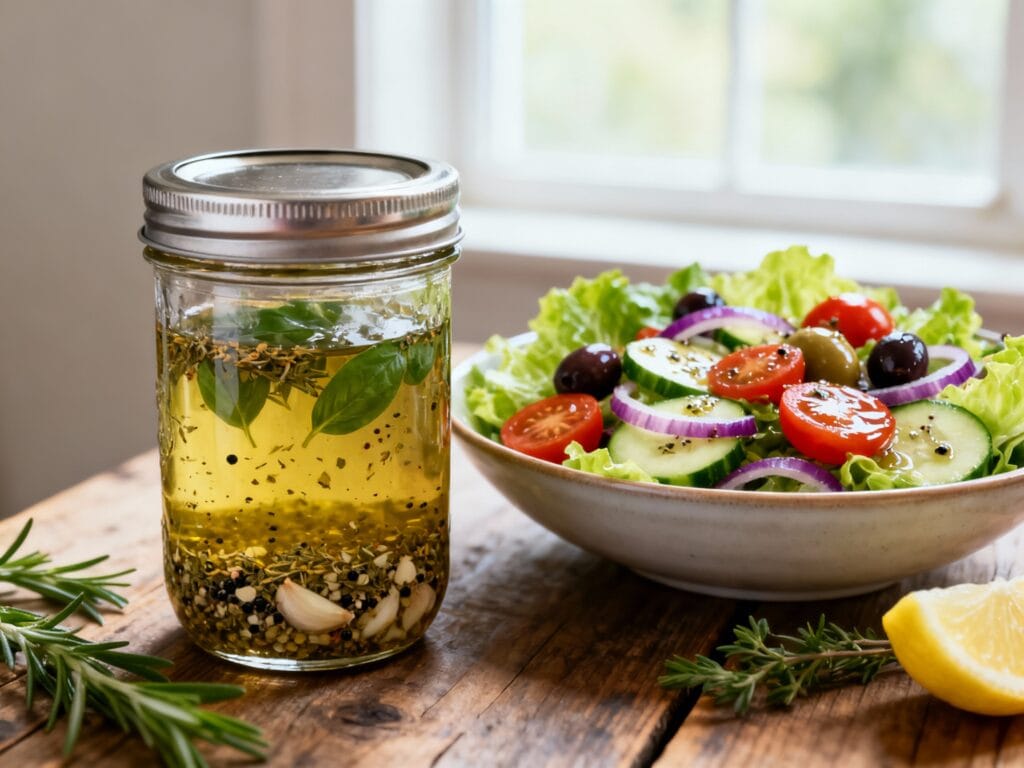
Homemade Italian dressing is one of those tiny kitchen upgrades that makes everything taste like you tried harder than you did. It’s bright, herby, a little tangy, and it takes about five minutes to shake up.
Below is my go-to base recipe plus 7 variations (yes: creamy, spicy, and lemon are here) so you can match the vibe of your salad, sandwich, pasta, or marinade situation.
Why You’ll Love This
It’s fresher than bottled, customizable to your exact tangy-to-salty-to-herby preferences, and it turns basic greens, grilled chicken, or roasted veggies into something you actually want to eat.
Ingredients
- 1/2 cup extra-virgin olive oil
- 1/4 cup red wine vinegar
- 2 tablespoons lemon juice (fresh)
- 1 tablespoon Dijon mustard
- 2 teaspoons honey (or maple syrup)
- 2 teaspoons Italian seasoning
- 1 teaspoon dried oregano
- 1/2 teaspoon garlic powder (or 1 small fresh garlic clove, finely grated)
- 1/2 teaspoon onion powder
- 3/4 teaspoon kosher salt, plus more to taste
- 1/4 teaspoon black pepper
- 2 tablespoons grated Parmesan (optional, but very good)
How to Make It
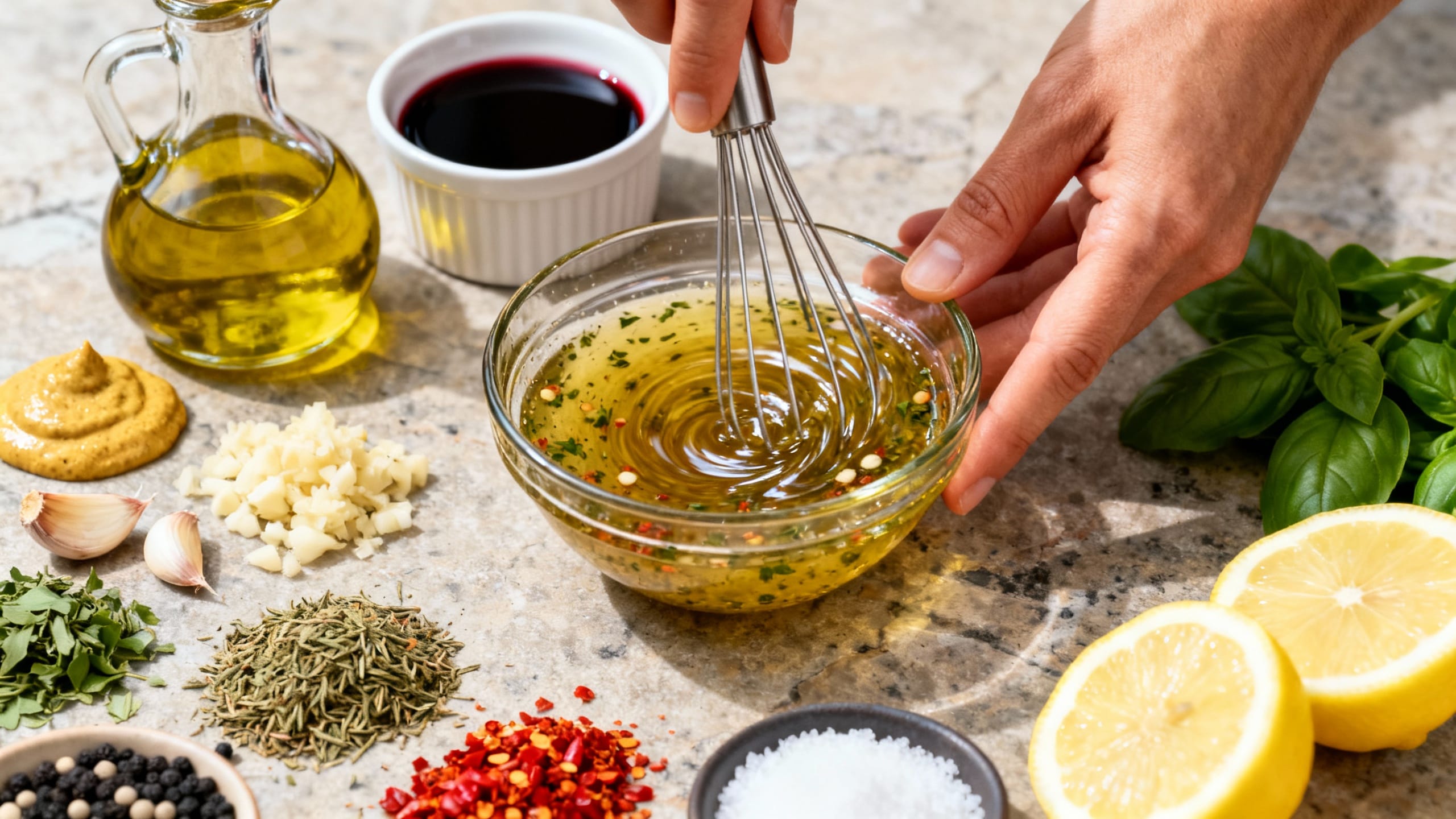
- Add the vinegar, lemon juice, Dijon, honey, Italian seasoning, oregano, garlic powder, onion powder, salt, and pepper to a jar with a tight lid (or a small bowl).
- Shake (or whisk) until the honey dissolves and everything looks evenly mixed.
- Slowly pour in the olive oil while whisking, or add it to the jar and shake vigorously for 20–30 seconds to emulsify.
- If using Parmesan, stir it in (or shake again) so it’s well distributed.
- Taste and adjust: more vinegar for extra tang, a pinch more salt for “restaurant” flavor, or a touch more honey to mellow sharpness.
- Let it sit for 5–10 minutes so the herbs hydrate and the flavor rounds out.
- Use immediately on salads, as a pasta salad dressing, or as a marinade for chicken, shrimp, or veggies.
- Before each use, shake well—homemade dressing separates (that’s how you know it’s real).
Tips for the Best Results
- Use a jar: shaking is faster than whisking and makes cleanup basically nothing.
- Balance matters: if it tastes too sharp, add 1/2 teaspoon honey; if it’s too flat, add a pinch of salt or a squeeze of lemon.
- Let the herbs bloom: 5–10 minutes of resting makes dried herbs taste way more “fresh.”
- Choose a good olive oil: you’ll taste it, so go for one you’d happily dip bread into.
- Parmesan thickens: it adds salty depth and a slightly creamy feel without changing the base too much.
- For marinating: keep it simple—skip Parmesan in the marinade (it can burn), and add cheese after cooking.
Variations
- Creamy Italian: Add 1/4 cup mayonnaise (or Greek yogurt) and 1–2 tablespoons water to thin. Shake until silky. Perfect for chopped salads and wraps.
- Spicy Italian: Add 1/2 to 1 teaspoon red pepper flakes plus 1 teaspoon hot sauce (optional). Great on pizza salads, grilled chicken, and roasted potatoes.
- Lemon Italian (extra bright): Replace the red wine vinegar with 3 tablespoons lemon juice + 1 tablespoon white wine vinegar. Add 1 teaspoon lemon zest for peak citrus energy.
- Balsamic Italian: Swap red wine vinegar for balsamic vinegar. Reduce honey to 1 teaspoon (balsamic is naturally sweeter). Amazing with strawberries, arugula, and mozzarella.
- Garlic Lover’s Italian: Use 2 grated garlic cloves (or 1 teaspoon garlic powder). Let it sit 15 minutes before serving so the garlic mellows into the dressing.
- Herby Garden Italian: Add 2 tablespoons chopped fresh parsley or basil (or both). If using fresh herbs, use within 3–4 days for best flavor.
- No-Sugar Italian: Skip honey and add 1–2 teaspoons extra Dijon to keep it balanced. A pinch of salt helps the tang feel less aggressive.
Storage & Reheating
Store dressing in a sealed jar in the fridge for up to 7 days (5 days if using fresh herbs or yogurt). No reheating needed—just let it sit at room temp for 10 minutes if the olive oil firms up, then shake like you mean it.
FAQ
Why does my homemade Italian dressing separate?
Because it doesn’t have stabilizers like store-bought bottles. The oil and acid naturally split over time. Shake it right before using, or add a little extra Dijon (about 1 teaspoon) to help it stay emulsified longer.
Can I make this dressing without Dijon mustard?
Yes. Dijon helps emulsify and adds a subtle tang, but you can replace it with 1 teaspoon mayonnaise, 1 teaspoon tahini, or just omit it. If you omit it, expect more separation—just shake before serving.
Is this safe as a chicken marinade, and how long should I marinate?
It’s great for marinating. For chicken breasts or thighs, aim for 30 minutes to 4 hours in the fridge. For shrimp, keep it short—15 to 30 minutes. If you included Parmesan, leave it out for marinating and add cheese later.
How do I make it taste like restaurant Italian dressing?
Use enough salt (start with 3/4 teaspoon kosher salt), add Parmesan, and don’t skip the rest time so the herbs hydrate. If it still tastes “thin,” add 1 more teaspoon vinegar and a pinch of salt to sharpen the flavor.
Can I use this for pasta salad, and should I change anything?
Yes—this is perfect for pasta salad. Make it slightly more intense so it doesn’t get diluted: add an extra 1 tablespoon vinegar or lemon juice and a pinch more salt. Toss with warm pasta so it absorbs flavor, then chill.