


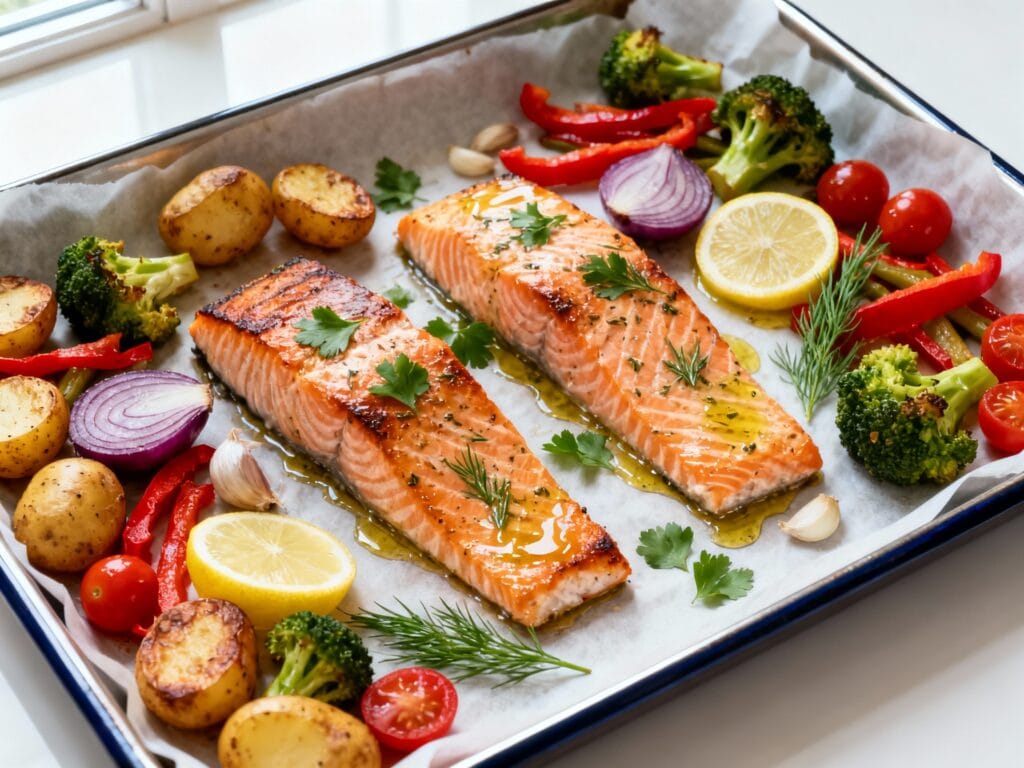
If you’re trying to eat a little lighter without giving up that “real dinner” feeling, this healthy sheet-pan salmon dinner is the move. You get crispy-edged potatoes, tender salmon, and colorful veggies—all roasted together on one pan so the cleanup is basically a rinse and done.
It’s weeknight-friendly but still feels like you cooked on purpose. The key is giving the potatoes a head start, then sliding the salmon and veggies in at the perfect time so everything finishes together.
Why You’ll Love This
It’s balanced, high-protein, and loaded with fiber-rich veggies, plus it’s made on a single sheet pan with simple pantry seasonings—aka maximum flavor for minimal effort.
Ingredients
- 1 1/2 lb baby potatoes (or Yukon gold), halved or quartered
- 2 tbsp olive oil, divided
- 1 tsp kosher salt, divided (plus more to taste)
- 1/2 tsp black pepper, divided
- 1 tsp garlic powder
- 1 tsp smoked paprika (or regular paprika)
- 1 tsp dried oregano
- 1 lb salmon fillets (about 4 pieces, skin-on or skinless)
- 2 cups broccoli florets
- 1 red bell pepper, sliced
- 1 small red onion, sliced into wedges
- 1 lemon (half sliced, half for juice)
- Optional for serving: chopped parsley or dill, plain Greek yogurt, Dijon mustard
How to Make It
- Preheat your oven to 425°F. Line a large rimmed sheet pan with parchment paper (or foil) for easy cleanup.
- Toss the potatoes with 1 1/2 tbsp olive oil, 1/2 tsp salt, 1/4 tsp pepper, garlic powder, paprika, and oregano. Spread them out in a single layer on the sheet pan.
- Roast the potatoes for 18–20 minutes, flipping once halfway, until they’re starting to turn golden and are mostly tender.
- While the potatoes roast, pat the salmon dry. Season with the remaining 1/2 tsp salt and 1/4 tsp pepper. Squeeze a little lemon juice over the top and set aside.
- In a bowl, toss broccoli, bell pepper, and red onion with the remaining 1/2 tbsp olive oil and a pinch of salt and pepper.
- Pull the sheet pan out of the oven. Push the potatoes to one side, then add the veggies in an even layer. Nestle the salmon fillets on the open space of the pan.
- Add lemon slices on top of the salmon (or around the pan). Return to the oven and roast for 10–14 minutes, depending on salmon thickness, until the salmon flakes easily and the veggies are tender-crisp.
- Optional but worth it: switch the oven to broil for 1–2 minutes to get extra color on the veggies and crisp edges on the potatoes. Keep an eye on it—things go from “golden” to “oops” fast.
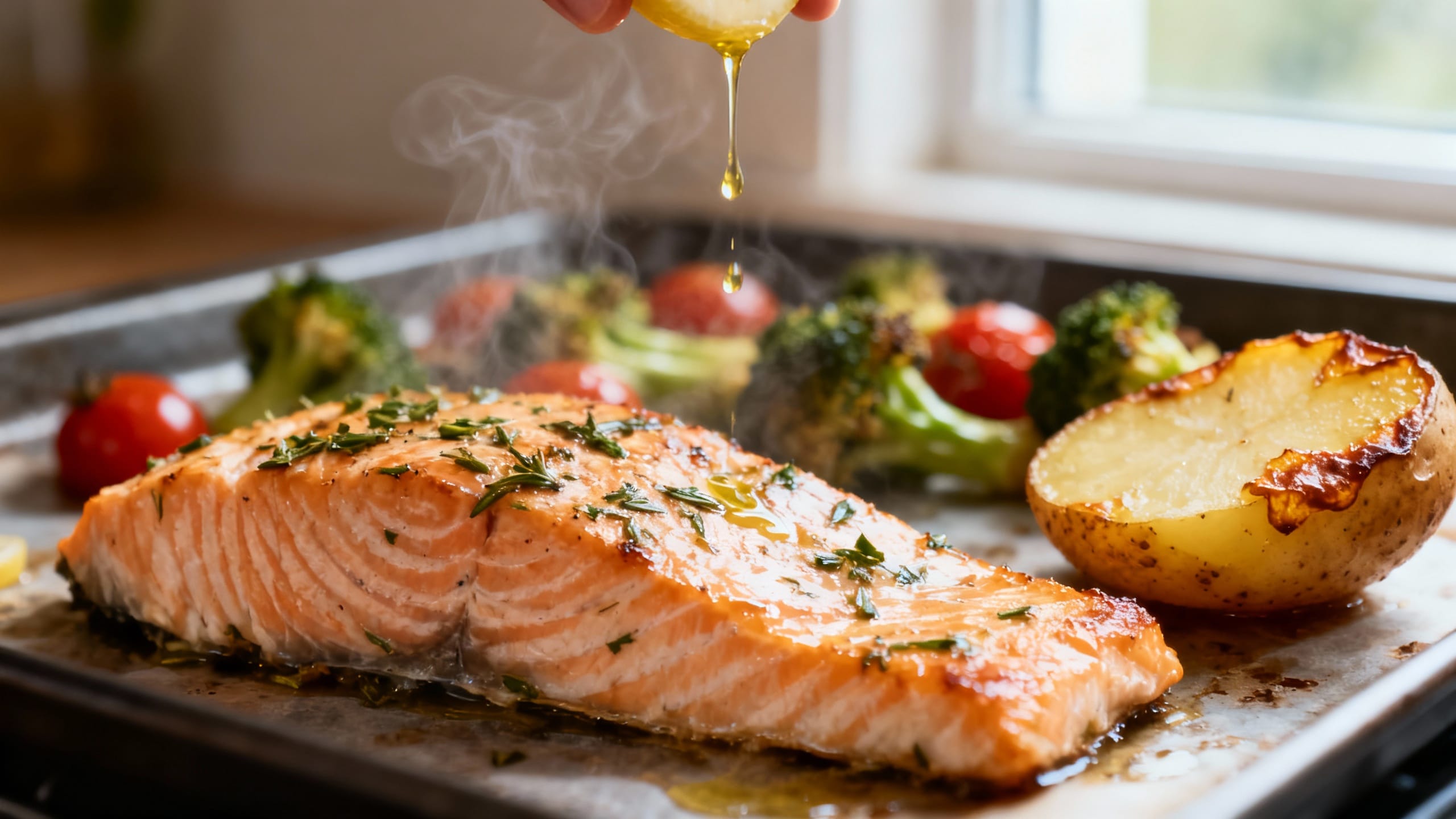
- Finish with fresh herbs and an extra squeeze of lemon. Serve as-is or with a quick yogurt-Dijon drizzle.
Tips for the Best Results
- Give the potatoes a head start. If you add everything at once, the salmon will be done long before the potatoes.
- Cut potatoes evenly. Similar-size pieces roast at the same speed, which means no half-raw surprises.
- Don’t overcrowd the pan. Crowding = steaming. If your pan is small, use two pans for better roasting.
- Pat salmon dry. This helps it roast instead of “wet-bake,” and the seasoning sticks better.
- Use thick salmon if you can. Thicker fillets are more forgiving and stay juicy.
- Keep veggies chunkier. Bigger florets and thicker pepper slices hold up better at 425°F.
- Know your doneness. Salmon is ready when it flakes easily and looks opaque, but still moist in the center.
Variations
- Mediterranean vibe: Swap oregano for Italian seasoning, add cherry tomatoes in the last 10 minutes, and finish with crumbled feta.
- Spicy-sweet: Brush salmon with a mix of 1 tsp honey + 1 tsp Dijon + a pinch of chili flakes before roasting.
- Green veggie swap: Use asparagus (add during the salmon step) or green beans (add with the veggies).
- Different carbs: Try sweet potatoes (cut small and roast a bit longer) or cauliflower florets for a lower-carb sheet pan.
- Seasoning switch: Cajun seasoning is amazing here—just watch the salt level and adjust as needed.
Storage & Reheating
Store leftovers in an airtight container in the fridge for up to 3 days. Reheat on a sheet pan at 350°F for about 8–10 minutes (best for keeping potatoes crisp), or microwave in short bursts until just warmed through to avoid drying out the salmon.
FAQ
Can I use frozen salmon for this sheet-pan dinner?
Yes, but for best texture, thaw it first in the fridge overnight. If you cook from frozen, the salmon can release extra liquid and cook unevenly; you’ll likely need a few extra minutes and your veggies may get softer than intended.
How do I know when the salmon is done?
It’s done when it flakes easily with a fork and looks mostly opaque. If you use a thermometer, aim for about 125–130°F for moist salmon (it will carry over a bit), or 140°F if you prefer it more firm.
What vegetables work best with salmon and potatoes on a sheet pan?
Broccoli, bell peppers, red onion, zucchini, green beans, and asparagus all roast well. Quick-cooking veggies (like asparagus) should go in during the salmon step, while sturdier veggies (like broccoli) can handle the full second roast.
My potatoes aren’t getting crispy—what am I doing wrong?
Usually it’s one of three things: the pan is overcrowded, the oven isn’t hot enough, or the potatoes are too wet. Spread them out, roast at 425°F, and make sure they’re coated in oil and fully exposed to heat (not piled up).
Can I meal prep this recipe for lunches?
Totally. Portion salmon, potatoes, and veggies into containers and add lemon wedges on the side. For the best “not sad lunch” experience, reheat in the oven or air fryer when possible, and add a fresh sauce like Greek yogurt + Dijon or a squeeze of lemon right before eating.