


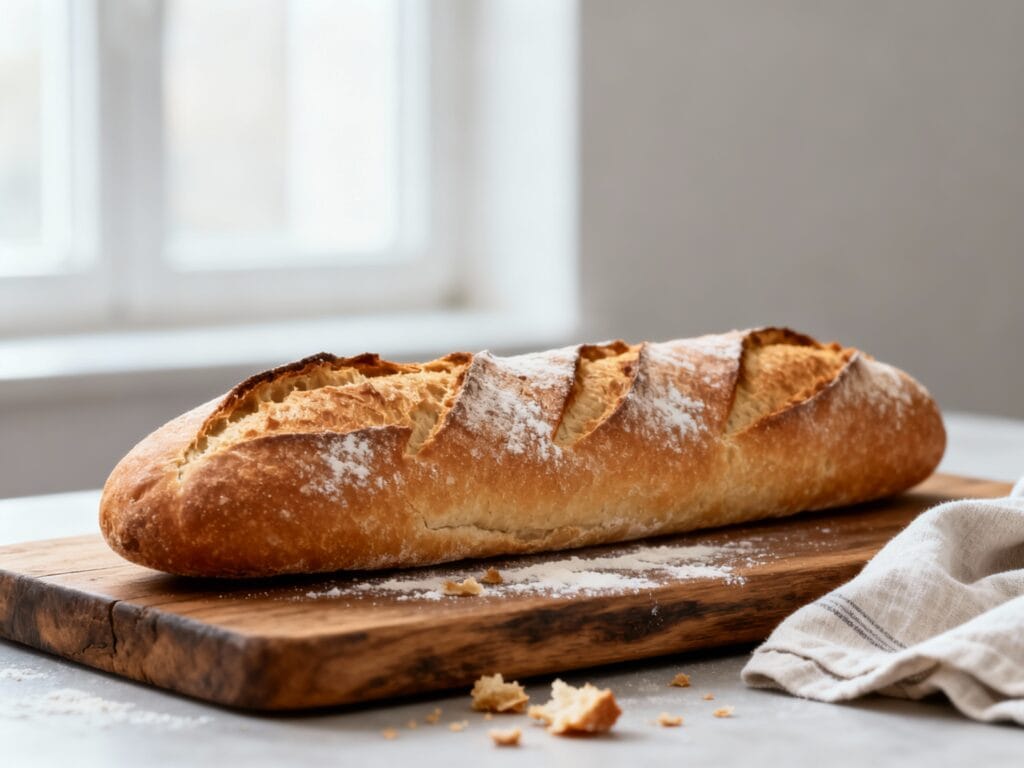
French Bread Recipe Without Fancy Equipment: Crispy Crust, Fluffy Inside
If you’ve ever wanted that classic French bread vibe—crackly crust, soft fluffy middle, and the kind of smell that makes people “casually” wander into your kitchen—this is your moment. No stand mixer, no Dutch oven, no bread lame required.
This recipe is made for real-life kitchens: a bowl, a spoon, a baking sheet, and a little patience while the dough does its thing. The payoff? A golden loaf (or two!) that feels bakery-level without the bakery-level gear.
Why You’ll Love This
It’s simple, reliable, and gives you that crispy crust + airy interior combo using steam and smart shaping instead of specialized tools. Also: the ingredients are basic, the method is forgiving, and it’s perfect for sandwiches, soups, or tearing off warm pieces “just to taste.”
Ingredients
- 4 cups (480g) all-purpose flour, plus a little extra for dusting
- 1 1/2 cups (360g) warm water (about 105–110°F / 40–43°C)
- 2 1/4 teaspoons (1 packet) active dry yeast
- 2 teaspoons kosher salt (or 1 1/2 teaspoons fine salt)
- 1 teaspoon granulated sugar (optional, helps yeast get going)
- 1 tablespoon olive oil (optional, for a slightly softer crumb)
- 1 egg + 1 tablespoon water (optional egg wash for shine)
How to Make It
- Wake up the yeast. In a large bowl, mix warm water, yeast, and sugar (if using). Let it sit 5–10 minutes until foamy on top. If it doesn’t foam, your yeast may be old or the water may have been too hot/cold.
- Make the dough. Add flour and salt (and olive oil if using). Stir with a sturdy spoon until a shaggy dough forms. If it’s very sticky, add 1–2 tablespoons flour; if it’s dry, add a splash of water.
- Knead—by hand, no drama. Turn dough onto a lightly floured counter and knead 8–10 minutes until smooth and elastic. (If you press it with a finger and it slowly springs back, you’re in business.)
- First rise. Place the dough back in the bowl (lightly oiled if you want easier release). Cover with a towel or plastic wrap and let rise 60–90 minutes, until doubled in size.
- Shape the loaves. Punch down gently and divide into 2 equal pieces for two medium loaves (or keep it as 1 larger loaf). Flatten each piece into a rectangle, then roll up tightly from the short side like a jelly roll. Pinch the seam closed and taper the ends slightly.
- Second rise. Place loaves seam-side down on a parchment-lined baking sheet (or lightly greased sheet). Cover and let rise 30–45 minutes until puffy.
- Preheat and set up steam. Preheat oven to 425°F (220°C). Place an empty metal pan (like a small roasting pan) on the bottom rack while the oven heats. Steam is what helps create that crispy crust.
- Score and bake. Use a sharp knife to cut 3–4 diagonal slashes across the top of each loaf (about 1/4-inch deep). Optional: brush with egg wash for shine. Slide the bread in, then carefully pour 1 cup hot water into the empty pan to create steam. Bake 22–28 minutes until deeply golden.
- Cool (yes, really). Move loaves to a rack and cool at least 20 minutes before slicing. Cutting too soon can make the inside gummy, even if it smells amazing.
Tips for the Best Results
- Measure flour the smart way: spoon into your measuring cup and level off. Packing flour can make the dough dense.
- Warm water matters: lukewarm won’t wake yeast quickly; too hot can kill it. Aim for “warm bath water.”
- Go for a tight shape: rolling the dough firmly creates better structure and a fluffier interior.
- Don’t skip the steam: that hot-water-in-a-pan trick is the no-fancy-equipment secret to a crisp crust.
- Deeper color = better flavor: bake until the crust is a rich golden brown, not pale.
- Check doneness: the loaf should sound hollow when tapped on the bottom. If you have a thermometer, aim for 200–205°F (93–96°C) inside.
Variations
- Single big loaf: keep the dough whole and shape one large batard-style loaf; add 3–5 minutes bake time.
- Chewy “almost-baguette”: divide into 3 narrower loaves and bake a bit shorter; great for sandwiches.
- Garlic herb French bread: mix 1 teaspoon dried Italian seasoning into the flour, then brush baked loaves with melted garlic butter.
- Sesame or poppy top: brush with egg wash, then sprinkle seeds on before baking.
- Slightly tangy: replace 1/4 cup of the water with plain yogurt or buttermilk (the crumb will be a little softer).
Storage & Reheating
Store cooled bread loosely wrapped at room temp for up to 2 days (a paper bag or bread box is ideal for keeping the crust from going soft). For longer storage, slice and freeze in a zip-top bag for up to 2 months. Reheat at 350°F (175°C) for 8–12 minutes for a whole loaf, or toast slices straight from frozen.
FAQ
How do I get a crispy crust without a Dutch oven?
Steam is the key. Preheating an empty metal pan on the bottom rack and pouring hot water into it right after the bread goes in creates the humid environment that helps the crust blister and crisp. Bake until deep golden for maximum crunch.
Can I make this French bread with instant yeast instead of active dry?
Yes. Use the same amount (2 1/4 teaspoons). You can mix it directly into the flour if you want, but you can also proof it in warm water the same way—either works. Rising times may be slightly faster, so watch the dough, not the clock.
Why is my bread dense instead of fluffy inside?
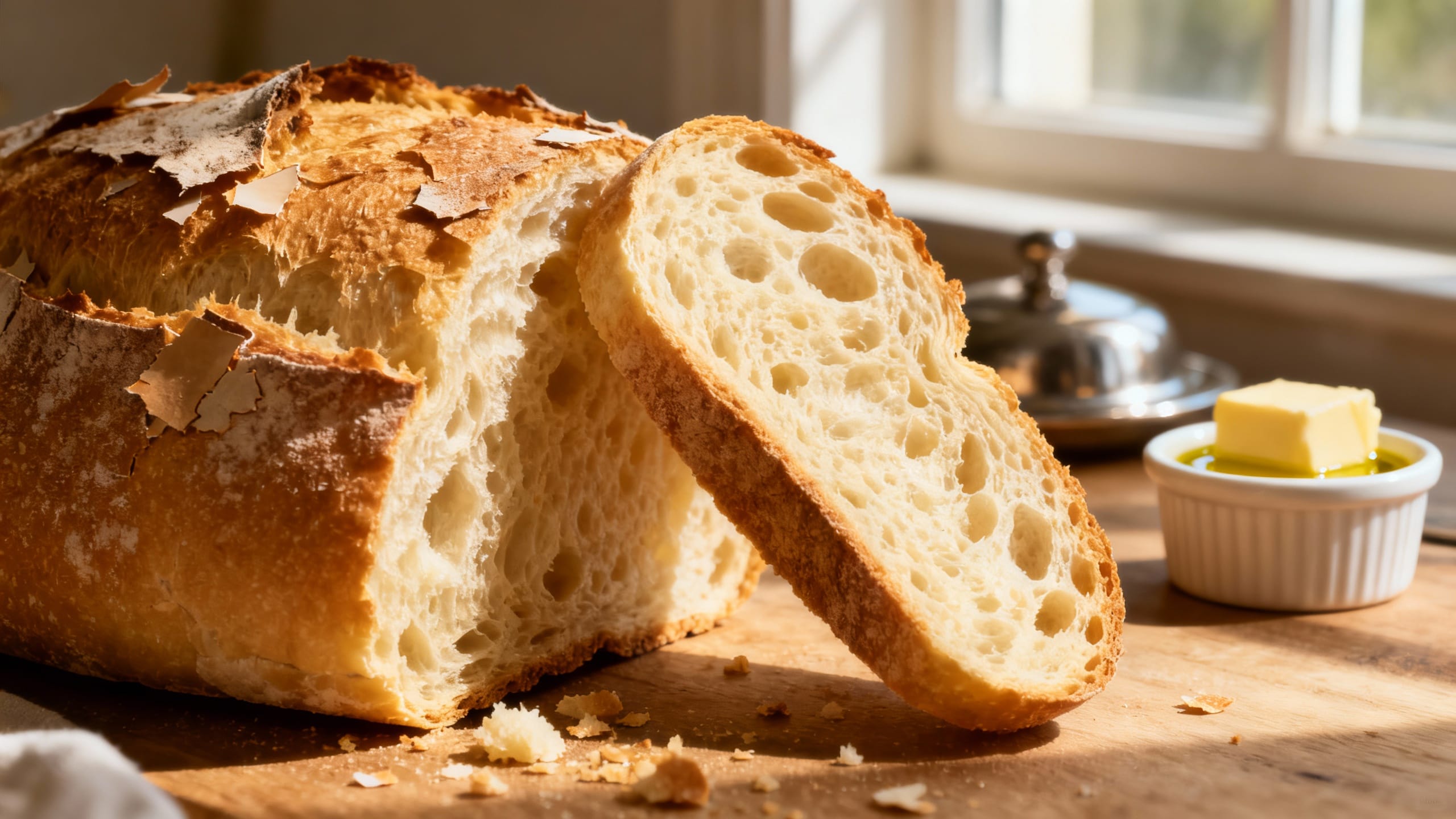
Usually it’s one of three things: too much flour (measure lightly), not enough kneading (gluten needs time), or under-proofing (the dough didn’t rise enough). Let the dough double on the first rise and get noticeably puffy on the second rise before baking.
What can I use to score the bread if I don’t have a lame?
A sharp serrated knife works great, and even clean kitchen shears can do the job. Make quick, confident slashes about 1/4-inch deep so the loaf expands where you want it to instead of tearing randomly.
Can I make the dough ahead and bake later?
Yes. After kneading, place the dough in the fridge for a slow first rise (8–24 hours). When ready, let it sit at room temp for about 30–60 minutes, shape, do the second rise until puffy, then bake as directed. The flavor gets even better with the slow rise.