


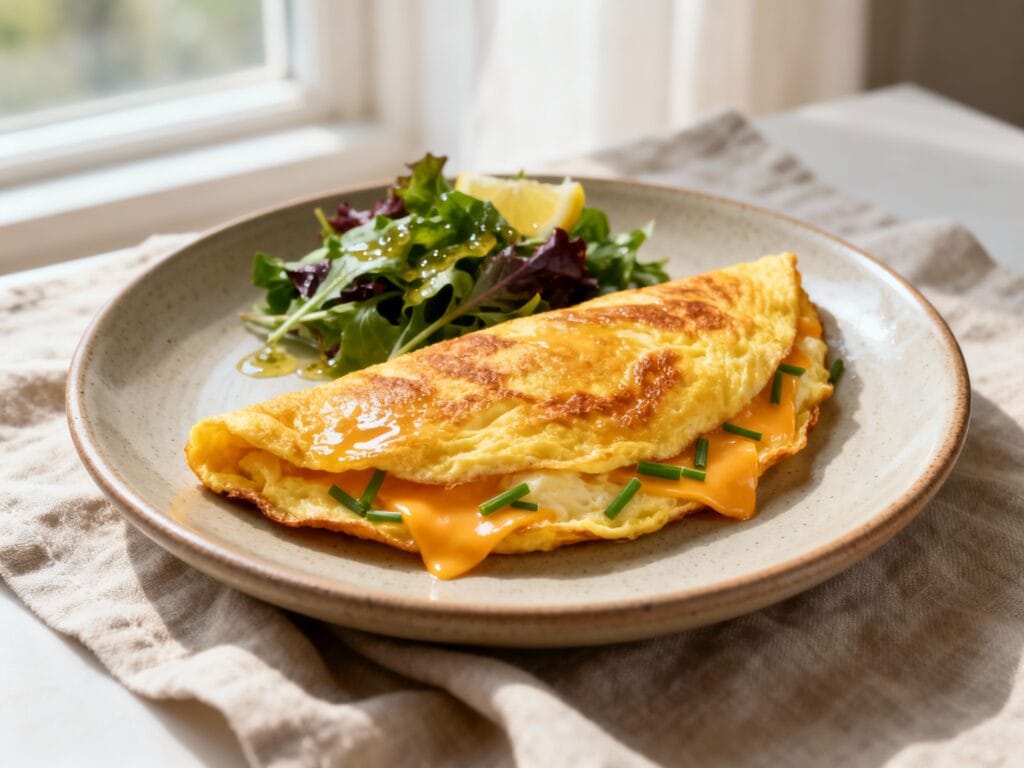
If you’ve ever cracked eggs into a pan and ended up with scrambled chaos (still tasty, just… not an omelette), this one’s for you. Making an omelette is one of those “looks fancy, is actually simple” skills—once you know the few small moves that matter.
This easy omelette recipe is built for beginners: minimal ingredients, clear steps, and a foolproof flip alternative (aka the no-stress fold) that gives you that classic omelette shape without the panic.
Why You’ll Love This
It’s quick, flexible, and forgiving—perfect for breakfast, lunch, or a “what’s for dinner” moment. Plus, you’ll learn two ways to finish it: a traditional flip if you’re feeling brave, and an easier fold method that works every time.
Ingredients
- 2 large eggs
- 1 tablespoon milk or water (optional, for a softer texture)
- 1/4 teaspoon kosher salt (or to taste)
- Pinch of black pepper
- 1 teaspoon butter (or 2 teaspoons olive oil)
- 1/3 cup filling of choice (pick 1–2): shredded cheese, diced ham, cooked bacon, sautéed mushrooms, spinach, chopped bell pepper, tomatoes, green onions
How to Make It
- Prep your fillings first. Omelettes cook fast, so have everything ready: shred cheese, chop veggies, and make sure any meat or veggies are cooked and not watery.
- Beat the eggs. In a bowl, whisk eggs with salt, pepper, and milk or water (if using) until the mixture looks uniform and a little frothy—about 20–30 seconds.
- Heat the pan. Place an 8-inch nonstick skillet over medium-low heat. Add butter and let it melt, coating the pan. You want gentle heat—this is an omelette, not a browning contest.
- Pour and set the edges. Pour in the eggs. Let them sit for about 10 seconds, then use a silicone spatula to gently pull the cooked egg from the edges toward the center while tilting the pan so uncooked egg flows into the gaps.
- Stop stirring at “barely set.” When the top looks mostly set but still slightly glossy (not wet and sloshy), stop moving it. This is the moment that keeps your omelette tender.
- Add fillings on one side. Sprinkle cheese and other fillings over half of the omelette. Keep the layer thin so it can fold cleanly.
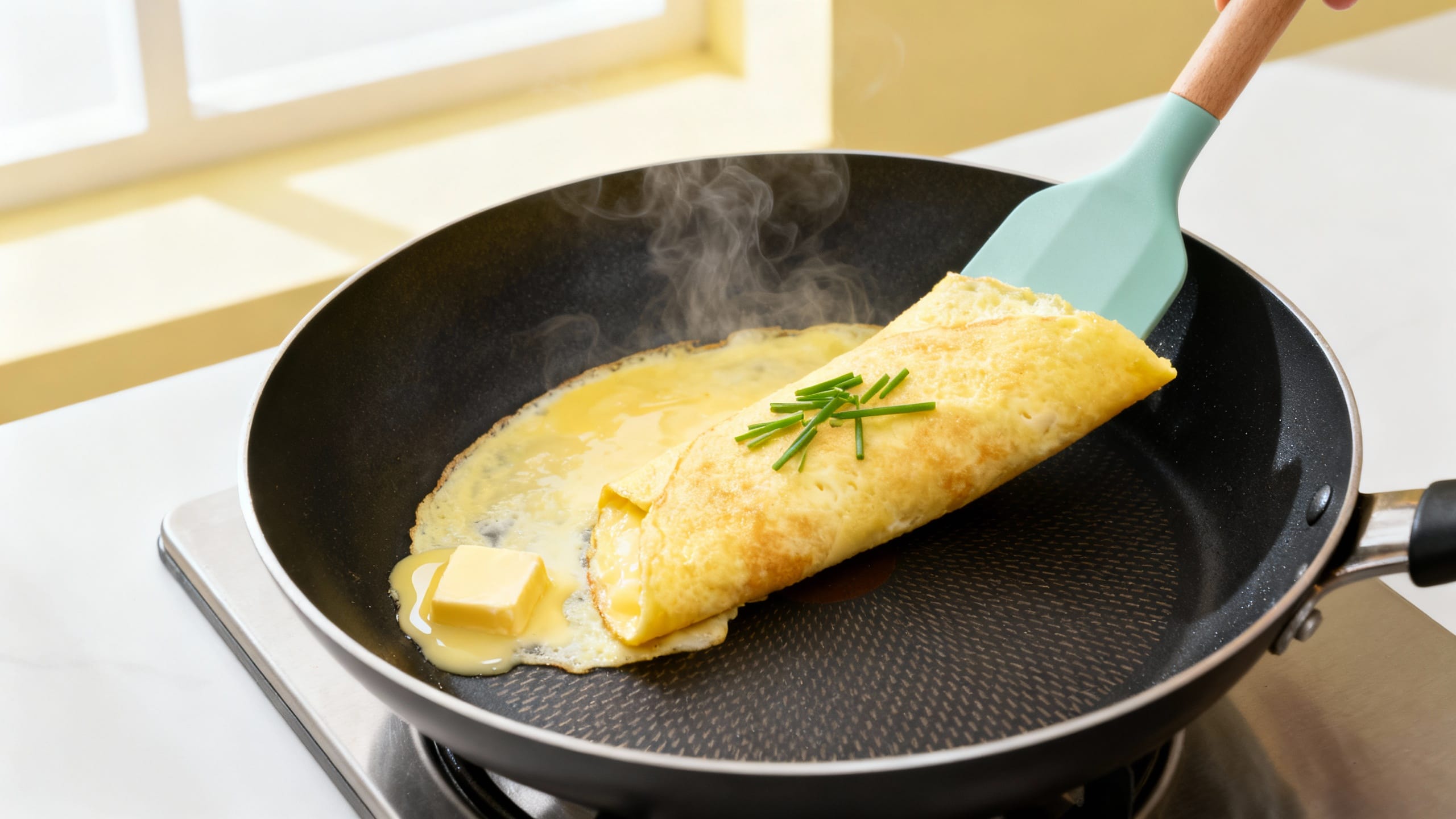
- Foolproof flip alternative: fold, don’t flip. Use the spatula to gently lift the empty side and fold it over the filling side like a book. Lower the heat if needed and let it cook 30–60 seconds, just until the cheese melts.
- Optional traditional flip method. If you want to practice: slide the omelette to one side of the pan, tilt the pan slightly, and in one confident motion, flip the empty side over the filling side. (If it folds instead of flips, you still win.)
- Serve. Slide onto a plate, seam-side down. Rest for 30 seconds so the inside finishes gently, then eat immediately.
Tips for the Best Results
- Use medium-low heat. High heat makes eggs tough fast. Omelettes like patience.
- Nonstick is your best friend. A small nonstick pan (8-inch) makes the shape easier and prevents sticking.
- Don’t overload fillings. Keep it to about 1/3 cup total or the omelette won’t fold neatly.
- Dry fillings = better omelette. Pat tomatoes dry, squeeze cooked spinach, and avoid watery salsa inside (save it for topping).
- Butter adds flavor and helps release. Oil works too, but butter gives that classic diner vibe.
- Look for “glossy, not wet.” Add fillings when the top is just barely set for the softest texture.
- Season the eggs, not just the top. A little salt in the whisked eggs makes the flavor even throughout.
Variations
- Cheese-only classic: Use 1/3 cup cheddar, mozzarella, or Swiss. Simple and always good.
- Veggie lover: Sauté mushrooms, peppers, and onions first, then add a handful of spinach at the end to wilt.
- Western-style: Add diced ham, sautéed peppers and onions, and cheddar.
- Greek-ish: Feta + spinach + chopped tomatoes (tomatoes on top after cooking if they’re juicy).
- Spicy breakfast: Pepper jack + a pinch of chili flakes, topped with hot sauce after plating.
- Herby: Add chopped chives, parsley, or dill to the eggs before cooking for a fresh flavor.
Storage & Reheating
Omelettes are best fresh, but you can store leftovers in an airtight container in the fridge for up to 2 days. Reheat gently in a nonstick pan over low heat with a lid for 1–2 minutes per side, or microwave in 15-second bursts until just warm (overheating turns eggs rubbery fast).
FAQ
What’s the easiest way to flip an omelette if I’m nervous?
Skip the flip and do the fold. Add fillings on one half, then fold the empty side over with a spatula. It gives you the same finished omelette shape with way less risk of tearing or launching eggs across the stove.
Why is my omelette rubbery?
Usually it’s heat that’s too high or cooking too long. Keep the pan at medium-low, pull it off the heat when it’s just set, and let residual heat finish the middle. Also, reheating too aggressively can make it rubbery—go low and slow.
Can I make this without milk?
Yes. Milk is optional. Water also works (it steams a bit and can keep things tender). For a richer omelette, you can use a teaspoon of cream instead, but plain eggs + butter are already great.
What pan size should I use for 2 eggs?
An 8-inch nonstick skillet is ideal for a beginner omelette with 2 eggs. If your pan is bigger, the eggs spread thinner and can overcook faster; if it’s smaller, it may be too thick and harder to fold neatly.
When do I add cheese and fillings so they don’t fall out?
Add them when the eggs are mostly set but still slightly glossy on top. Put fillings on only one half and keep them in a thin layer. After folding, let it sit 30–60 seconds so the cheese melts and everything “sticks” together.