



Eggs Benedict looks fancy, but it doesn’t have to be fussy. With a few smart shortcuts and a reliable blender hollandaise, you can pull off restaurant-level brunch at home in under 30 minutes. The textures are everything here: a toasty English muffin, salty Canadian bacon, silky yolk, and a buttery lemon sauce that ties it all together.
This version is approachable, consistent, and perfect for weekend mornings. If you’ve ever been nervous about poaching eggs or breaking a hollandaise, this guide will change your mind.
What Makes This Recipe So Good

- Foolproof hollandaise: A quick blender method that’s stable, silky, and ready in minutes.
- No-stress poached eggs: Simple steps ensure set whites and runny yolks every time.
- Reliable timing: The order of operations keeps everything hot and ready together.
- Balanced flavor: Bright lemon, buttery sauce, savory meat, and a hint of acidity from vinegar in the poaching water.
- Easy to customize: Swap the meat, add greens, or go fully vegetarian without losing the magic.
Ingredients
- 4 large eggs
- 2 English muffins, split and toasted
- 4 slices Canadian bacon or thick-cut ham
- 1 tablespoon white vinegar (for poaching water)
- Kosher salt and black pepper, to taste
- Chopped chives or parsley, for garnish (optional)
For the Foolproof Blender Hollandaise
- 3 large egg yolks
- 10 tablespoons unsalted butter (1 stick plus 2 tablespoons)
- 2 tablespoons fresh lemon juice (plus more to taste)
- 1 tablespoon warm water
- 1/4 teaspoon Dijon mustard (optional, for a little bite)
- 1/4 teaspoon kosher salt, or to taste
- Pinch of cayenne or a few drops of hot sauce (optional)
Instructions
- Toast and warm the base: Split and toast the English muffins until golden. Keep warm in a low oven.
In a skillet over medium heat, warm the Canadian bacon until lightly browned on both sides, 2–3 minutes. Set aside.
- Start the poaching water: Fill a medium saucepan with 2–3 inches of water. Add the vinegar and a big pinch of salt.
Bring to a gentle simmer—you want small bubbles, not a rolling boil.
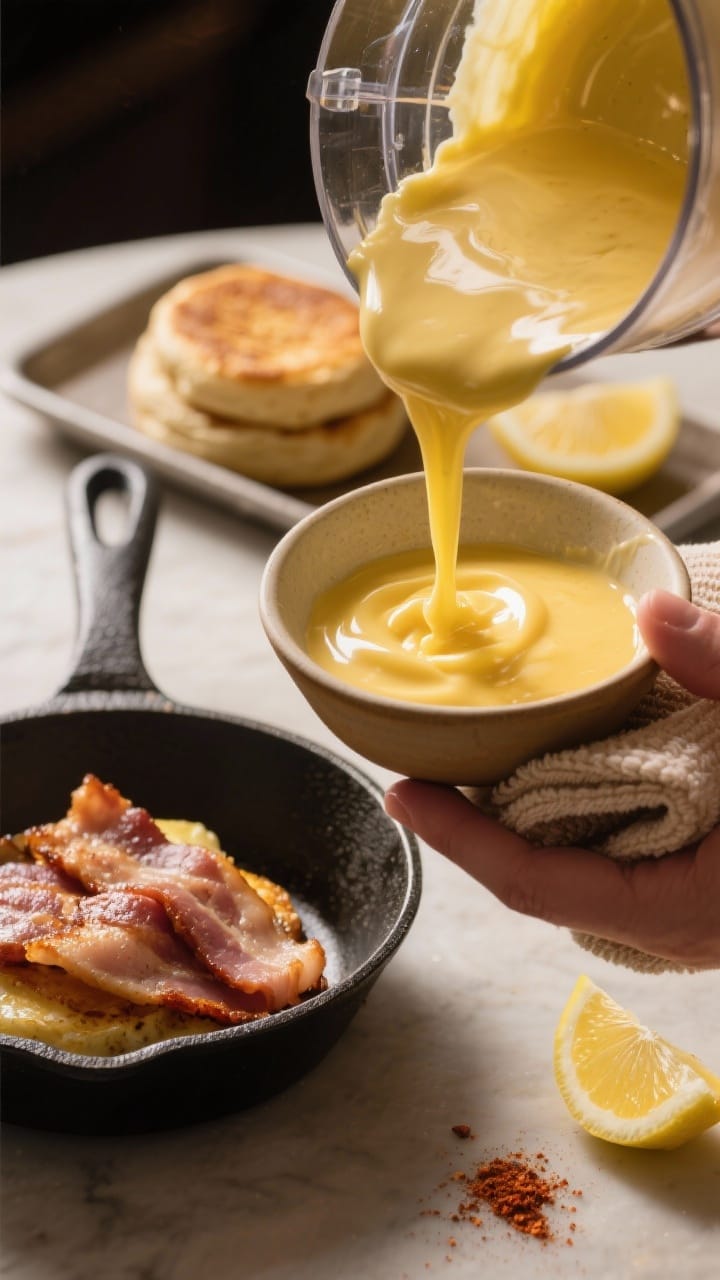
- Make the hollandaise: Add egg yolks, lemon juice, warm water, salt, and Dijon (if using) to a blender. Melt the butter in a small saucepan until sizzling and fully liquid. With the blender running on low, slowly stream in the hot butter over 20–30 seconds until the sauce is thick and creamy.
Taste and adjust with more lemon or salt. Keep warm near the stove or in a warm-water bath. If it thickens too much, whisk in a teaspoon of warm water to loosen.
- Poach the eggs: Crack each egg into a small bowl or ramekin.
Swirl the simmering water gently to create a small whirlpool. Lower an egg into the center and cook 3–4 minutes for runny yolks, 4–5 for medium. Lift with a slotted spoon and drain on a paper towel.
Repeat with remaining eggs. Lightly season with salt and pepper.
- Assemble: Place a slice of Canadian bacon on each toasted muffin half. Top with a poached egg.
Spoon warm hollandaise generously over the eggs. Finish with a pinch of cayenne, black pepper, or chopped chives.
- Serve immediately: Eggs Benedict is best hot and fresh when the yolks are still soft and the sauce is silky.

Storage Instructions
- Hollandaise: Best enjoyed fresh. If needed, hold for up to 1 hour in a warm spot (not over heat) or in a thermos.
To revive, whisk in a teaspoon of warm water. Avoid refrigerating; reheated hollandaise often splits.
- Poached eggs: You can poach ahead. Shock cooked eggs in ice water, then refrigerate up to 24 hours.
To serve, reheat in hot (not boiling) water for 30–60 seconds.
- English muffins and bacon: Toast muffins fresh for best texture. Cooked Canadian bacon can be refrigerated up to 3 days and reheated in a skillet.
Benefits of This Recipe
- Consistent results: The blender hollandaise takes guesswork out of a traditionally tricky sauce.
- Weekender-friendly timing: Everything comes together in about 25–30 minutes.
- Customizable: Works with different proteins, breads, and toppings.
- Restaurant flavor at home: Rich, buttery sauce meets bright lemon and velvety yolk—classic for a reason.
- Entertaining made easy: Poach eggs ahead and make sauce just before serving for stress-free brunch.
Common Mistakes to Avoid
- Boiling water for poaching: A vigorous boil breaks apart egg whites. Keep it at a gentle simmer.
- Cold ingredients for hollandaise: Cold yolks or butter that’s not hot enough can lead to a thin or unstable sauce.
Use hot melted butter and room-temperature yolks if possible.
- Skipping the vinegar: A splash helps set the egg whites for neater poached eggs.
- Over-toasting muffins: Too dark and they turn dry and hard. Aim for golden with a bit of crunch.
- Letting hollandaise sit on heat: Direct heat can break the sauce. Keep it warm, not hot, and whisk in a touch of warm water if it tightens.
Variations You Can Try
- Florentine: Swap meat for sautéed spinach with garlic and a pinch of nutmeg.
- Smoked salmon: Use lox or hot-smoked salmon.
Add dill and a little lemon zest to the hollandaise.
- Avocado and tomato: Add sliced avocado and a thick tomato slice for a fresh twist.
- Crab Benedict: Use lump crab meat warmed with a dab of butter and lemon—luxurious but easy.
- Gluten-free: Serve on gluten-free English muffins or crispy hash brown patties.
- Spicy: Add hot sauce or extra cayenne to the hollandaise and top with pickled jalapeños.
FAQ
Can I make hollandaise without a blender?
Yes. Whisk the yolks, lemon, and water in a heatproof bowl set over barely simmering water. Slowly whisk in melted butter until thick.
Keep the heat low and move the bowl off and on the steam as needed to avoid scrambling.
How do I keep hollandaise warm without breaking it?
Hold it in a warm spot, such as a thermos or a bowl set over warm (not hot) water. If it thickens, whisk in a teaspoon of warm water or a few drops of lemon juice to loosen and brighten.
What if my hollandaise breaks?
Start a new yolk in a clean bowl and slowly whisk in the broken sauce to re-emulsify. You can also whisk in a teaspoon of hot water first to help stabilize before adding more sauce.
How can I poach eggs for a crowd?
Poach in batches ahead of time, shock in ice water, and refrigerate.
Reheat in hot water right before serving. Assemble with warm muffins and meat, then sauce and garnish.
Do I need a special vinegar for poaching?
No. Plain white vinegar works best because it’s neutral.
Apple cider vinegar is fine too, but avoid anything dark or strongly flavored.
Can I use clarified butter for the hollandaise?
Absolutely. Clarified or ghee makes a very stable, glossy sauce. Use hot clarified butter and taste for salt since it’s often unsalted.
What’s the best doneness for poached eggs?
Aim for set whites with soft, runny yolks—around 3–4 minutes.
If you prefer a slightly thicker yolk, go 4–5 minutes.
Is there a good dairy-free option?
You can blend egg yolks with warm, neutral oil (like light olive or avocado oil) and add extra lemon and a pinch of nutritional yeast for buttery flavor. It won’t be classic hollandaise, but it’s rich and tasty.
In Conclusion
Eggs Benedict doesn’t have to be intimidating. With gentle poaching, a no-fail blender hollandaise, and a simple game plan, you can make an impressive, comforting brunch at home any day of the week.
Keep the sauce warm, the water at a simmer, and the muffins golden—not dark. Once you’ve nailed the basics, mix it up with greens, seafood, or spice. It’s a classic for a reason, and now it’s well within reach.