


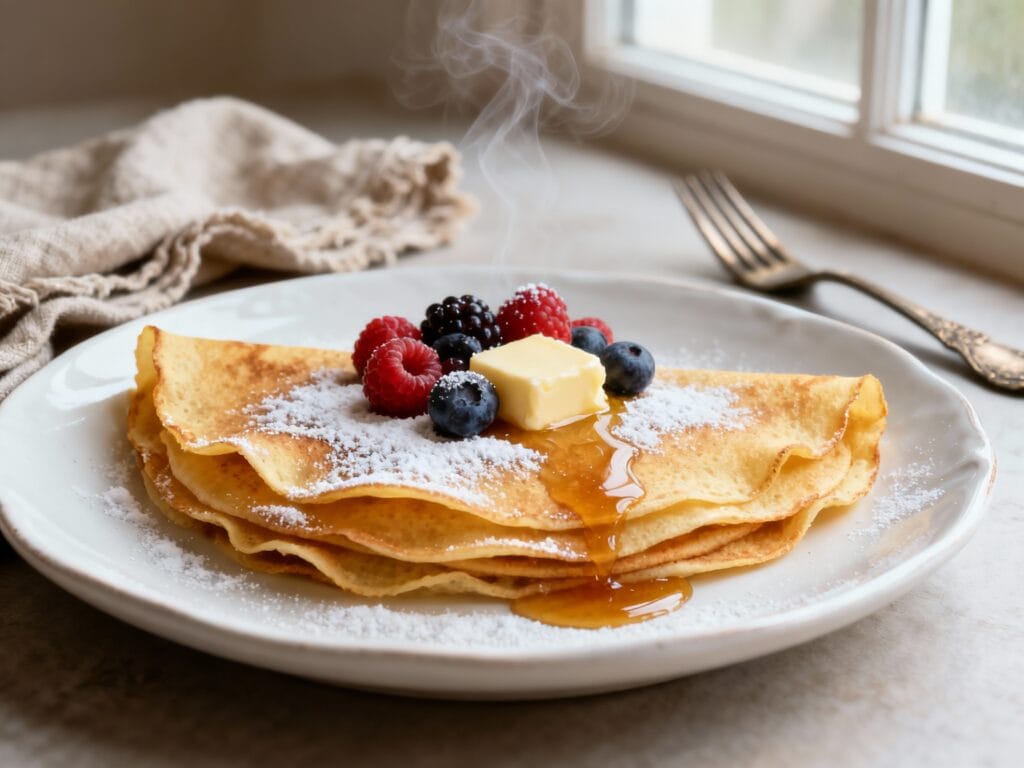
If you’ve ever wanted crepes but didn’t want a sink full of dishes (or a sad, lumpy batter situation), this is your recipe. This easy crepes batter comes together in about 5 minutes, and the “zero-lump trick” makes it basically foolproof.
These crepes are thin, flexible, and ready for whatever vibe you’re feeling: sweet with berries and whipped cream, or savory with eggs and cheese. Once you nail the swirl, you’ll be making “just one more” until the batter’s gone.
Why You’ll Love This
It’s fast, beginner-friendly, and uses simple pantry staples—plus the blender method (aka the zero-lump trick) gives you a silky batter every single time with zero whisk drama.
Ingredients
- 1 cup all-purpose flour
- 2 tablespoons granulated sugar (optional, but nice for sweet crepes)
- 1/4 teaspoon fine salt
- 1 1/2 cups milk (any kind works; dairy or unsweetened plant milk)
- 2 large eggs
- 2 tablespoons melted butter (plus more for the pan)
- 1 teaspoon vanilla extract (optional, for sweet crepes)
How to Make It
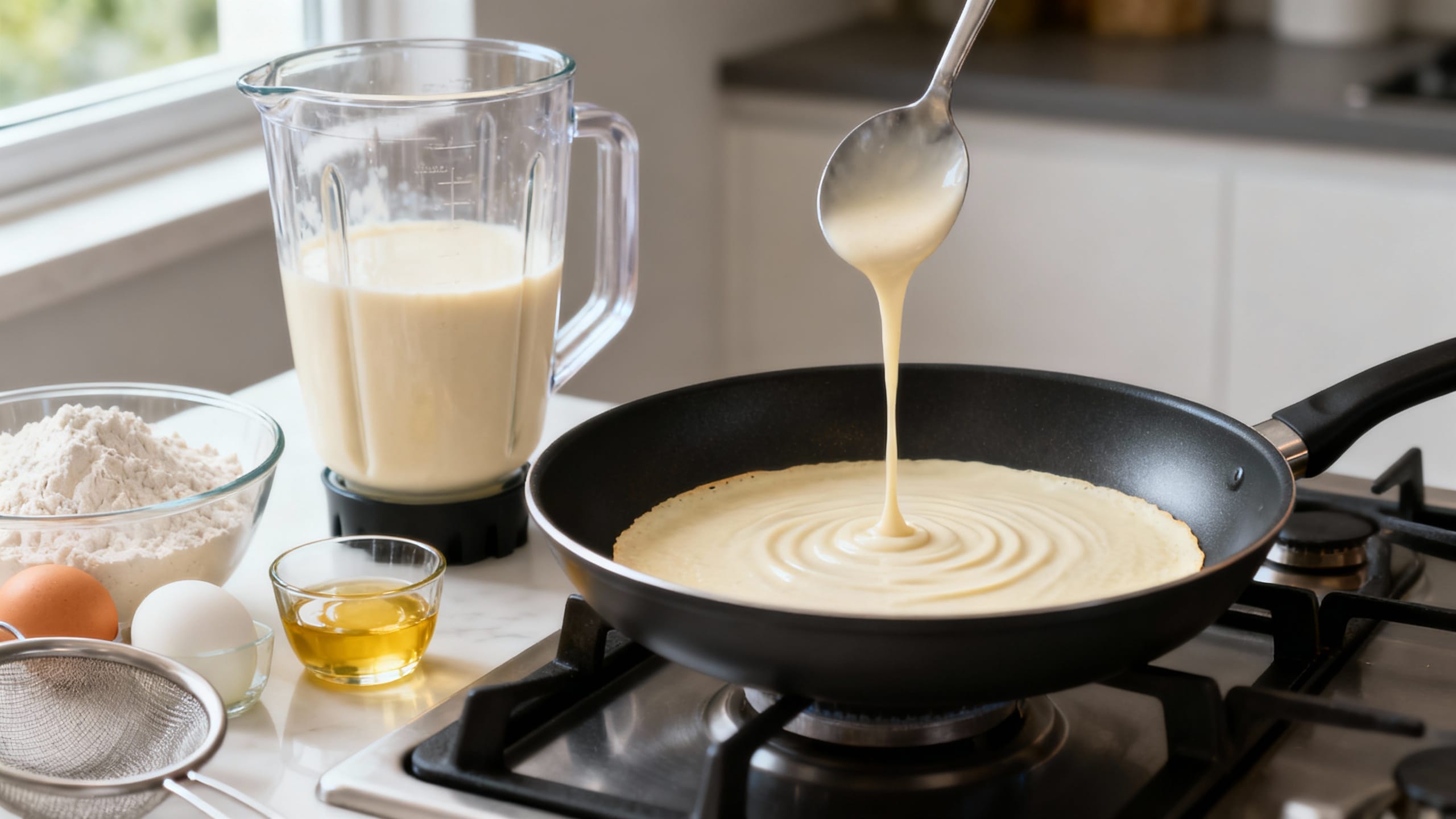
- Do the zero-lump trick: Add the milk, eggs, melted butter, and vanilla (if using) to a blender first. This helps the flour blend in smoothly instead of clumping.
- Add the flour, sugar (if using), and salt. Blend for 15–20 seconds until silky and fully combined. Scrape down the sides if needed, then blend 5 seconds more.
- Rest the batter (quick version): Let it sit for 5–10 minutes while your pan heats up. This helps the flour hydrate and makes softer crepes. (You can also refrigerate up to 24 hours.)
- Heat a nonstick skillet (8–10 inches) over medium heat. Lightly butter the pan, then wipe with a paper towel so you have a thin, even layer.
- Pour about 1/4 cup batter into the center of the pan and immediately swirl the pan in a circle to spread it into a thin layer. If it doesn’t reach the edges, add a tiny splash more and swirl fast.
- Cook 45–75 seconds until the top looks mostly set and the edges start to lift. Use a thin spatula to loosen, then flip.
- Cook the second side for 20–40 seconds until lightly golden in spots. Slide onto a plate.
- Repeat with remaining batter, buttering the pan lightly as needed. Stack crepes on the plate; they won’t stick if they’re not overcooked.
Tips for the Best Results
- Blender first, flour second: Liquids first is the real secret to zero lumps. If you don’t have a blender, use an immersion blender in a tall cup.
- Use medium heat: Too hot = crispy, fragile crepes. Too low = pale and rubbery. Medium is the sweet spot.
- Wipe the butter: A thick layer of butter can fry the crepe and make it spotty. A thin film gives that classic look.
- Measure your pour: For an 8–10 inch pan, start with 1/4 cup. Adjust slightly based on pan size and how thin you like them.
- First crepe is a tester: Even pros have a “warm-up crepe.” Use it to dial in heat and batter amount.
- If the batter feels thick: Blend in 1–2 tablespoons milk at a time. It should pour like heavy cream.
Variations
- Classic sweet: Keep the sugar and vanilla, then fill with fresh berries, powdered sugar, lemon juice, and a little whipped cream.
- Chocolate crepes: Add 2 tablespoons unsweetened cocoa powder and an extra 1–2 tablespoons sugar. If needed, add a splash more milk to keep it pourable.
- Savory crepes: Skip the sugar and vanilla. Add a pinch of black pepper and chopped herbs (like chives). Fill with ham and cheese, sautéed mushrooms, or scrambled eggs.
- Whole wheat swap: Replace up to half the flour with whole wheat flour for a nuttier taste (expect slightly less delicate crepes).
- Dairy-free: Use unsweetened oat or almond milk and melted coconut oil or vegan butter.
Storage & Reheating
Store cooled crepes stacked with parchment between them (optional but helpful) in an airtight container in the fridge for up to 3 days. Reheat in a dry nonstick skillet over medium-low for about 20–30 seconds per side, or microwave covered for 10–15 seconds to make them pliable again.
FAQ
How does the “zero-lump trick” work if I don’t have a blender?
Use an immersion blender in a tall container, or whisk the wet ingredients first, then slowly sprinkle in the flour while whisking constantly. If you still get lumps, strain the batter through a fine-mesh sieve and you’re back in business.
Do I really need to rest the batter if it’s a 5-minute recipe?
Not strictly, but a 5–10 minute rest noticeably improves texture and reduces tearing. If you’re in a rush, make the batter, heat the pan, and by the time it’s hot you’ve basically done a mini rest.
Why are my crepes tearing when I flip them?
Usually it’s one of three things: the pan isn’t hot enough (the crepe sticks), the crepe is too thin (use slightly more batter), or you’re flipping too early. Wait until the edges look dry and lift easily before flipping.
How much batter should I use per crepe?
For an 8–10 inch skillet, start with about 1/4 cup. For a 12-inch pan, you’ll likely need closer to 1/3 cup. The goal is a thin layer that reaches the edges with a quick swirl.
Can I make the batter ahead of time for brunch?
Yes—this batter is great made ahead. Blend it, cover, and refrigerate for up to 24 hours. Before cooking, give it a quick blend or whisk (it may separate a bit), and add a tablespoon or two of milk if it thickened overnight.