


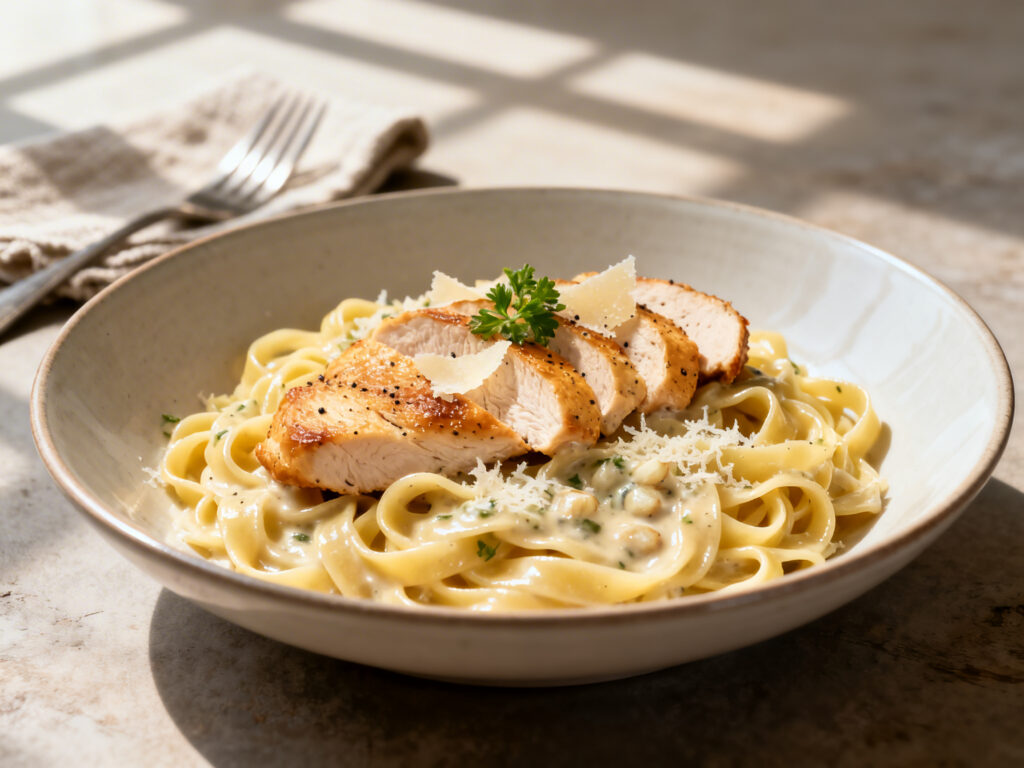
When you want dinner to feel like it came from your favorite Italian spot (but you’re still in sweatpants), this creamy garlic parmesan chicken pasta is the move. It’s rich, silky, and loaded with garlicky flavor—without being complicated or fussy.
The secret is building a quick pan sauce with butter, garlic, cream, and parmesan, then letting the pasta finish in that sauce so every bite tastes restaurant-level. Let’s do it.
Why You’ll Love This
It’s comforting, fast enough for a weeknight, and genuinely tastes like something you’d pay for—tender chicken, a glossy garlic-parm sauce, and pasta that soaks up all that flavor (plus it reheats like a champ).
Ingredients
- 12 oz pasta (fettuccine, penne, or linguine)
- 1 lb boneless, skinless chicken breasts (or thighs), sliced into bite-size pieces
- 1 1/2 tsp kosher salt, divided (plus more for pasta water)
- 1 tsp black pepper, divided
- 1 tsp Italian seasoning
- 2 tbsp olive oil
- 3 tbsp unsalted butter
- 6 cloves garlic, minced
- 2 tbsp all-purpose flour
- 1 1/2 cups chicken broth
- 1 1/2 cups heavy cream
- 1 cup freshly grated Parmesan cheese (plus more to serve)
- 1/4 tsp crushed red pepper flakes (optional)
- 1 tbsp lemon juice (optional, to brighten)
- 2 tbsp chopped fresh parsley (optional, for finishing)
How to Make It
- Bring a large pot of well-salted water to a boil. Cook the pasta until just shy of al dente (about 1 minute less than the package directions). Reserve 1 cup of pasta water, then drain.
- Season the chicken with 1 tsp salt, 1/2 tsp pepper, and Italian seasoning. Heat olive oil in a large skillet over medium-high heat.
- Add the chicken in a single layer and cook 3–5 minutes, flipping once, until golden and cooked through (165°F). Transfer to a plate.
- Lower heat to medium. Add butter to the same skillet. Once melted, stir in the garlic and cook for 30–45 seconds, just until fragrant (don’t let it brown).
- Sprinkle in the flour and whisk constantly for 1 minute to cook out the raw taste. Slowly pour in the chicken broth while whisking to keep it smooth.
- Pour in the heavy cream and bring to a gentle simmer. Cook 2–3 minutes, stirring, until the sauce slightly thickens.
- Turn heat to low and stir in the Parmesan a handful at a time until melted and silky. Add the remaining 1/2 tsp salt and 1/2 tsp pepper, plus red pepper flakes if using.
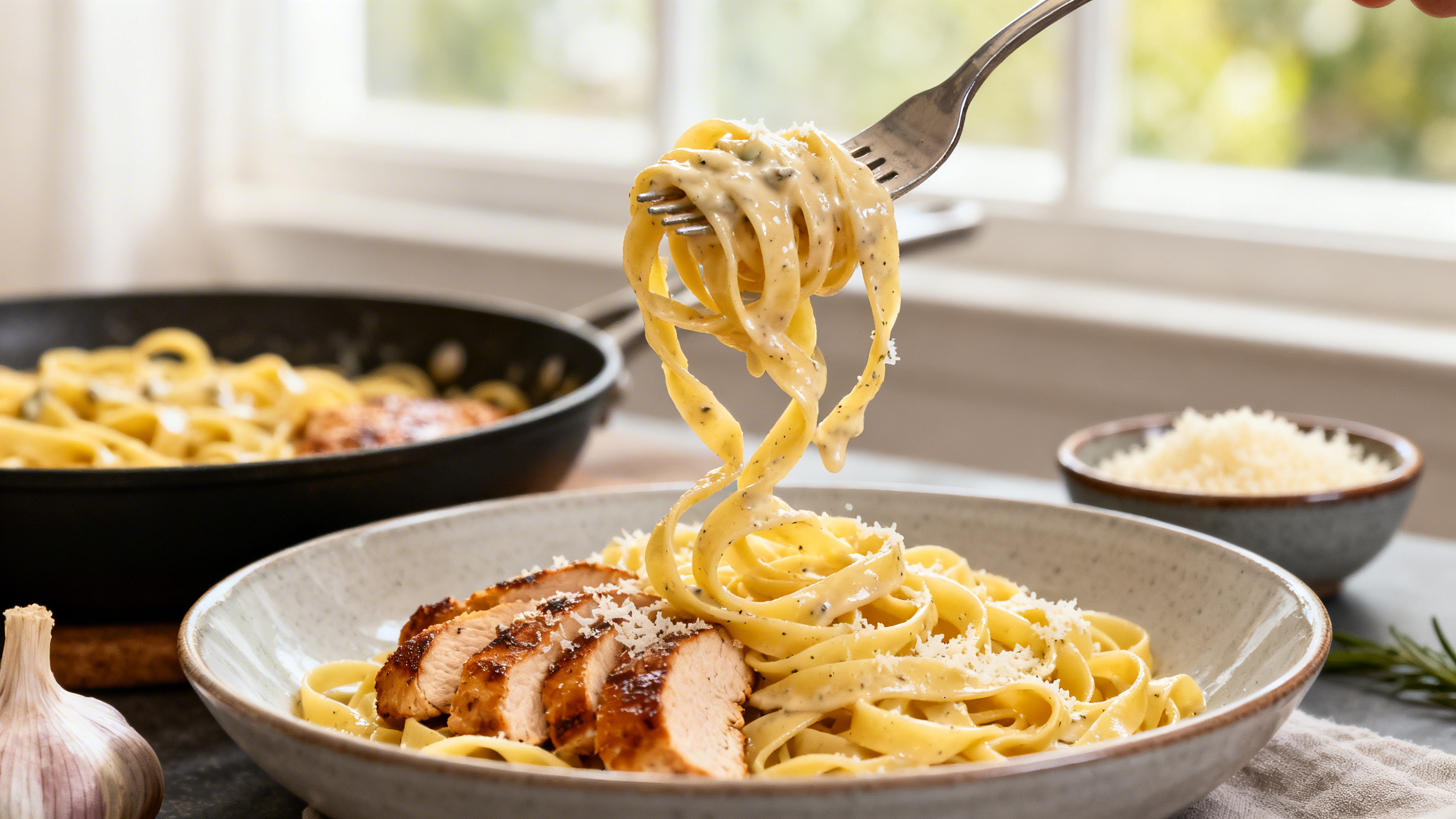
- Add the drained pasta and cooked chicken back to the skillet. Toss for 1–2 minutes so the pasta finishes in the sauce. If the sauce feels too thick, splash in reserved pasta water a little at a time until it’s glossy and coats everything.
- Optional but highly recommended: stir in lemon juice for balance. Top with parsley and extra Parmesan, then serve immediately.
Tips for the Best Results
- Grate your own Parmesan. The pre-shredded kind often has anti-caking agents that can make the sauce grainy.
- Don’t overcook the pasta. Slightly under al dente is perfect because it finishes in the sauce and absorbs flavor.
- Keep the heat low when adding cheese. High heat can cause parmesan to clump or turn gritty.
- Use pasta water like a pro. A little reserved pasta water makes the sauce smoother and helps it cling to the noodles.
- Brown the chicken well. Those golden bits add major “restaurant” flavor to the final sauce.
- Garlic timing matters. Cook it just until fragrant—burnt garlic will take over the whole dish.
Variations
- Add veggies: Stir in baby spinach at the end, or sauté mushrooms before the garlic for extra savory depth.
- Make it spicy: Increase red pepper flakes or add a spoonful of Calabrian chili paste.
- Swap the protein: Use shrimp (cook quickly and remove, then add back at the end) or sliced sausage.
- Go extra cheesy: Add 1/2 cup shredded mozzarella for a slightly stretchier, ultra-creamy vibe.
- Lighten it up: Use half-and-half instead of heavy cream (the sauce will be a bit thinner—use less broth and more pasta water).
- Herby twist: Add fresh basil or a pinch of rosemary for a different flavor profile.
Storage & Reheating
Store leftovers in an airtight container in the fridge for up to 3 days. Reheat gently on the stovetop (best) or in the microwave, adding a splash of broth, milk, or water to loosen the sauce. Keep the heat low and stir often so the parmesan sauce stays creamy instead of separating.
FAQ
How do I keep garlic parmesan sauce from getting grainy?
Use freshly grated Parmesan and melt it in on low heat (not a boil). Also, add the cheese gradually and stir constantly. If it starts to look grainy, take the pan off the heat and whisk in a splash of warm pasta water to help it smooth out.
Can I make this with chicken thighs instead of chicken breasts?
Yes—boneless, skinless thighs are even juicier and super forgiving. Cook them the same way, just give them an extra minute or two if needed to reach 165°F.
What pasta shape works best for restaurant-style creamy sauce?
Fettuccine and linguine feel the most classic, but penne (or rigatoni) is great because the sauce gets inside the tubes. Honestly, any pasta works—just make sure you save pasta water for that glossy finish.
Can I make it ahead for meal prep?
You can, but it’s best within 1–2 days because creamy sauces thicken as they sit. For the best texture, store a small splash of broth or milk with the pasta and reheat gently, stirring to bring the sauce back to life.
My sauce is too thick (or too thin). How do I fix it?
If it’s too thick, add reserved pasta water (or a splash of broth/milk) a little at a time until it coats the pasta smoothly. If it’s too thin, simmer on low for a few minutes to reduce, or add a bit more Parmesan to tighten it up.