


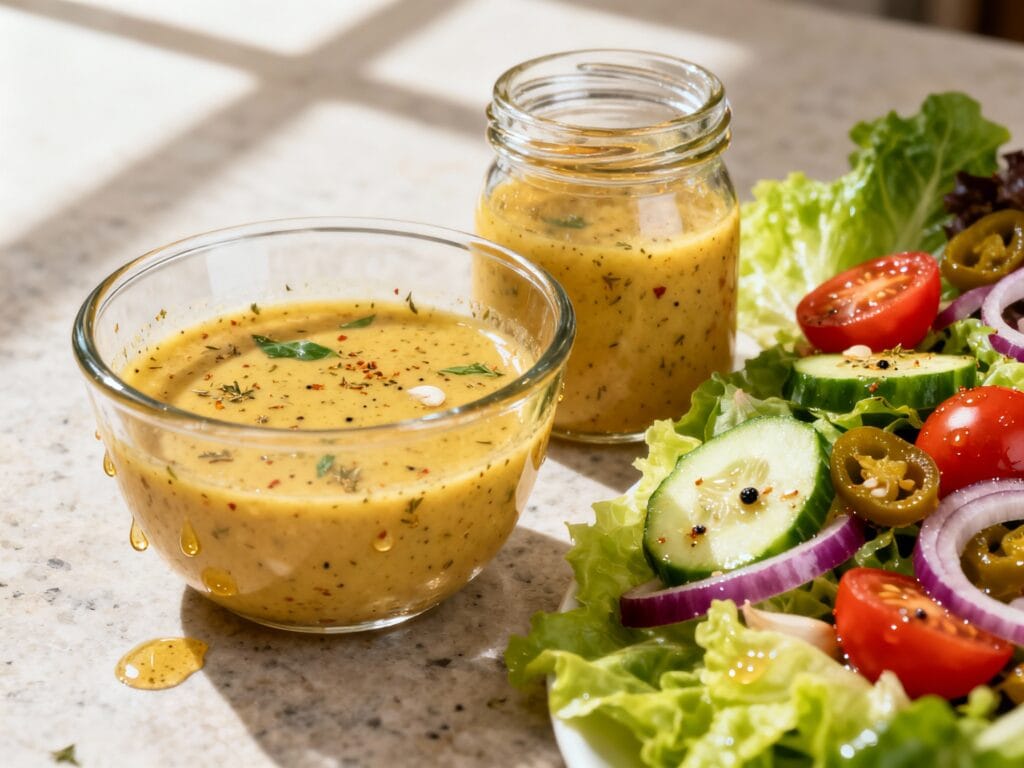
If you’ve ever made “classic Italian dressing” at home and ended up with something harsh, bitter, or weirdly oily, this one’s for you. This version is bright, zesty, and balanced—aka it tastes like the good restaurant stuff, not like you accidentally sipped straight oregano.
The trick is all about smart acidity, a tiny touch of sweetness, and letting the herbs bloom before you shake it up. Bonus: it’s a total meal-prep hero and instantly upgrades everything from chopped salads to pasta salad to chicken marinades.
Why You’ll Love This
It’s punchy and fresh without the bitter aftertaste, comes together in minutes, and uses pantry staples—plus it actually clings to your salad instead of sliding off to the bottom of the bowl.
Ingredients
- 1/2 cup extra-virgin olive oil
- 1/4 cup red wine vinegar
- 2 tablespoons fresh lemon juice
- 1 1/2 teaspoons Dijon mustard
- 1 1/2 teaspoons honey (or maple syrup)
- 1 small garlic clove, finely grated or pressed
- 1 1/2 teaspoons dried oregano
- 1 teaspoon dried basil
- 1/2 teaspoon dried thyme
- 1/2 teaspoon onion powder
- 1/4 teaspoon crushed red pepper flakes (optional)
- 1/2 teaspoon kosher salt, plus more to taste
- 1/4 teaspoon black pepper
- 2 tablespoons finely grated Parmesan (optional but very classic)
How to Make It
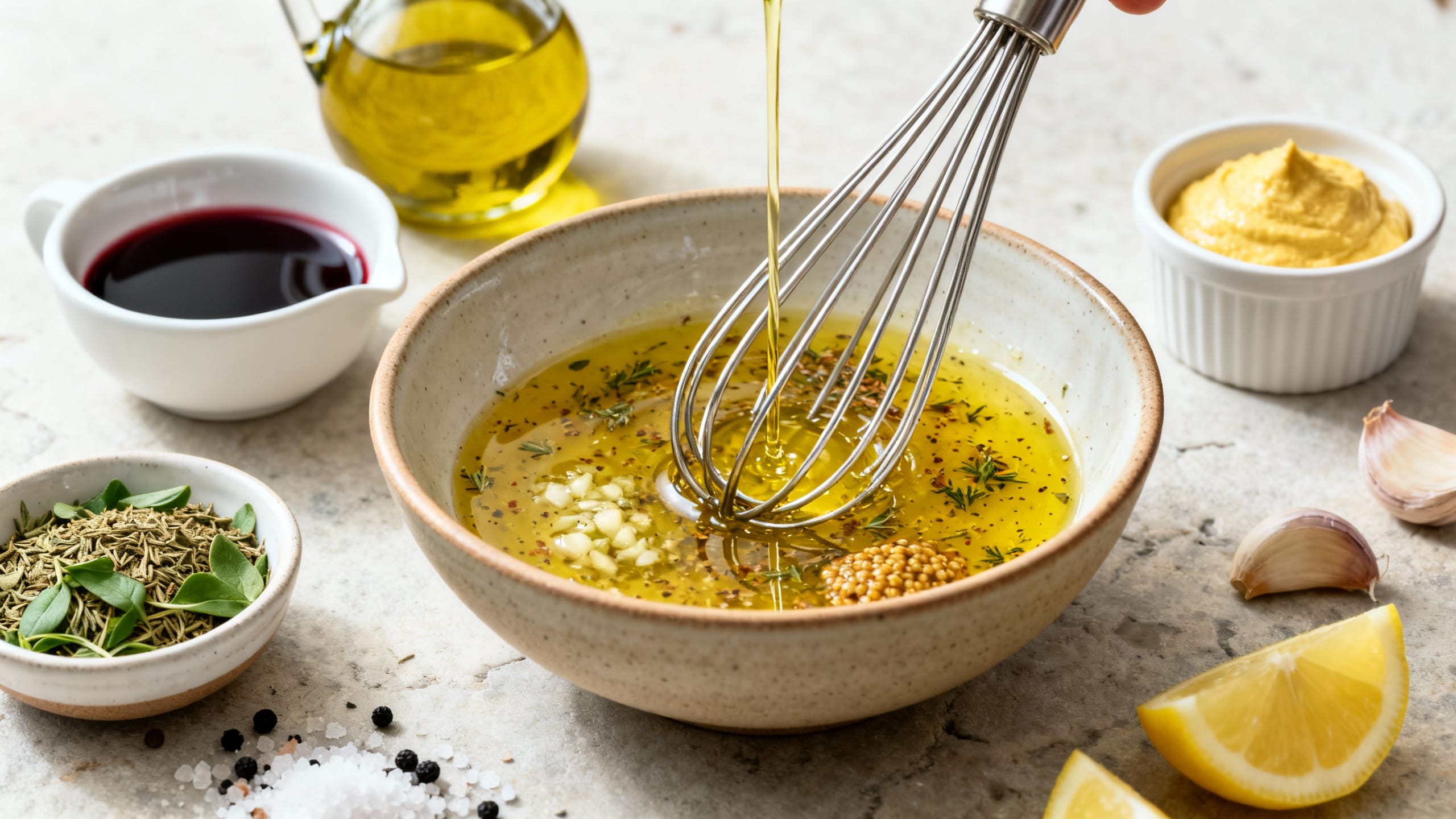
- In a small bowl or measuring cup, whisk together the red wine vinegar, lemon juice, Dijon mustard, and honey until smooth.
- Add the garlic, oregano, basil, thyme, onion powder, red pepper flakes (if using), salt, and black pepper. Whisk again.
- Let the mixture sit for 5 minutes. This quick rest helps the dried herbs hydrate so the flavor tastes round and zesty, not sharp and dusty.
- While whisking constantly, slowly drizzle in the olive oil to emulsify (aka make it creamy-looking and well blended).
- Stir in the Parmesan if you’re using it. Taste and adjust: more salt for flavor, more honey for balance, or a squeeze of lemon for extra zip.
- Pour into a jar with a tight lid and shake for 10 seconds. (Even if you whisked, the shake makes it extra cohesive.)
- Use right away, or chill for 30 minutes for the flavors to really mingle.
- Before serving, shake again and drizzle over your salad—start with 2 tablespoons per salad and add more as needed.
Tips for the Best Results
- Use a blend of acids. Red wine vinegar brings the classic Italian vibe, while lemon juice keeps it bright and prevents that one-note “vinegar bite.”
- Don’t skip the Dijon. It helps emulsify so the oil and vinegar don’t instantly separate, and it adds a subtle tang.
- Sweetness isn’t “making it sweet.” A little honey simply rounds the edges and fights bitterness from strong olive oil or herbs.
- Choose a mellow olive oil. If your extra-virgin olive oil tastes super peppery or bitter on its own, cut it with a lighter olive oil (half and half) for a smoother dressing.
- Hydrate the herbs. That 5-minute rest after adding dried herbs makes a noticeable difference in flavor and texture.
- Salt is your secret weapon. If the dressing tastes “too sharp,” it often needs a pinch more salt (not more sugar).
- Dress like a pro. Toss greens with a small amount first, then add more. Overdressing is the fastest way to a soggy salad.
Variations
- Creamy Italian: Add 2 tablespoons mayo or Greek yogurt and whisk until smooth. Great for chopped salads.
- More zesty, less tang: Swap 1 tablespoon of the vinegar for extra lemon juice.
- Herby upgrade: Add 1 tablespoon chopped fresh parsley or basil (stir in at the end).
- Garlic-lover’s version: Use 2 cloves garlic, but let it sit 10 minutes before adding oil so it mellows.
- No cheese: Skip the Parmesan or use nutritional yeast for a dairy-free, savory vibe.
- Spicy: Add a pinch of cayenne or a spoonful of chopped pepperoncini brine for a deli-style kick.
Storage & Reheating
Store in a sealed jar in the fridge for up to 7 days. The olive oil may solidify when cold—totally normal. Let it sit at room temp for 10–15 minutes, then shake hard to re-emulsify. (No reheating needed, just a good shake.)
FAQ
How do you keep homemade Italian dressing from tasting bitter?
Bitterness usually comes from very robust olive oil, too much dried oregano, or an acid profile that’s all vinegar and no balance. This recipe fixes that with a little honey, a combo of vinegar and lemon, and a short “herb hydration” rest. If it’s still bitter, try using a milder olive oil or reducing oregano slightly.
What are the best salad pairings for this dressing?
This shines on a classic Italian chopped salad (romaine, salami, provolone, pepperoncini, tomatoes), a simple garden salad, or a Greek-leaning salad with cucumbers and olives. It’s also perfect for pasta salad, tortellini salad, and as a quick drizzle on sliced tomatoes and mozzarella.
Can I use fresh herbs instead of dried?
Yes. Use about 3 times the amount of fresh herbs (so 1 1/2 teaspoons dried oregano becomes about 1 1/2 tablespoons fresh). Stir fresh herbs in at the end. Keep in mind the dressing won’t last quite as long with fresh herbs—aim for 3–5 days for peak flavor.
Why is my dressing separating, and is that bad?
Separation is normal for oil-and-vinegar dressings. Dijon mustard helps it stay blended longer, but it will still separate over time. Just shake before using. If you want it extra stable, whisk longer while drizzling in the oil, or blend it for 10 seconds.
Can I use this classic Italian dressing as a marinade?
Absolutely. It’s great for chicken, shrimp, or veggies like zucchini and peppers. Marinate chicken for 30 minutes to 4 hours (not overnight—the acid can make it mealy). For shrimp, 15–30 minutes is plenty. Pat food dry a bit before cooking so it sears instead of steaming.