


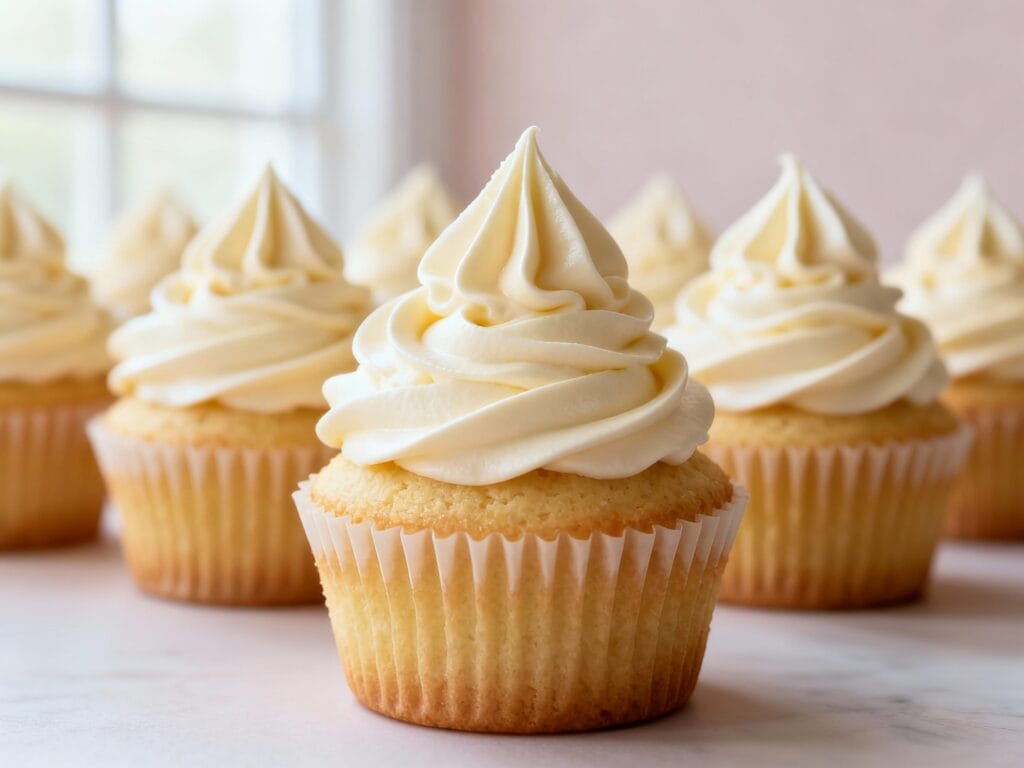
Buttercream Frosting Recipe: Smooth, Fluffy, Pipeable (Not Too Sweet)
If you’ve ever made buttercream that tasted like straight powdered sugar, or looked cute for five minutes and then slumped off the cupcake… yeah, same. This is the buttercream that fixes all of that.
It’s smooth, fluffy, holds its shape for piping, and (most importantly) it’s not too sweet. Think bakery vibes, but you made it at home in one bowl.
Why You’ll Love This
This buttercream is the sweet spot: rich and creamy with a lighter sweetness, super easy to spread, and sturdy enough for swirls, borders, and simple flowers—without tasting like sugar paste.
Ingredients
- 1 cup (226g) unsalted butter, softened to cool room temperature
- 3 cups (360g) powdered sugar, sifted
- 2 tablespoons heavy cream (plus more as needed)
- 1 tablespoon full-fat Greek yogurt or mascarpone (for a less-sweet, extra-smooth finish)
- 2 teaspoons pure vanilla extract
- 1/4 teaspoon fine salt
How to Make It
- Soften the butter правильно. Your butter should be soft enough to dent with a finger, but not shiny, greasy, or melty. This is the key to fluffy frosting.
- Whip the butter. In a large bowl (or stand mixer), beat the butter on medium-high for 3–4 minutes until it looks paler and airy. Scrape down the bowl.
- Add powdered sugar in stages. With the mixer on low, add sifted powdered sugar 1 cup at a time. Mix until mostly combined before adding more, so you don’t get a sugar cloud.
- Flavor + balance. Add vanilla, salt, and Greek yogurt (or mascarpone). Mix on medium until smooth.
- Adjust the texture. Add heavy cream 1 tablespoon at a time, mixing after each addition, until it’s silky and spreadable. For piping, you want it smooth but still able to hold peaks.
- Whip for fluff. Turn the mixer to medium-high and beat for 2–3 minutes. This final whip makes it lighter, smoother, and more pipeable.
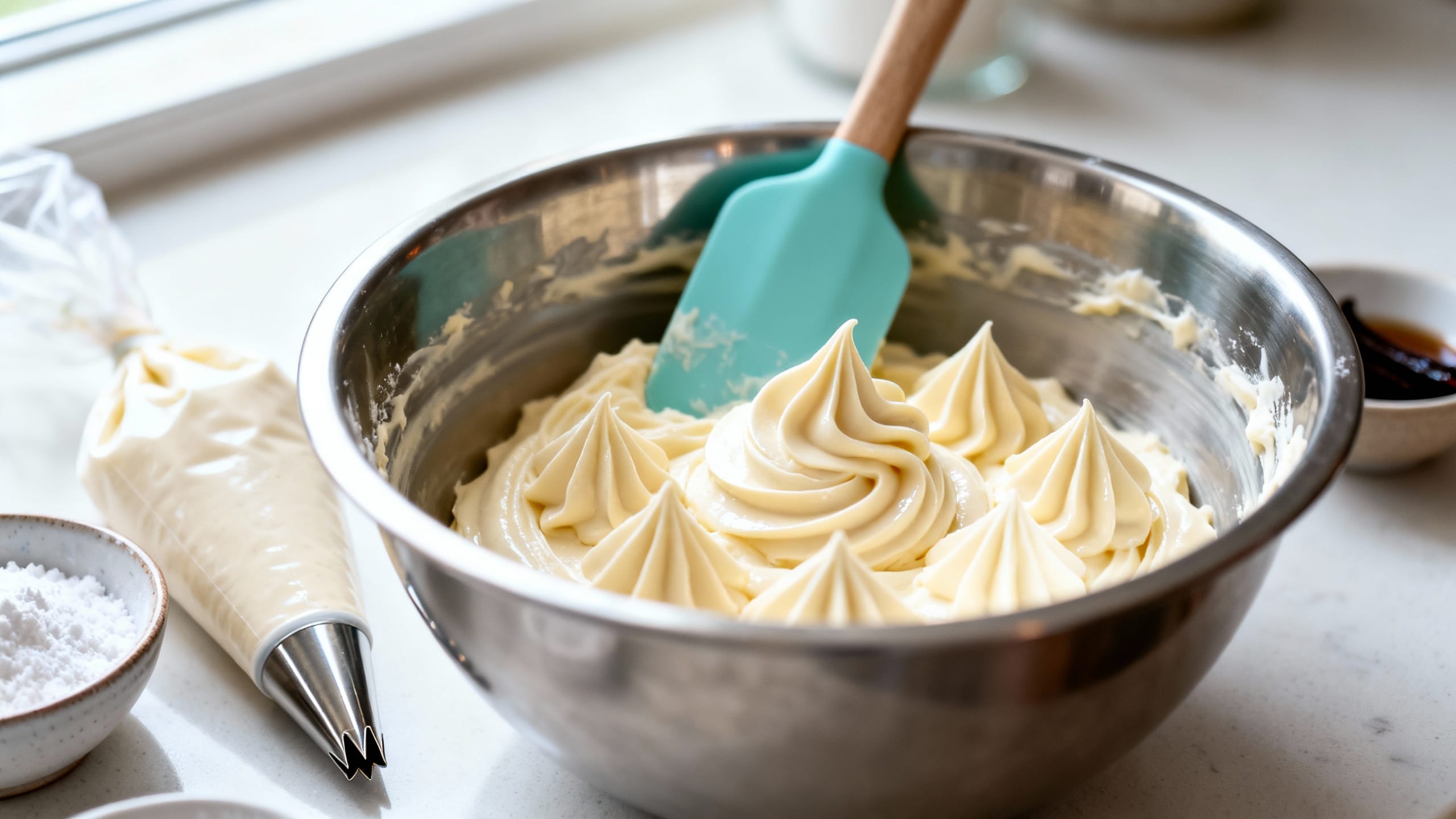
- Pop the bubbles. For extra-smooth piping, switch to a spatula and gently press/“stir” the frosting against the sides of the bowl for 30–60 seconds to knock out air pockets.
- Use right away. Spread onto cooled cakes/cupcakes, or transfer to a piping bag fitted with your favorite tip.
Tips for the Best Results
- Sift the powdered sugar. It takes 30 seconds and prevents gritty frosting and clogged piping tips.
- Don’t skip the salt. It’s the easiest way to make buttercream taste less sweet and more “bakery.”
- Use cool room-temp butter. Too cold = lumpy. Too warm = greasy and unstable. If your kitchen is hot, chill the bowl for 5 minutes before whipping.
- For super-smooth swirls: Beat to fluff, then gently paddle by hand at the end to remove air bubbles.
- Consistency check: If it’s stiff and tearing, add cream 1 teaspoon at a time. If it’s too soft to pipe, chill 10–15 minutes, then re-whip briefly.
- Always frost a cooled cake. Warm cake = melted buttercream = sliding sadness.
Variations
- Chocolate (not too sweet): Add 1/3 cup (30–35g) unsweetened cocoa powder (sifted) with the powdered sugar. Add an extra 1–2 teaspoons cream as needed.
- Cream cheese vibe (more stable): Swap the Greek yogurt for 2–3 tablespoons softened cream cheese. (More than that will make it softer.)
- Strawberry: Beat in 2–3 tablespoons freeze-dried strawberry powder. It adds flavor without making it runny.
- Lemon: Add 1–2 teaspoons lemon zest plus 1 tablespoon lemon juice. If it loosens, add a little extra powdered sugar.
- Less sweet option: Reduce powdered sugar to 2 1/2 cups and add 1 more tablespoon yogurt/mascarpone. (It’ll be slightly softer—great for spreading.)
Storage & Reheating
Store buttercream in an airtight container in the fridge for up to 1 week. Let it sit at room temperature until soft (about 30–60 minutes), then re-whip for 1–2 minutes to bring back the fluffy texture. You can also freeze it for up to 2 months; thaw overnight in the fridge, then re-whip before using.
FAQ
How do I make buttercream smooth and pipeable (not full of air bubbles)?
Whip for fluff first, then do a quick “de-bubble” stir at the end: use a spatula to press the frosting against the sides of the bowl for about a minute. This knocks out big air pockets so your piping looks clean and satin-smooth.
Why is my buttercream too sweet, and how can I fix it?
Most buttercream tastes too sweet when it relies only on powdered sugar for structure. This recipe uses salt plus a little Greek yogurt/mascarpone to balance the sweetness. If it’s still too sweet for you, add an extra pinch of salt (tiny amounts!) and 1 more tablespoon yogurt/mascarpone, then re-whip.
My frosting is runny—what happened?
Usually it’s butter that’s too warm or too much liquid added too fast. Pop the bowl in the fridge for 10–15 minutes, then re-whip. If it’s still loose, add 2–4 tablespoons more powdered sugar (sifted) until it holds peaks again.
Can I make this ahead for a cake order or party?
Yes. Make it up to a week ahead and refrigerate, or freeze up to 2 months. Before using, bring to room temp and re-whip until fluffy. If it looks separated at first, keep mixing—once the butter warms slightly, it usually comes back together.
How much frosting does this recipe make?
It makes about 2 1/2 to 3 cups, enough to frost 12–16 cupcakes with a simple swirl or a 2-layer 8-inch cake with a generous layer in the middle and a light outer coat. If you want thick, tall piping on 24 cupcakes, plan on doubling it.