


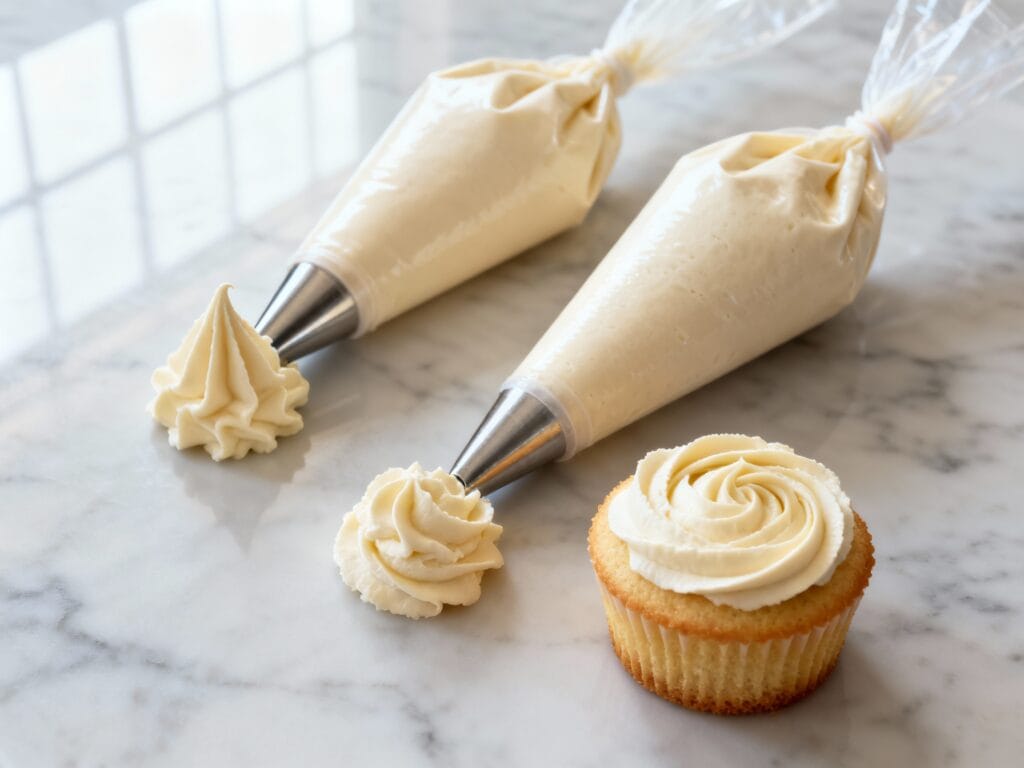
If buttercream has ever made you feel like you’re one mixer moment away from chaos, this one’s for you. The good news: buttercream isn’t hard—it’s just picky about temperature, timing, and texture.
This beginner-friendly buttercream frosting recipe walks you through the basics and shows you exactly how to nail the consistency you need, from soft peaks (dreamy swoops) to stiff peaks (sharp edges and strong piping).
Why You’ll Love This
It’s a simple, classic buttercream that’s easy to customize, pipes beautifully, and includes a clear consistency guide so you’ll know when to stop mixing (and when to tweak) without guessing.
Ingredients
- 1 cup (226g) unsalted butter, softened to cool room temp
- 3 1/2 to 4 1/2 cups (420–540g) powdered sugar, sifted if lumpy
- 2 teaspoons vanilla extract
- 1/8 teaspoon fine salt (more to taste)
- 2 to 4 tablespoons heavy cream or milk (adjust for consistency)
- Optional: gel food coloring (best for keeping consistency stable)
How to Make It
- Set yourself up. Add softened butter to a large bowl (or stand mixer bowl). If your kitchen is warm, let the butter sit 5 minutes, then test it: it should indent easily but not look shiny or melty.
- Beat the butter. Mix on medium-high for 2–3 minutes until lighter in color and fluffy. This step is your base for a smooth frosting.
- Add powdered sugar gradually. Turn mixer to low. Add 3 1/2 cups powdered sugar, about 1 cup at a time, mixing until mostly combined each time. Scrape down the bowl as needed.
- Flavor it. Add vanilla and salt, then mix on medium for 30 seconds. Taste now—this is the easiest point to balance sweetness.
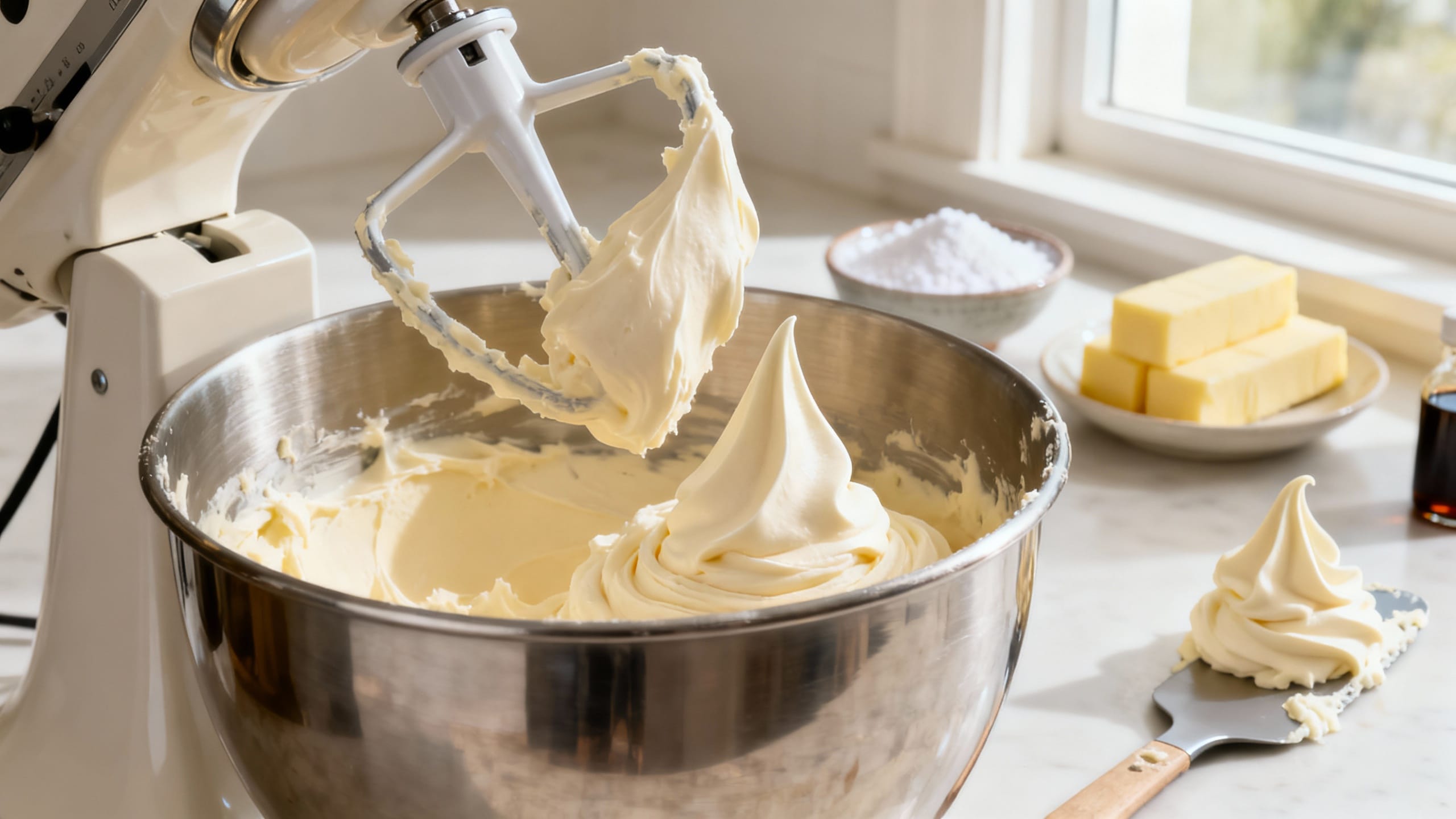
- Adjust for soft peaks (spreadable). Add 2 tablespoons cream or milk and beat on medium-high for 1–2 minutes. Soft peaks look smooth and glossy; when you lift the beater, the tip droops over gently. This is perfect for swooping on cupcakes or spreading on cakes.
- Adjust for stiff peaks (piping + sharp edges). For a firmer buttercream, add 1/2 to 1 cup more powdered sugar (a little at a time) and beat 1 minute. Stiff peaks stand straight when you lift the beater, and the frosting holds ridges without slumping.
- Color (optional). Add gel food coloring a tiny bit at a time. Mix on low first (to avoid streaks), then medium until fully even.
- Final texture check. If it feels too thick, add cream 1 teaspoon at a time. If it feels too soft, add powdered sugar 2–3 tablespoons at a time. Beat 30–45 seconds between changes so you don’t overcorrect.
Tips for the Best Results
- Butter temperature matters more than anything. Too cold = lumpy frosting. Too warm = greasy, slack frosting. Aim for “soft but not shiny.”
- Start on low with powdered sugar. This keeps your kitchen from looking like a winter storm.
- Use heavy cream for the smoothest piping. Milk works, but cream helps it feel richer and more stable.
- Soft peaks vs stiff peaks, in real life: Soft peaks are best for swirls with a spoon, rustic cake frosting, and a fluffy bite. Stiff peaks are best for piping roses, borders, and anything with definition.
- Don’t skip the salt. It makes the vanilla taste bigger and the sweetness less intense.
- Beat it enough. That 2–3 minute butter whip and the final 1–2 minute whip are what make it feel light, not gritty.
- If you see bubbles, slow down. Mix on low for 1 minute at the end to knock out large air pockets (especially for super-smooth cake finishes).
Variations
- Chocolate buttercream: Add 1/2 cup (45g) unsweetened cocoa powder with the powdered sugar. Add an extra 1–2 tablespoons cream as needed.
- Cream cheese swirl: Beat in 4 oz (113g) softened cream cheese after whipping the butter. Great for soft peaks; for stiff peaks, you’ll likely need extra powdered sugar.
- Almond vanilla: Swap 1/2 teaspoon of the vanilla for almond extract (a little goes a long way).
- Citrus pop: Add 1 tablespoon lemon or orange zest plus 1–2 teaspoons juice. If it loosens the frosting too much, add powdered sugar to bring it back.
- Less sweet option (still beginner-friendly): Use 3 1/2 cups powdered sugar, add an extra pinch of salt, and whip a full 2 minutes with cream for maximum fluff.
Storage & Reheating
Store buttercream in an airtight container in the fridge for up to 7 days or in the freezer for up to 2 months. To use again, bring to room temperature until soft (about 30–60 minutes), then re-whip for 1–2 minutes. If it looks curdled, keep mixing—most of the time it comes back together once it warms slightly. Add a teaspoon of cream if needed.
FAQ
How do I know if I have soft peaks or stiff peaks for buttercream?
Lift your beater or spatula straight up. Soft peaks will form a peak that gently folds over at the tip and looks creamy and smooth. Stiff peaks will stand tall with a sharp point and hold defined ridges without drooping—great for borders, roses, and anything detailed.
My buttercream is too sweet. What can I do without ruining the consistency?
Add 1/8 teaspoon salt at a time and a splash more vanilla to balance the flavor. If you can, whip in 1–2 extra tablespoons cream and beat well; fluffier buttercream tastes less intensely sweet. You can also blend in 2–3 tablespoons unsweetened cocoa powder for a less-sweet chocolate vibe.
Why is my buttercream grainy or gritty?
Usually it’s powdered sugar that wasn’t fully mixed or butter that was too cool. Beat longer (1–2 minutes) and scrape the bowl. Next time, sift the powdered sugar if it’s clumpy and make sure the butter is properly softened before you start.
My frosting is too soft to pipe. How do I fix it fast?
First, chill the bowl for 10–15 minutes, especially if your kitchen is warm. Then beat again briefly. If it still won’t hold shape, add powdered sugar 2–3 tablespoons at a time until you reach stiff peaks. For super-hot days, use heavy cream (not milk) and keep the finished frosting cool between piping rounds.
Can I make this buttercream ahead for cupcakes and still get stiff peaks later?
Yes. Make it ahead and store airtight. When you’re ready, let it soften at room temp, then re-whip to restore volume. If you need stiff peaks for piping, re-whip and add a little extra powdered sugar as needed until it holds a firm peak.