


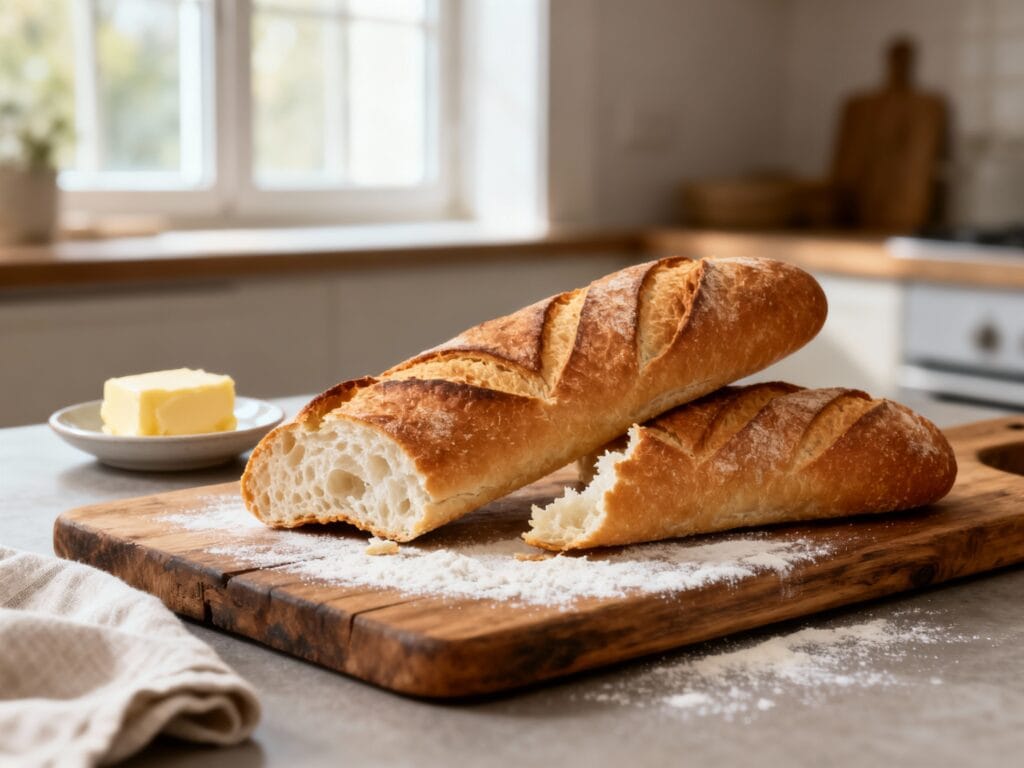
If French bread feels intimidating, you’re not alone. The good news: you don’t need fancy tools or a culinary degree—just a solid method and a few beginner-friendly guardrails.
This is a simple French bread recipe with the real-life fixes baked in. Think of it like a bread buddy who quietly taps the sign when something goes off track.
Why You’ll Love This
You’ll get that classic crisp crust + soft, chewy center without overcomplicating things, plus you’ll know exactly how to troubleshoot the most common beginner mistakes (dense loaf, pale crust, spreading dough, and more).
Ingredients
- 4 cups (480g) all-purpose flour (spooned and leveled), plus extra for dusting
- 1 1/2 cups (360g) warm water (about 105–110°F / 40–43°C)
- 2 1/4 tsp (1 packet) active dry yeast
- 2 tsp granulated sugar (helps wake up the yeast)
- 2 tsp fine salt
- 1 tbsp olive oil (optional, for slightly softer crumb and easier handling)
- 1 egg white + 1 tbsp water (optional, for extra shine)
How to Make It
- Activate the yeast: In a large bowl, stir warm water, sugar, and yeast. Let sit 5–10 minutes until foamy. If it doesn’t foam, your water may be too hot/cold or the yeast is old—start over for best results.
- Mix the dough: Add 3 1/2 cups flour and the salt (and olive oil if using). Stir until shaggy, then knead by hand or mixer until a smooth dough forms, 8–10 minutes. Add the remaining 1/2 cup flour a tablespoon at a time only if the dough is very sticky.
- First rise: Place dough in a lightly oiled bowl, cover, and let rise 60–90 minutes until doubled. If your kitchen is cool, set the bowl in the oven with the light on (oven off).
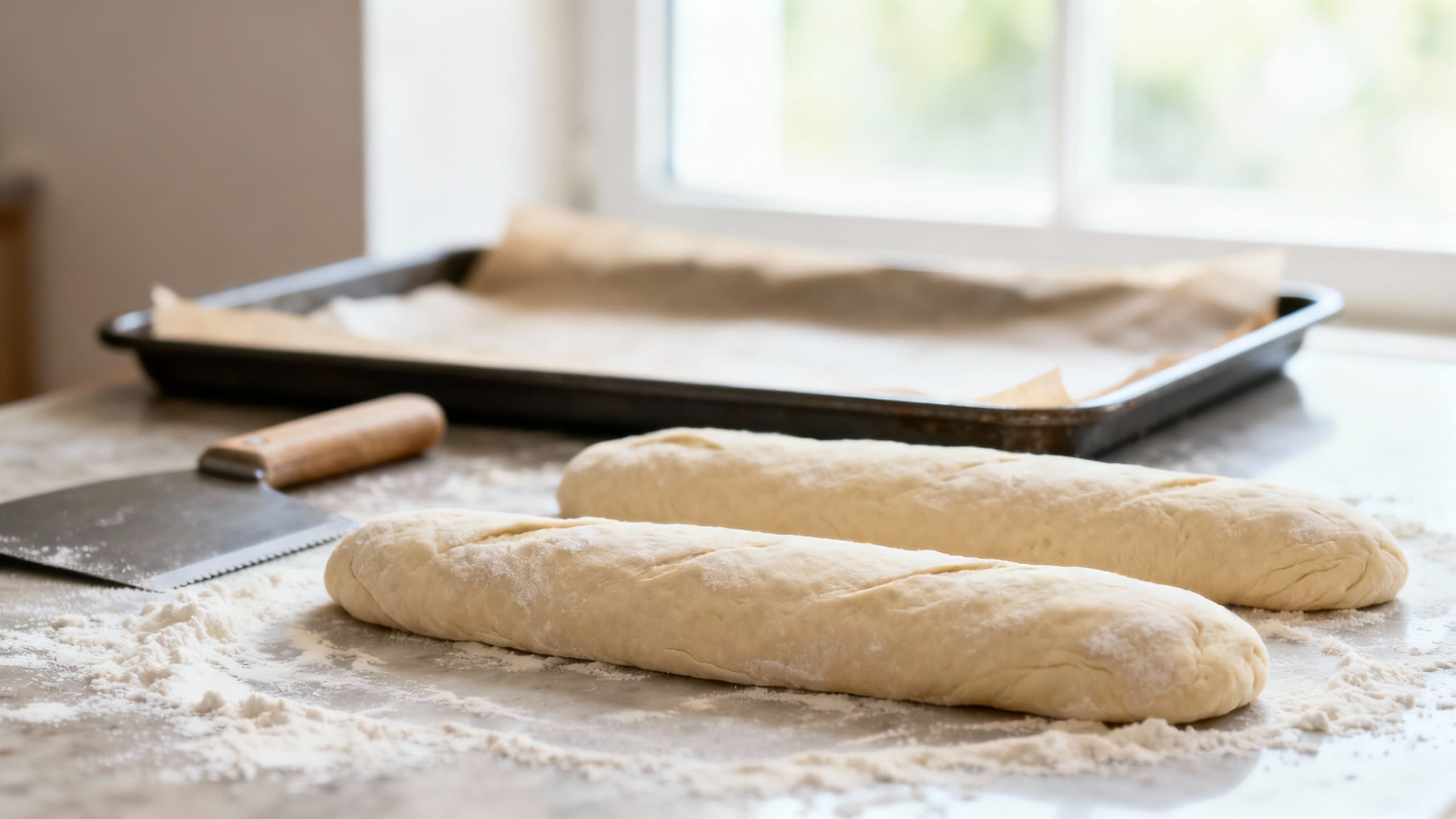
- Shape: Gently deflate dough and turn onto a lightly floured surface. Divide into 2 equal pieces. Shape each into a rough rectangle, then roll up tightly into a log, pinching the seam closed. Taper the ends slightly for that classic look.
- Second rise: Place loaves seam-side down on a parchment-lined baking sheet (or in a baguette pan). Cover and let rise 30–45 minutes until puffy (not necessarily doubled).
- Prep the oven + steam: Preheat to 425°F (220°C). Place an empty metal pan on the bottom rack to heat (this helps with steam for a better crust).
- Score: Use a sharp knife or lame to make 3–4 diagonal slashes on each loaf, about 1/4 inch deep. This prevents random tearing and helps the bread rise upward instead of sideways.
- Bake: (Optional) Brush with egg white wash for shine. Pour 1 cup hot water into the preheated empty pan to create steam, then immediately bake the loaves 22–28 minutes until deep golden brown and they sound hollow when tapped.
- Cool: Move to a rack and cool at least 30 minutes before slicing. Cutting too early is the fastest way to “gummy bread” heartbreak.
Tips for the Best Results
- Mistake: Dense bread. Fix: Make sure the yeast is active and give the dough enough time to rise. Also avoid adding too much flour—slightly tacky dough bakes up lighter.
- Mistake: Dough spreads flat. Fix: Tension matters. Roll the dough up tightly when shaping and pinch the seam well. If it’s still loose, let the dough rest 10 minutes and reshape.
- Mistake: Pale, soft crust. Fix: Bake hot (425°F) and use steam. Don’t pull the loaves early—color equals flavor.
- Mistake: Crust too hard. Fix: Reduce bake time by a few minutes and skip egg wash. You can also brush the hot loaf with a little melted butter for a softer finish.
- Mistake: Gummy center. Fix: Cool fully before slicing and make sure the loaf is baked through (internal temp around 200–205°F / 93–96°C).
- Measure flour the non-chaos way: Spoon into the measuring cup and level off. Scooping packs flour and makes dough dry.
- Salt placement: Don’t dump salt directly on yeast during mixing. It can slow yeast down—mix salt with flour first if you want to be extra safe.
Variations
- Garlic butter French bread: Brush warm loaves with garlic butter and sprinkle with parsley. Instant side-dish hero.
- Everything-seasoned: After egg wash, sprinkle with everything bagel seasoning for a bakery vibe.
- Whole wheat blend: Swap in up to 1 cup whole wheat flour (keep the rest all-purpose for softness). Add 1–2 tbsp extra water if needed.
- Cheesy loaf: Fold in 1 cup shredded mozzarella or parmesan during mixing (expect slightly less rise, still delicious).
Storage & Reheating
Store cooled bread at room temp in a paper bag or loosely wrapped for up to 2 days (tight plastic softens the crust). For longer storage, slice and freeze in a zip-top bag up to 2 months. Reheat whole or partial loaves at 350°F (175°C) for 8–12 minutes; for frozen slices, toast straight from the freezer.
FAQ
Why didn’t my yeast foam?
Most commonly: the water was too hot (it can kill yeast) or too cool (it won’t wake up). Aim for 105–110°F. Also check the expiration date—old yeast can be a no-show. If it doesn’t foam after 10 minutes, restart with fresh yeast.
My dough is super sticky—should I keep adding flour?
Add flour slowly. French bread dough should be slightly tacky, not dry. Too much flour is a top reason loaves turn dense. Try kneading a few more minutes first; dough often becomes less sticky as gluten develops. If needed, add 1 tablespoon flour at a time.
What if I don’t have a baguette pan or baking stone?
A regular sheet pan works perfectly. Use parchment for easy transfer and cleanup. For a little extra lift, place the loaves closer together so they support each other slightly as they rise.
How do I get that crackly, bakery-style crust at home?
Two things: high heat and steam. Preheat the oven fully, and add hot water to a preheated metal pan on the bottom rack right when the bread goes in. Keep the oven door closed as much as possible so the steam can do its job.
Can I make the dough ahead and bake later?
Yes. After the first rise, shape the loaves, cover tightly, and refrigerate up to 18 hours. Let them sit at room temp 45–60 minutes (until puffy) before scoring and baking. This also boosts flavor, so it’s a win-win.