


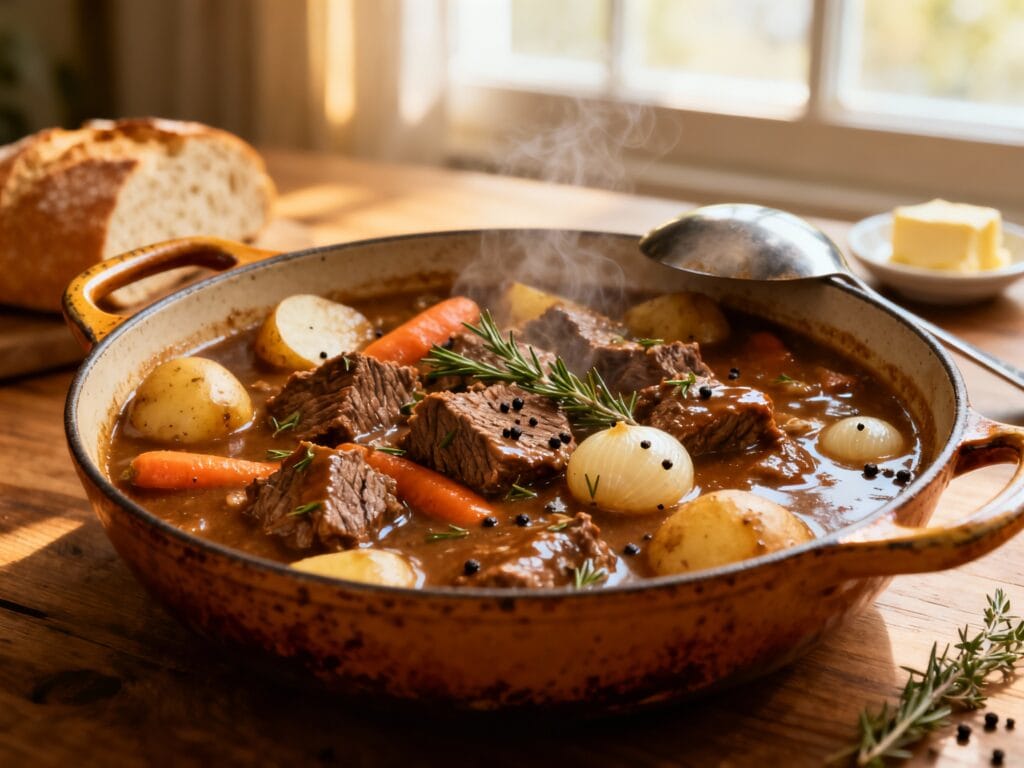
Cold nights basically demand one thing: a big, cozy bowl of beef stew. This one is rich, savory, and packed with tender beef, carrots, and potatoes in a glossy, herby gravy you’ll want to mop up with bread.
And because we all cook differently depending on the day (and energy level), this post breaks down how to make the same stew two ways: Dutch oven vs slow cooker. Same vibe, slightly different results—so you can pick your lane.
Why You’ll Love This
This beef stew is classic comfort food with real weeknight flexibility: deep flavor from browned beef, a thick, satisfying broth, and instructions for both Dutch oven (faster, richer browning) and slow cooker (hands-off, all-day cozy).
Ingredients
- 2 1/2 lb beef chuck roast, cut into 1 1/2-inch cubes
- 2 tsp kosher salt, plus more to taste
- 1 tsp black pepper
- 3 tbsp all-purpose flour
- 2 tbsp olive oil (or avocado oil)
- 1 large yellow onion, chopped
- 4 cloves garlic, minced
- 2 tbsp tomato paste
- 1 cup dry red wine (or extra beef broth)
- 4 cups beef broth
- 2 tbsp Worcestershire sauce
- 2 tsp Dijon mustard
- 2 bay leaves
- 1 tsp dried thyme (or 1 tbsp fresh)
- 4 medium carrots, cut into chunks
- 1 1/2 lb Yukon Gold potatoes, cut into chunks
- 2 celery ribs, sliced (optional but nice)
- 8 oz mushrooms, halved (optional)
- 1 cup frozen peas (optional, stirred in at the end)
- 1 tbsp cornstarch + 1 tbsp water (optional, for extra thickening)
- 2 tbsp chopped parsley, for serving
How to Make It
- Pat the beef dry (this matters). Toss with salt, pepper, and flour until lightly coated.
- Dutch oven: Heat oil in a large Dutch oven over medium-high. Brown beef in batches 3–4 minutes per side; transfer to a plate. Slow cooker: For best flavor, do the same browning step in a skillet; if you’re skipping it, still season the beef well.
- Add onion to the pot (or skillet) with a little more oil if needed. Cook 3–5 minutes until softened. Stir in garlic and tomato paste; cook 1 minute to toast it.
- Deglaze with red wine, scraping up the browned bits. Simmer 2–3 minutes to reduce slightly.
- Stir in beef broth, Worcestershire, Dijon, bay leaves, and thyme. Return beef (and any juices) to the liquid.
- Add carrots, potatoes, and celery/mushrooms if using.
- Dutch oven: Cover and simmer on low (gentle bubbles) for 2 to 2 1/2 hours, stirring occasionally, until beef is fork-tender. Slow cooker: Cook on LOW 8 hours or HIGH 4–5 hours, until tender.
- Finish the texture: Remove bay leaves. If you want it thicker, stir in the cornstarch slurry and simmer (Dutch oven) 3–5 minutes or (slow cooker) cook on HIGH 10–15 minutes with the lid on.
- Stir in peas (if using) for the last 2–3 minutes. Taste and adjust salt, pepper, and a splash of Worcestershire if you want more depth. Top with parsley and serve.
Tips for the Best Results
- Dutch oven vs slow cooker flavor: Dutch oven gives you deeper caramelization and a slightly silkier sauce. Slow cooker is softer, more “stew-y,” and effortless—especially if you brown first.
- Don’t crowd the beef: Brown in batches so it sears instead of steaming.
- Cut size matters: Keep beef and veggies in big-ish chunks so they don’t disappear into the broth.
- Potato choice: Yukon Golds hold shape and taste buttery. Russets can break down and thicken more (not a bad thing).
- Salt at the end too: Broth reduces and flavors concentrate, so do a final seasoning check right before serving.
- Want a darker, richer stew? Add 1–2 tsp soy sauce or a tiny splash of balsamic at the end.
Variations
- No wine: Swap with more beef broth plus 1 tbsp balsamic vinegar for a similar “wow.”
- More veggies: Add parsnips, turnips, or sweet potato (add sweet potato in the last half so it doesn’t get mushy).
- Spicy-cozy: Add a pinch of red pepper flakes or smoked paprika with the tomato paste.
- Herb upgrade: Use fresh rosemary and thyme (tie with kitchen twine for easy removal).
- Gluten-free: Skip flour and use cornstarch at the end, or dredge beef in gluten-free all-purpose flour.
Storage & Reheating
Store beef stew in an airtight container in the fridge for up to 4 days or freeze for up to 3 months. Reheat gently on the stovetop over medium-low, adding a splash of broth or water if it’s thick; microwave works too—use a cover and stir halfway for even heating.
FAQ
Dutch oven vs slow cooker: which one makes more tender beef?
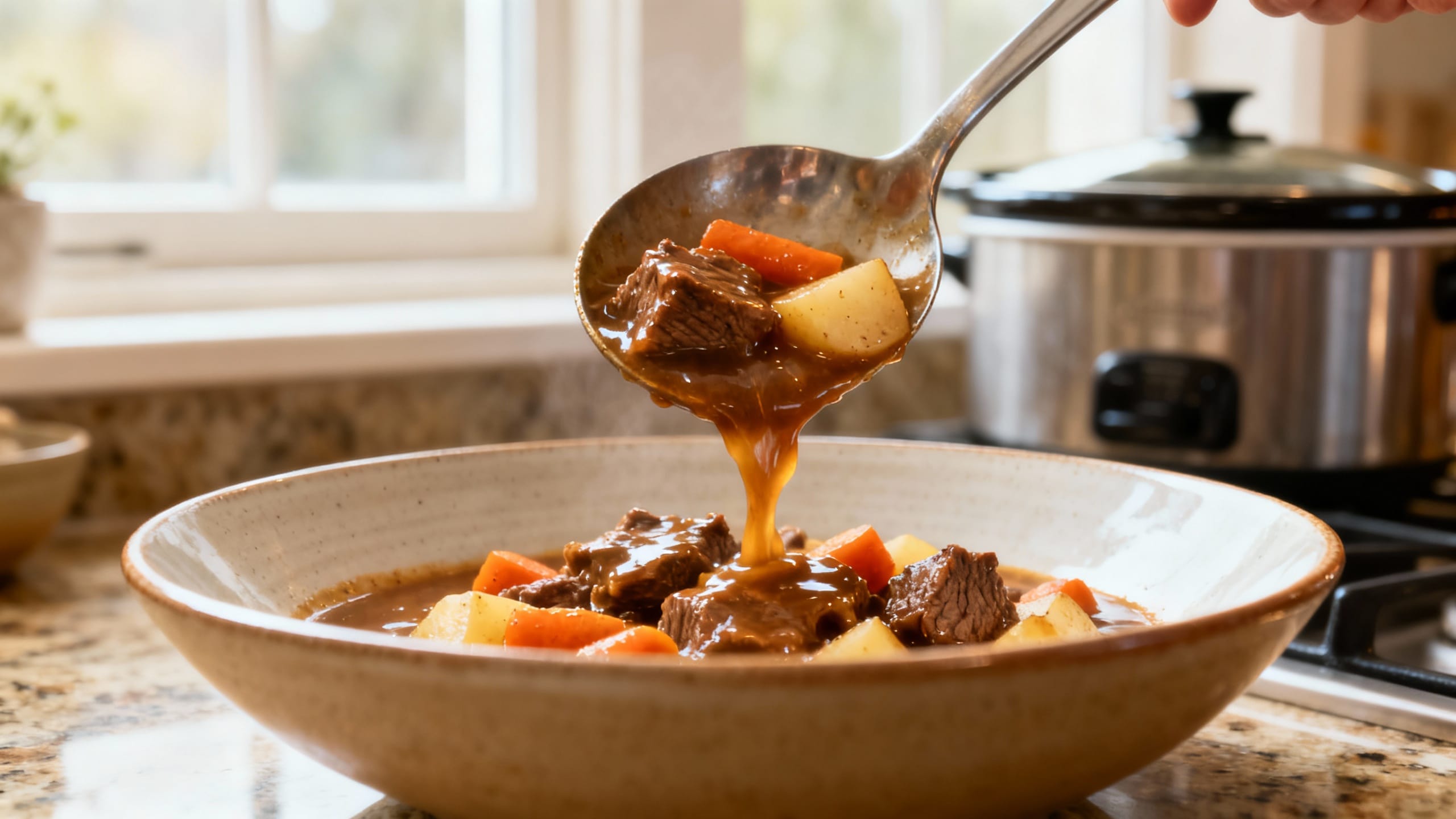
Both can make super tender beef, but the slow cooker is more forgiving because it holds a steady low heat for hours. The Dutch oven can be just as tender as long as you keep it at a gentle simmer (not a rolling boil) and give it enough time.
Do I really need to brown the beef first?
If you want the best flavor, yes—browning adds those deep, savory notes that make stew taste restaurant-level. In a slow cooker, browning isn’t required for safety, but it’s the difference between “fine” and “can I get a second bowl?”
Why did my potatoes turn mushy in the slow cooker?
Potatoes can overcook if they’re cut too small or cooked on HIGH too long. Use Yukon Golds, cut them into larger chunks, and cook on LOW if you can. Also, keep potatoes fully submerged so they cook evenly.
How do I thicken beef stew without making it gummy?
For a smooth thickness, use a cornstarch slurry (1 tbsp cornstarch + 1 tbsp water) and add it near the end. Simmer just until thickened. Avoid adding a lot of flour late in the cooking process—it can taste pasty and feel heavy.
Can I prep this the night before?
Yes. Chop veggies and cube the beef up to 24 hours ahead (store separately). You can also fully cook the stew the day before—its flavor actually gets better overnight. Reheat gently and add a splash of broth to loosen it up.