


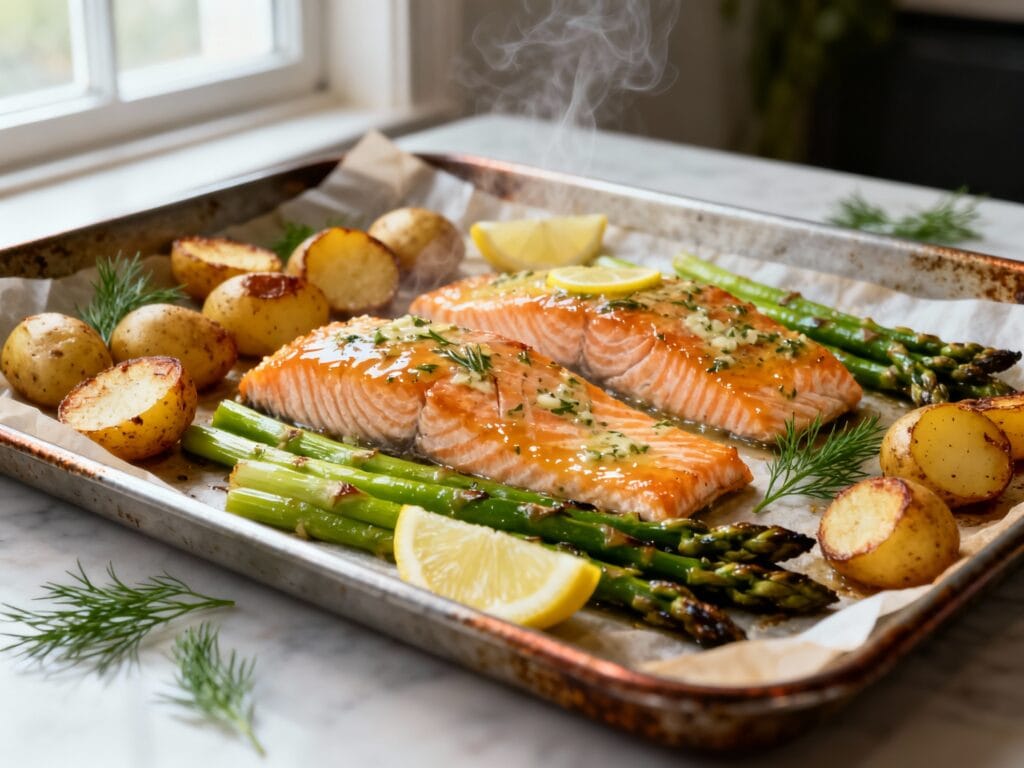
If you’re craving a dinner that looks like you tried (but didn’t), this baked salmon with potatoes and asparagus is the move. It’s a true sheet-pan situation: everything cooks together, the flavors mingle, and cleanup is basically a victory lap.
You’ll get tender, flaky salmon, crispy-edged potatoes, and bright asparagus in one go—perfect for weeknights, meal prep, or when you want something wholesome without being high-effort.
Why You’ll Love This
It’s an easy sheet-pan dinner that feels fresh and a little fancy, but it’s honestly just smart timing: start the potatoes first, then add asparagus and salmon so everything finishes at the same time—hot, seasoned, and ready to plate.
Ingredients
- 1 1/2 lbs baby potatoes (or Yukon gold), halved (quartered if large)
- 1 bunch asparagus, ends trimmed
- 4 salmon fillets (about 5–6 oz each), skin-on or skinless
- 3 tbsp olive oil, divided
- 1 1/4 tsp kosher salt, divided (plus more to taste)
- 1/2 tsp black pepper, divided
- 1 tsp garlic powder
- 1 tsp smoked paprika (or sweet paprika)
- 1 tsp dried dill (or 1 tbsp fresh, chopped)
- 1 lemon (half sliced, half for squeezing)
- 2 tbsp butter, melted (optional, for extra gloss on the salmon)
How to Make It
- Preheat your oven to 425°F. Line a large sheet pan with parchment paper or foil for easier cleanup.
- Toss the potatoes with 2 tbsp olive oil, 3/4 tsp salt, and 1/4 tsp pepper. Spread them out cut-side down (or as flat as possible) in a single layer.
- Roast the potatoes for 15 minutes, then flip/stir them and roast for 8–10 minutes more, until they’re starting to brown and feel close to tender when pierced with a fork.
- While the potatoes roast, pat the salmon dry with paper towels. In a small bowl, mix garlic powder, paprika, dill, 1/2 tsp salt, and 1/4 tsp pepper. Rub the salmon with 1 tbsp olive oil (and melted butter if using), then sprinkle the seasoning mix evenly over the top.
- Push the potatoes to one side of the pan. Add the asparagus to the open space, toss with a drizzle of olive oil (or a quick spray), and season with a pinch of salt and pepper.
- Nestle the salmon fillets onto the sheet pan, leaving a little space between them. Add lemon slices on top of the salmon or tuck them around the pan.
- Bake for 10–14 minutes, depending on thickness, until the salmon flakes easily and the asparagus is tender-crisp. If you like extra color, broil for 1–2 minutes at the end (watch closely).
- Finish with fresh lemon juice over everything. Taste and add an extra pinch of salt or pepper if needed, then serve right away.
Tips for the Best Results
- Start the potatoes first. They take longer than salmon and asparagus, so that head start is the whole secret.
- Dry the salmon well. Patting it dry helps the seasoning stick and prevents that “steamed” vibe.
- Don’t overcrowd the pan. If the ingredients are piled up, they’ll roast slower and get softer instead of golden.
- Cut potatoes evenly. Similar size = similar cook time = no random hard chunks.
- Know your salmon thickness. Thicker fillets need closer to 14 minutes; thinner ones can be done around 10.
- Use an instant-read thermometer if you want zero guesswork. Aim for about 125°F for medium (still juicy) or 135–140°F for more done.
- Asparagus varies a lot. Thin spears cook fast; thicker ones may need an extra minute or two (or add them a couple minutes earlier).
Variations
- Honey mustard salmon: Swap the dry rub for a mix of 1 tbsp Dijon, 1 tbsp honey, and 1 tsp olive oil. Brush on before baking.
- Greek-ish vibes: Season the potatoes with oregano and garlic, and finish the whole pan with crumbled feta and a squeeze of lemon.
- Cajun sheet-pan: Use Cajun seasoning on the salmon and potatoes, and add a little extra paprika for smoky color.
- Swap the veg: Broccoli florets, green beans, or Brussels sprouts work great—just adjust cook time (Brussels need longer, green beans are similar to asparagus).
- Extra crispy potatoes: Parboil the potatoes for 6–8 minutes, drain, rough them up a bit, then roast. More effort, but the crunch is real.
Storage & Reheating
Store leftovers in an airtight container in the fridge for up to 3 days. Reheat on a sheet pan at 350°F for 8–12 minutes until warmed through (this helps the potatoes stay crisp). For the fastest option, microwave in short bursts, but the salmon can dry out—add a squeeze of lemon and cover loosely.
FAQ
Can I use frozen salmon for this sheet-pan dinner?
Yes, but thaw it first for the best texture and even cooking. Thaw overnight in the fridge (preferred) or in a sealed bag in cold water for about 30–45 minutes. Pat it very dry before seasoning so it roasts instead of steaming.
What size potatoes work best, and do I need to peel them?
Baby potatoes are ideal because they cook quickly and get nice crispy edges. Yukon golds also work—just cut them into 1-inch chunks. No peeling needed; the skins help them hold their shape and add texture.
How do I know when the salmon is done without overcooking it?
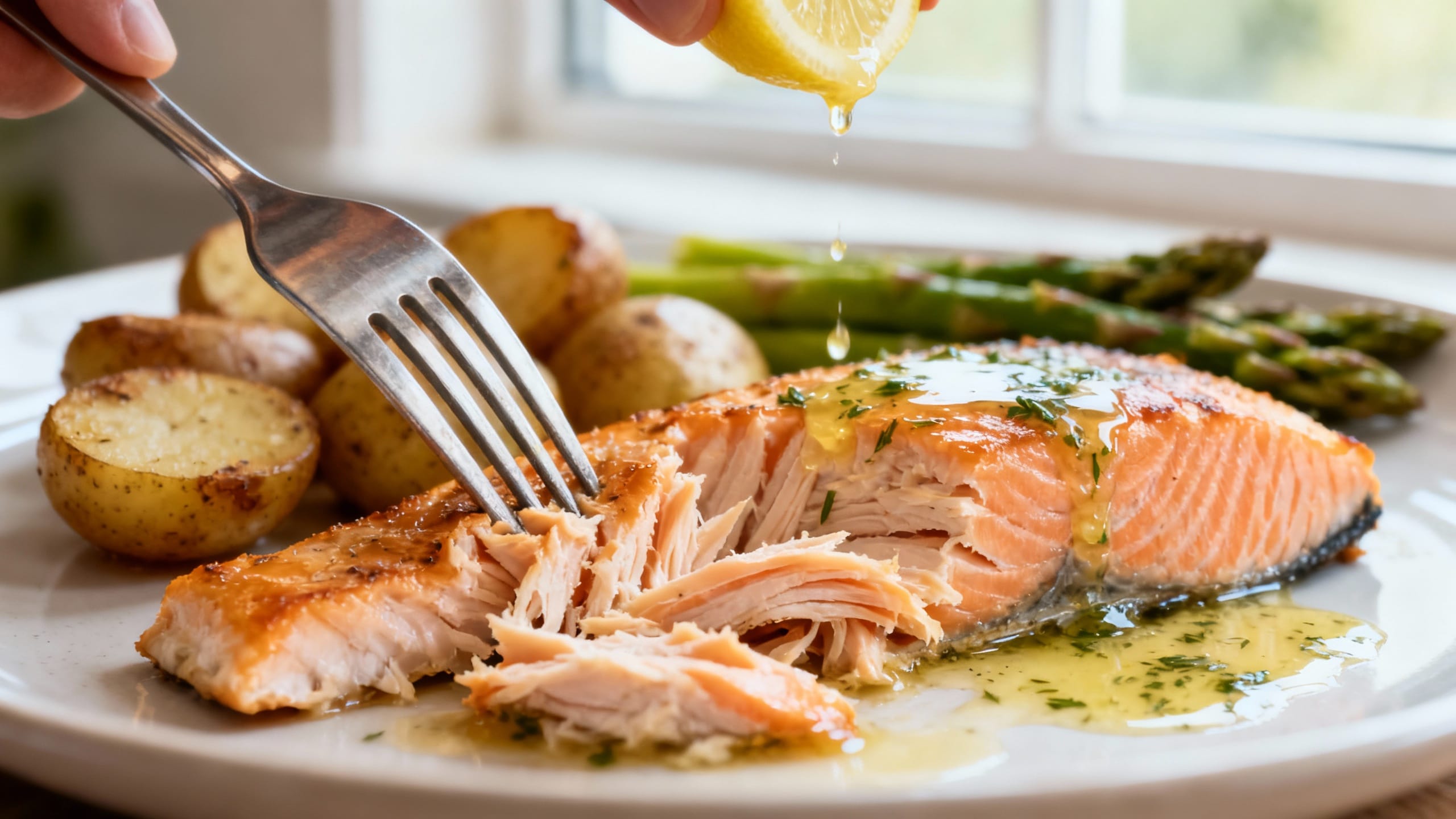
Look for salmon that flakes easily with a fork and has turned opaque on the outside, with a slightly darker center for medium. If you’re using a thermometer, 125°F is juicy/medium and 135–140°F is more fully cooked. Pull it a little early because it keeps cooking on the hot pan.
My asparagus turned soggy—what went wrong?
This usually happens when the pan is crowded or the asparagus is too thin and stayed in too long. Make sure the asparagus has space, and add very thin spears during the last 8–10 minutes instead of the full bake time. A quick broil at the end can also help.
Can I prep anything ahead of time to make this even easier?
Totally. You can halve the potatoes and trim the asparagus up to a day ahead, then store them in separate containers in the fridge. You can also mix the salmon seasoning in advance. When it’s time to cook, you’ll basically just toss, season, and bake.