


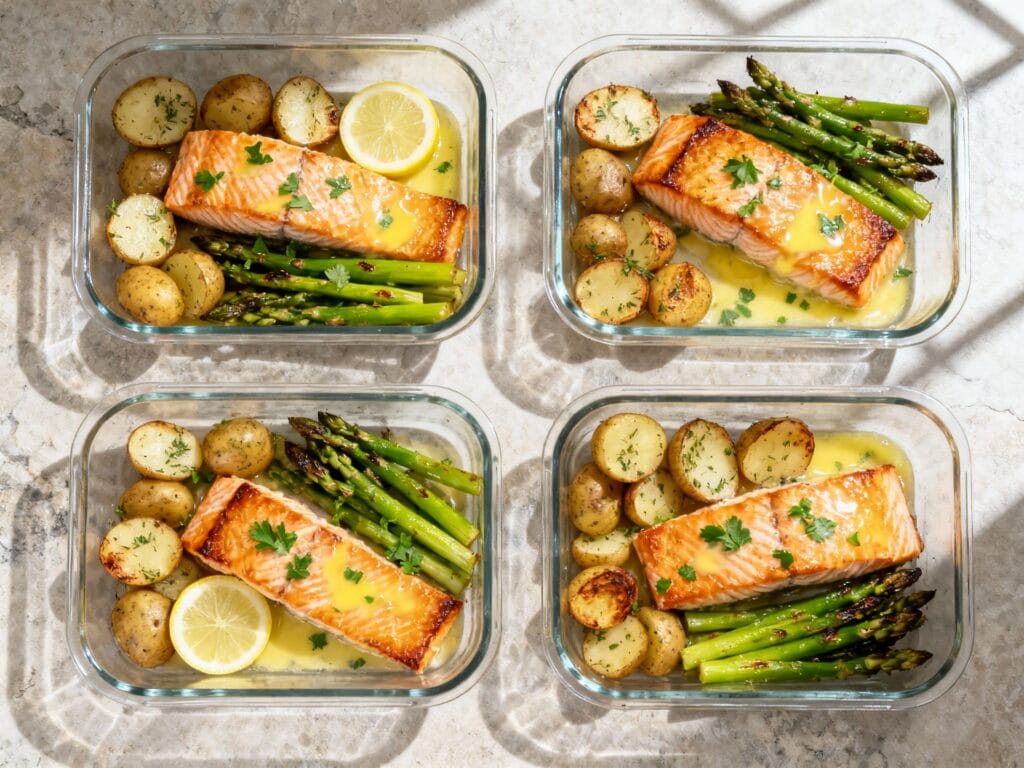
Baked Salmon, Potatoes, and Asparagus Meal Prep Boxes
If your week needs a little “I have my life together” energy, these baked salmon, potatoes, and asparagus meal prep boxes are it. Everything cooks on a couple sheet pans, the flavors are bright and buttery-lemony, and you end up with lunches (or quick dinners) that feel fresh, not sad.
This is the kind of meal prep that doesn’t taste like compromise: flaky salmon, crisp-tender asparagus, and roasted potatoes that actually reheat well. Bonus: you can mix and match sauces all week so it never gets boring.
Why You’ll Love This
It’s a balanced, high-protein meal prep that’s low-drama: simple ingredients, minimal cleanup, and dependable leftovers. The timing is built so nothing overcooks, and the final boxes look like something you’d happily pay for at a café.
Ingredients
- 4 salmon fillets (about 5–6 oz each), skin-on or skinless
- 1 1/2 lb baby potatoes (or Yukon gold), halved or quartered
- 1 lb asparagus, tough ends trimmed
- 3 tbsp olive oil, divided
- 2 tbsp unsalted butter, melted (or more olive oil)
- 2 cloves garlic, minced
- 1 lemon (zest + juice), plus extra wedges for serving
- 1 tsp Dijon mustard
- 1 tsp dried oregano (or Italian seasoning)
- 1/2 tsp smoked paprika
- 1 1/4 tsp kosher salt, divided (plus more to taste)
- 1/2 tsp black pepper, plus more to taste
- Optional for serving: chopped parsley or dill, red pepper flakes
How to Make It
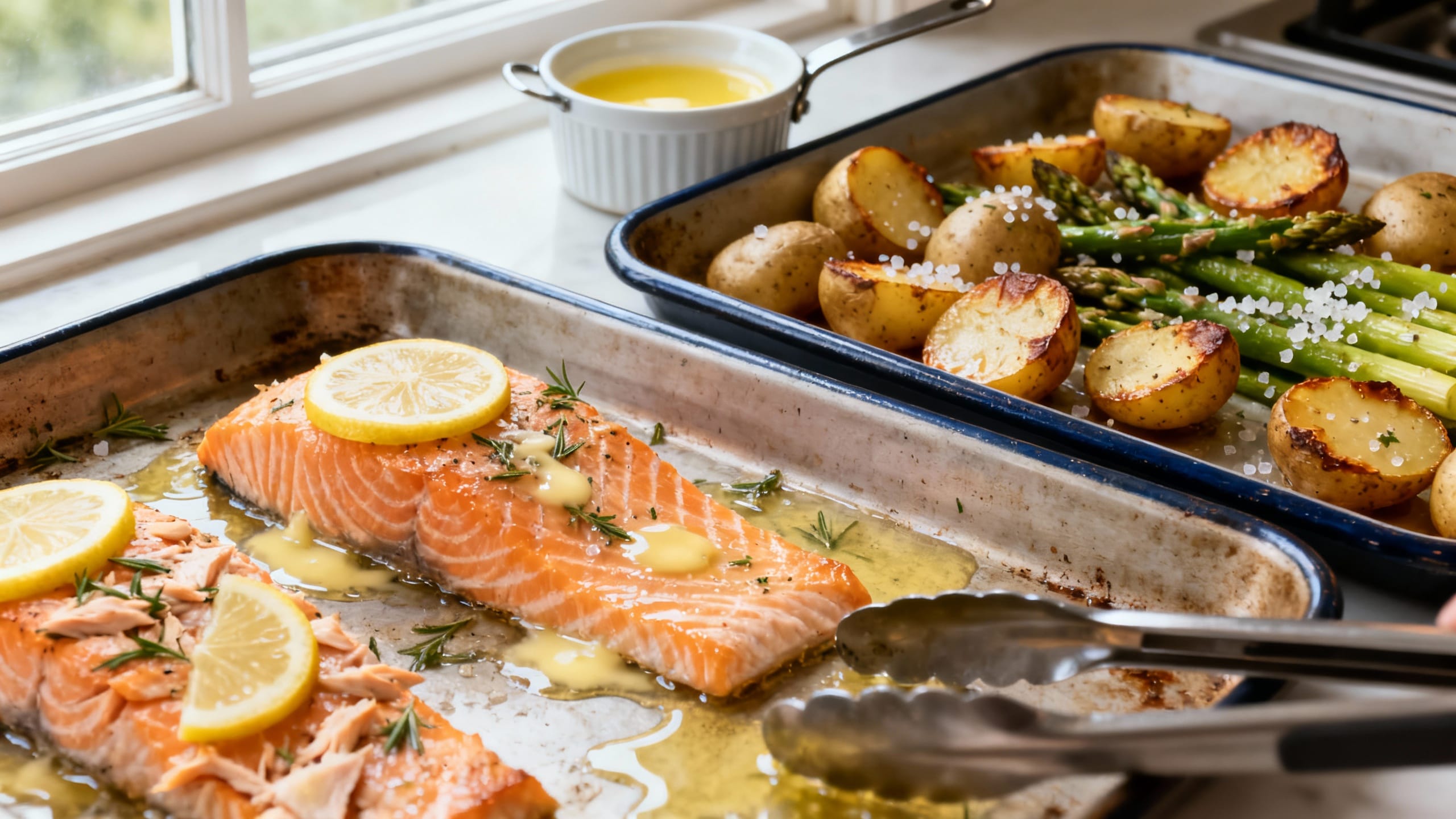
- Preheat your oven to 425°F. Line two sheet pans with parchment paper (or foil for easy cleanup).
- Prep the potatoes: add potatoes to one sheet pan. Toss with 2 tbsp olive oil, 3/4 tsp salt, 1/4 tsp pepper, oregano, and smoked paprika. Spread into an even layer, cut sides down when possible.
- Roast the potatoes for 15 minutes to give them a head start (this is the secret to everything finishing together).
- Meanwhile, make the salmon drizzle: in a small bowl, mix melted butter, garlic, lemon zest, 1 tbsp lemon juice, Dijon mustard, and a pinch of salt and pepper.
- Season the salmon: place fillets on the second sheet pan. Pat dry, then lightly salt and pepper. Spoon the lemon-garlic butter mixture over the top of each fillet.
- Add asparagus to the potato pan: after the potatoes have roasted 15 minutes, push them to one side and add asparagus. Toss asparagus with the remaining 1 tbsp olive oil, 1/2 tsp salt, and a little pepper.
- Bake everything: put both pans in the oven. Roast for 10–12 minutes, until the salmon flakes easily (about 130–140°F for medium, 145°F for fully cooked) and the asparagus is crisp-tender.
- Finish and portion: squeeze a little extra lemon over the salmon. Let everything rest 3 minutes, then divide potatoes, asparagus, and salmon into 4 meal prep containers. Add lemon wedges and herbs if you’re feeling fancy.
Tips for the Best Results
- Pat the salmon dry before seasoning. Less moisture = better roasting and a nicer top.
- Cut potatoes evenly so they finish at the same time. If some pieces are huge, they’ll hold up the whole operation.
- Don’t overcook the salmon. Pull it when it flakes and still looks juicy; it will carry over a bit while resting.
- Asparagus thickness matters: thin spears may only need 8–10 minutes; thick spears can handle 12–14.
- Use two pans if you can. It keeps the asparagus from steaming and helps everything roast, not sog.
- If you love crispy potatoes, give them a flip when you add the asparagus.
Variations
- Honey mustard salmon: swap the Dijon mixture for 1 tbsp Dijon + 1 tbsp honey + 1 tsp soy sauce.
- Garlic parmesan asparagus: toss asparagus with a spoonful of grated parmesan after roasting (not before, or it can burn).
- Sweet potato switch: use cubed sweet potatoes instead of baby potatoes (they roast faster; start checking at the 20-minute mark total).
- Spicy-lemon version: add 1/2 tsp red pepper flakes to the butter mixture and finish with extra lemon juice.
- Different veg: broccoli florets or green beans work great. Add them when you’d add asparagus and adjust cook time as needed.
- Sauce it up: pack a little container of tzatziki, pesto, chimichurri, or garlic aioli for dipping and drizzle energy.
Storage & Reheating
Cool completely, then seal meal prep boxes and refrigerate for up to 3–4 days. Reheat gently in the microwave (about 60–90 seconds, then in 20-second bursts) so the salmon stays tender; or warm in a 325°F oven until heated through. Add a fresh squeeze of lemon after reheating to wake everything back up.
FAQ
How do I keep salmon from drying out in meal prep boxes?
Cook it just until it flakes and still looks slightly glossy in the center (aim for 130–140°F if you like it medium, or 145°F for fully cooked). For reheating, go low and slow: short microwave bursts or a 325°F oven. Adding lemon juice or a little sauce after reheating also helps it taste freshly made.
Can I use frozen salmon?
Yes, but thaw it first for the best texture and even cooking. Thaw overnight in the fridge, pat dry, then proceed as written. If you’re in a rush, you can thaw in a sealed bag in cold water for about 30–45 minutes.
What kind of potatoes reheat best for meal prep?
Baby potatoes and Yukon golds are the move because they stay creamy instead of turning grainy. Roast them until browned, and store them separate from any extra sauce so they don’t get soggy.
How do I avoid overcooked asparagus?
Add it later (after the potatoes have a head start) and roast until it’s bright green and crisp-tender. If your asparagus is super thin, start checking at 8–10 minutes. If it’s thick, 12–14 minutes usually works.
How many meal prep boxes does this make, and can I scale it?
This makes 4 meal prep boxes (one salmon fillet per box). You can double it easily, just use extra sheet pans so everything roasts instead of steaming. If your oven is crowded, rotate pans halfway through for even browning.