


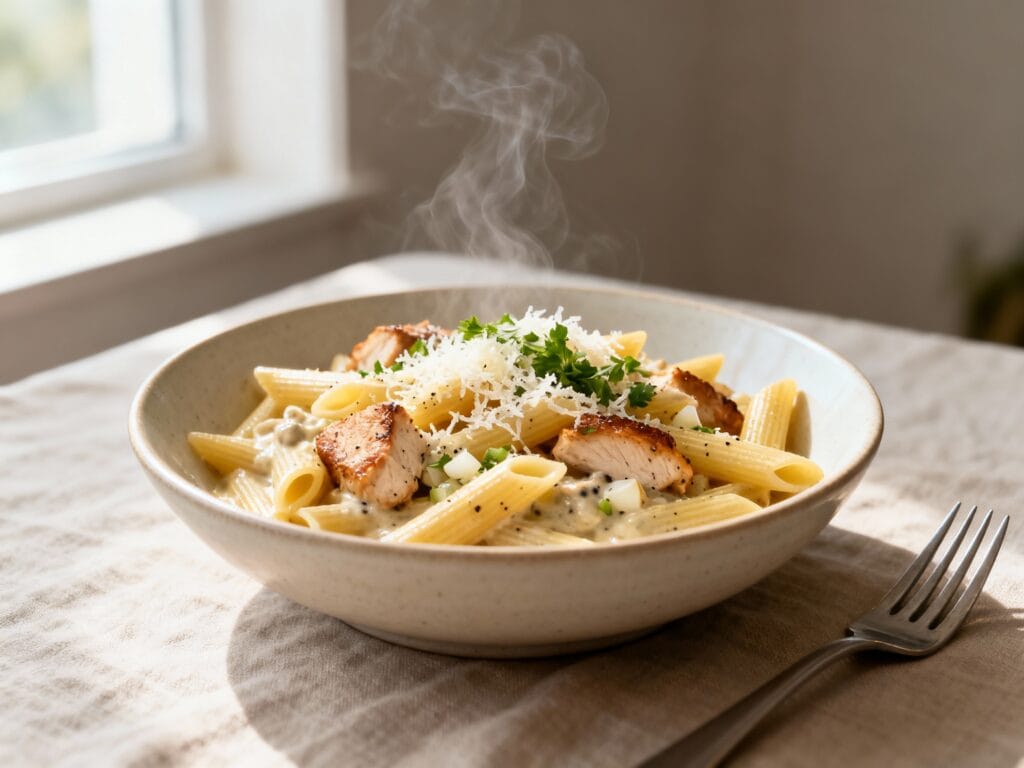
Some nights you want “real dinner” energy without a grocery run, a sink full of pans, or a sauce that needs a whole dairy aisle. This Simple Garlic Parmesan Chicken Pasta is the weeknight cheat code: cozy, creamy-ish (without being heavy), and made with pantry staples you probably already have.
It’s the kind of recipe that tastes like you tried… but it’s actually just smart timing, a few basics, and lots of garlic + Parmesan doing the absolute most.
Why You’ll Love This
It’s quick, budget-friendly, and flexible: you can use any pasta shape, swap in frozen chicken or leftover rotisserie, and still get that garlicky, savory, Parmesan-coated comfort that feels restaurant-level with minimal effort.
Ingredients
- 12 oz pasta (spaghetti, penne, rotini, or whatever you’ve got)
- 1 lb boneless, skinless chicken breast (or thighs), cut into bite-size pieces
- 1 tsp Italian seasoning
- 3/4 tsp kosher salt, plus more for pasta water
- 1/2 tsp black pepper
- 2 tbsp olive oil
- 3 tbsp unsalted butter
- 5–6 cloves garlic, minced (or 1 1/2 tsp garlic powder in a pinch)
- 2 tbsp all-purpose flour
- 2 cups chicken broth (boxed is perfect)
- 1/2 cup milk (any kind, including 2% or whole; unsweetened plain non-dairy works too)
- 1 cup finely grated Parmesan (plus more for serving)
- 1/4 tsp red pepper flakes (optional)
- 2 cups baby spinach (optional, but highly recommended)
- Fresh parsley or basil for topping (optional)
How to Make It
- Bring a large pot of salted water to a boil and cook the pasta until just al dente (check the box time, then shave off about 1 minute). Before draining, scoop out 1 cup of pasta water and set it aside.
- While the pasta cooks, season the chicken with Italian seasoning, salt, and pepper.
- Heat olive oil in a large skillet over medium-high heat. Add chicken in an even layer and cook 4–6 minutes, stirring occasionally, until browned and cooked through. Transfer chicken to a plate.
- Lower heat to medium. Add butter to the same skillet. Once melted, add garlic and cook for about 30–45 seconds, just until fragrant (don’t let it brown).
- Sprinkle in the flour and stir continuously for 1 minute to form a quick roux. It should look like a paste coating the pan.
- Slowly pour in the chicken broth while whisking or stirring to keep it smooth. Add milk and bring to a gentle simmer for 2–3 minutes, until slightly thickened.
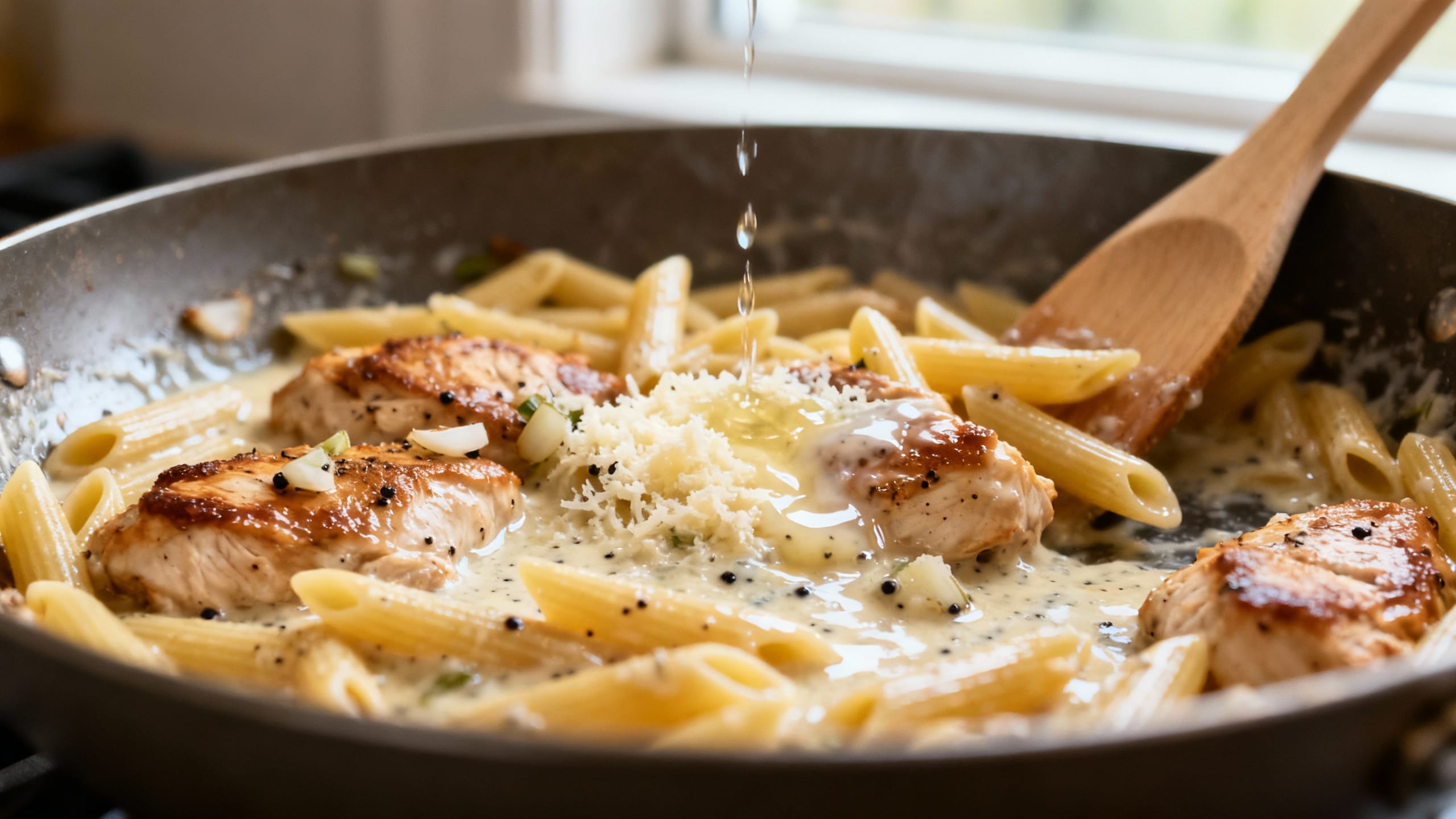
- Turn heat to low and stir in the Parmesan a handful at a time until melted. If using, add red pepper flakes and spinach, stirring until the spinach wilts.
- Add the drained pasta and cooked chicken back into the skillet. Toss until everything is coated. If the sauce looks tight, add a splash of reserved pasta water (a few tablespoons at a time) until glossy and silky.
- Taste and adjust: more salt, pepper, Parmesan, or a tiny squeeze of lemon if you want it brighter. Serve hot with extra Parmesan on top.
Tips for the Best Results
- Grate your own Parmesan if possible. Pre-shredded can be waxy and won’t melt as smoothly. Finely grated is the move for a velvety sauce.
- Don’t overcook the pasta. Slightly under is perfect because it finishes in the sauce.
- Use reserved pasta water like a pro. That starchy water helps the sauce cling to every noodle instead of sliding off.
- Keep the heat low when adding cheese. High heat can make Parmesan clump or turn grainy.
- Cut chicken evenly. Bite-size pieces cook fast and stay juicy.
- Garlic burns fast. If it starts browning, add the broth immediately to stop the cooking.
Variations
- Make it extra creamy: Swap the milk for half-and-half, or stir in 2–3 tbsp cream cheese at the end.
- Use canned chicken: Drain well and add it when you return the pasta to the skillet—no need to sauté.
- Add veggies: Toss in frozen peas, chopped broccoli, or sautéed mushrooms. (Broccoli works best if you steam it in the pasta water for the last 2 minutes.)
- Make it lemon-garlic Parmesan: Add 1 tsp lemon zest and 1–2 tbsp lemon juice right before serving.
- Spicy version: Double the red pepper flakes, or add a spoonful of Calabrian chili paste.
- Gluten-free: Use gluten-free pasta and swap flour for a 1:1 gluten-free blend (or skip flour and reduce sauce longer).
Storage & Reheating
Store leftovers in an airtight container in the fridge for up to 3 days. Reheat in a skillet over low heat (best texture) with a splash of broth, milk, or water to loosen the sauce, stirring often until warmed through; the microwave works too—use 50% power and stir halfway so the chicken stays tender.
FAQ
Can I make this with only garlic powder (no fresh garlic)?
Yes. Use 1 1/2 to 2 teaspoons garlic powder, adding it after the butter melts (before the flour). The flavor will be slightly less punchy than fresh garlic, but still very good and totally pantry-friendly.
Why is my Parmesan sauce grainy?
Usually it’s either heat that’s too high or the cheese type. Keep the sauce on low when adding Parmesan, and use finely grated Parmesan (not the shelf-stable “shaker” style). If it starts looking grainy, add a splash of warm broth and whisk gently to smooth it out.
Can I use rotisserie chicken or leftover cooked chicken?
Absolutely. Skip the chicken cooking step and add shredded or chopped cooked chicken when you toss the pasta in the sauce. Warm it through for 1–2 minutes so it doesn’t dry out.
What pantry pasta shapes work best for this recipe?
Anything works, but shapes with ridges or curves hold the sauce best—penne, rotini, and rigatoni are especially good. Spaghetti is great too; just use a little extra pasta water to help the sauce cling.
Can I freeze garlic Parmesan chicken pasta?
You can, but the texture is best fresh. If you do freeze it, cool completely and store in a freezer-safe container for up to 2 months. Thaw overnight in the fridge, then reheat gently with added broth or milk to bring the sauce back to life.