


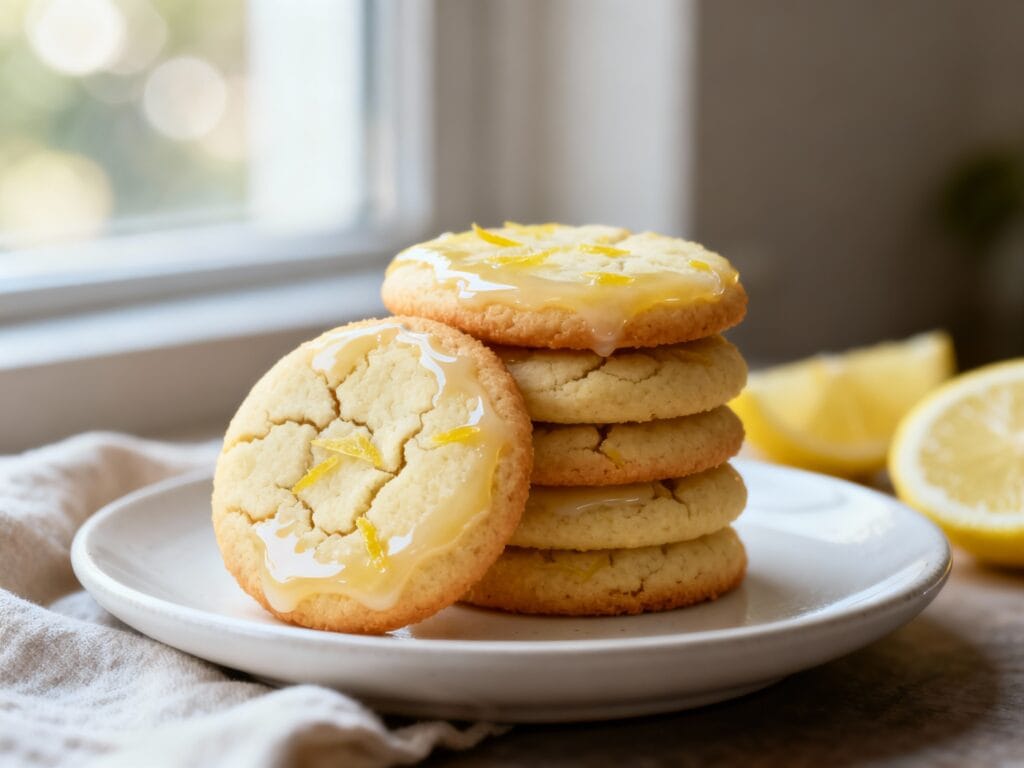
These soft lemon cookies are the kind of dessert that disappears fast: pillowy centers, bright citrus flavor, and a glossy sweet glaze that sets into that dreamy crackle on top. Think bakery-style lemon crinkle vibes, but softer, smoother, and extra zesty.
They’re simple enough for a weeknight bake, but cute enough for gifting, brunch trays, showers, and basically any moment that needs something sunny.
Why You’ll Love This
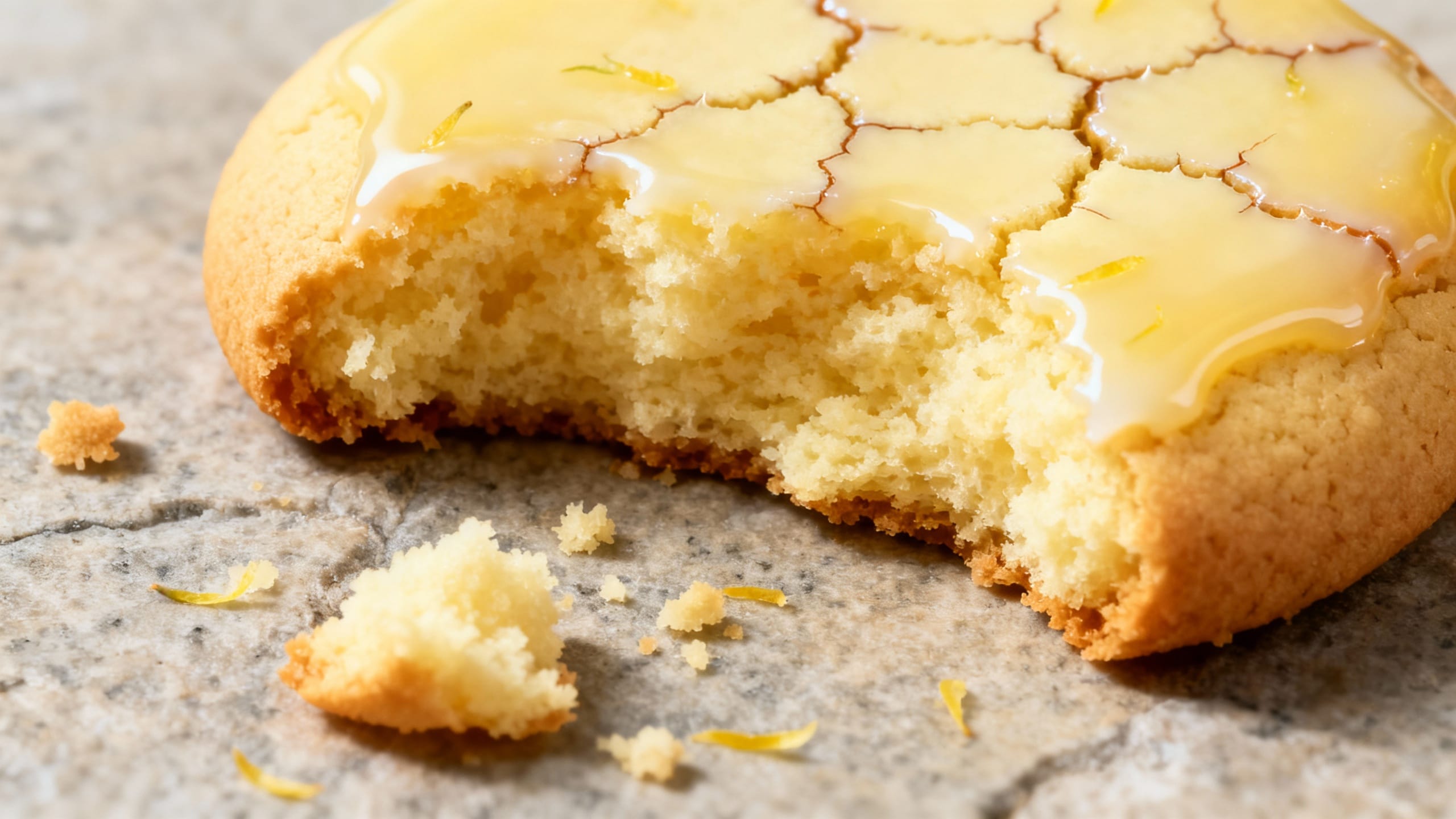
You get big lemon flavor without the sour face: buttery-soft cookies with a tender bite, plus a vanilla-lemon glaze that dries into a delicate shell and cracks like it’s been professionally styled (but it’s just smart timing and the right texture).
Ingredients
- 2 1/4 cups (270g) all-purpose flour
- 1 tsp baking powder
- 1/2 tsp baking soda
- 1/2 tsp fine salt
- 1 cup (200g) granulated sugar
- 2 tbsp fresh lemon zest (about 2 large lemons)
- 1/2 cup (113g) unsalted butter, softened
- 1 large egg, room temperature
- 1 large egg yolk, room temperature
- 2 tbsp fresh lemon juice
- 1 tsp vanilla extract
- 1/3 cup (80g) sour cream or full-fat Greek yogurt
- For rolling: 1/3 cup (65g) granulated sugar
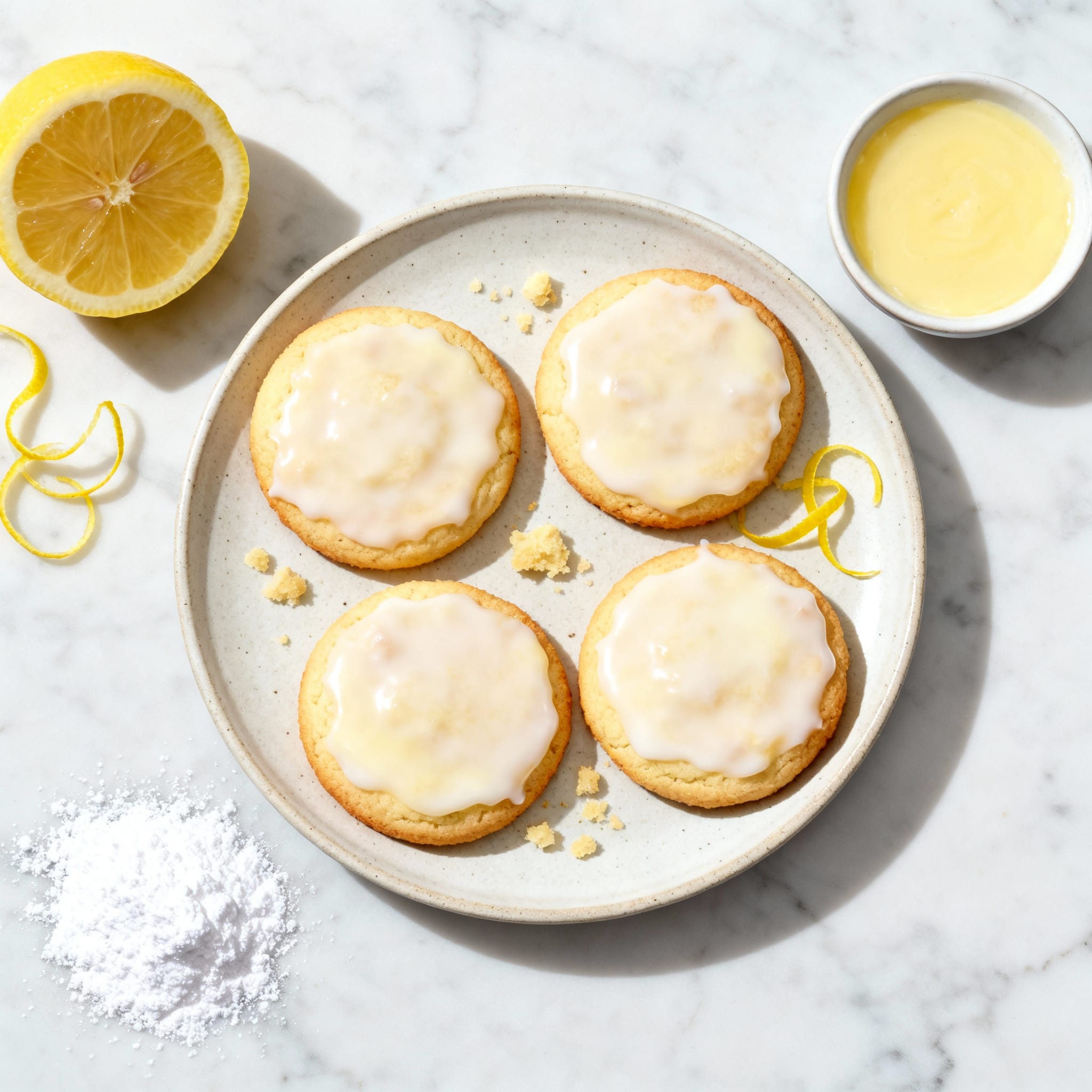
- For the glaze: 1 1/4 cups (150g) powdered sugar, sifted
- For the glaze: 1 1/2–2 1/2 tbsp fresh lemon juice (plus more as needed)
- For the glaze: 1/2 tsp vanilla extract
- Optional: pinch of salt for the glaze (highly recommended)
How to Make It
- Preheat the oven to 350°F (175°C). Line two baking sheets with parchment paper.
- Whisk flour, baking powder, baking soda, and salt in a medium bowl. Set aside.
- In a large bowl, rub the lemon zest into the granulated sugar with your fingertips for 30 seconds until it feels slightly damp and super fragrant. This step makes the lemon flavor pop.
- Cream the butter into the lemon sugar until light and fluffy, about 2 minutes. Beat in the egg and egg yolk until smooth, then mix in lemon juice and vanilla.
- Mix in the sour cream (or Greek yogurt). The dough should look creamy and slightly thick.
- Add the dry ingredients and mix just until no flour streaks remain. Cover and chill the dough for 30–45 minutes (it should be scoopable and not sticky).
- Scoop dough into 1 1/2-tablespoon portions (about 30–35g each). Roll into balls, then roll each ball in granulated sugar.
- Bake for 9–11 minutes, until the tops look set and the edges are just barely turning pale golden. The centers should look soft and slightly underdone (they’ll finish on the tray).
- Cool cookies on the baking sheet for 5 minutes, then transfer to a rack to cool completely.
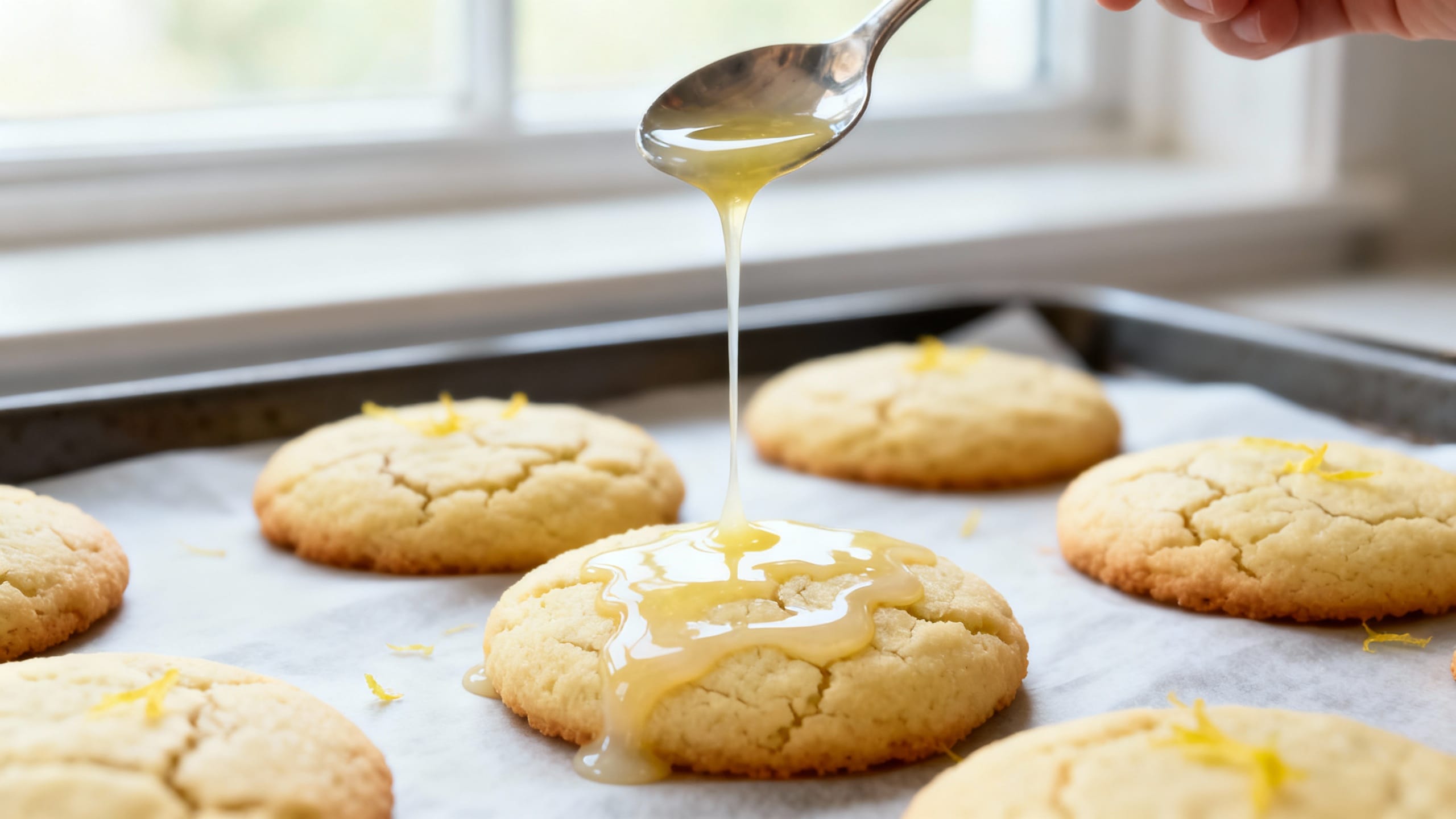
- Make the glaze: whisk powdered sugar, lemon juice, vanilla, and a pinch of salt until smooth. You want a thick ribbon consistency (it should settle back into itself in about 10 seconds).
- Glaze the cooled cookies by spooning a little on top and gently nudging it toward the edges. Let set 20–30 minutes. As the glaze dries, it will crackle naturally.
Tips for the Best Results
- Chill the dough: This keeps the cookies thick and soft, and it helps prevent spreading into flat lemon wafers.
- Don’t overbake: Pull them when they look set but still soft in the center. Overbaking dries them out and dulls the lemon.
- Zest first, then juice: It’s easier, and the zest carries most of the lemon aroma. Use a microplane for the fluffiest zest.
- Glaze thickness matters: Too thin = it soaks in and looks shiny, not crackly. Too thick = it sits like frosting. Aim for that slow ribbon.
- Cool completely before glazing: Warm cookies melt glaze and you lose the pretty crackle.
- Use parchment: It prevents over-browning on the bottoms and keeps them tender.
Variations
- Lemon poppy seed: Add 1 1/2 tbsp poppy seeds to the dough with the dry ingredients.
- Lemon-berry: Add 1/2 cup freeze-dried raspberries, lightly crushed, to the dough for a sweet-tart twist.
- Coconut-lemon: Swap vanilla for coconut extract and sprinkle toasted coconut over the wet glaze.
- Extra tangy glaze: Replace 1 tbsp of lemon juice with 1 tbsp of strained lemon curd (thin with juice as needed).
- Make them mini: Scoop 1 tablespoon portions and bake 8–9 minutes for bite-size cookies.
Storage & Serving
Store glazed cookies in an airtight container at room temperature for up to 3 days (separate layers with parchment to protect the crackly tops). For an extra-soft texture, add a slice of bread to the container. Serve at room temp for the best lemon flavor, or chill for a firmer, candy-like glaze bite.
FAQ
How do I get that perfect crackle on the glaze?
Use a thick glaze (slow ribbon consistency) and glaze only fully cooled cookies. The crackle happens as the top dries into a thin shell while the cookie underneath stays soft. Let them sit uncovered for 20–30 minutes to set before stacking.
Why did my cookies spread too much?
Most likely the dough was too warm or the butter was overly soft. Chill the dough at least 30 minutes, and make sure your baking sheet isn’t warm from a previous batch. Also measure flour accurately (spoon and level) to avoid a loose dough.
Can I make the dough ahead of time?
Yes. Cover and refrigerate the dough for up to 48 hours. When ready to bake, let it sit at room temperature for 10–15 minutes so it’s easier to scoop, then roll in sugar and bake as directed.
Can I freeze these lemon cookies?
You can freeze the unglazed baked cookies for up to 2 months. Thaw at room temperature, then glaze fresh for the best crackle. You can also freeze dough balls (unrolled) and bake from frozen—just add 1–2 minutes to bake time and roll in sugar right before baking.
My glaze won’t set—what should I do?
If it stays sticky, it’s usually too thin or the cookies were slightly warm. Whisk in a bit more powdered sugar (1–2 tablespoons at a time) and try again. Let the glazed cookies set in a cool, dry spot; humid kitchens can slow the set time.