


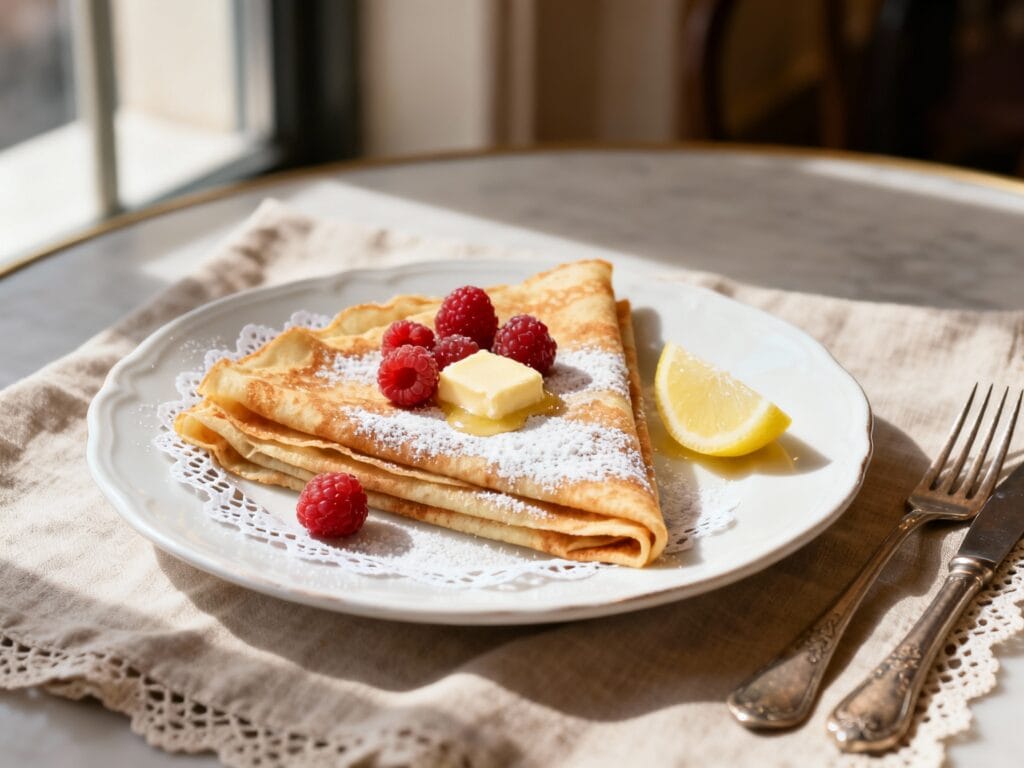
If you’ve ever tried making crepes and ended up with sad little pancakes that tear, stick, or refuse to flip, this is your reset. This French-style crepes recipe is the classic Paris café method: silky batter, quick swirl, and thin, lacy edges that lift like they’re supposed to.
No specialty equipment required, no dramatic chef energy needed—just a good nonstick pan, a rested batter, and a few simple moves. You’ll be stacking tender crepes in under 30 minutes, ready for lemon-sugar, Nutella, or something savory.
Why You’ll Love This
These crepes are light, flexible, and buttery with that signature café texture—thin but not fragile—so you can fold, roll, or stuff them without rips (or tears, yours included).
Ingredients
- 1 cup (125g) all-purpose flour
- 2 tablespoons sugar (optional for sweet crepes)
- 1/4 teaspoon fine salt
- 2 large eggs
- 1 1/4 cups (300ml) whole milk (room temp if possible)
- 2 tablespoons melted unsalted butter, plus more for the pan
- 1 teaspoon vanilla extract (optional for sweet crepes)
- 1–2 teaspoons neutral oil (optional, for extra nonstick insurance)
How to Make It
- Mix the dry ingredients. In a medium bowl, whisk flour, sugar (if using), and salt until evenly combined.
- Add eggs, then milk gradually. Make a well in the center, add eggs, and whisk until thick and smooth. Slowly whisk in the milk a splash at a time to avoid lumps, then whisk until the batter is silky.
- Finish with butter (and vanilla). Whisk in melted butter and vanilla (if using). The batter should be thin, like heavy cream. If it feels thick, whisk in 1–2 tablespoons more milk.
- Rest the batter. Cover and let rest 20–30 minutes at room temp (or up to overnight in the fridge). This is the “no rips” step: it relaxes the gluten and hydrates the flour.
- Heat the pan properly. Warm an 8–10 inch nonstick skillet over medium heat for 2–3 minutes. Lightly butter the pan (use a paper towel to leave a thin sheen, not puddles).
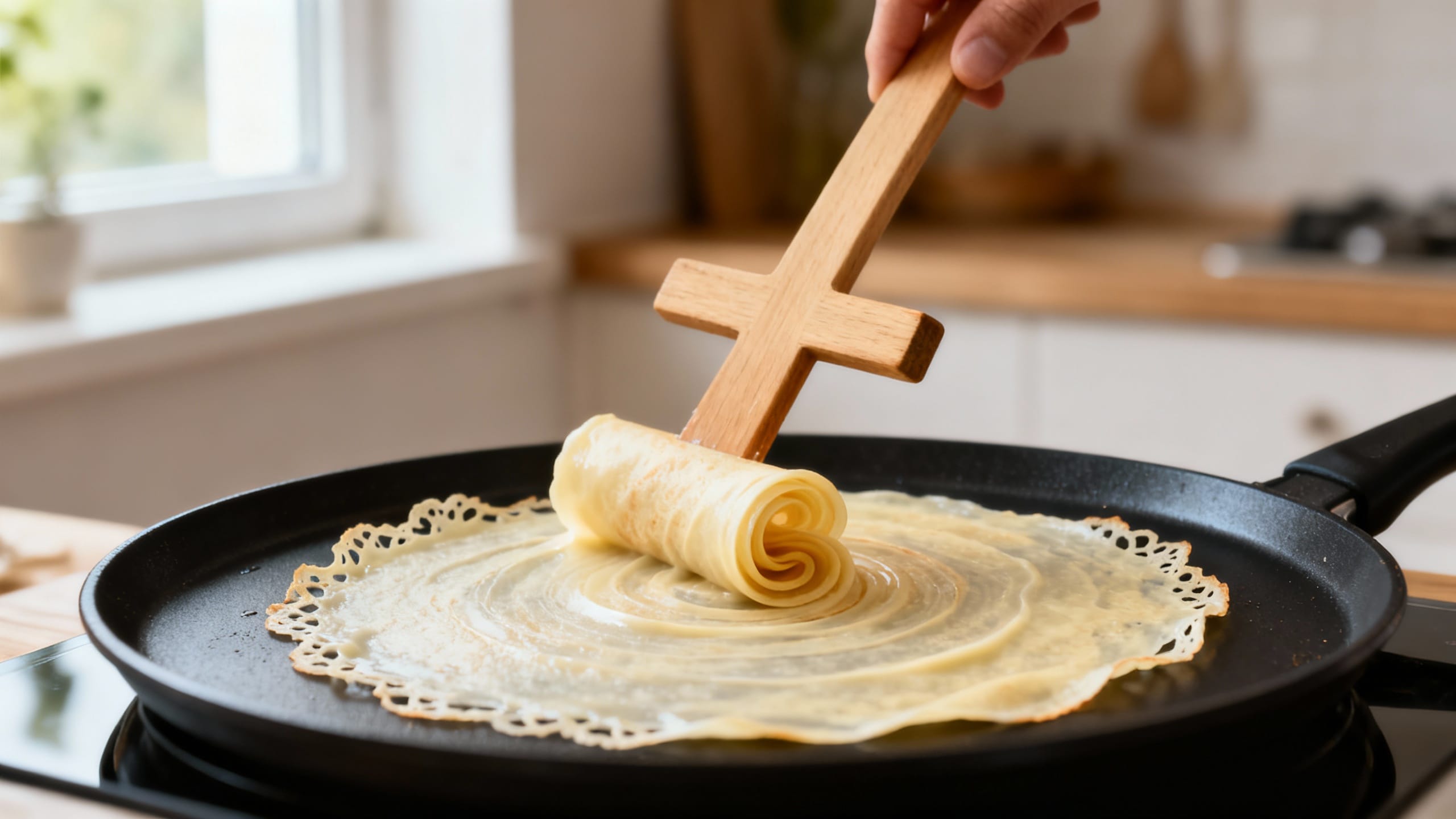
- Pour and swirl. Lift the pan off the heat, pour about 1/4 cup batter into the center, and immediately swirl to coat the bottom in a thin layer. Return to heat.
- Cook, then flip. Cook 45–75 seconds until the edges look dry and start to lift. Slide a thin spatula under the crepe and flip in one confident motion.
- Finish and stack. Cook the second side 20–40 seconds. Slide onto a plate and stack (stacking keeps them soft). Repeat, buttering the pan lightly every 2–3 crepes.
Tips for the Best Results
- Rest = Paris café vibes. Skipping the rest often leads to tearing and chewy crepes. Even 20 minutes helps a lot.
- Use the right heat. Medium is the sweet spot. Too hot and they get brittle; too low and they dry out before releasing.
- Go thin with the butter. Excess butter can “fry” the batter and cause lacy holes that turn into weak spots.
- First crepe is the tester. The first one is usually a little pale or oddly shaped. It’s not a failure; it’s calibration.
- Swirl fast. Batter sets quickly. Pour, swirl, and commit.
- If it’s sticking, fix the pan—not the batter. Wipe the pan, add a tiny bit more butter, and make sure the skillet is truly nonstick and preheated.
- Lumps? Don’t panic. Strain the batter through a fine mesh sieve, or blend for 10–15 seconds.
Variations
- Classic sweet (Paris style): Skip vanilla if you want a more neutral crepe, then serve with lemon juice and sugar or jam.
- Savory (galette-inspired): Omit sugar and vanilla. Add an extra pinch of salt and fill with ham, cheese, sautéed mushrooms, or an egg.
- Orange butter “Suzette-ish” shortcut: Stir orange zest into the batter and serve with warmed orange marmalade plus a little melted butter.
- Whole wheat blend: Replace 1/3 cup flour with whole wheat flour for a slightly nutty taste (add a splash more milk if needed).
- Extra-tender: Replace 1/4 cup milk with water or sparkling water for a lighter texture.
Storage & Reheating
Store crepes stacked with parchment between them in an airtight container in the fridge for up to 3 days. Reheat in a dry nonstick skillet over medium-low for about 20–30 seconds per side, or microwave covered with a damp paper towel for 15–25 seconds (just until warm, not hot).
FAQ
Why do my crepes tear when I flip them?
Most often it’s one of three things: the batter didn’t rest, the crepe wasn’t cooked enough on the first side, or the pan wasn’t properly preheated/nonstick. Let the first side set until the edges lift and the surface looks dry, then flip. Resting the batter for at least 20 minutes makes a noticeable difference in strength and flexibility.
What’s the “Paris café method,” exactly?
It’s the simple classic approach: thin batter, rested, cooked in a lightly buttered pan, poured off-heat and swirled quickly for an even, thin layer. No thick pancake texture, no heavy leavening—just delicate crepes that stay pliable.
Can I make the batter ahead of time?
Yes—this is actually ideal. Make it up to 24 hours ahead and store covered in the fridge. Before cooking, whisk well (flour settles), and if it thickened overnight, whisk in 1–3 tablespoons milk to get back to a pourable, cream-like consistency.
What pan size is best for French-style crepes?
An 8-inch pan makes smaller café-style crepes that are easier to flip; a 10-inch pan makes larger ones that are great for fillings. Either works—just adjust batter amount (about 3 tablespoons for 8-inch, about 1/4 cup for 10-inch) so the layer stays thin.
How do I keep crepes warm for serving without drying them out?
Stack them on a plate and cover loosely with foil, or keep them on a plate set over a barely-simmering pot of water (gentle steam). Stacking is key: it traps moisture so the crepes stay soft, flexible, and café-level foldable.