


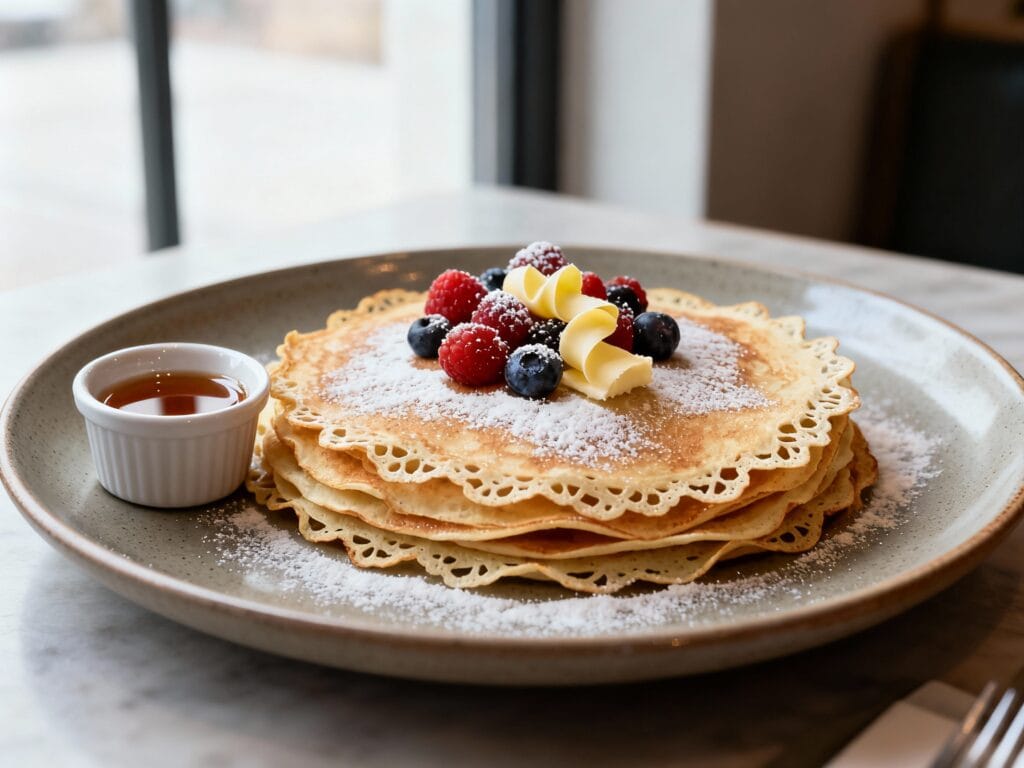
If crepes feel like a “restaurant-only” situation, this is your sign to make them at home. This easy crepes recipe skips the blender entirely, but still gives you that smooth, pourable batter that cooks up into thin, flexible crepes with lacy edges.
All you need is one bowl, a whisk, and about 20 minutes (including a quick rest, if you have it). Fill them sweet or savory, stack them high, and act like you didn’t just pull off a mini French café moment in your own kitchen.
Why You’ll Love This
This one-bowl crepe batter is simple, fast, and forgiving—no fancy equipment, no overthinking. The crepes cook up soft and tender, they don’t tear easily, and the batter is smooth enough to spread beautifully in the pan with just a swirl.
Ingredients
- 1 cup (125g) all-purpose flour
- 2 tablespoons granulated sugar (optional, for sweet crepes)
- 1/4 teaspoon fine salt
- 2 large eggs, room temperature if possible
- 1 1/4 cups (300ml) milk (any kind)
- 2 tablespoons melted butter (plus more for the pan)
- 1 teaspoon vanilla extract (optional, for sweet crepes)
- 1–2 tablespoons water, as needed to thin the batter
How to Make It
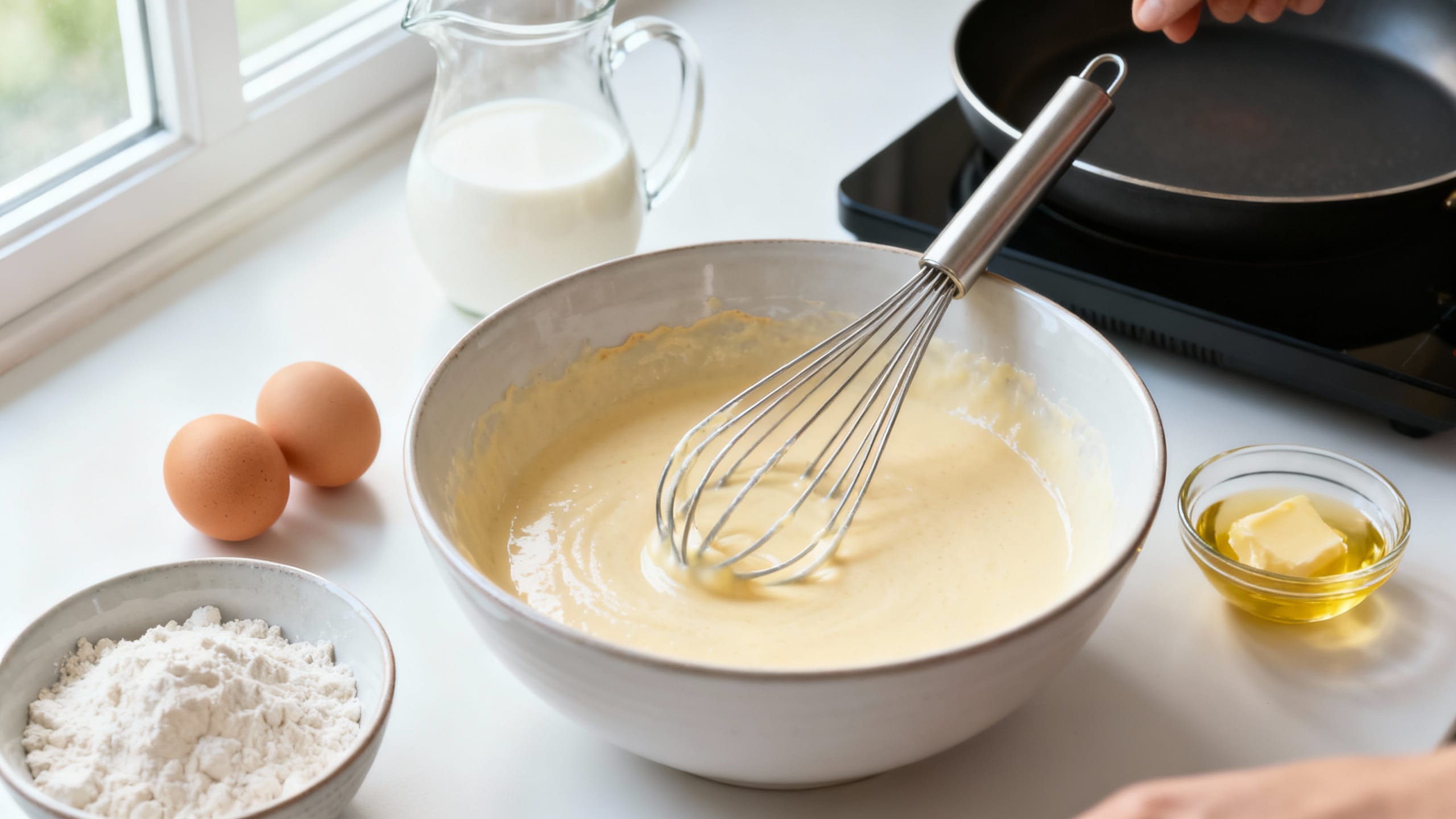
- Mix the dry ingredients. In a medium bowl, whisk together the flour, sugar (if using), and salt until evenly combined.
- Add eggs first. Make a well in the center and add the eggs. Whisk from the center outward. The mixture will look thick and a little clumpy at first—totally fine.
- Whisk in the milk gradually. Pour in about 1/3 of the milk and whisk until smooth. Add the remaining milk in two more additions, whisking well each time. This is the no-blender trick for a smooth batter.
- Add butter and flavor. Whisk in the melted butter and vanilla (if using). If the batter seems thick like pancake batter, add 1–2 tablespoons water to make it more pourable.
- Rest the batter (optional but worth it). Let the batter sit for 10–20 minutes at room temperature. This helps the flour fully hydrate for softer crepes and fewer bubbles.
- Heat the pan. Warm a nonstick skillet (8–10 inches) over medium heat. Lightly butter the pan, then wipe with a paper towel so it’s coated but not greasy.
- Pour and swirl. Pour about 1/4 cup batter into the center of the pan, then immediately lift and swirl the pan to spread the batter into a thin, even layer.
- Cook and flip. Cook for 45–75 seconds, until the edges look set and lightly golden. Flip with a thin spatula (or your bravest wrist flick) and cook 20–40 seconds more.
- Stack and repeat. Slide onto a plate and stack crepes as you go. Butter the pan lightly as needed between crepes. Serve warm with your favorite fillings.
Tips for the Best Results
- Whisk eggs into the flour before adding all the milk. This is the easiest way to avoid lumps without a blender.
- Use a nonstick pan. Crepes are thin and delicate; nonstick makes life easier, especially for the first flip.
- Keep the heat at medium. Too hot and the butter browns fast, the batter sets before it spreads, and the crepe can tear.
- Adjust batter thickness. If it won’t swirl easily, thin with water 1 tablespoon at a time. If it’s too thin and tearing, whisk in 1 tablespoon flour.
- The first crepe is a tester. Use it to fine-tune heat and batter amount. It still tastes good—chef’s snack.
- Butter lightly. A thin film helps browning and release. Too much butter can fry the batter and create crispy, uneven spots.
- Stack to keep them soft. Crepes stay warm and flexible when stacked; they steam each other just a little.
Variations
- Savory crepes: Skip sugar and vanilla. Add 1/2 teaspoon dried herbs (like thyme) or a pinch of black pepper. Fill with ham and cheese, sautéed mushrooms, eggs, or spinach.
- Chocolate crepes: Replace 2 tablespoons flour with 2 tablespoons unsweetened cocoa powder. Add an extra tablespoon sugar if you like them sweeter.
- Whole wheat: Swap in up to half whole wheat flour for a nuttier flavor (100% whole wheat can be a bit more fragile).
- Dairy-free: Use a neutral oil or vegan butter and your favorite plant milk. Oat milk makes especially tender crepes.
- Citrus vibe: Add 1 teaspoon orange or lemon zest to the batter for instant “brunch at a cute place” energy.
Storage & Reheating
Store cooled crepes stacked with parchment or wax paper between them in an airtight container in the fridge for up to 3 days. Reheat in a dry nonstick pan over low heat for about 20–30 seconds per side, or microwave covered with a damp paper towel in 10–15 second bursts until warm.
FAQ
How do I get a smooth crepe batter without a blender?
Whisk the eggs into the flour first, then add the milk gradually. Starting thick and loosening the mixture step-by-step prevents stubborn flour pockets. If you still see a few tiny lumps, let the batter rest 10–20 minutes and whisk once more—most lumps soften on their own.
Why is my batter too thick to swirl around the pan?
Crepe batter should pour like heavy cream. If it’s moving slowly or leaving thick patches, whisk in water 1 tablespoon at a time until it spreads easily. Thickness can vary based on how flour is measured and the type of milk used.
Why are my crepes tearing when I flip them?
Tearing usually happens if the crepe is too thin, undercooked, or the pan isn’t nonstick enough. Let the first side cook until the edges look dry and lift easily, and make sure the pan is lightly buttered. If the batter seems watery, whisk in 1 tablespoon flour to strengthen it.
Do I really need to rest the batter?
Not strictly, but it helps. A short rest (even 10 minutes) lets the flour hydrate, which makes the batter smoother and the crepes more tender and less prone to tearing. If you’re in a hurry, you can cook right away—just expect the first crepe to be a little more “rustic.”
What’s the best pan size and how much batter should I use per crepe?
An 8–10 inch nonstick skillet is ideal for classic crepes. Start with about 1/4 cup batter, then adjust: use a bit less for thinner crepes or a bit more if your pan is larger. The goal is a thin layer that covers the bottom as soon as you swirl.