


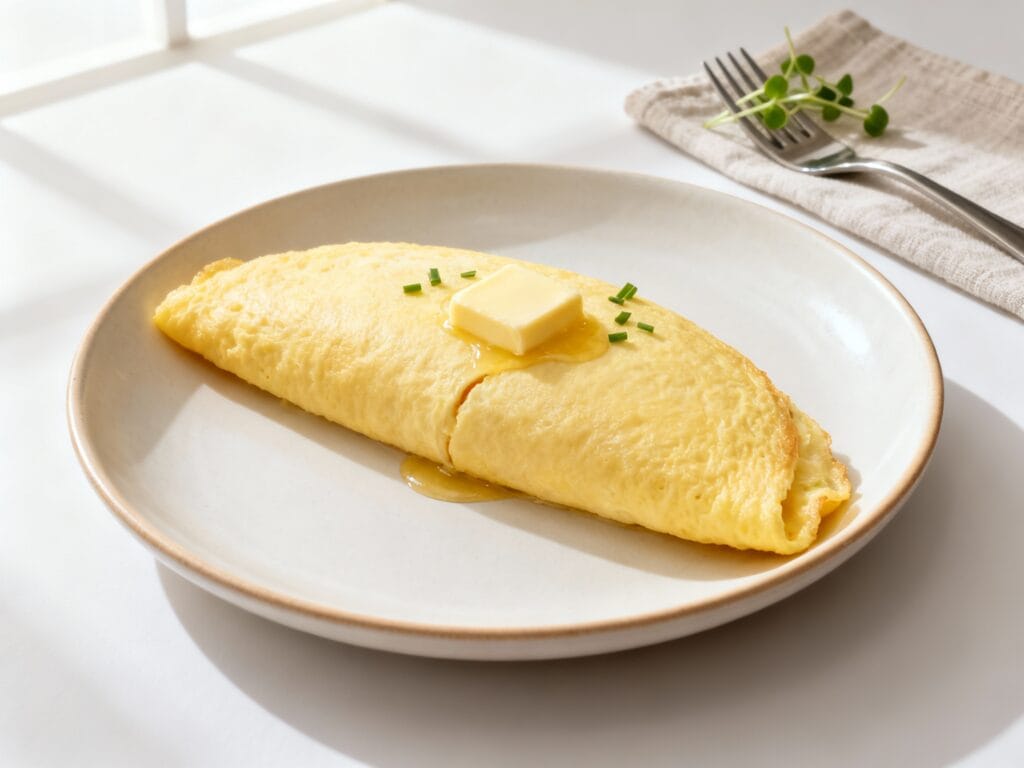
How to Make an Omelette Recipe That Never Sticks (Pan + Heat Guide)
If you’ve ever tried to make an omelette and ended up with scrambled eggs glued to the pan, this one’s for you. A truly nonstick omelette isn’t about fancy chef moves—it’s about the right pan, the right heat, and a tiny bit of timing.
This guide walks you through the exact method I use for a smooth, foldable omelette that releases cleanly every time, plus a simple pan + heat “map” so you’re not guessing.
Why You’ll Love This
It’s fast (10 minutes), reliable, and teaches you the small details that make the difference between “breakfast win” and “why is this welded on.” Once you nail the heat and fat setup, omelettes become an easy weekday flex.
Ingredients
- 2 large eggs
- 1 tablespoon water or milk (water = lighter, milk = slightly creamier)
- 1/4 teaspoon kosher salt
- Freshly ground black pepper, to taste
- 1 teaspoon butter (or 2 teaspoons neutral oil)
- 2–4 tablespoons filling of choice (shredded cheese, sautéed veggies, ham, herbs)
How to Make It
- Choose the right pan. Use an 8-inch nonstick skillet for 2 eggs (10-inch if making 3 eggs). Make sure it’s clean and dry—leftover residue is a sticking magnet.
- Whisk the eggs like you mean it. Crack eggs into a bowl, add water or milk, salt, and pepper. Whisk 20–30 seconds until totally uniform and slightly foamy on top (that foam = easier, softer set).
- Preheat on the right heat (the “never-stick” zone). Set the burner to medium-low to low. Let the empty pan warm for about 60–90 seconds. You want it warm, not ripping hot.
- Add butter and coat the pan. Add butter and swirl to coat the bottom and a little up the sides. The butter should melt and gently bubble, not brown instantly. If it browns fast, your heat is too high—pull the pan off the burner for 20 seconds and lower the heat.
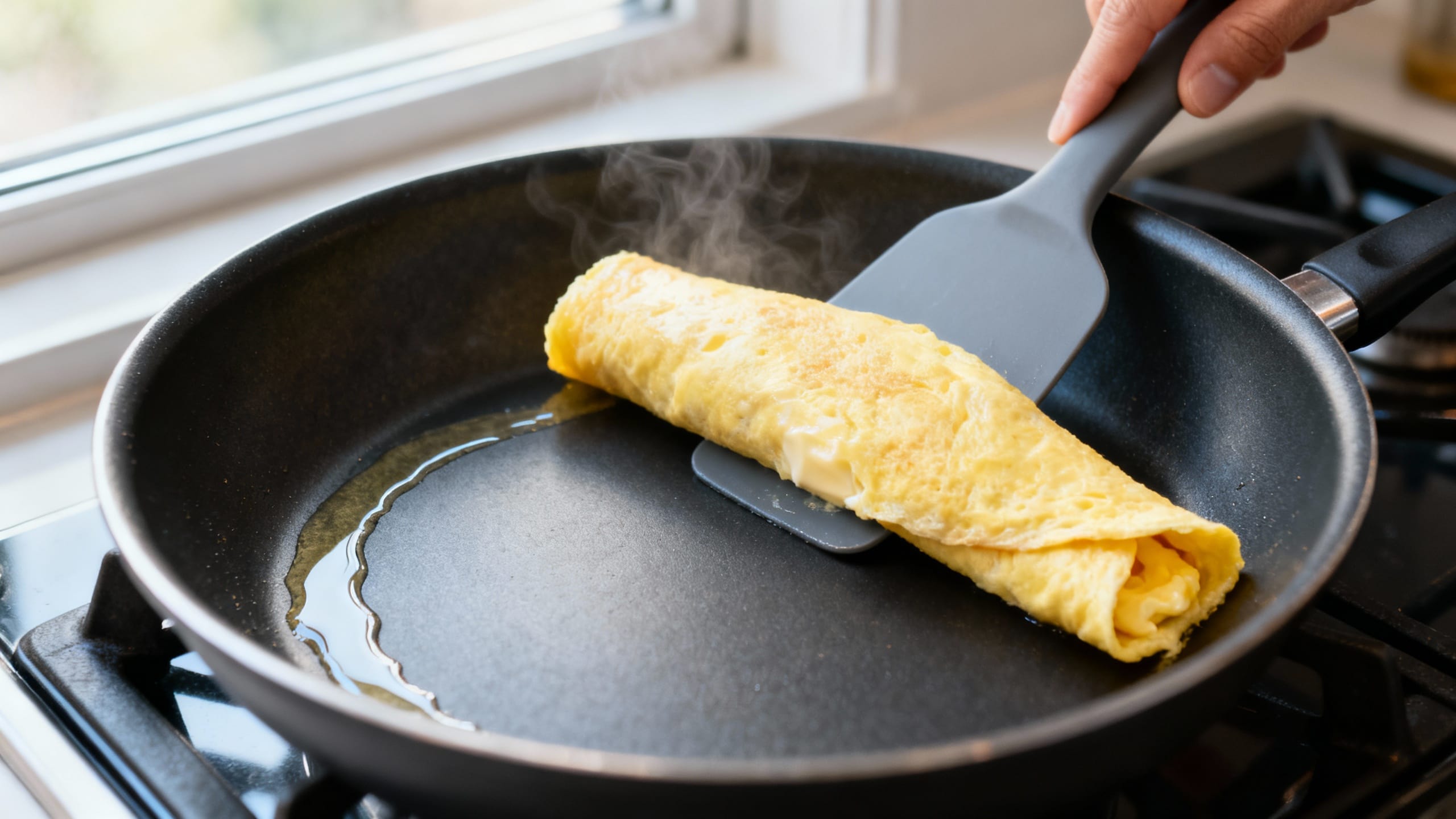
- Pour in eggs and set the edges. Pour in the eggs. They should sizzle very softly (think: quiet). Let the edges set for 10–15 seconds, then use a silicone spatula to gently pull set egg from the edges toward the center while tilting the pan so uncooked egg flows into the cleared spaces.
- Cook until just set on the bottom, slightly glossy on top. Keep moving around the pan in a slow circle. When the omelette is mostly set but still has a thin sheen of wet egg on top (usually 60–90 seconds), stop stirring.
- Add fillings at the right moment. Sprinkle fillings over one half only. Keep fillings modest—overstuffing is the fastest way to tear an omelette and make it steam/weep.
- Fold, finish, and slide out clean. Turn off heat. Use the spatula to fold the empty half over the filling. Let it sit 15–30 seconds to melt cheese and finish gently. Then tilt the pan and slide the omelette onto a plate. If it won’t slide, your heat was too high or the egg set too long—next time lower the heat and move faster.
Tips for the Best Results
- Pan matters more than skills. If your “nonstick” is scratched, worn, or sticky even with oil, it’s time. A small, fresh nonstick skillet is the easiest route to a never-stick omelette.
- Heat guide: Medium-low is the sweet spot on most stoves. High heat causes rubbery eggs and sticking because proteins seize and bond before the fat can do its job.
- Butter vs oil: Butter gives flavor and a smoother slide, but burns faster. If your stove runs hot, use oil or a 50/50 mix of butter and oil.
- Don’t “dry cook” the eggs. The omelette should still look slightly glossy when you fold. Residual heat finishes it without glueing it to the pan.
- Keep fillings cooked and not watery. Raw mushrooms, watery salsa, or juicy tomatoes can make the omelette stick and tear. Sauté or drain first.
- Use the right spatula. Silicone is gentle on nonstick and helps lift edges without scraping.
- Salt timing: Salting in the bowl is fine for omelettes (you’re cooking quickly). Just don’t let salted eggs sit for 20 minutes.
Variations
- French-style soft omelette: Use low heat, minimal browning, and stir gently more often. Skip heavy fillings and finish with herbs.
- Diner-style browned omelette: Use medium heat, let the bottom set a bit longer, and fold when fully set. Use oil + a little butter to prevent burning.
- Veggie & feta: Fill with sautéed spinach, mushrooms, and a crumble of feta. Make sure veggies are cooked dry.
- Ham & cheddar: Classic. Warm diced ham in the pan for 30 seconds, remove, then cook the eggs.
- Egg-white omelette: Use 4 egg whites + 1 teaspoon oil. Cook on low and be extra gentle—egg whites stick more easily than whole eggs.
Storage & Reheating
Omelettes are best fresh, but you can store leftovers in an airtight container in the fridge for up to 2 days. Reheat gently in a nonstick pan on low with a tiny bit of butter or oil, or microwave in 15-second bursts until just warm (overheating makes eggs tough and more likely to stick).
FAQ
What pan is best for an omelette that never sticks?
An 8-inch nonstick skillet is the easiest for a 2-egg omelette because the egg layer is thick enough to fold without tearing. Stainless steel can work, but it requires more technique and more fat. If your nonstick pan is scratched or “grippy,” it will stick no matter what—swap it.
What heat should I use so the eggs don’t stick?
Medium-low is the go-to on most stoves. The eggs should barely sizzle when they hit the pan. If you hear loud sizzling or see the edges brown fast, the pan is too hot and the egg proteins will grab the surface before they set smoothly.
Is butter or oil better for preventing sticking?
Both work, but butter gives the best glide and flavor. If you keep burning butter, use neutral oil (like avocado or canola) or do a combo: 1/2 teaspoon butter for flavor + 1 teaspoon oil for heat insurance.
Why does my omelette tear when I fold it?
Usually one of three things: (1) it’s overcooked and dry, (2) it’s overfilled, or (3) you’re folding too late after the bottom has fully set and tightened. Fold when the top is still slightly glossy, keep fillings to a thin layer, and let residual heat finish the center.
Can I make this omelette ahead for meal prep?
You can, but it won’t be as tender as fresh. For the best make-ahead option, cook fillings in advance and whisk eggs in the morning. If you do cook it ahead, slightly undercook the omelette, cool quickly, and reheat gently on low so it stays soft and doesn’t stick.