


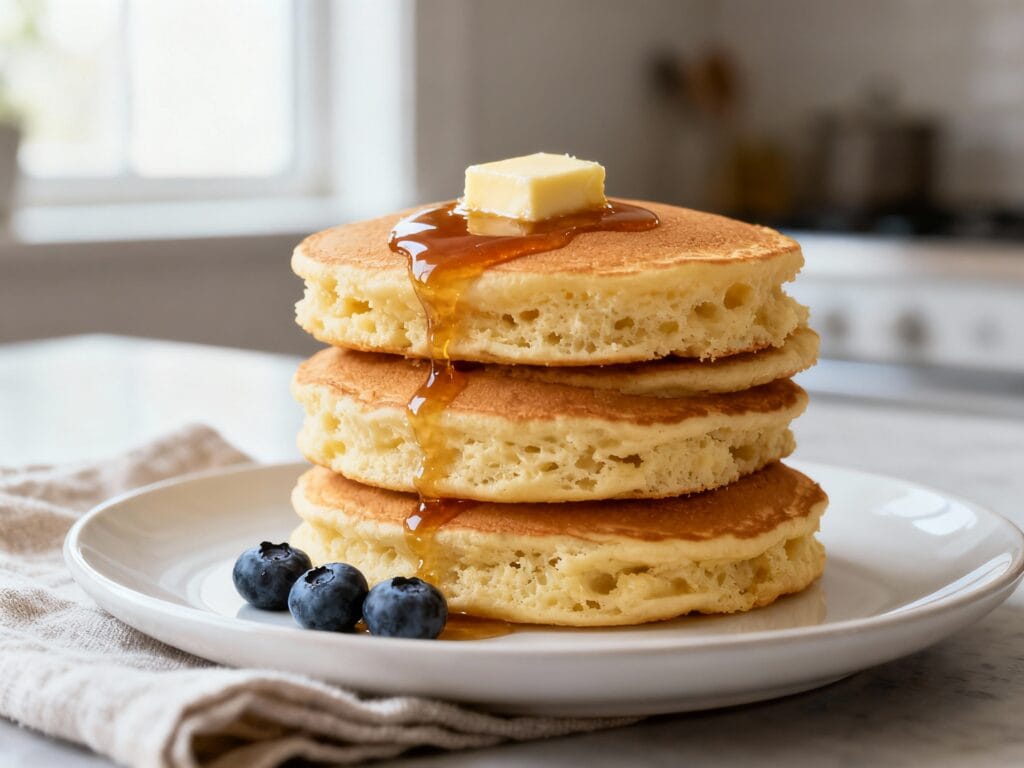
If you’ve ever followed the back-of-the-box pancake mix directions and still ended up with flat, kinda sad pancakes… you’re not alone. Most mixes aren’t actually “bad”—they’re just set up in a way that makes it easy to overmix, under-rest, and cook at the wrong heat.
This pancake mix recipe is designed to fix what most mixes get wrong, so you get pancakes that are fluffy, tender, and consistently golden. Bonus: you can make the dry mix ahead, stash it, and have weekend-level pancakes on a random Tuesday.
Why You’ll Love This
It’s a simple DIY pancake mix that delivers legit fluffy pancakes because it nails the ratio of leavening, adds a little structure for lift, and bakes in the “don’t overmix” and “rest the batter” rules that most mixes conveniently forget.
Ingredients
- 2 cups (260g) all-purpose flour
- 3 tablespoons (36g) granulated sugar
- 1 tablespoon baking powder
- 1/2 teaspoon baking soda
- 1 teaspoon fine salt
- 2 tablespoons (28g) powdered buttermilk (optional but highly recommended for flavor and tenderness)
- For making pancakes (per batch): 1 large egg
- For making pancakes (per batch): 1 1/4 cups (300ml) milk (or 1 cup milk + 1/4 cup plain yogurt for extra fluffy)
- For making pancakes (per batch): 3 tablespoons melted butter or neutral oil
- For making pancakes (per batch): 1 teaspoon vanilla extract (optional)
- For making pancakes (per batch): 1 teaspoon lemon juice or white vinegar (only if you skip powdered buttermilk; helps activate baking soda)
How to Make It
- Make the dry pancake mix: In a large bowl, whisk together flour, sugar, baking powder, baking soda, salt, and powdered buttermilk (if using). Whisk for 30 seconds so the leaveners are evenly distributed.
- Store or use right away: If prepping ahead, transfer to an airtight container. This makes about 2 batches of pancakes (depending on size).
- Mix the wet ingredients: For one batch, add 1 1/2 cups of the dry mix to a bowl. In a separate bowl, whisk egg, milk, melted butter (or oil), and vanilla. If you didn’t use powdered buttermilk, whisk in lemon juice or vinegar.
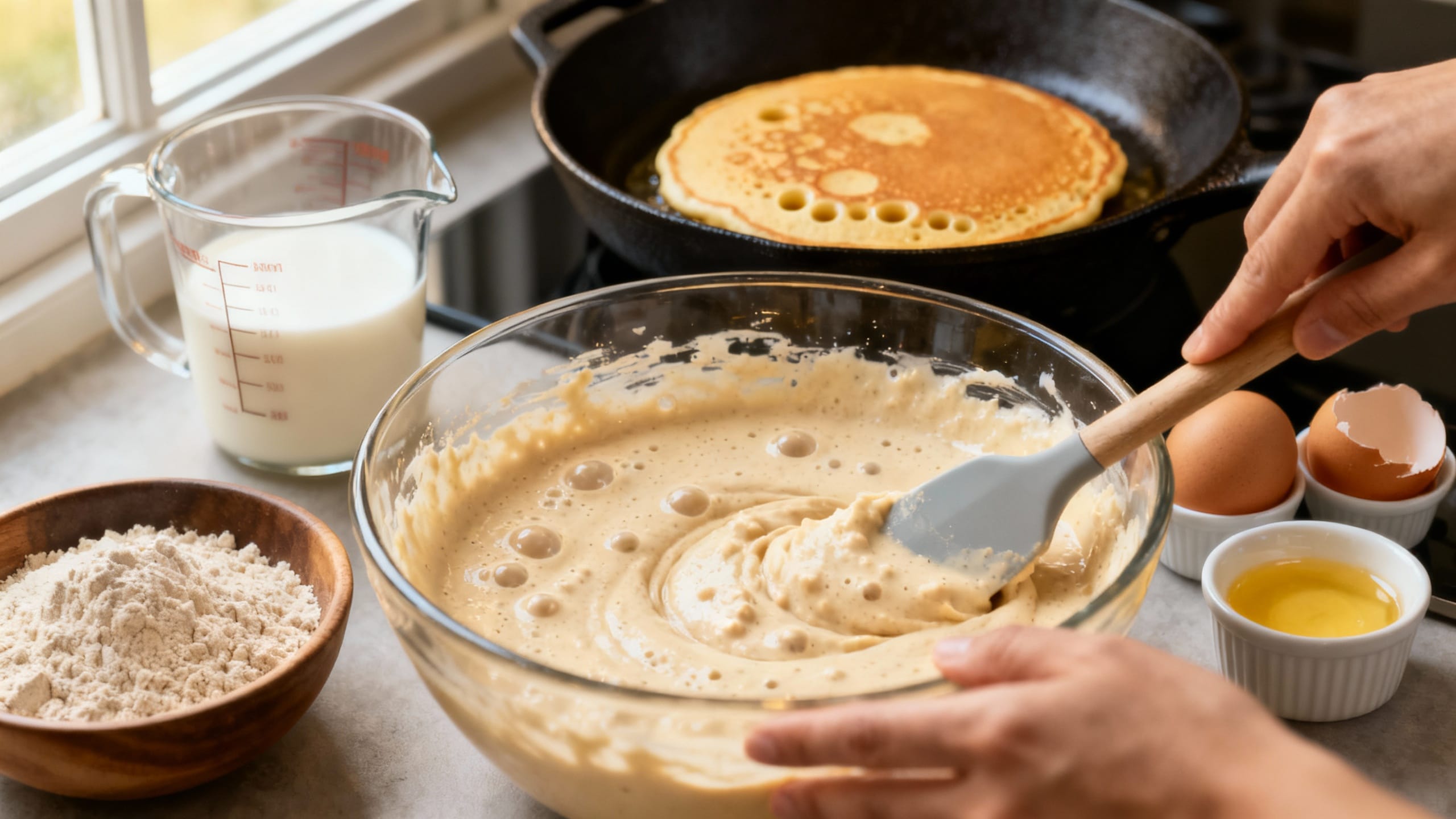
- Combine gently: Pour wet into dry and stir with a spatula until just combined. The batter should look lumpy and thick. If it’s super thick (won’t pour), add 1–2 tablespoons milk.
- Rest the batter: Let it sit for 8–10 minutes. This is the glow-up step: it hydrates the flour and lets bubbles start forming for fluffier pancakes.
- Preheat the pan: Heat a nonstick skillet or griddle over medium-low to medium heat. Lightly butter or oil it, then wipe off excess with a paper towel (too much fat can cause uneven browning).
- Cook the first side: Scoop 1/4 cup batter per pancake. Cook until you see bubbles on top and the edges look set, 2–3 minutes.
- Flip and finish: Flip once and cook 1–2 minutes more, until golden and springy in the center. Repeat, adjusting heat as needed.
Tips for the Best Results
- What most mixes get wrong: overmixing. A few lumps are good. Overmixing develops gluten and makes pancakes chewy instead of fluffy.
- Rest time isn’t optional. Even 5 minutes helps, but 8–10 minutes is the sweet spot for thicker, fluffier batter.
- Medium-low heat beats high heat. Too hot browns the outside before the inside rises and sets. Aim for steady, even cooking.
- Use fresh leavening. If your baking powder is older than 6–12 months (or smells dusty), replace it. Fluff depends on it.
- Don’t press pancakes. Smashing them with a spatula pops the air you worked for.
- Do a test pancake. The first one tells you if your pan is too hot/cool and whether the batter needs a splash more milk.
Variations
- Blueberry: Sprinkle berries onto the batter after it hits the pan (instead of mixing in) so the batter stays fluffy.
- Chocolate chip: Add 1/3 cup mini chips to the batter after resting.
- Extra-tall “diner” pancakes: Replace 1/4 cup of the milk with plain yogurt or sour cream for a thicker batter and more lift.
- Whole wheat vibe: Swap 1/2 cup flour for whole wheat flour. Add 1–2 extra tablespoons milk if needed.
- Dairy-free: Use oat or almond milk and oil instead of butter. Add the lemon juice/vinegar if skipping powdered buttermilk.
Storage & Reheating
Store the dry pancake mix in an airtight container in a cool, dry spot for up to 3 months (label it so you don’t forget). Cooked pancakes keep in the fridge for 3–4 days or freezer for up to 2 months; reheat in a toaster for crisp edges or microwave in 20–30 second bursts for soft pancakes.
FAQ
Why do most pancake mixes make pancakes turn out flat?
Usually it’s a combo of overmixing, skipping the batter rest, and cooking too hot. Most box directions encourage “stir until smooth” (bad for fluff) and don’t explain that a short rest helps the batter thicken and trap more bubbles.
How much of the dry mix do I use per batch?
Use 1 1/2 cups dry mix for one batch (about 8 small pancakes or 6 medium). Pair it with 1 egg, 1 1/4 cups milk, and 3 tablespoons melted butter or oil. If you want more, double the wet ingredients and use 3 cups dry mix.
Do I have to use powdered buttermilk?
No, but it’s a big upgrade. It adds that classic tang and helps with tenderness. If you skip it, add 1 teaspoon lemon juice or vinegar to the wet ingredients to give the baking soda something to react with.
My pancakes are browning too fast but still raw inside—what should I do?
Turn the heat down and give the pan a minute to cool slightly between rounds. Medium-low heat is your friend. Also make sure your pancakes aren’t too thick; if the batter is very stiff, loosen it with 1–2 tablespoons milk.
Can I make this pancake mix gluten-free?
Yes—use a 1:1 gluten-free all-purpose flour blend that contains xanthan gum. Keep the “don’t overmix” rule, rest the batter for the full 10 minutes, and expect the batter to thicken more as it sits (a small splash of extra milk may help).