


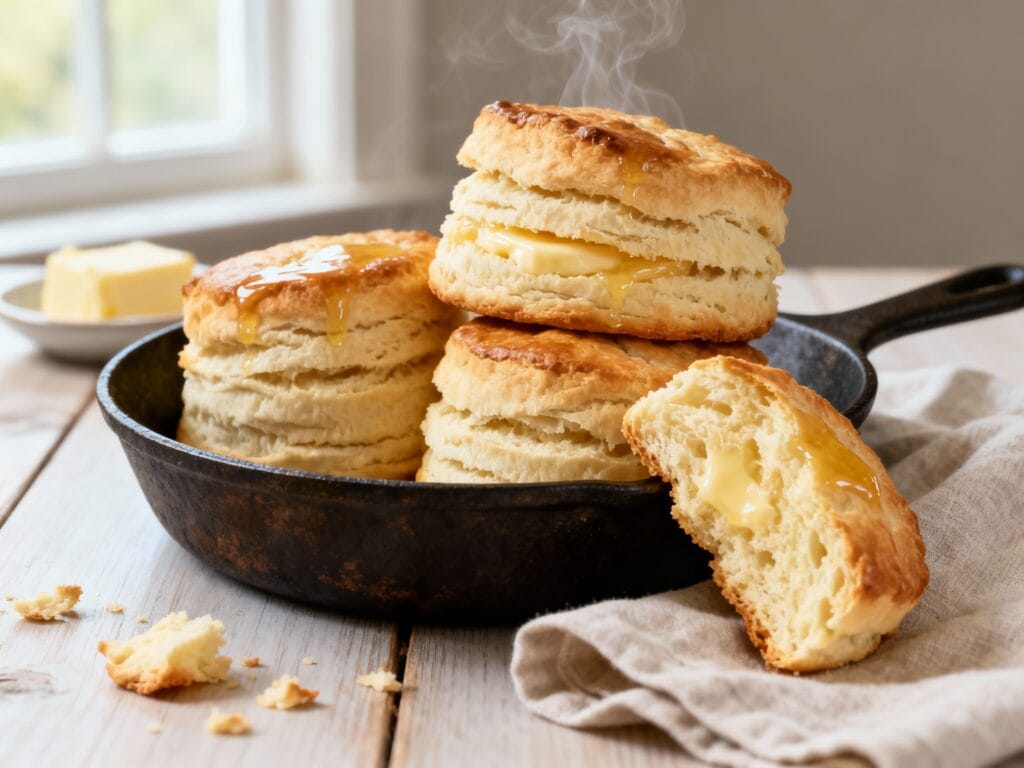
If you’ve ever pulled a batch of biscuits from the oven only to find a tall outside and a sad, doughy middle… this one’s for you. These are the real deal: high rise, flaky layers, buttery edges, and centers that are fully baked (but still tender).
The method is simple and fast, but it’s all about a few key moves: super-cold butter, a gentle dough, and one easy fold that creates those dreamy layers. Let’s bake.
Why You’ll Love This
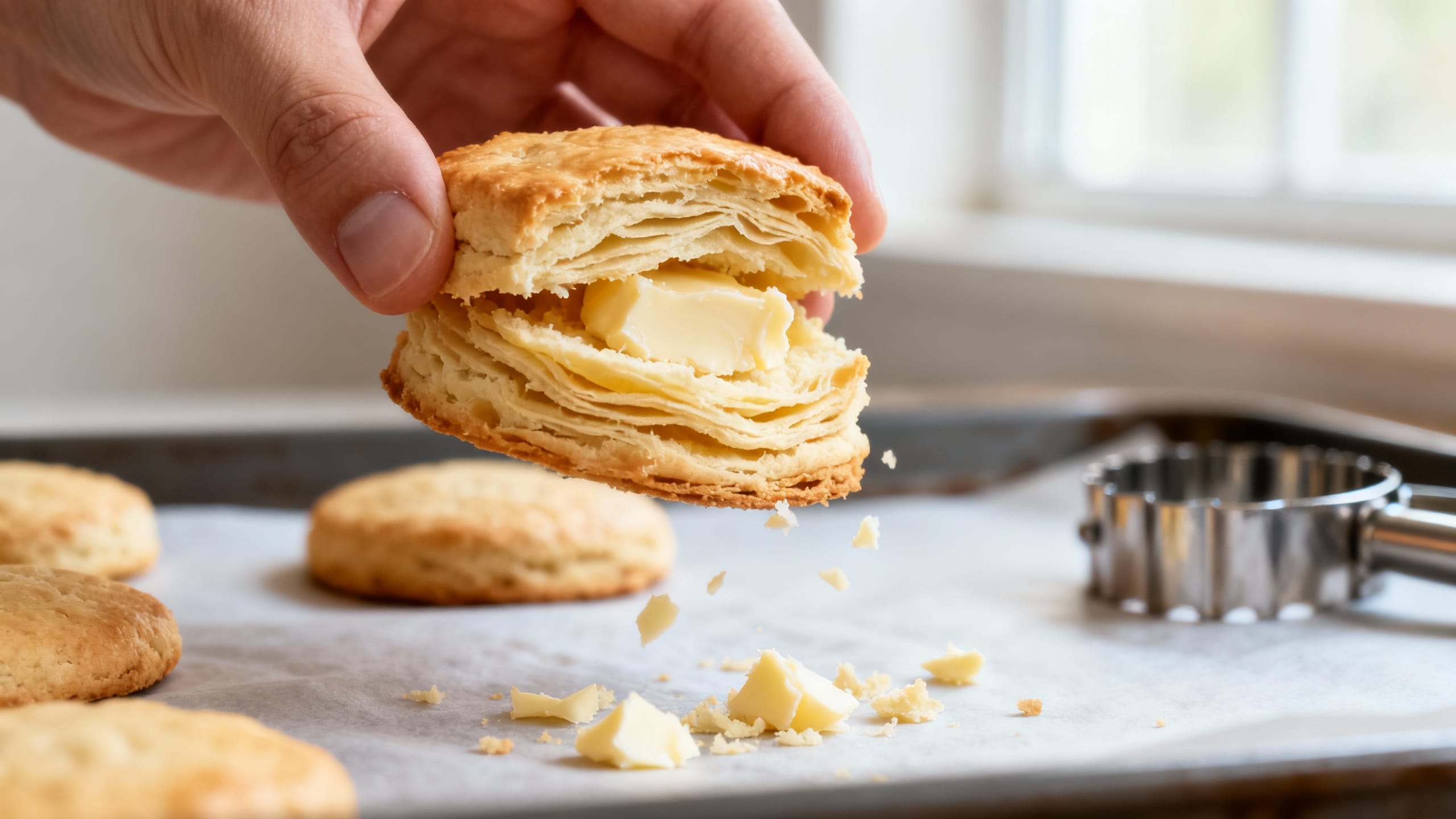
These biscuits bake up tall with crisp, buttery tops and distinct flaky layers—no dense centers—because we keep everything cold, avoid overworking the dough, and use a high-heat bake for maximum lift.
Ingredients
- 2 cups (250g) all-purpose flour, plus more for dusting
- 1 tablespoon baking powder (aluminum-free if you’re sensitive to the taste)
- 1/2 teaspoon baking soda
- 1 teaspoon fine salt
- 1 tablespoon granulated sugar (optional, but helps browning)
- 1/2 cup (113g) unsalted butter, very cold
- 3/4 cup (180ml) cold buttermilk, plus 1–2 tablespoons more if needed
- 2 tablespoons melted butter (optional, for brushing after baking)
How to Make It
- Chill the setup. Preheat the oven to 450°F (232°C). Place a cast iron skillet or sheet pan in the oven to preheat (optional but great for lift). Pop the butter in the freezer for 10–15 minutes if it’s not already super cold.
- Mix the dry ingredients. In a large bowl, whisk together flour, baking powder, baking soda, salt, and sugar (if using). This even distribution helps the biscuits rise evenly (aka no weird dense pockets).
- Cut in the butter. Grate the cold butter on a box grater (fast + keeps it cold), or cube it and cut it in with a pastry cutter. You want pea-sized bits plus some flatter shards—those melt into flaky layers.
- Add buttermilk gently. Pour in the cold buttermilk and stir with a fork just until the dough looks shaggy and barely comes together. If it’s super dry, add 1–2 tablespoons more buttermilk. The dough should look messy, not smooth.
- Fold for layers. Turn the dough onto a lightly floured surface. Pat into a rough rectangle about 3/4-inch thick. Fold into thirds like a letter. Rotate 90 degrees, pat back out, and fold once more. (Two folds is the sweet spot: layers without getting tough.)
- Cut straight down. Pat the dough to about 1-inch thick. Cut biscuits using a 2 1/2-inch cutter, pressing straight down and lifting straight up—no twisting, which can “seal” the edges and reduce rise.
- Arrange for max height. Carefully place biscuits close together (almost touching) on the preheated skillet/pan or a parchment-lined sheet. Biscuits that cozy up bake taller and more tender.
- Bake hot and fast. Bake 12–15 minutes, until tall and deeply golden on top. If your oven runs cool, give them an extra minute or two—fully baked centers are the goal.
- Finish buttery. Brush with melted butter right after baking (optional, but highly recommended). Cool 5 minutes, then serve warm.
Tips for the Best Results
- Cold ingredients = tall biscuits. Keep butter and buttermilk cold. If your kitchen is warm, chill the mixed dough for 10 minutes before cutting.
- Measure flour the “fluff and level” way. Spoon flour into the cup and level it off. Packing flour leads to dense centers.
- Don’t overmix. Stir until shaggy and stop. Overworked dough = tough, bready biscuits.
- Go thick. Pat the dough to about 1 inch before cutting. Thin dough bakes up flat and can feel dry.
- Cut clean. Use a sharp cutter and press straight down. Twisting reduces rise and can make layers uneven.
- Use a hot pan if you can. Preheating the pan gives instant bottom heat, helping the biscuits spring up fast.
- Check doneness smartly. Tops should be golden and the sides should look set, not wet. If in doubt, split one—better a 1-minute longer bake than a dense center.
Variations
- Extra-buttery layers: After the first fold, lightly dust with a tiny bit of flour and add a few thin butter shavings, then fold again.
- Cheddar chive: Mix in 3/4 cup shredded sharp cheddar + 2 tablespoons chopped chives with the dry ingredients.
- Honey butter biscuits: Brush with melted butter mixed with 1 tablespoon honey when they come out of the oven.
- Garlic herb: Add 1/2 teaspoon garlic powder to the dry mix and brush with butter + parsley after baking.
- Make them mini: Use a 1 1/2-inch cutter and start checking at 9–10 minutes.
Storage & Reheating
Store cooled biscuits in an airtight container at room temp for up to 2 days, or refrigerate up to 5 days. Reheat in a 350°F (177°C) oven for 6–8 minutes (best for keeping them flaky), or microwave 12–18 seconds for a quick warm-up. If reheating from the fridge, split and toast for crisp edges.
FAQ
Why do my biscuits get dense in the center?
Usually it’s one of three things: too much flour (packed measuring cups), overmixing/overworking the dough, or not baking hot enough. Use cold buttermilk, stop mixing when shaggy, and bake at 450°F so the biscuits rise quickly before the butter fully melts.
Can I use regular milk instead of buttermilk?
Buttermilk is best for tenderness and lift, but you can DIY it: mix 3/4 cup milk with 2 1/4 teaspoons lemon juice or white vinegar, let sit 5 minutes, then use cold. The texture will be close, just slightly less rich.
What’s the best butter method: grated or cubed?
Grated butter is easiest for tall, flaky biscuits because it stays cold and distributes fast. Cubed butter works too—just cut it in until you see pea-sized bits and a few thin flakes. Those visible butter pieces are what create layers.
Should biscuits touch while baking?
Yes, for this style. Biscuits placed close together rise taller and stay softer on the sides. If you prefer crispier edges all around, space them about 2 inches apart, but they may not rise quite as high.
Can I make the dough ahead of time?
You can prep the shaped, unbaked biscuits and refrigerate them (covered) for up to 24 hours. Bake straight from the fridge, adding 1–2 minutes if needed. For longer storage, freeze unbaked biscuits on a tray, then transfer to a bag and bake from frozen, adding about 3–5 minutes.