


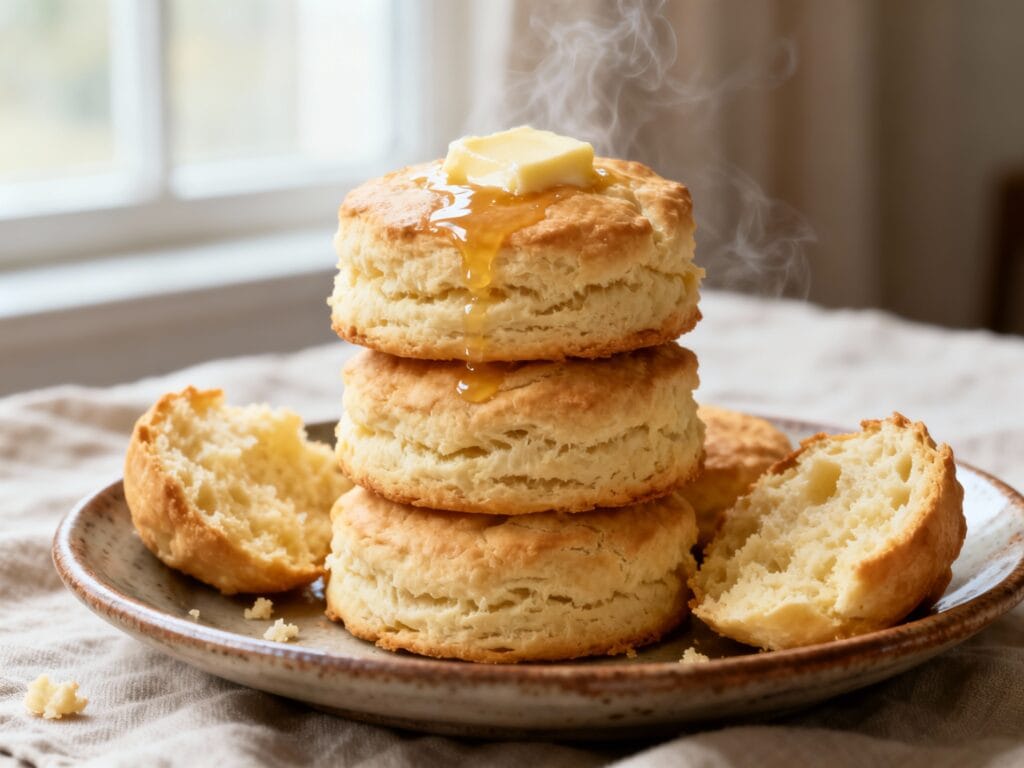
Biscuits Recipe Without Buttermilk: Pantry Swap That Still Tastes Amazing
You want fluffy, tender biscuits, but your fridge is giving “no buttermilk, no problem.” Same. The good news: you can absolutely make craveable, buttery biscuits with a simple pantry-friendly swap that still bakes up tall and cozy.
This recipe uses regular milk plus a little acid (lemon juice or vinegar) to mimic buttermilk’s tang. The result? Soft layers, golden tops, and the kind of biscuit that disappears before the jam even hits the table.
Why You’ll Love This
These biscuits are fast, forgiving, and made with ingredients you probably already have. They bake up fluffy with crisp edges, and the “fake buttermilk” trick gives you that classic biscuit flavor without a special grocery run.
Ingredients
- 2 cups (250g) all-purpose flour, plus more for dusting
- 1 tablespoon baking powder
- 1 tablespoon granulated sugar (optional, but adds a nice balance)
- 1 teaspoon fine salt
- 1/2 teaspoon baking soda (helps mimic buttermilk lift)
- 1/2 cup (113g) cold unsalted butter, cut into small cubes
- 3/4 cup (180ml) milk (whole milk is best, but any works)
- 1 tablespoon lemon juice or white vinegar (to “sour” the milk)
- 1 tablespoon melted butter (optional, for brushing after baking)
How to Make It
- Heat oven to 425°F (220°C). Line a baking sheet with parchment paper or lightly grease it.
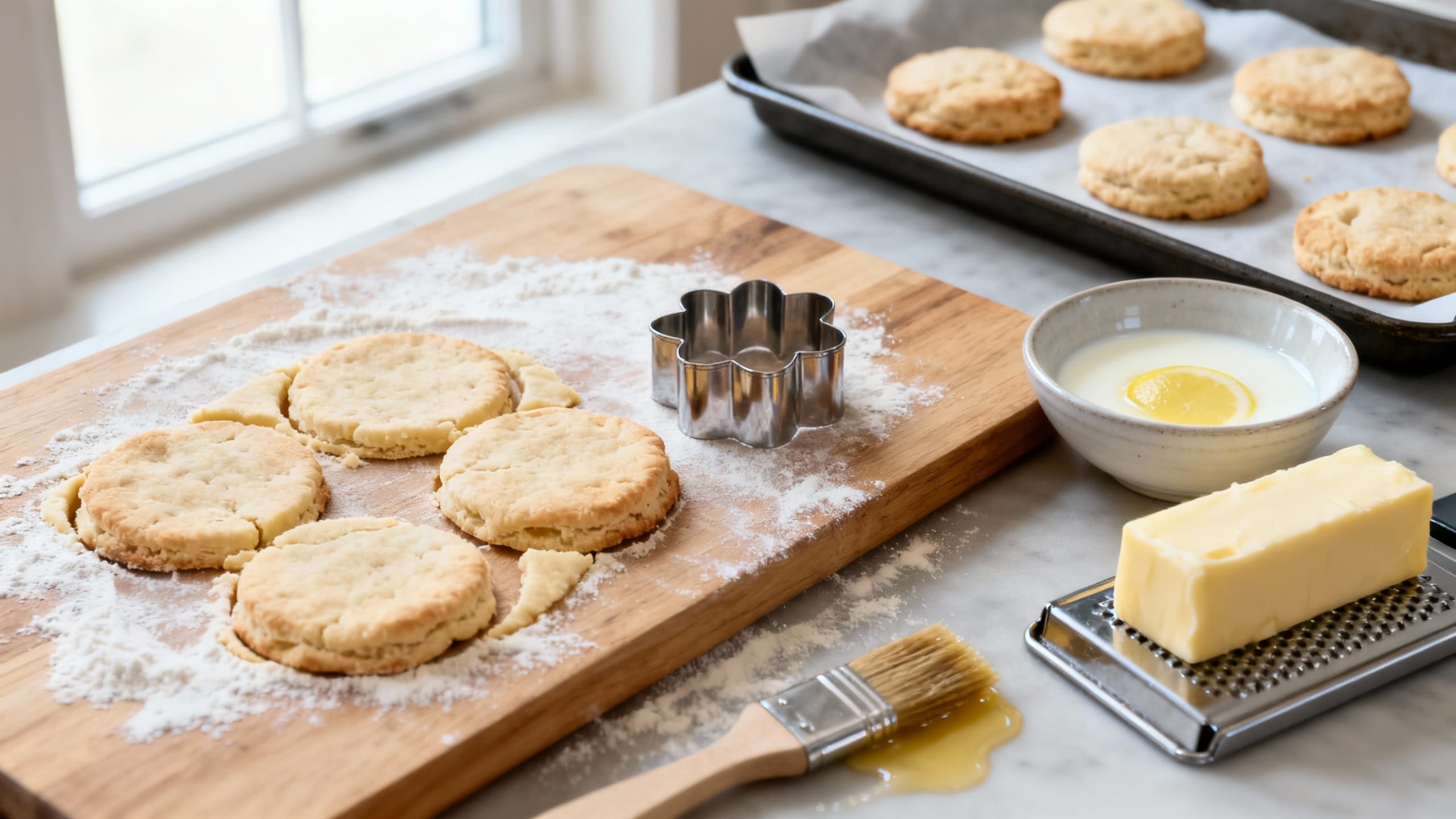
- Make the buttermilk swap: stir the lemon juice (or vinegar) into the milk and let it sit for 5–10 minutes. It may look slightly curdled; that’s perfect.
- In a large bowl, whisk together the flour, baking powder, sugar (if using), salt, and baking soda.
- Add the cold butter cubes. Use a pastry cutter, two forks, or your fingertips to work the butter into the flour until it looks like coarse crumbs with some pea-sized bits. Those bits = flaky layers.
- Pour in the soured milk. Stir gently with a fork or spatula just until a shaggy dough forms. If it looks a little dry, add 1 tablespoon milk at a time, but don’t aim for “smooth.”
- Turn the dough onto a lightly floured surface. Gently pat it into a rectangle about 3/4-inch thick. Fold it in half, rotate, and pat again. Repeat 2 more times (3 folds total) for extra layers.
- Pat the dough to about 1-inch thick. Cut biscuits with a 2 1/2-inch round cutter (or the rim of a glass). Press straight down—no twisting—so they rise evenly.
- Place biscuits close together on the baking sheet for taller, softer sides (or spaced apart for crispier edges). Bake 12–15 minutes, until tall and golden on top.
- Brush with melted butter right after baking (optional, but highly recommended). Cool for 5 minutes, then serve warm.
Tips for the Best Results
- Keep everything cold. Cold butter + hot oven = steam pockets = fluffy biscuits. If your kitchen is warm, chill the butter (and even the bowl) for a few minutes.
- Don’t overmix. Once the milk goes in, stir just until it comes together. Overmixing makes biscuits tough, not tender.
- Use the right flour touch. Lightly flour your surface, but don’t bury the dough in flour or it can dry out.
- Do the quick folds. Those simple folds are the low-effort secret to flaky layers without rolling forever.
- Cut clean. Press the cutter straight down. Twisting seals the edges and can block the rise.
- Watch the bake time. Every oven is dramatic in its own way. Pull them when tops are golden and sides look set.
Variations
- Extra buttery: Replace 2 tablespoons of the milk with heavy cream, or brush tops with a little cream before baking for deeper browning.
- Cheddar biscuits: Add 1 cup shredded sharp cheddar and 1/2 teaspoon garlic powder. (Keep mix-ins gentle so you don’t overwork the dough.)
- Herb biscuits: Add 1 tablespoon chopped chives or parsley, plus 1/2 teaspoon black pepper.
- Sweeter biscuits: Increase sugar to 2 tablespoons and add 1/2 teaspoon vanilla. Perfect for berries and whipped cream.
- Dairy-free: Use unsweetened soy or oat milk + vinegar, and swap butter for a good plant-based stick butter (cold).
Storage & Reheating
Store cooled biscuits in an airtight container at room temp for up to 2 days, or refrigerate up to 5 days. Reheat in a 350°F (175°C) oven for 6–8 minutes (best texture), or microwave 15–25 seconds for a quick fix. For longer storage, freeze up to 2 months and rewarm from frozen at 350°F for 12–15 minutes.
FAQ
What can I use instead of buttermilk for biscuits?
For this recipe, mix 3/4 cup milk with 1 tablespoon lemon juice or white vinegar and let it sit 5–10 minutes. That quick “soured milk” gives a similar tang and helps create tender biscuits without buying buttermilk.
Do I really need baking soda if I’m not using buttermilk?
With the milk + lemon juice/vinegar swap, yes—baking soda helps react with the added acid for better rise and a more classic biscuit flavor. If you skip the acid, skip the baking soda too (but your biscuits won’t taste as buttermilk-style).
Why didn’t my biscuits rise very much?
The usual culprits: butter got too warm, dough was overmixed, or the cutter was twisted (sealing the edges). Also check your baking powder freshness—if it’s been open for a long time, it may not lift well. Bake in a fully preheated 425°F oven for the best rise.
Can I make the dough ahead of time?
Yes. Cut the biscuits, place on a tray, and refrigerate (covered) up to 24 hours before baking. You can also freeze the unbaked biscuits and bake from frozen; add 2–4 minutes to the bake time.
Can I use water instead of milk for the buttermilk substitute?
Milk works best because it adds richness and helps with browning. If you’re in a pinch, you can use water + lemon juice/vinegar, but expect a less tender texture and paler tops. If you have any milk at all (even non-dairy), use that.