


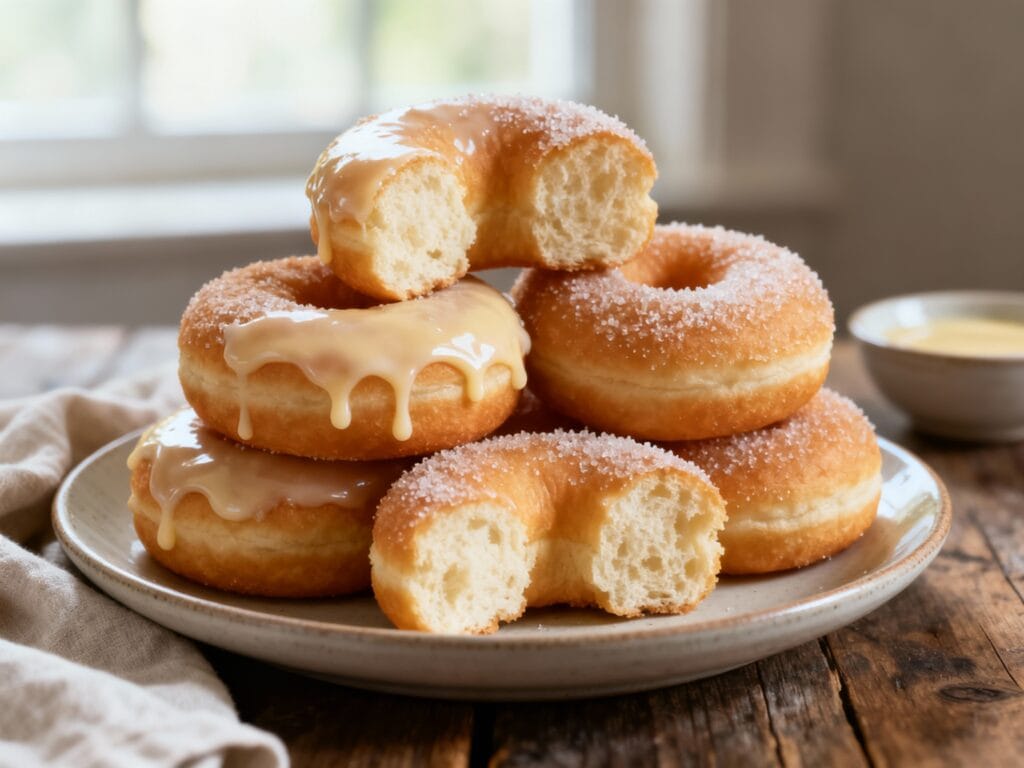
Homemade Donuts Recipe: Soft, Fluffy Yeast Donuts (Like a Donut Shop)
If you’ve ever bitten into a fresh donut shop donut and thought, “How is this so soft?”—this is that vibe, made in your own kitchen. These are classic yeast donuts: fluffy inside, lightly crisp outside, and perfect for glazing, sugaring, or filling.
Don’t let “yeast” scare you. The steps are simple, and the payoff is huge: warm, pillowy donuts that make your kitchen smell like a legit bakery.
Why You’ll Love This
These homemade yeast donuts are tender, tall, and cloud-soft, with that real donut shop chew (not cakey). The dough is easy to work with, the glaze sets beautifully, and you can customize them a dozen ways without changing the base recipe.
Ingredients
- 3/4 cup warm whole milk (about 105–110°F)
- 2 1/4 teaspoons active dry yeast (1 packet)
- 1/4 cup granulated sugar
- 2 large eggs, room temperature
- 6 tablespoons unsalted butter, melted and slightly cooled
- 1 teaspoon vanilla extract
- 3 1/2 cups all-purpose flour, plus more for dusting
- 1 teaspoon fine salt
- Neutral oil for frying (canola or vegetable), about 6 cups depending on pot size
- Optional topping: 1 cup granulated sugar for tossing
- Simple glaze (optional but highly recommended): 2 cups powdered sugar, 3–4 tablespoons milk, 1/2 teaspoon vanilla extract, pinch of salt
How to Make It
- Activate the yeast: In a large bowl (or stand mixer bowl), whisk warm milk, yeast, and 1 tablespoon of the sugar. Let sit 5–10 minutes until foamy on top.
- Mix the wet ingredients: Add the remaining sugar, eggs, melted butter, and vanilla. Whisk until smooth.
- Form the dough: Add flour and salt. Mix until a shaggy dough forms, then knead 6–8 minutes (stand mixer with dough hook) or 8–10 minutes by hand until smooth and slightly tacky, not sticky. Add a tablespoon of flour only if the dough is very wet.
- First rise: Place dough in a lightly greased bowl, cover, and let rise in a warm spot until doubled, about 60–90 minutes.
- Cut the donuts: Turn dough onto a lightly floured surface and roll to about 1/2-inch thickness. Cut with a donut cutter or use a 3-inch round cutter plus a 1-inch cutter for holes. Place on parchment-lined trays, leaving space between each.
- Second rise: Cover loosely and let rise 30–45 minutes until puffy and airy (they should look like little pillows).
- Fry: Heat 2–3 inches of oil in a heavy pot to 350°F. Fry donuts 1–2 minutes per side until golden. Donut holes will take less time, about 45–60 seconds per side. Transfer to a rack set over a sheet pan.
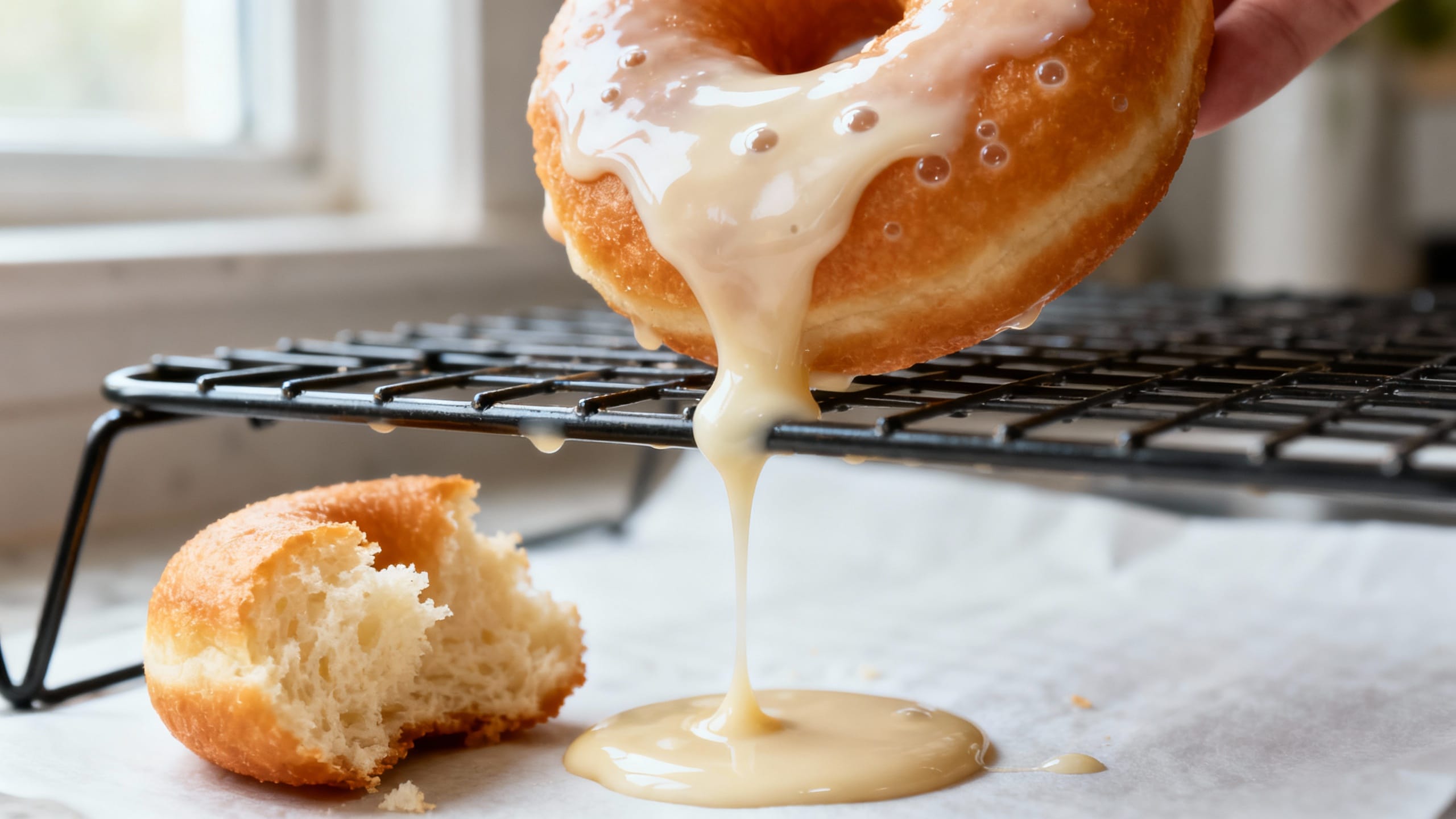
- Finish: For sugar donuts, toss warm donuts in granulated sugar. For glaze, whisk powdered sugar, milk, vanilla, and salt until smooth; dip slightly warm donuts, let excess drip off, then set on the rack to dry 10–15 minutes.
Tips for the Best Results
- Use a thermometer for both milk and oil. Too-hot milk can kill yeast; too-hot oil browns fast while leaving the inside undercooked.
- Don’t over-flour the dough. A slightly tacky dough fries up softer and lighter.
- Watch the second rise closely. Under-proofed donuts can split and feel dense; over-proofed donuts can collapse or absorb extra oil.
- Fry in small batches so the oil stays near 350°F. Temperature swings = greasy donuts.
- Drain on a rack, not paper towels. Paper towels can trap steam and soften the exterior.
- Glaze while donuts are still a little warm so it sets with that classic donut shop finish.
Variations
- Chocolate glaze: Replace the glaze milk with 2–3 tablespoons milk plus 2 tablespoons cocoa powder (sifted). Add more milk as needed.
- Cinnamon sugar: Mix 1 cup sugar with 2 teaspoons cinnamon; toss donuts while warm.
- Filled donuts: Skip cutting holes. Cut rounds, fry, then pipe in jelly, pastry cream, or sweetened whipped cream using a piping bag with a filling tip.
- Maple glaze: Add 1–2 tablespoons maple syrup to the glaze and reduce milk slightly.
- Sprinkle party: Dip in glaze, then immediately top with sprinkles before it sets.
Storage & Reheating
Yeast donuts are at their peak the day they’re made, but you can store leftovers in an airtight container at room temp for up to 2 days. To rewarm, microwave a donut for 8–12 seconds for that fresh, soft texture; if glazed, rewarm gently so the glaze doesn’t melt off completely.
FAQ
Why are my homemade yeast donuts dense instead of fluffy?
Dense donuts usually come from under-proofing (not letting the dough rise enough) or adding too much flour. Make sure the dough doubles on the first rise and looks puffy on the second rise. Also, keep the dough slightly tacky and avoid packing flour into the measuring cup.
What oil is best for frying donuts?
Choose a neutral oil with a higher smoke point, like canola or vegetable oil. Avoid olive oil because the flavor comes through. Keep the oil around 350°F for even browning and a non-greasy finish.
Can I make the donut dough ahead of time?
Yes. After kneading, cover the dough and refrigerate overnight for a slow first rise (8–12 hours). The next day, let it sit at room temp for about 30–45 minutes, then roll, cut, do the second rise, and fry.
How do I know when the oil is the right temperature without a thermometer?
A thermometer is the most reliable, but you can test with a small piece of dough: it should bubble immediately and rise to the surface within a few seconds, turning golden in about 60–90 seconds per side. If it browns too fast, lower the heat; if it takes forever, raise it.
Can I bake these instead of frying?
Frying is what gives true donut shop texture, but you can bake for a lighter result. Place cut donuts on parchment, let them rise until puffy, then bake at 375°F for 8–10 minutes until lightly golden. Brush with melted butter and dip in glaze or cinnamon sugar for the best baked-donut finish.