


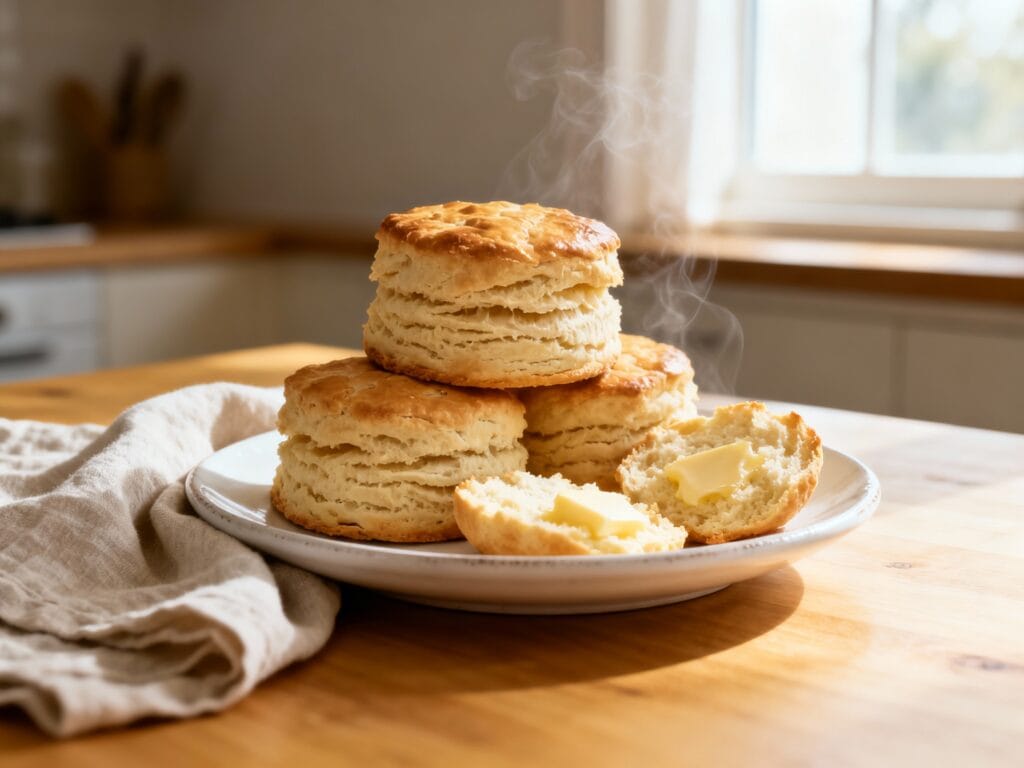
Biscuits are one of those “looks easy, why is mine a hockey puck?” recipes. If you’re a beginner, you’re not alone—dense biscuits usually come down to a few fixable habits, not your baking skills.
This easy biscuit recipe is built to be forgiving: simple ingredients, clear steps, and the exact reasons biscuits turn dense (plus how to fix them). Let’s get you tall, fluffy, golden biscuits on the first try.
Why You’ll Love This
These biscuits bake up tender and buttery with crisp edges, and the method is beginner-friendly (no fancy equipment). You’ll also learn the small moves—cold butter, gentle mixing, smart cutting—that keep biscuits light instead of dense.
Ingredients
- 2 cups (260g) all-purpose flour, plus extra for dusting
- 1 tablespoon baking powder (aluminum-free if possible for best flavor)
- 1 tablespoon granulated sugar (optional, but helps browning)
- 1 teaspoon fine salt
- 1/2 cup (113g) unsalted butter, very cold and cubed
- 3/4 cup (180ml) cold buttermilk, plus a splash more if needed
- 1 tablespoon melted butter (optional, for brushing after baking)
How to Make It
- Heat oven to 450°F (232°C). Line a sheet pan with parchment paper or leave it unlined (both work). Put the pan in the oven while it preheats for extra lift if you want.
- Mix dry ingredients: In a large bowl, whisk together flour, baking powder, sugar, and salt until evenly combined.
- Cut in the butter: Add cold butter cubes. Use your fingertips, a pastry cutter, or two forks to work butter into the flour until you have pea-sized pieces with a few bigger flakes. (Those flakes = layers.)
- Add buttermilk: Pour in the cold buttermilk and stir with a fork just until a shaggy dough forms. If you still have a lot of dry flour at the bottom, add 1–2 teaspoons buttermilk at a time.
- Fold for layers (quickly): Turn dough onto a lightly floured surface. Pat into a rectangle about 3/4-inch thick. Fold in half, then in half again (like a letter), gently. Pat back to 3/4-inch thick.
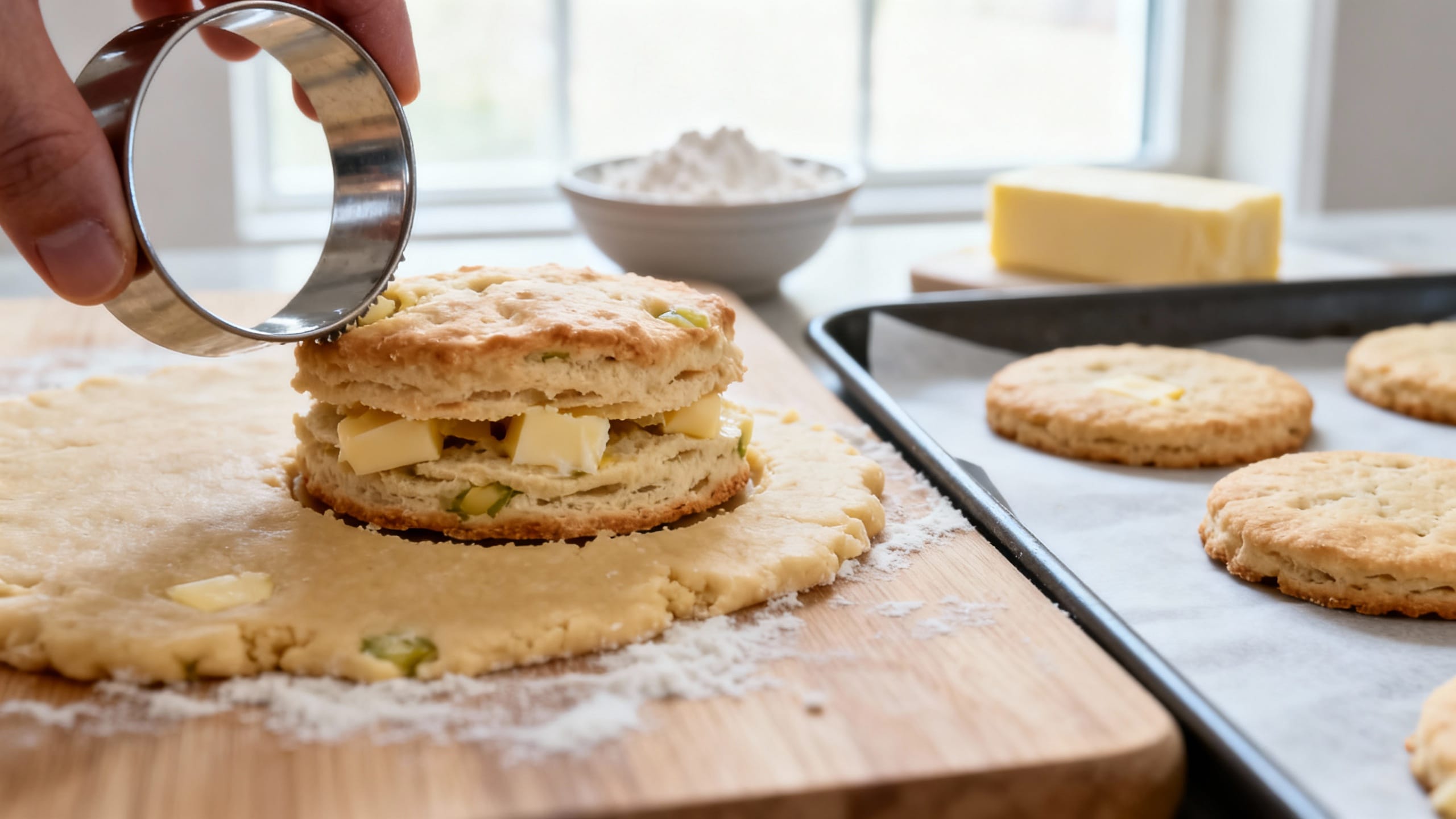
- Cut biscuits: Use a 2 1/2-inch round cutter. Press straight down—no twisting (twisting seals the edges and blocks rise). Re-roll scraps gently once if needed.
- Arrange and bake: Place biscuits close together for taller sides (touching is good). Carefully remove the hot pan (if using), place biscuits on it, and bake 12–15 minutes until tall and deeply golden on top.
- Finish: Brush with melted butter if you’re feeling extra. Cool 5 minutes and serve warm.
Tips for the Best Results
- Keep everything cold. Warm butter melts into the flour early and you lose steam-powered lift. If your kitchen is warm, chill the bowl or pop the shaped biscuits in the freezer for 10 minutes before baking.
- Don’t overmix. Dense biscuits usually mean too much stirring, which builds gluten. Mix just until the dough holds together and looks a little shaggy.
- Use fresh baking powder. If it’s older than about 6 months (or it’s been living open near the stove), replace it. Flat biscuits are often a leavener issue.
- Measure flour the light way. Spoon flour into the measuring cup and level it off. Scooping packs flour, dries the dough, and makes biscuits heavy.
- Pat, don’t roll. Rolling compresses the dough. A gentle pat keeps air pockets intact.
- Cut straight down. Twisting the cutter is a classic beginner move that leads to poor rise.
- Hot oven = tall biscuits. Don’t bake low and slow. High heat sets the structure fast and creates lift.
- Buttermilk matters. The acidity helps tenderness and flavor. If you only have milk, add 2 teaspoons lemon juice or vinegar to 3/4 cup milk, stir, and let sit 5 minutes.
Variations
- Cheddar chive biscuits: Add 1 cup shredded cheddar and 2 tablespoons chopped chives to the dry ingredients.
- Garlic butter biscuits: Skip sugar. Brush baked biscuits with melted butter mixed with 1 small grated garlic clove and a pinch of salt.
- Honey biscuits: Add 1 tablespoon honey to the buttermilk and increase sugar to 2 tablespoons.
- Whole wheat swap: Replace 1/2 cup flour with whole wheat flour. Add an extra tablespoon of buttermilk if the dough feels dry.
- Drop biscuits (no cutting): Add 2–3 extra tablespoons buttermilk for a softer dough and scoop mounds onto the pan. Rustic, fast, still delicious.
Storage & Reheating
Store cooled biscuits in an airtight container at room temp for up to 2 days, or freeze up to 2 months. Reheat at 350°F (177°C) for 6–8 minutes (10–12 from frozen) until warm; a quick brush of butter before reheating brings back that fresh-baked vibe.
FAQ
Why did my biscuits turn out dense and not fluffy?
The usual culprits are overmixing (too much gluten), butter that wasn’t cold, or too much flour from scooping/packing the cup. Mix gently, keep ingredients cold, and spoon-and-level your flour for lighter biscuits.
Can I make these biscuits without buttermilk?
Yes. Make a quick substitute: add 2 teaspoons lemon juice or white vinegar to 3/4 cup milk, stir, and let it sit for 5 minutes. It won’t be identical, but it still helps tenderness and rise.
Is it better for biscuits to touch while baking?
For taller, softer-sided biscuits, yes—place them close together or touching so they rise upward. If you want crispier edges all around, space them out by about 1 inch.
What if I don’t have a biscuit cutter?
Use a drinking glass with a thin rim, or cut squares with a sharp knife or bench scraper (zero scraps, honestly a win). If using a glass, flour the rim and press straight down without twisting.
How do I know when biscuits are done?
Look for a deep golden top and visible layers on the sides. The bottoms should be golden too. If you’re unsure, gently lift one with a spatula to check the underside, or use a thermometer: the center should be around 200–205°F (93–96°C).