


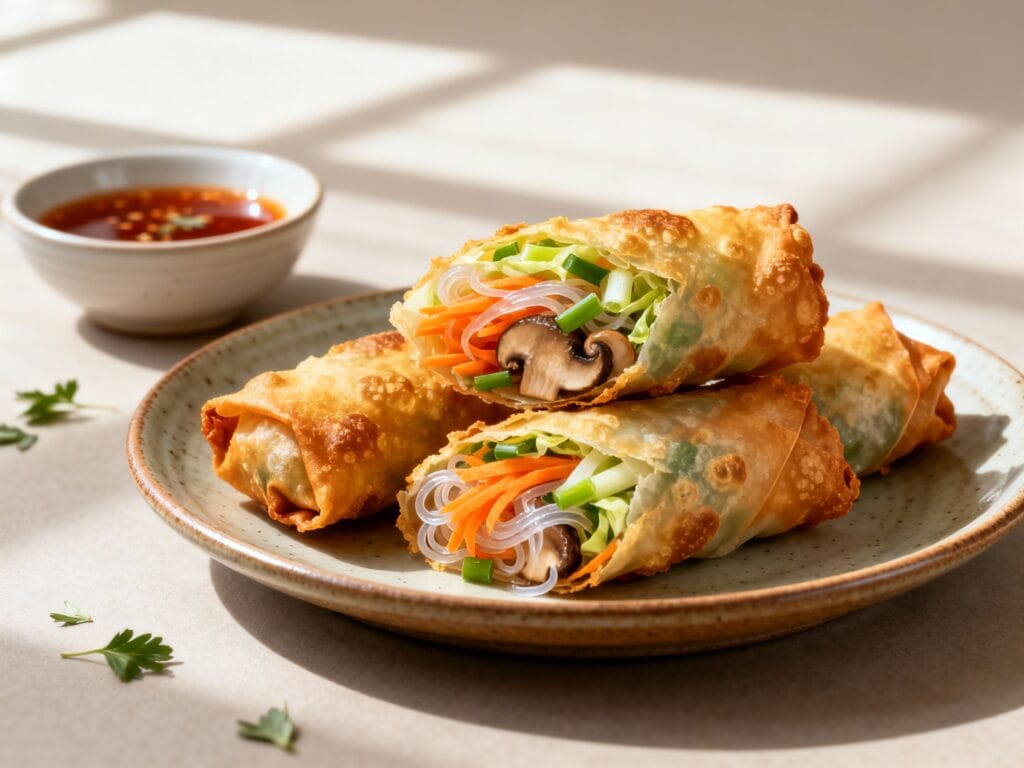
Spring rolls are that perfect “crispy outside, fresh and flavorful inside” situation that somehow works for dinner, appetizers, and snacky-girl meals. The best part? Once you learn the wrapper basics and a simple filling formula, you can make them on repeat with whatever you’ve got.
This post covers the full spring roll recipe (fried for maximum crunch), plus wrapper options, filling ideas, and the real secrets to keeping them crisp—because soggy spring rolls are not the vibe.
Why You’ll Love This
These spring rolls are ultra-crispy, customizable, and totally make-ahead friendly—aka perfect for hosting, meal prep, or clearing out your fridge while still feeling like you ordered takeout (in the best way).
Ingredients
- 12–14 spring roll wrappers (or “spring roll pastry” sheets), thawed if frozen
- 3 cups shredded cabbage (green, napa, or a mix)
- 1 cup shredded carrots
- 1 cup bean sprouts (optional but classic)
- 4 oz mushrooms, finely chopped
- 3 scallions, sliced
- 2 cloves garlic, minced
- 1 tablespoon fresh grated ginger (or 1 teaspoon ground ginger)
- 2 tablespoons soy sauce
- 1 tablespoon oyster sauce (optional; use extra soy sauce for vegetarian)
- 1 teaspoon sesame oil
- 1 teaspoon sugar
- 1 tablespoon cornstarch + 2 tablespoons water (for sealing slurry)
- Neutral oil for frying (canola, vegetable, peanut), enough for 1–2 inches in your pan
- Optional add-ins: cooked shrimp, shredded chicken, tofu crumbles, glass noodles, cilantro
- For serving: sweet chili sauce, soy-vinegar dip, or spicy mayo
How to Make It
- Prep your filling base. Finely chop anything watery (like mushrooms) and shred the rest. The smaller the pieces, the easier it is to roll tight and fry evenly.
- Cook the filling. Heat a large skillet over medium-high with a teaspoon of oil. Sauté garlic and ginger for 20 seconds, then add mushrooms and cook until their moisture evaporates (2–3 minutes).
- Soften the veggies. Add cabbage, carrots, and bean sprouts. Stir-fry 2–4 minutes until slightly softened but not mushy.
- Season and dry it out. Add soy sauce, oyster sauce (if using), sesame oil, and sugar. Cook another 1–2 minutes, stirring, until the pan looks mostly dry. Turn off the heat, stir in scallions, then let filling cool completely. (Cooling matters for crispiness.)
- Make sealing “glue.” Mix cornstarch and water in a small bowl until smooth.
- Wrap. Place one wrapper on a clean surface like a diamond (corner pointing toward you). Add 2–3 tablespoons filling near the bottom third. Fold the bottom corner over the filling, fold in the sides, then roll tightly. Brush a little cornstarch slurry on the top corner to seal.
- Set up for success. Place wrapped rolls seam-side down on a tray, leaving space between them. Cover lightly with a towel to prevent the wrappers from drying out while you finish.
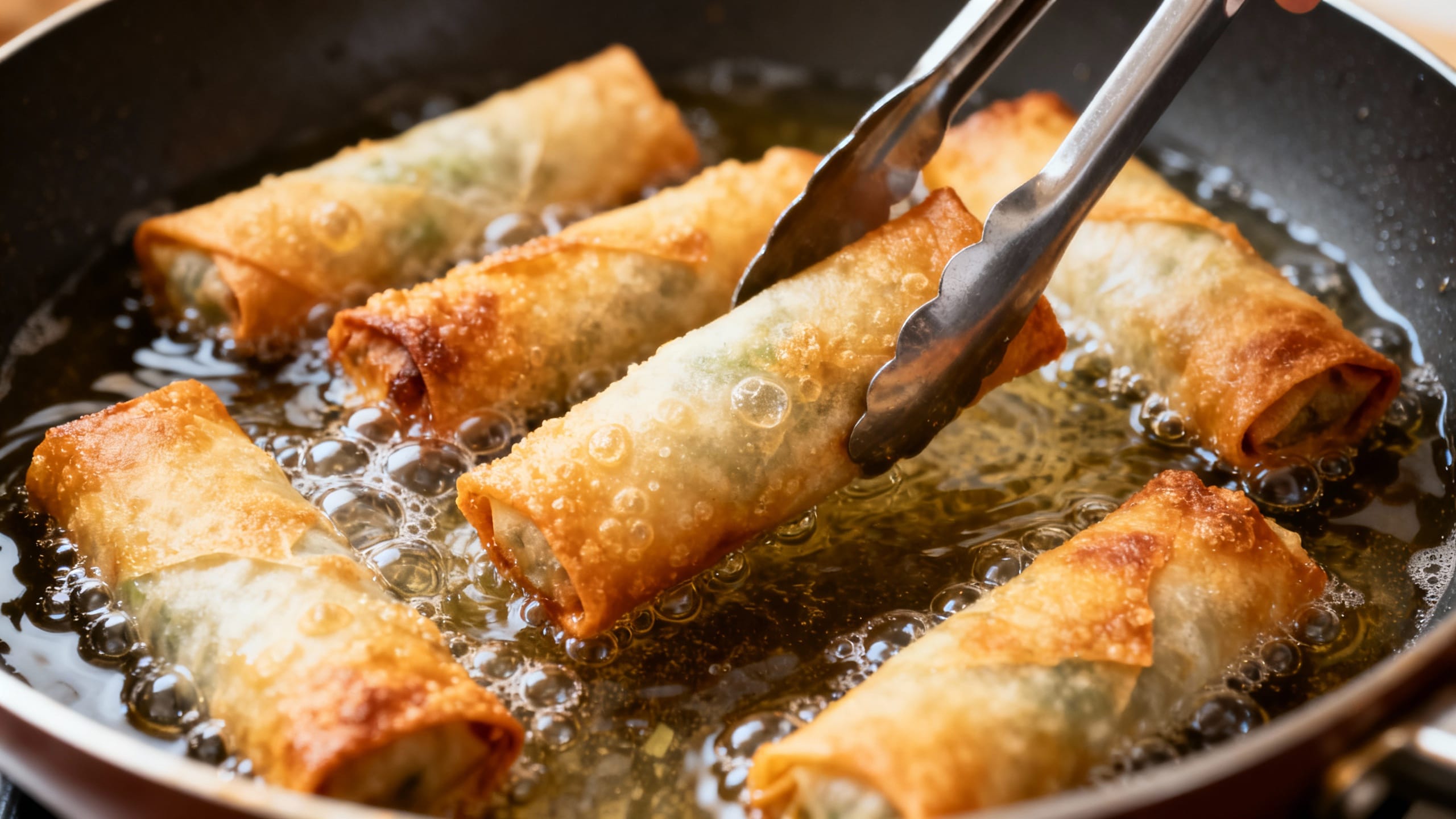
- Fry. Heat 1–2 inches of oil to 350°F (175°C). Fry in batches (don’t crowd) for 3–5 minutes, turning, until deep golden brown and crisp.
- Drain and serve. Transfer to a wire rack (best) or paper towels (fine). Serve hot with your favorite dipping sauce.
Tips for the Best Results
- Pick the right wrapper. Use spring roll wrappers (thin wheat-based pastry), not rice paper. Rice paper is for fresh Vietnamese-style rolls and won’t fry the same way.
- Cool the filling completely. Warm filling creates steam inside the wrapper, and steam is the fast track to soggy.
- Cook off moisture. If your skillet looks wet, keep cooking. You want a relatively dry filling so the wrapper stays crisp.
- Roll tight, not stuffed. Overfilling leads to splits and oil seepage. Tight rolling helps the wrapper crisp evenly.
- Seal with cornstarch slurry. Water alone can work, but the slurry holds better, especially if you’re frying in batches.
- Maintain oil temp. Too low = greasy rolls. Too high = browned outside, underdone inside. Aim for 350°F and let oil come back up between batches.
- Drain on a rack. Paper towels trap steam underneath; a rack keeps airflow moving so the bottoms stay crunchy.
Variations
- Chicken spring rolls: Add 1 cup shredded cooked chicken (rotisserie is perfect). Reduce veggies slightly so you don’t overfill.
- Shrimp spring rolls: Add 8–10 small shrimp, chopped and cooked before rolling, or use pre-cooked shrimp and chop fine.
- Vegetarian tofu-mushroom: Crumble and pan-brown firm tofu first, then mix into the filling for extra protein and texture.
- Glass noodle “party rolls”: Soak and chop glass noodles (mung bean vermicelli), then stir into the cooked filling. Adds chew in a good way.
- Spicy vibe: Add 1–2 teaspoons chili garlic sauce or sambal oelek to the filling, or serve with spicy mayo.
Storage & Reheating
Spring rolls are crispiest right after frying, but leftovers can still be great. Store cooled rolls in an airtight container in the fridge for up to 3 days. Reheat in a 375°F oven or air fryer until hot and re-crisped (about 6–10 minutes), flipping halfway; avoid the microwave if you care about crunch.
FAQ
What’s the best wrapper for crispy spring rolls?
Look for “spring roll wrappers” or “spring roll pastry” (thin wheat-based sheets), usually in the freezer section at Asian markets. They fry up bubbly and crisp. Egg roll wrappers are thicker and give a chewier, more blistered crunch—still good, just a different vibe.
How do I keep spring rolls crisp after frying?
Drain them on a wire rack, not piled on paper towels, and don’t cover them (trapped steam softens the wrapper). If you’re making multiple batches, keep finished rolls warm on a rack in a 200°F oven until serving.
Why are my spring rolls greasy?
Oil temp is usually the culprit. If it’s too low, the wrapper absorbs oil before it can crisp. Use a thermometer and aim for 350°F, and fry in small batches so the temperature doesn’t crash.
Can I bake spring rolls instead of frying?
Yes. Brush or spray the rolls generously with oil, place on a rack over a sheet pan, and bake at 425°F for 15–20 minutes, flipping once, until browned and crisp. They won’t be quite as shatter-crisp as fried, but they’re still very snackable.
Can I make spring rolls ahead of time?
You can prep the filling up to 2 days ahead and store it covered in the fridge. For best texture, wrap and fry the same day. If you need to wrap ahead, keep uncooked rolls in a single layer under a barely damp towel, cover with plastic wrap, and fry