


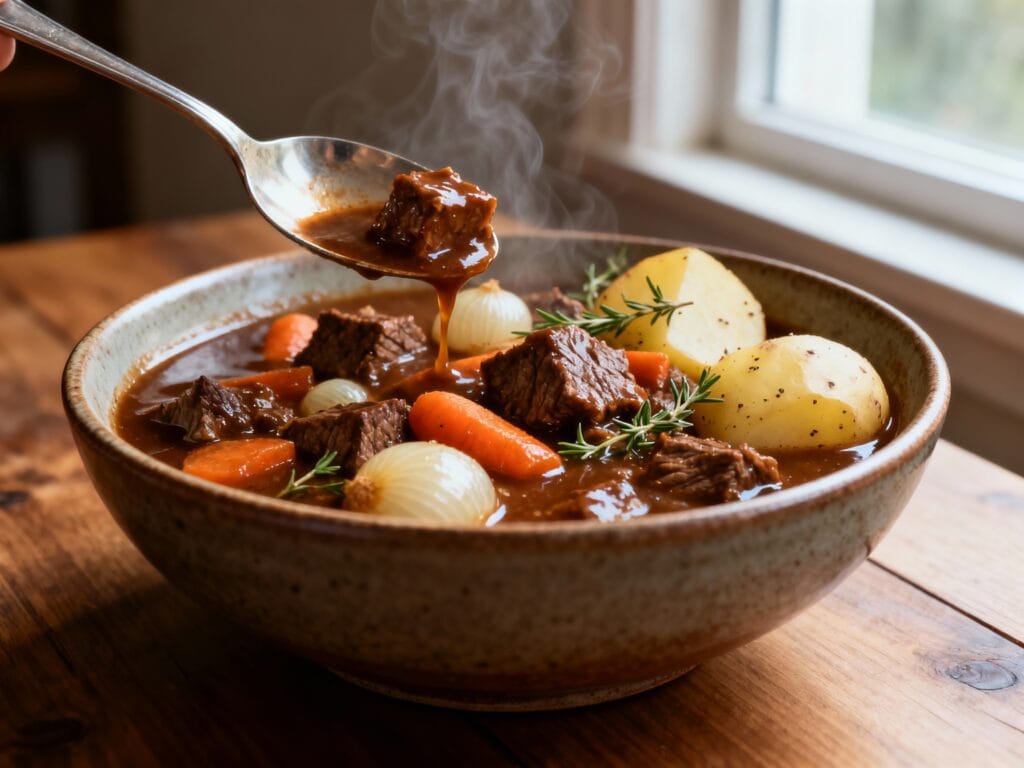
Some beef stews are cozy… and some are basically beef soup. This one is firmly in the “deep flavor, tender beef, not watery” category, with a rich, glossy broth that actually clings to your spoon (and your potatoes) in the best way.
The secret is simple: brown the meat properly, build layers with tomato paste and aromatics, and thicken on purpose—no sad, thin stew vibes allowed.
Why You’ll Love This
It’s the kind of stew that tastes like it cooked all day (even if you start after work): beef that’s fork-tender, veggies that hold their shape, and a thick, savory gravy with real depth from searing, herbs, and a little tomato paste.
Ingredients
- 2 1/2 lb beef chuck roast, cut into 1 1/2-inch cubes
- 2 1/2 tsp kosher salt, divided (plus more to taste)
- 1 tsp black pepper
- 3 tbsp all-purpose flour
- 2–3 tbsp olive oil (as needed for browning)
- 1 large yellow onion, chopped
- 4 carrots, peeled and cut into 1-inch chunks
- 3 celery ribs, chopped
- 4 garlic cloves, minced
- 2 tbsp tomato paste
- 1 cup dry red wine (or extra beef broth)
- 4 cups low-sodium beef broth
- 1 tbsp Worcestershire sauce
- 2 tsp Dijon mustard (optional but recommended)
- 1 1/2 lb Yukon Gold potatoes, cut into 1 1/2-inch chunks
- 2 bay leaves
- 1 tsp dried thyme (or 1 tbsp fresh)
- 1 tsp smoked paprika (optional, for extra depth)
- 1 tbsp cornstarch + 1 tbsp cold water (optional, for final thickening)
- 1 cup frozen peas (optional, stirred in at the end)
- 2 tbsp chopped parsley, for serving
How to Make It
- Prep and season. Pat the beef very dry with paper towels (this is huge for browning). Toss with 2 tsp salt, pepper, and flour until lightly coated.
- Brown the beef in batches. Heat 1–2 tbsp olive oil in a large Dutch oven over medium-high heat. Sear beef in a single layer, 3–4 minutes per side, until deeply browned. Transfer to a plate and repeat, adding a bit more oil if needed.
- Sauté the aromatics. Lower heat to medium. Add onion, carrots, and celery with a pinch of salt. Cook 6–8 minutes, scraping up browned bits, until the onion softens and the edges start to caramelize. Add garlic and cook 30 seconds.
- Bloom the flavor builders. Stir in tomato paste, thyme, and smoked paprika. Cook 1–2 minutes until the tomato paste darkens slightly and smells roasted (not raw).
- Deglaze and build the broth. Pour in the wine and simmer 2–3 minutes, scraping the bottom thoroughly. Add beef broth, Worcestershire, Dijon (if using), bay leaves, and the browned beef with any juices. Bring to a gentle simmer.
- Slow cook until tender. Cover with the lid slightly ajar and simmer on low for 75–90 minutes, stirring occasionally, until the beef is starting to get tender.
- Add potatoes, finish cooking. Add potatoes and simmer, uncovered or partially covered, 30–40 minutes more, until potatoes are tender and the stew looks thicker.
- Adjust thickness and seasoning. If you want it thicker, mix cornstarch and cold water, stir into the stew, and simmer 2–3 minutes. Taste and add remaining 1/2 tsp salt (or more), plus pepper as needed. Stir in peas for the last 2 minutes if using. Finish with parsley.
Tips for the Best Results
- Dry beef = real browning. Moisture is the enemy of that deep crust. Pat it dry and don’t overcrowd the pot.
- Use chuck. It has the right fat and connective tissue to turn buttery after a long simmer.
- Cook tomato paste until it darkens. This tiny step makes the stew taste richer and less acidic.
- Low and slow, not boiling. A hard boil can make beef tough. Keep it at a gentle simmer with small bubbles.
- Cut veggies big. Larger chunks hold their shape and don’t dissolve into mush.
- Control “watery” with the lid. Simmer partly uncovered near the end to reduce and concentrate flavor.
- Salt in layers. Season the beef, season the veg, then adjust at the end so the broth tastes finished.
Variations
- No wine: Swap the wine for more beef broth plus 1 tbsp balsamic vinegar for a similar depth.
- Mushroom boost: Add 8 oz cremini mushrooms with the onions for extra savory flavor.
- Herby vibe: Add a rosemary sprig while simmering (remove before serving) or use fresh thyme.
- Spicy-warm: Add a pinch of red pepper flakes with the garlic, or a dash of hot sauce at the end.
- Gluten-free: Skip the flour coating and thicken at the end with cornstarch or mashed potatoes.
Storage & Reheating
Store cooled stew in an airtight container in the fridge for up to 4 days, or freeze for up to 3 months. Reheat gently on the stovetop over medium-low, adding a splash of broth or water if it thickened too much in the fridge. For the microwave, heat in 60–90 second bursts, stirring between, until hot throughout.
FAQ
How do you make beef stew not watery?
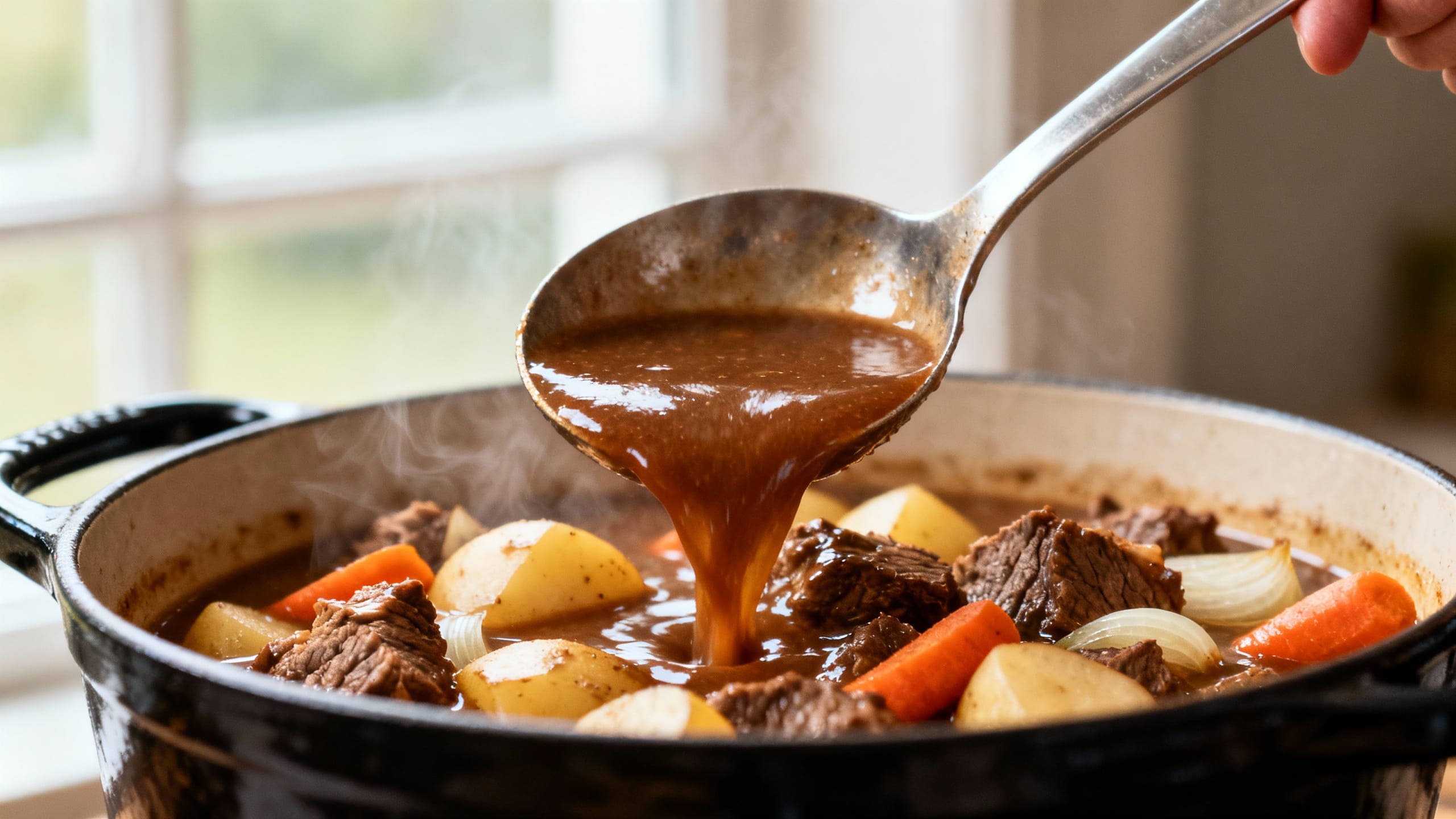
Three things: (1) brown the beef well for flavor and body, (2) simmer partially uncovered toward the end to reduce, and (3) thicken intentionally—either with the light flour coating on the beef or a quick cornstarch slurry at the end.
Why is my beef stew meat tough?
It usually needs more time at a gentle simmer. Chuck gets tender when connective tissue breaks down, which can take 2–3 hours total depending on your heat and beef pieces. Also avoid a rolling boil, which can tighten the meat.
Can I make this in a slow cooker?
Yes—still brown the beef and cook the tomato paste step on the stovetop first (that’s where the deep flavor comes from). Then transfer everything except potatoes and peas to the slow cooker and cook on Low 8 hours (or High 4–5). Add potatoes for the last 2–3 hours on Low, then thicken if needed.
When should I add potatoes so they don’t fall apart?
Add them after the beef has simmered about 75–90 minutes. Yukon Golds hold up well, but if they cook from the beginning, they can get overly soft and make the stew starchy in a “mashy” way.
What’s the best cut of beef for tender stew?
Beef chuck roast is the classic for a reason: it has enough marbling to stay juicy and enough collagen to turn silky after a long simmer. Avoid lean cuts like sirloin—they cook faster but won’t get that fall-apart texture.