


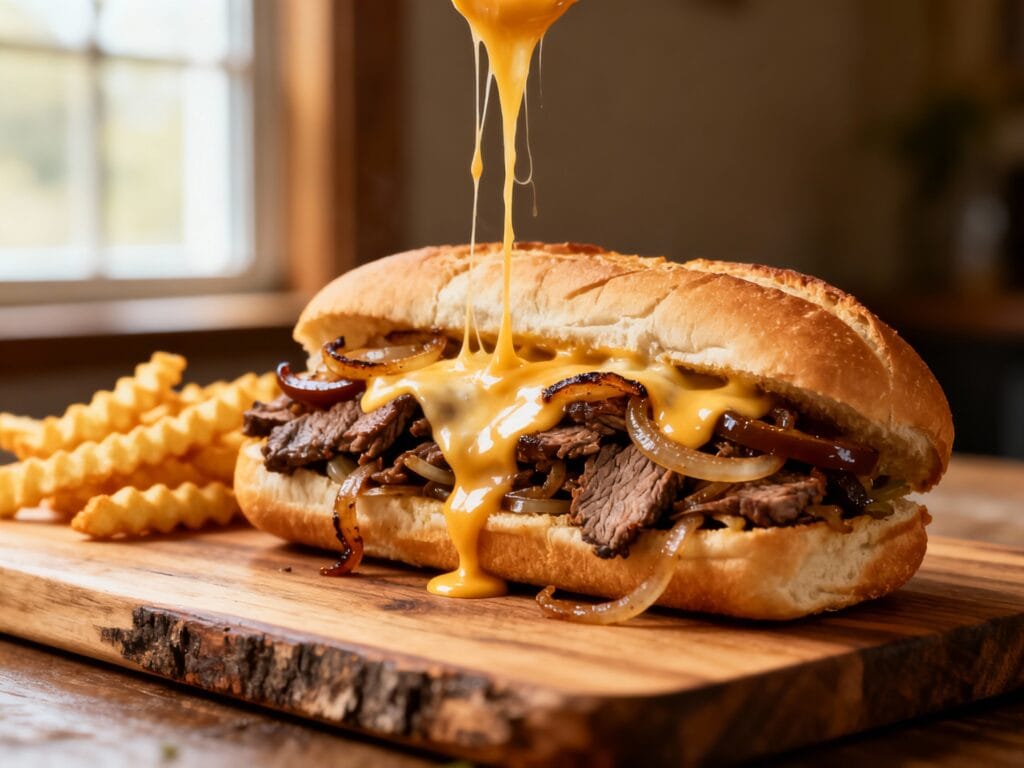
Craving a real-deal cheesesteak but not trying to leave your kitchen (or your budget) behind? Same. The good news: you can make an insanely satisfying cheesesteak at home with the right cut of beef, a hot pan, and a few simple moves.
This recipe is built for weeknights: minimal fuss, maximum melty cheese, and that classic savory beef-and-onion situation that makes cheesesteaks iconic.
Why You’ll Love This
It’s fast, customizable, and honestly hard to mess up once you know what beef to buy and how to slice it thin—plus you get that legit, juicy, cheesy bite without needing a flat-top grill.
Ingredients
- 1 1/4 lb ribeye steak (best choice), sirloin (budget-friendly), or top round (leaner option)
- 1 tsp kosher salt, plus more to taste
- 1/2 tsp black pepper
- 1/2 tsp garlic powder (optional but great)
- 1 tbsp neutral oil (avocado, canola, or vegetable)
- 1 tbsp unsalted butter
- 1 large yellow onion, thinly sliced
- 1 green bell pepper, thinly sliced (optional)
- 4 hoagie rolls (soft but sturdy)
- 8 slices provolone (classic and easy), or 6–8 oz American cheese, or 1 cup Cheez Whiz
- 2–4 tbsp beef broth or water (to keep things juicy; optional but helpful)
How to Make It
- Chill the steak for easier slicing. Place the steak in the freezer for 20–30 minutes. You’re not freezing it solid—just firming it up so you can get super thin slices.
- Slice thin against the grain. Using a sharp knife, slice the steak as thin as you can. Aim for paper-thin strips. If you see long muscle lines, cut across them (that’s “against the grain”) for tender bites.
- Season the beef. Toss sliced steak with salt, pepper, and garlic powder. Keep it simple—cheesesteak flavor comes from good beef, hot heat, and onions.
- Cook the onions (and peppers if using). Heat a large cast iron skillet or heavy pan over medium-high heat. Add oil and butter, then add onions (and peppers). Cook 6–8 minutes, stirring often, until softened and lightly browned. Push to one side of the pan.
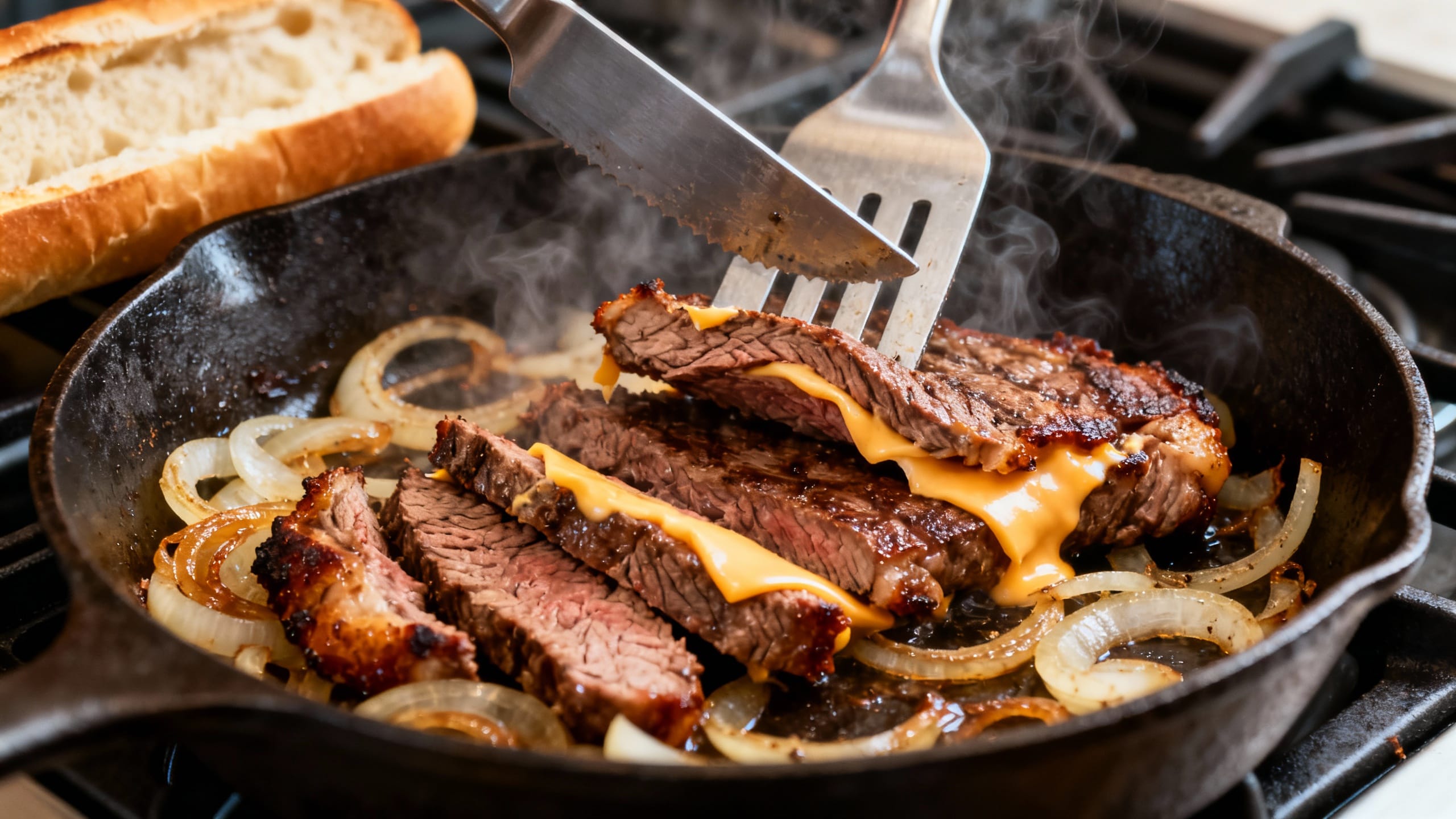
- Sear the beef fast. Turn heat to high. Add the sliced beef to the empty side of the skillet in a thin layer. Let it sear for about 45–60 seconds, then stir and cook another 1–2 minutes until mostly cooked through. If the pan looks dry, splash in a little broth or water.
- Chop and combine. Use a spatula to chop the beef a bit (not into crumbs—just smaller pieces) and mix it with the onions/peppers. Taste and adjust salt/pepper.
- Melt the cheese like a pro. Divide the mixture into 4 piles in the skillet. Top each pile with 2 slices provolone (or your cheese choice). Add a tablespoon of water to the pan and quickly cover with a lid for 30–45 seconds to steam-melt the cheese.
- Toast the rolls (optional but worth it). Split hoagie rolls and toast cut-side down in a dry skillet or under the broiler for 1–2 minutes until warm and lightly crisp.
- Assemble and serve. Scoop each cheesy pile into a roll. Serve immediately while the cheese is still doing its melty thing.
Tips for the Best Results
- Best cut of beef: Ribeye is the gold standard—marbled, tender, and forgiving. Sirloin is a great second choice if you want something leaner but still flavorful. Top round works if sliced very thin and cooked fast; it’s lean, so don’t overcook.
- Thin slicing is everything. A quick freezer chill makes it way easier. If your knife is struggling, chill longer.
- Don’t overcrowd the pan. If your skillet is small, cook the beef in two batches so it sears instead of steaming.
- High heat, short time. Cheesesteak beef should be cooked quickly. Long cooking = tough vibes.
- Use the lid trick. A tiny splash of water + lid = instant cheese melt without overcooking the beef.
- Pick the right roll. Soft hoagie rolls are classic. Avoid super crusty bread—it can fight the filling instead of hugging it.
Variations
- Cheez Whiz-style: Skip sliced cheese and warm Cheez Whiz in a small pan or microwave. Drizzle inside the roll before adding the beef.
- American cheese melt: Use deli American for that ultra-creamy, diner-style melt. It’s low-effort and very legit.
- Mushroom cheesesteak: Add 8 oz sliced mushrooms. Cook them after onions until browned, then proceed.
- Spicy version: Add sliced pickled cherry peppers or a few shakes of crushed red pepper while cooking onions.
- Extra saucy: Stir 1–2 tsp Worcestershire into the beef right at the end (not traditional everywhere, but it’s delicious).
Storage & Reheating
Store leftover beef-and-onion mixture (separate from rolls if possible) in an airtight container for up to 3 days. Reheat in a skillet over medium heat with a splash of broth or water until hot, then add cheese and cover to melt. Rolls are best toasted fresh right before serving.
FAQ
What cut of beef works best for a homemade cheesesteak?
Ribeye is the best because it has enough fat (marbling) to stay juicy and tender with quick, high-heat cooking. If you want a cheaper option, go with sirloin. If you use top round, slice it ultra-thin and cook it very fast so it doesn’t get tough.
How do I get the beef sliced super thin at home?
Freeze the steak for 20–30 minutes to firm it up, then use a sharp knife and slice against the grain. If you have a butcher counter available, you can also ask for “shaved ribeye” or “cheesesteak sliced” and it’ll be basically ready to go.
What cheese is most traditional for cheesesteaks?
It depends who you ask, but provolone, American cheese, and Cheez Whiz are the most common classics. Provolone gives you a mild, stretchy melt, American is creamy and rich, and Cheez Whiz is the iconic gooey option.
Should I cook the onions and peppers first or the steak first?
Cook onions (and peppers, if using) first, then push them aside and cook the steak in the same pan. This keeps the steak from overcooking while still letting everything mix together at the end for that classic flavor.
Why did my cheesesteak turn out dry or tough?
The usual reasons are slicing too thick, cooking too long, or using a very lean cut without adjusting. Slice thinner, use higher heat for a shorter time, and add a small splash of broth or water if the pan looks dry. Ribeye is also more forgiving if you’re new to making it at home.