


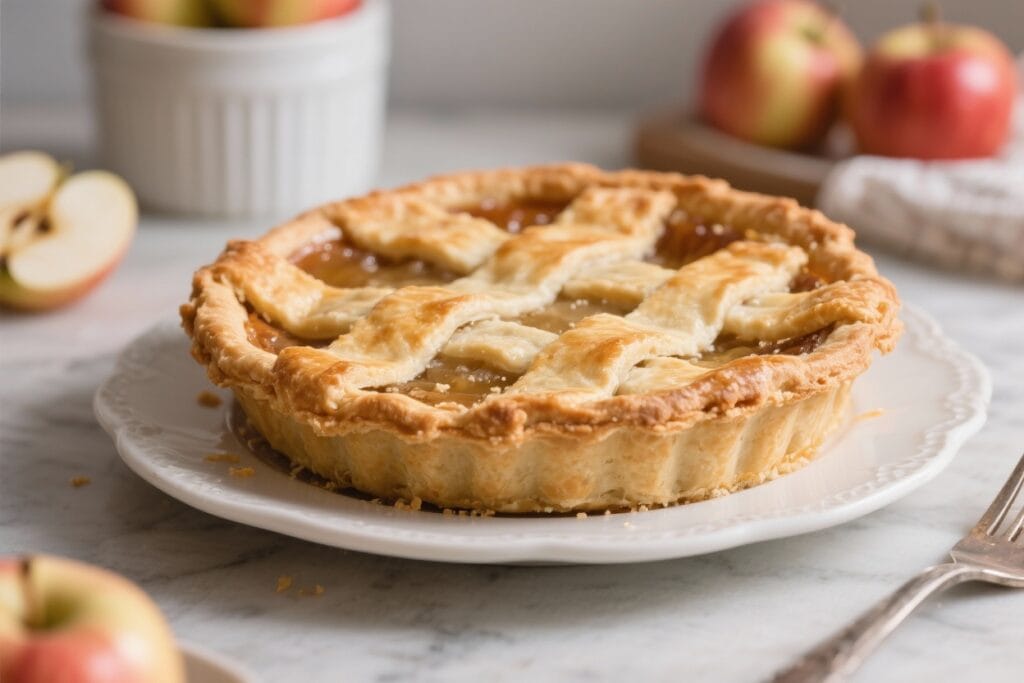
Nothing beats a warm slice of apple pie with a buttery, flaky crust and tender cinnamon-spiced apples. This is the kind of pie that makes your kitchen smell like home and your table feel a little more welcoming. The crust is crisp and golden, the filling is juicy but not soupy, and every bite tastes familiar in the best way.
If you’ve been looking for a reliable, nostalgic recipe, this one delivers. It’s simple, straightforward, and tested, just like Grandma would have made it.
Why This Recipe Works
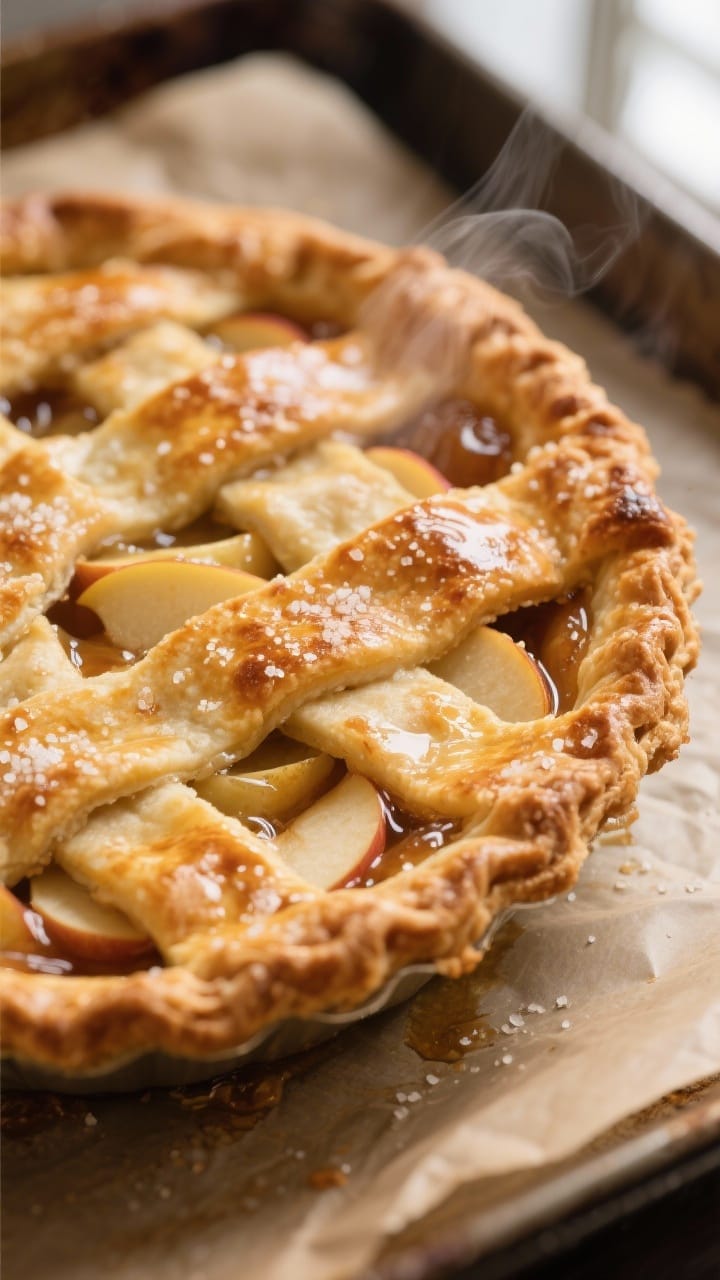
- All-butter crust for flavor and flake: Cold butter and minimal handling create distinct layers that bake up crisp and tender.
- Right apple mix: Using a blend of sweet and tart apples gives balanced flavor and great texture that holds up in the oven.
- Pre-chilling at key steps: Cold dough and a chilled assembled pie help prevent a soggy bottom and keep the crust flaky.
- Just enough thickener: A measured amount of flour and cornstarch binds the juices so the filling slices cleanly without turning gummy.
- High-heat start: Beginning with a hotter oven sets the crust, then lowering the heat cooks the apples through without burning.
What You’ll Need
- For the crust (double crust):
- 2 1/2 cups (300 g) all-purpose flour
- 1 cup (225 g) cold unsalted butter, cut into 1/2-inch cubes
- 1 tablespoon granulated sugar
- 1 teaspoon fine sea salt
- 6–8 tablespoons ice water, plus more as needed
- For the filling:
- 6–7 medium apples (about 2 1/2 pounds), peeled, cored, and sliced 1/4-inch thick
- 2/3 cup (135 g) granulated sugar
- 1/4 cup (50 g) light brown sugar, packed
- 2 tablespoons all-purpose flour
- 1 tablespoon cornstarch
- 1 1/2 teaspoons ground cinnamon
- 1/4 teaspoon ground nutmeg
- 1/8 teaspoon ground allspice (optional)
- 1/4 teaspoon fine sea salt
- 1 tablespoon lemon juice
- 1 teaspoon vanilla extract (optional but lovely)
- For assembly:
- 1 tablespoon cold butter, cut into small pieces
- 1 egg, beaten with 1 tablespoon milk or water (egg wash)
- 1–2 teaspoons coarse sugar for sprinkling (optional)
Instructions
- Make the dough: In a large bowl, whisk flour, sugar, and salt. Cut in the cold butter with a pastry cutter or your fingertips until pea-sized bits remain.
Drizzle in ice water a tablespoon at a time, tossing with a fork until the dough clumps when squeezed.
- Chill the dough: Divide into two disks, wrap each in plastic, and chill for at least 1 hour (or up to 2 days). Cold dough is key to flakiness.
- Prep the apples: In a big bowl, combine sliced apples, granulated sugar, brown sugar, flour, cornstarch, cinnamon, nutmeg, allspice, salt, lemon juice, and vanilla. Toss until the slices are evenly coated.
Let sit 10–15 minutes to start releasing juices.
- Roll the bottom crust: On a lightly floured surface, roll one dough disk into a 12-inch circle. Fit it into a 9-inch pie plate, letting excess hang over the rim. Chill the lined plate while you roll the top.
- Fill the pie: Spoon the apple mixture into the crust, mounding slightly in the center.
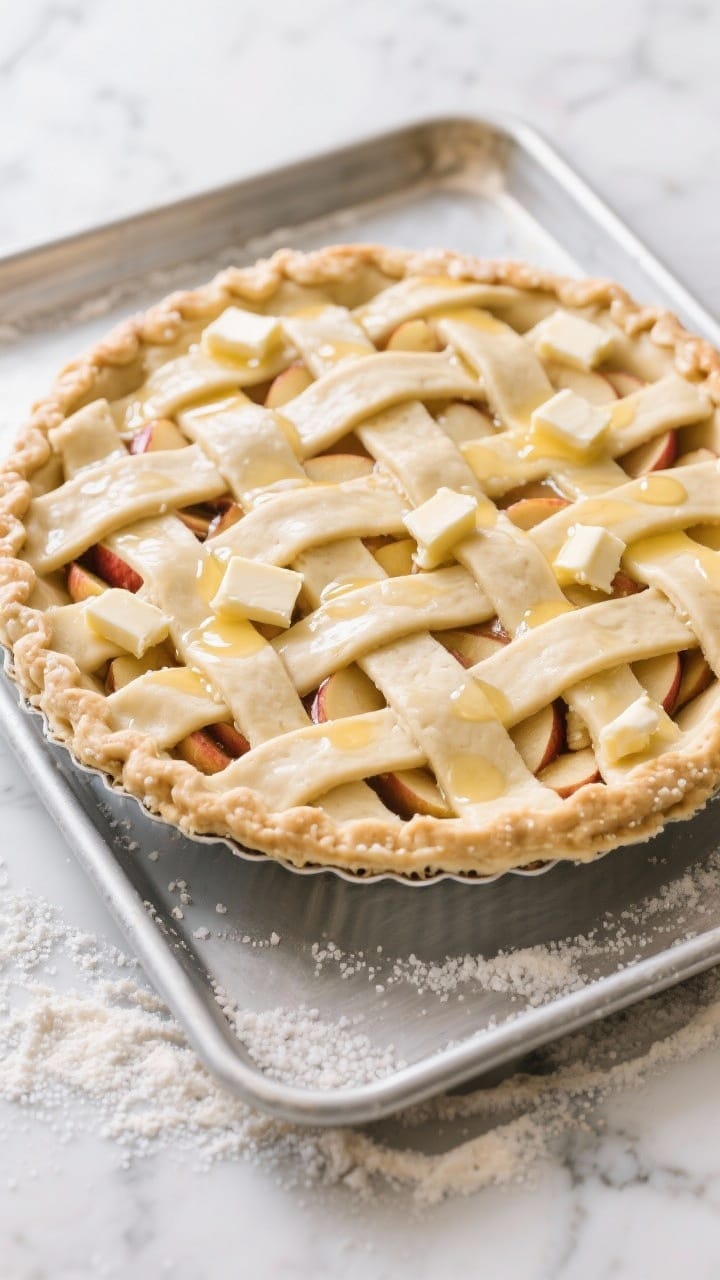
Dot the top with the small pieces of cold butter.
- Top crust or lattice: Roll the second dough disk into another 12-inch circle. Lay it over the filling for a full top or cut into strips for a lattice. Trim excess, leaving about 1 inch overhang all around.
- Seal and crimp: Fold the overhang under itself and crimp with your fingers or a fork.
If using a full top, cut 4–6 slits to vent steam. Brush with egg wash and sprinkle with coarse sugar if you like.
- Chill the assembled pie: Place the pie in the fridge or freezer for 15–20 minutes while the oven preheats. This helps the crust hold its shape.
- Preheat and bake hot to start: Preheat oven to 425°F (220°C) with a rack in the lower third.
Set the pie on a parchment-lined baking sheet to catch drips. Bake 20 minutes.
- Lower the temperature: Reduce oven to 375°F (190°C) and continue baking 35–45 minutes, until the crust is deep golden and the filling is bubbling through the vents. Tent the edges with foil if they brown too quickly.
- Cool completely: Let the pie cool on a rack for at least 3 hours.
This sets the juices so slices hold together. Serve warm or at room temperature.
Storage Instructions
- Room temperature: Keep loosely covered for up to 1 day.
- Refrigerator: Store covered for 3–4 days. Rewarm slices at 300°F (150°C) for 10–15 minutes to refresh the crust.
- Freezer (baked): Freeze the cooled pie, well wrapped, for up to 3 months.
Reheat at 350°F (175°C) until hot and crisp, 35–45 minutes.
- Freezer (unbaked): Assemble the pie and freeze until solid, then wrap tightly. Bake from frozen at 400°F (205°C) for 25 minutes, then 375°F (190°C) until bubbly and golden, 40–55 minutes more.
Benefits of This Recipe
- Reliable texture: Juicy but sliceable filling thanks to the flour-cornstarch mix.
- Big flavor payoff: All-butter crust and a balanced spice blend make each bite fragrant and rich.
- Make-ahead friendly: Dough and assembled pie freeze well, so you can plan ahead.
- Comfort-food classic: Feels nostalgic and celebratory without being fussy.
What Not to Do
- Don’t skip chilling: Warm dough turns tough and greasy, not flaky.
- Don’t overwork the dough: Too much handling develops gluten and makes a dense crust.
- Don’t cut apples too thin: They’ll collapse and turn mushy; 1/4-inch slices hold shape.
- Don’t underbake: The filling must bubble to activate the thickeners and set the juices.
- Don’t slice too soon: Hot pie will ooze. Let it cool so it slices cleanly.
Recipe Variations
- Cheddar crust: Add 1 cup finely shredded sharp cheddar to the flour before cutting in butter for a sweet-savory twist.
- Brown butter filling: Brown 2–3 tablespoons of the butter and dot it over the apples for a nutty aroma.
- Maple apple pie: Replace 1/4 cup granulated sugar with pure maple syrup; add 1 extra teaspoon cornstarch.
- Caramel apple pie: Drizzle 1/3 cup thick caramel sauce over the apples before topping; slightly increase baking time.
- Crumble-topped pie: Swap the top crust for a streusel (1/2 cup flour, 1/2 cup brown sugar, 6 tablespoons cold butter).
Bake the same way.
- Spirited version: Toss apples with 1–2 tablespoons apple brandy or bourbon for depth.
FAQ
What are the best apples for pie?
Use a mix for balance. Granny Smith for tartness and structure, plus Honeycrisp, Braeburn, or Pink Lady for sweetness and juiciness. Avoid apples that turn mushy, like Red Delicious.
My crust shrinks.
How do I fix that?
Let the dough rest after rolling so the gluten relaxes, and chill the assembled pie before baking. Don’t stretch the dough to fit the pan; let it naturally settle and trim the extra.
How do I prevent a soggy bottom?
Bake on the lower oven rack and preheat a baking sheet to help set the base. Chilling the assembled pie and waiting for visible bubbling in the center also helps.
Can I make the dough in a food processor?
Yes.
Pulse dry ingredients, add butter, and pulse until pea-sized. Drizzle in ice water just until it clumps. Stop early and finish by hand to avoid overworking.
Can I reduce the sugar?
You can cut the total sugar by up to 25%.
If your apples are very tart, keep at least half to balance flavor and ensure proper syrupy juices.
Do I need to blind-bake the crust?
Not for this double-crust pie. A hot start and lower-rack baking are enough. Blind baking is more common for custard or cream pies.
How do I know it’s done?
Look for a deep golden crust and active bubbling through the vents for at least 5 minutes.
A skewer through the vent should meet very little resistance in the center.
Can I use store-bought crust?
Absolutely. It won’t be quite as flaky or flavorful as homemade, but it works in a pinch. Keep it cold and follow the same baking times.
Final Thoughts
This classic apple pie is comfort on a plate—simple ingredients, careful technique, and big, cozy flavor.
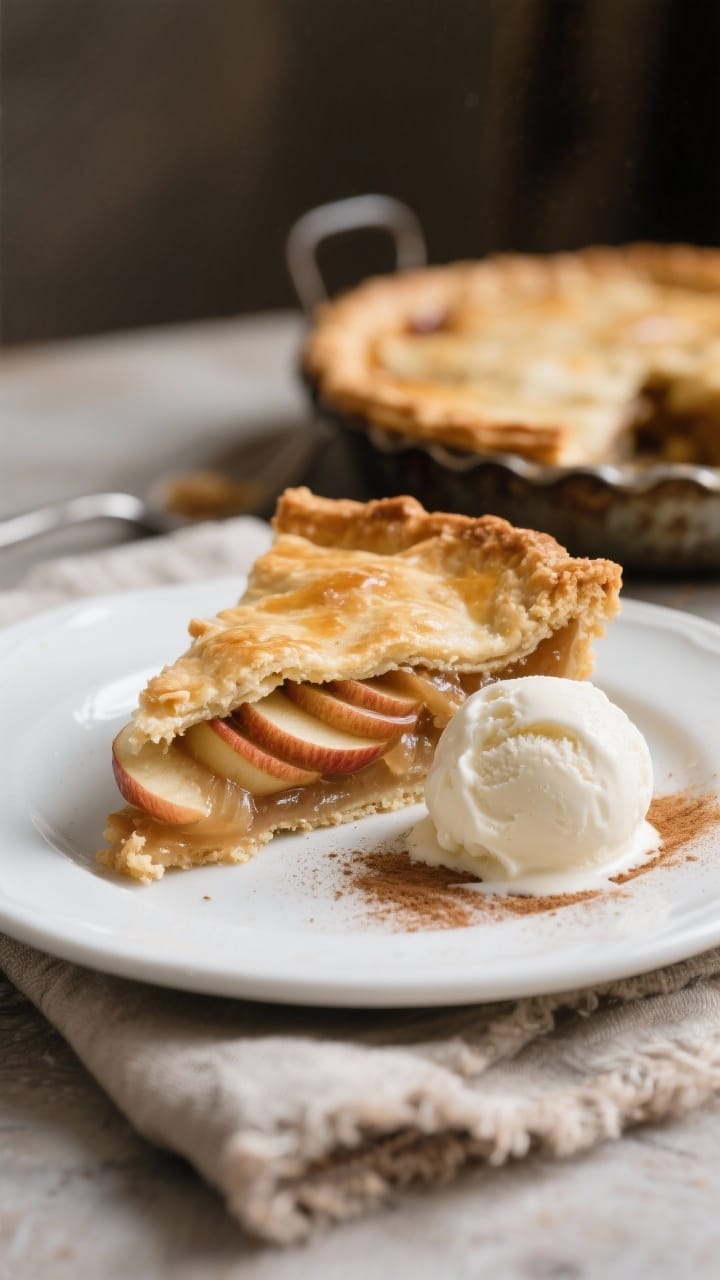
Keep the dough cold, don’t rush the bake, and let the pie cool. With those steps, you’ll get a crisp, buttery crust and tender, cinnamon-kissed apples every time. Serve with vanilla ice cream or a slice of sharp cheddar, and enjoy that old-fashioned, homemade goodness.