


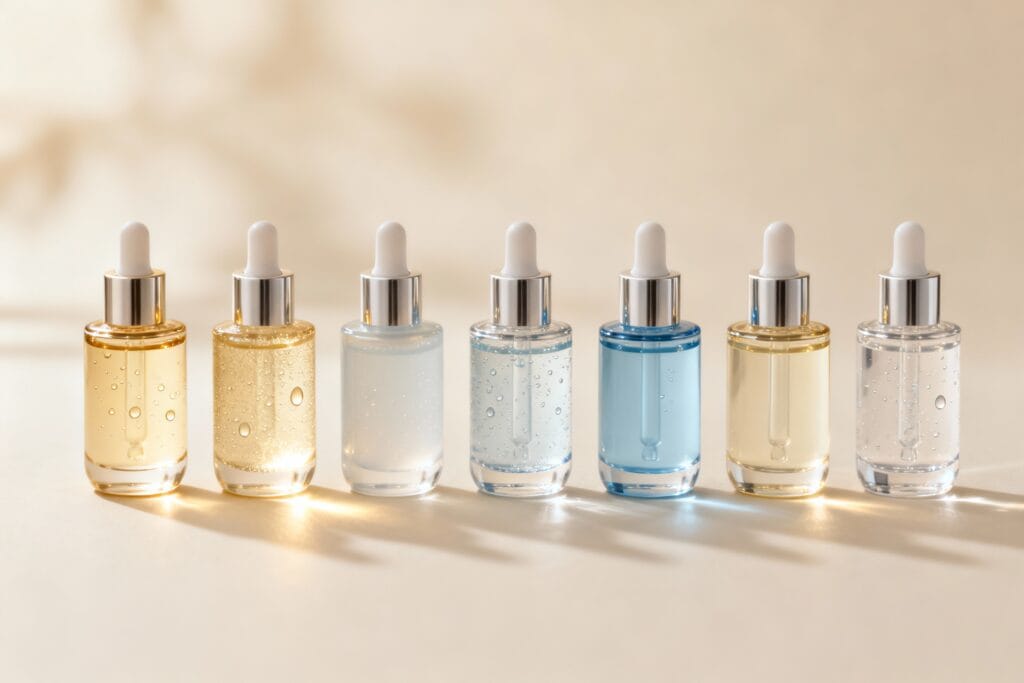
You want glowing, firmer skin that looks like you sleep eight hours and drink water for sport? Same. The right serum can do more heavy lifting than your moisturizer, and yes, you can actually see results.
Let’s cut the fluff and get into seven heavy-hitters that brighten, smooth, and tighten—without requiring a chemistry degree to use.
Why Serums Matter (And Moisturizer Can’t Do It Alone)
Serums pack a high concentration of actives that target fine lines, dullness, and loss of firmness. Think of them as the overachievers of your routine. Moisturizer seals it all in, but serums do the actual work.
You want smaller molecules for deeper penetration and formulas that mix well with your routine. Bonus points if they play nice with sunscreen and makeup.
The 7 Best Anti-Aging Serums For Real Results
These picks cover all the bases: retinoids, vitamin C, peptides, hydrators, and support for your skin barrier. Use one or layer strategically—more on that below.
1) Best Overall: Retinol Serum (0.3–1%)
If you want firm, smooth, even-toned skin, retinol reigns.
It boosts collagen, speeds cell turnover, and softens lines. Start at 0.3% and work up slowly.
- What it targets: Fine lines, texture, pores, uneven tone
- How to use: Night only, 2–3 times weekly at first, then increase
- Pair it with: A soothing moisturizer and sunscreen (always)
2) Best for Brightening + Firming: Vitamin C (L-Ascorbic Acid 10–15%)
Vitamin C does a lot: brightens, supports collagen, and fights environmental damage. Go for stabilized L-ascorbic acid or a gentler derivative if you’re sensitive.
- What it targets: Dullness, dark spots, loss of firmness
- How to use: Morning under sunscreen for antioxidant protection
- Pro tip: Look for formulas with vitamin E and ferulic for extra punch
3) Best for Plumpness: Peptide Serum
Peptides send “hey, build collagen” signals to your skin.
They won’t replace retinoids, but they support firmness and bounce, and they’re easy to tolerate.
- What it targets: Mild sagging, fine lines, resilience
- How to use: AM or PM, layers well with retinol and vitamin C
- FYI: Results are subtle but real with consistent use
4) Best for Deep Hydration: Hyaluronic Acid + Polyglutamic Acid
Dehydrated skin exaggerates wrinkles. A serum with multi-weight hyaluronic acid plus polyglutamic acid locks in moisture and gives that glazed, bouncy look.
- What it targets: Fine dehydration lines, dullness
- How to use: On slightly damp skin, then seal with moisturizer
- Pro tip: Don’t use HA alone in dry air—always top with cream
5) Best for Sensitive or Retinol-Intolerant Skin: Bakuchiol
Bakuchiol is a plant-derived retinol alternative that smooths texture and supports firmness with fewer side effects. No, it’s not identical to retinol, but it’s great if your skin throws tantrums.
- What it targets: Texture, mild lines, tone
- How to use: AM or PM, plays well with other actives
- IMO: A perfect gateway serum before full retinoids
6) Best for Resilience: Niacinamide (4–10%)
Niacinamide strengthens your barrier, refines pores, and evens tone.
It’s the steady friend who keeps the drama low when you’re using stronger actives.
- What it targets: Redness, uneven tone, oiliness
- How to use: AM and/or PM; easy to layer
- FYI: Over 10% can feel tingly; more isn’t always more
7) Best for Redness-Prone or Damaged Skin: Growth Factor/EGF Serums
Epidermal growth factors (and similar signaling ingredients) help skin recover and can improve texture and elasticity over time. They’re usually pricey but shine when your barrier needs TLC.
- What it targets: Texture, elasticity, post-procedure recovery
- How to use: PM, especially on nights off from retinoids
- Note: Consistency matters; think long game
How to Layer Without Annoying Your Skin
You don’t need to use everything at once. Promise.
Create a simple rotation and keep it consistent.
- Morning: Cleanser → Vitamin C → Hydrating serum (HA) → Moisturizer → Sunscreen
- Night A (active): Cleanser → Niacinamide or peptide → Retinol → Moisturizer
- Night B (repair): Cleanser → Growth factor or bakuchiol → Hydrator → Rich moisturizer
When to pause actives
If you feel stinging, tightness that lasts, or flaking, simplify. Go back to hydrators, niacinamide, and barrier creams for a few nights. Your skin will thank you.
Ingredients That Actually Move the Needle
Let’s make the science digestible.
If a label reads like a novella, skim for these:
- Retinoids: Retinol, retinaldehyde, adapalene (OTC). More collagen, smoother texture.
- Vitamin C: L-ascorbic acid (potent), or THD ascorbate and sodium ascorbyl phosphate (gentler).
- Peptides: Look for “palmitoyl,” “copper tripeptide-1,” or “hexapeptide.”
- Hydrators: Hyaluronic acid, glycerin, polyglutamic acid, panthenol.
- Barrier buddies: Ceramides, cholesterol, fatty acids.
- Soothers: Centella asiatica, green tea, allantoin, ectoin.
What to Avoid Mixing (Unless You Like Drama)
You can mix a lot, but let’s not test fate.
- Retinoids + strong exfoliating acids on the same night = high irritation risk. Alternate nights.
- Vitamin C (LAA) + niacinamide is generally fine in modern formulas, but super-sensitive skin might prefer spacing them.
- Multiple strong actives at once (retinol + high-strength AHA + benzoyl peroxide) = chaos.
Pick one hero per routine.
Patch testing, please
New serum? Test along the jawline for 3 nights. No reaction?
You’re good. It’s boring, but so is avoidable irritation.
How Long Until You See Results?
Skincare is not Prime delivery. Give it time—and sunscreen.
- Hydration glow: Instantly to a few days
- Tone and brightness: 2–4 weeks (vitamin C, niacinamide)
- Texture and fine lines: 6–12 weeks (retinoids, peptides)
- Firmness: 3–6 months of consistent use
Track your progress
Take a photo in the same lighting every 4 weeks.
You’ll notice the changes you miss in the mirror day-to-day. IMO, this keeps motivation high when you feel “meh” about results.
FAQs
Can I use more than one serum at a time?
Yes, just keep it simple. Use one antioxidant or brightener in the morning (like vitamin C), and one treatment at night (like retinol).
Layer lightest to heaviest and stop if your skin feels tight or stingy.
Do I need a moisturizer if I use hydrating serums?
Absolutely. Serums draw in water; moisturizers lock it in. Skip moisturizer and you risk that tight, parched feeling—especially in dry climates.
Is bakuchiol as effective as retinol?
Not quite, but it’s a solid option if retinoids irritate you.
It smooths texture and supports firmness with fewer side effects. You can also use bakuchiol on retinoid “off” nights for extra benefits.
What percentage of vitamin C should I use?
Start with 10–15% L-ascorbic acid for potency. Sensitive skin can try derivatives at similar or slightly higher percentages.
If it stings a lot or pills under sunscreen, switch formulas rather than forcing it.
How do I prevent purging from retinol?
Go slow. Use a pea-sized amount, start 2–3 nights a week, buffer with moisturizer, and wait two weeks before increasing frequency. If irritation persists after a month, drop to a gentler retinoid or consider bakuchiol.
Do peptides actually work?
They help—especially for hydration and skin resilience.
They won’t replace retinol or vitamin C, but they complement them and make your routine more comfortable, which means you’ll actually stick with it.
The Bottom Line
If you want firmer, glowier skin, build your routine around retinoids at night, vitamin C in the morning, and hydration + barrier support daily. Add peptides or growth factors for extra bounce, and bakuchiol if your skin needs a gentler touch. Be consistent, wear sunscreen like it’s your job, and give it time.
Your future face sends thanks.