


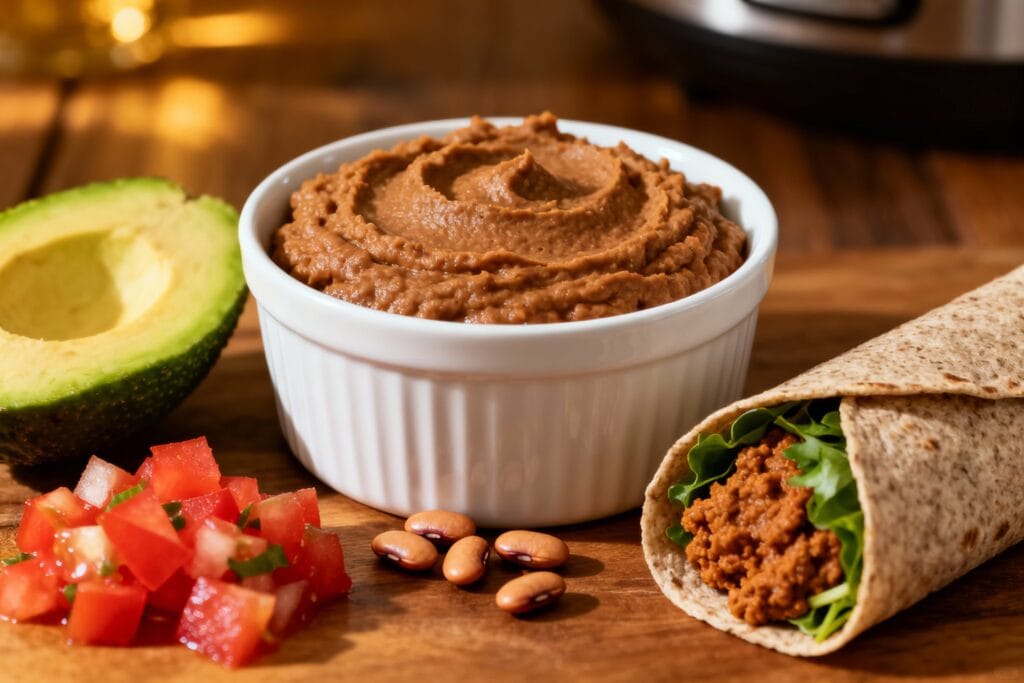
You don’t need a culinary degree to make a pot of creamy, dreamy refried beans. You need beans, an Instant Pot, and about 45 minutes. That’s it.
These beans taste better than anything canned, and they quietly load your meals with fiber, protein, and flavor. Want a dependable, healthy staple that doesn’t break the bank? Here you go.
Why refried beans deserve a permanent spot in your fridge
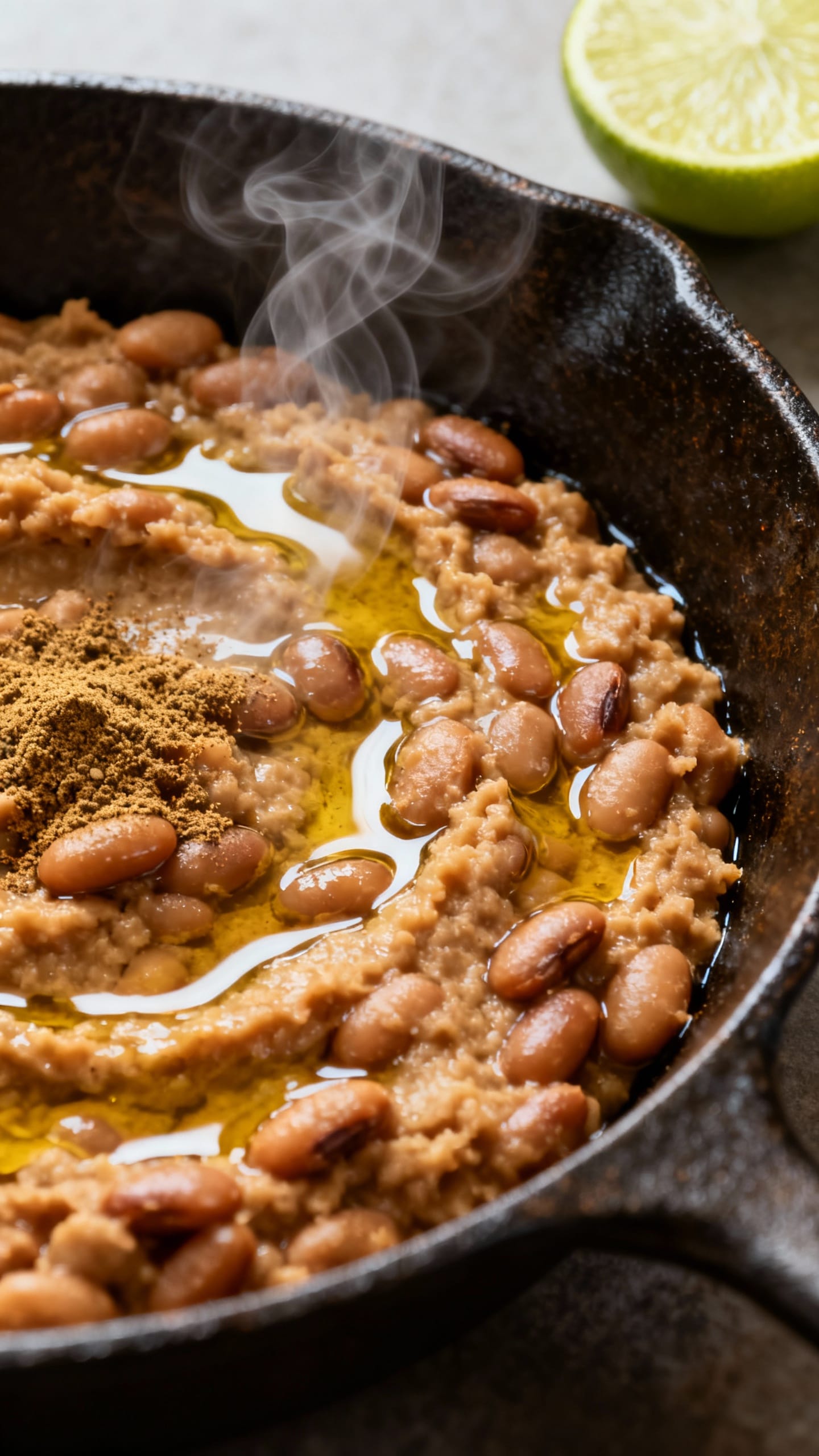
Refried beans don’t just “go with tacos.” They play nice with breakfast eggs, grain bowls, enchiladas, quesadillas, tostadas, nachos, and soups.
They freeze beautifully and reheat even better. Plus, beans give you a huge nutritional return on a tiny investment. High fiber, solid protein, steady energy, and serious satiety—all while costing less than your latte. If that’s not a pantry power move, what is?
The high-fiber advantage (and why your gut will thank you)
Let’s get nerdy for a hot second. One cup of cooked pinto beans brings roughly 15 grams of fiber.
That’s about half your daily target in one generous scoop. Fiber helps regulate digestion, keeps you full, and supports stable blood sugar. Even better, beans deliver soluble fiber and resistant starch, which feed the good gut bacteria.
More happy microbes = better digestion and long-term health. Does that mean refried beans are basically a wellness supplement you can put on nachos? IMO, yes.
Protein, minerals, and more
Beans aren’t just fiber bombs.
They bring:
- Plant protein: 12–15 grams per cup, making them legit filling.
- Folate, iron, magnesium, potassium: heart- and energy-friendly nutrients.
- Low saturated fat: heart health wins without sacrificing flavor.
Instant Pot = creamy beans without the drama
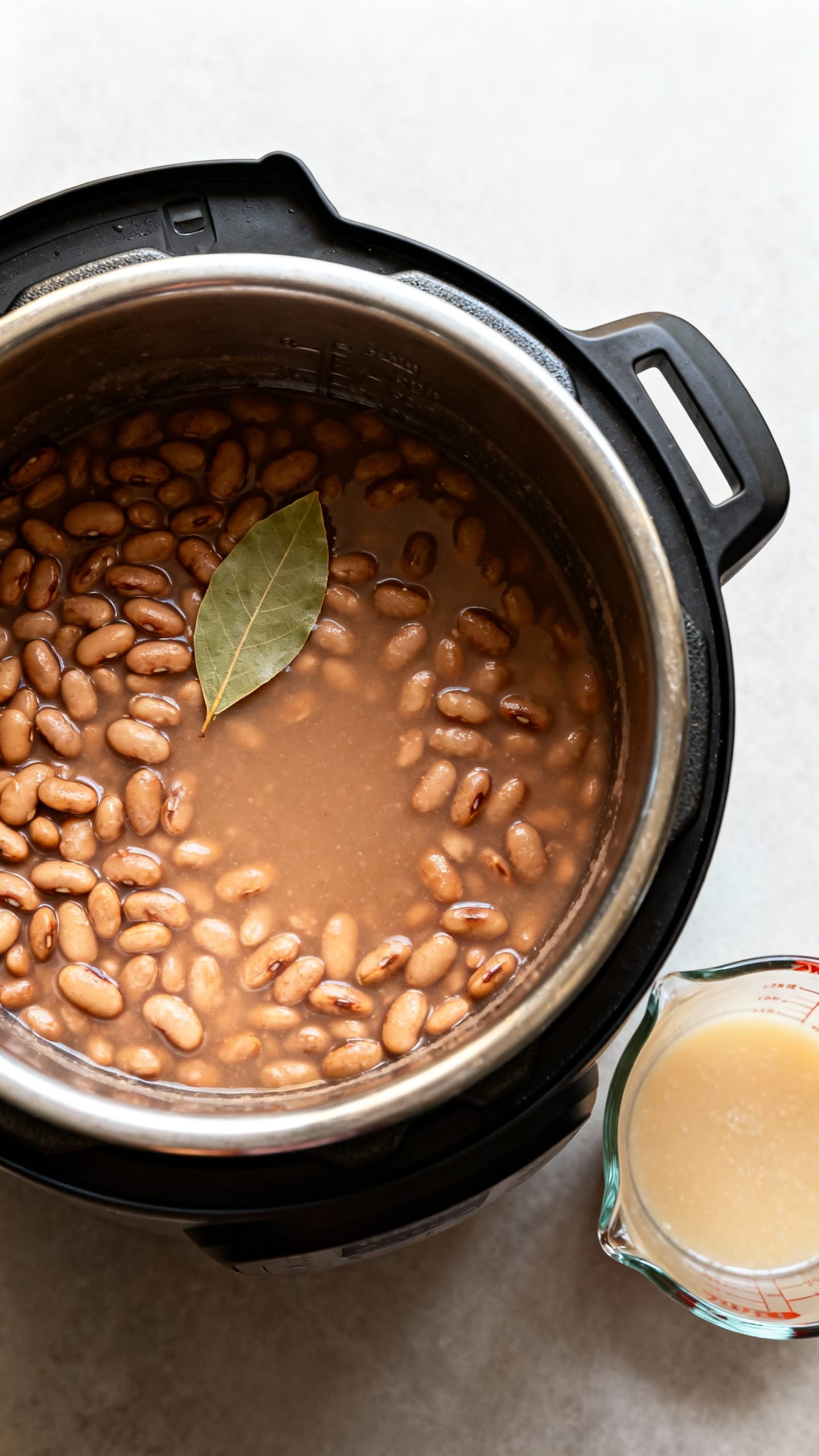
Stovetop beans can take forever, and canned beans often taste “meh.” The Instant Pot solves both. You can cook dried beans from scratch—no soak needed—and they turn out tender and creamy. Here’s a simple approach:
- Rinse 1 pound of dried pinto beans.
Pick out any random pebbles (why do those exist?).
- Add beans to the pot with 6 cups water, 1 teaspoon salt, 1 teaspoon cumin, and 1 bay leaf.
- Pressure cook 35–40 minutes (no soak) or 22–25 minutes (if soaked 6–8 hours). Natural release 15 minutes.
- Reserve 1–2 cups of the cooking liquid. Drain the rest.
- Sauté onion and garlic in a little oil or broth.
Add beans. Smash to your desired texture.
- Stir in cooking liquid until creamy. Season with salt, pepper, lime juice.
Done.
Pro tip: Don’t skip the reserved liquid. It’s liquid gold with flavor and starch that makes the beans luscious.
What about the “refried” part?
Despite the name, you don’t need to fry anything twice. You just mash cooked beans in a pan with some fat (oil, butter, or lard if you’re feeling classic). Olive oil keeps things heart-healthy, and a splash of broth lightens it up if you prefer.
Flavor upgrades that still keep it healthy
You can go from “good” to “can’t-stop-eating” with a few tweaks.
Keep it simple or dress it up. Your call.
- Onion + garlic: the base of all good things.
- Spices: cumin, chili powder, smoked paprika, oregano.
- Acid: lime juice or apple cider vinegar brightens everything.
- Heat: minced jalapeño, chipotle in adobo, or hot sauce.
- Herbs: cilantro for freshness (or skip if it tastes like soap to you—no judgment).
- Umami: a tiny spoon of miso or a splash of soy/tamari if you want depth without meat.
Health-forward fat choices
Use extra-virgin olive oil for a heart-smart option. Want extra creaminess?
Stir in a spoonful of Greek yogurt at the end (off heat). FYI, a little goes a long way.
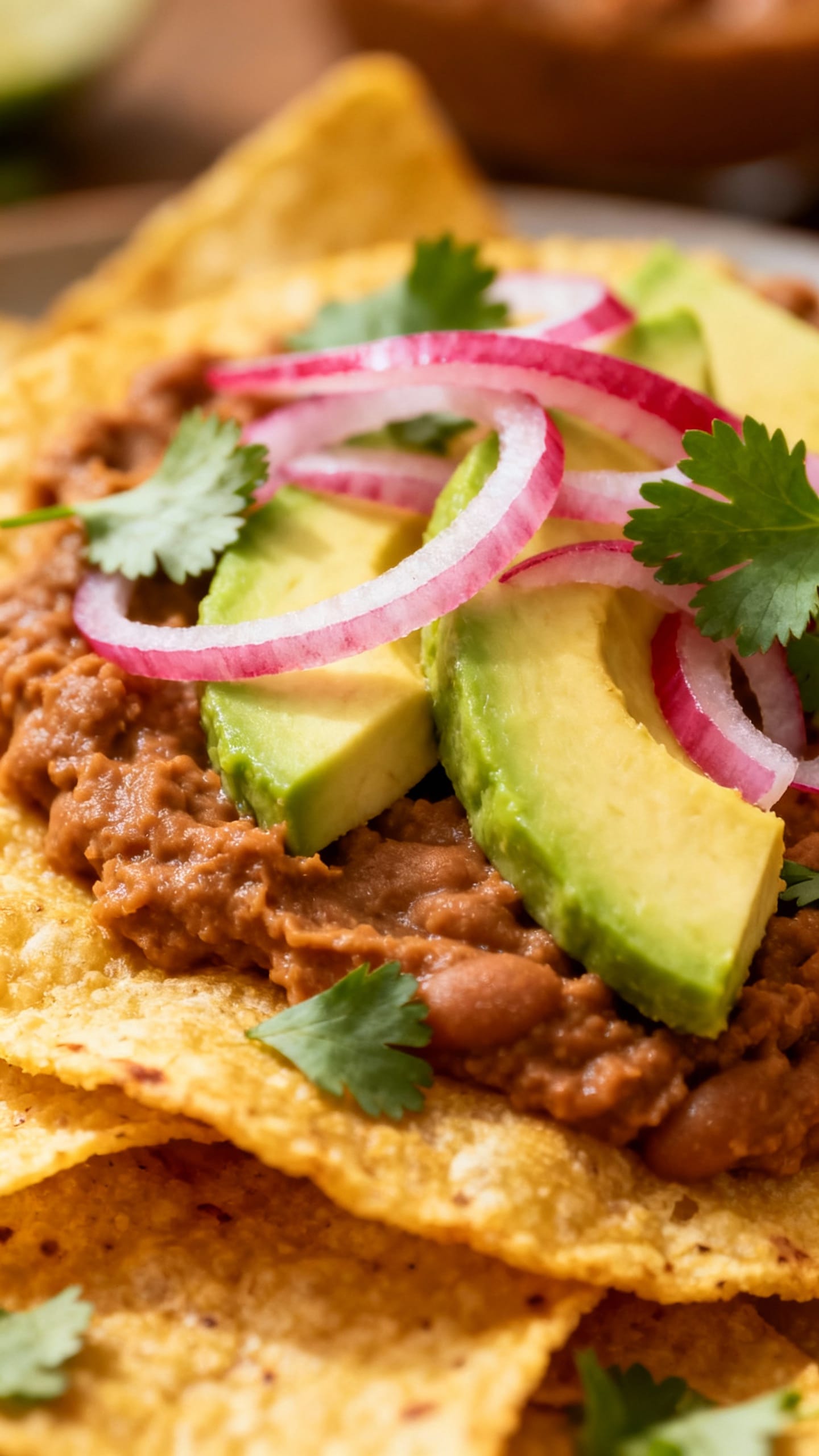
How to serve them so you never get bored
Refried beans play well with others. They can star or support, and they stretch meals like a champ.
- Breakfast: Spread on toast with a fried egg, or roll into a breakfast burrito with salsa.
- Bowls: Layer with rice or quinoa, roasted veggies, avocado, and pickled onions.
- Tacos and tostadas: Beans + slaw + salsa + cheese = weeknight victory.
- Quesadillas: Glue your tortillas with beans and a handful of cheese.
- Soups and stews: Stir a scoop in for body and extra protein.
- Dip life: Warm beans + salsa + lime + a sprinkle of queso fresco.
Done.
Portioning and meal prep
Make a big batch and portion into 1–2 cup containers. They keep 4–5 days in the fridge and up to 3 months in the freezer. Flat-freeze in zip bags for easy stacking. Reheat with a splash of water or broth to restore creaminess.
Smart substitutions and special diets
Keeping it flexible makes this a true everyday staple.
- Low oil: Sauté with broth and finish with a teaspoon of olive oil for flavor.
- Vegan: Use olive oil and vegetable broth.
Skip dairy garnish.
- Gluten-free: Beans are naturally GF; just check spice blends and add-ins.
- Lower sodium: Salt at the end and taste as you go. Use low-sodium broth if needed.
- Different beans: Black beans work great; cook times are similar. Pintos stay creamier, IMO.
Cost, convenience, and the real-life win
Let’s talk math.
A pound of dried beans often costs less than two bucks. That yields about 5–6 cups cooked. That’s several meals for pocket change, with better flavor than any canned option.
And because you can cook straight from dry in the Instant Pot, you cut time and effort. No soak, no babysitting. You hit a button and walk away like the calm, competent home cook you are.
Or at least pretend to be. Same difference.
FAQ
Do I need to soak beans before pressure cooking?
Nope. The Instant Pot cooks unsoaked beans in about 35–40 minutes.
Soaking just speeds things up slightly and may help some people digest them more easily. Both methods work—choose convenience or speed based on your mood.
How do I make them extra creamy?
Reserve some cooking liquid and stir it in while you mash. Cook low and slow after mashing to let the starches thicken.
A tablespoon of olive oil or a dollop of Greek yogurt at the end adds silkiness without heavy richness.
Can I use canned beans instead?
Yes, totally. Rinse 3–4 cans of pinto or black beans and warm them with a little broth. Sauté onion and garlic, add beans, season, and mash.
Canned beans won’t taste quite as deep as from-scratch, but they’re still great in a pinch.
How do I reduce, ahem, bean-related bloating?
If you’re sensitive, soak beans 6–8 hours and discard the soaking water. Add aromatics like bay leaf, cumin, or a small piece of kombu during cooking. Start with smaller portions and increase over a week—your gut microbes will adapt.
What’s the best fat to use?
Olive oil gives you flavor and heart-healthy fats.
For a classic taste, a little lard delivers nostalgia and richness. You can also use avocado oil or butter. Use what fits your diet and flavor goals—just don’t skip fat entirely if you want that luscious texture.
How long do they last and how should I store them?
Keep beans in an airtight container in the fridge for 4–5 days.
Freeze in meal-size portions for up to 3 months. Reheat on the stovetop with a splash of water or broth and adjust seasoning.
Bottom line
Instant Pot refried beans hit the sweet spot: healthy, high-fiber, affordable, and ridiculously versatile. They anchor breakfasts, power up weeknight tacos, and pack your lunches with steady energy.
Make a batch once, eat well all week, and enjoy the smug satisfaction that comes with having delicious, nourishing food ready to go. Honestly? That’s the kind of “meal prep” I can get behind, FYI.