


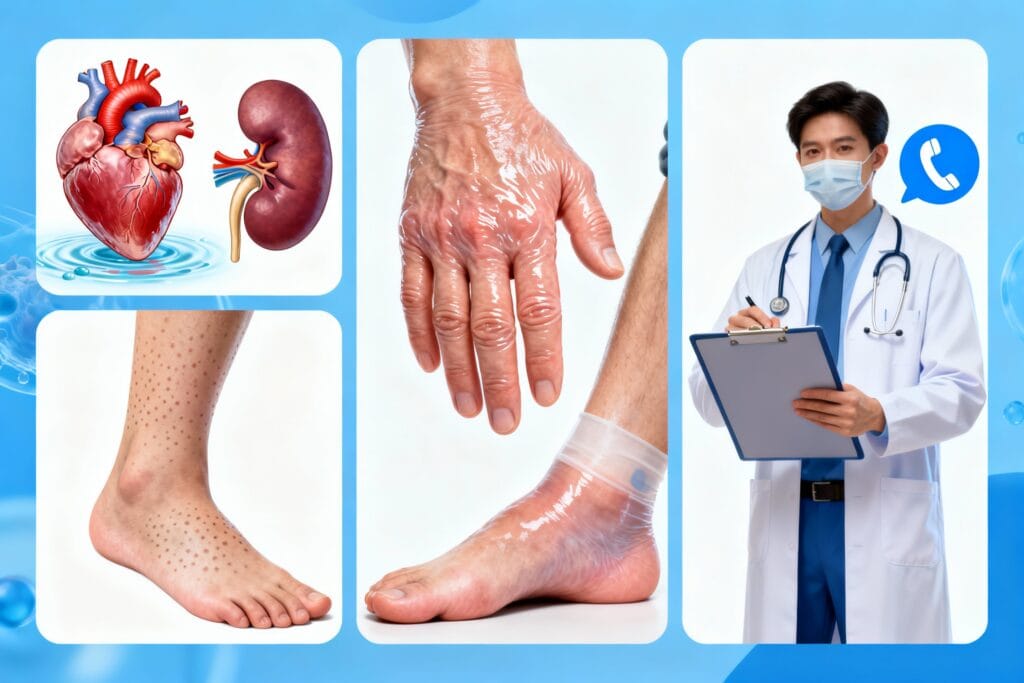
Your socks leave dents around your ankles. Your rings don’t fit by dinner. Your shoes feel like they shrunk in the wash.
If that sounds familiar, you might be dealing with edema—aka swelling—where fluid hangs out in places it doesn’t belong. The good news: it’s common and often harmless. The important news: sometimes it signals bigger health issues and deserves a doctor’s attention.
What Exactly Is Edema?
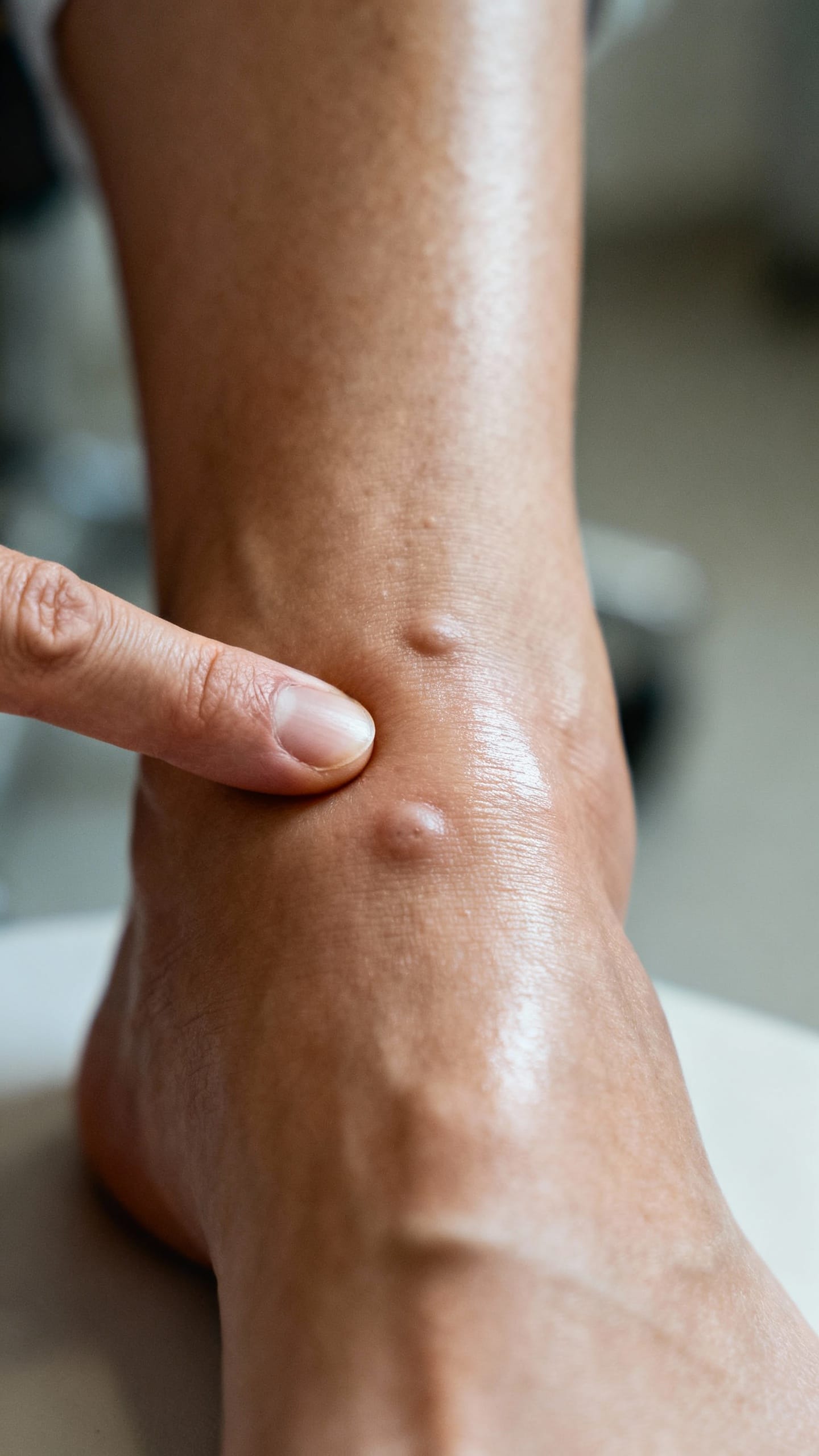
Edema means your body retains fluid in the tissues, which causes visible puffiness.
You’ll most often see it in your feet, ankles, legs, hands, and around the eyes. It can pop up suddenly after a long flight, or creep in gradually with certain health conditions. Here’s the quick science: fluid leaks out of tiny blood vessels into nearby tissues.
Normally, your lymphatic system and kidneys help shuttle that fluid back where it belongs. When they get overwhelmed—or when something messes with pressure in your blood vessels—fluid pools and swelling happens.
Common Everyday Causes (AKA The Usual Suspects)
Let’s start with the basic, non-scary reasons you might swell. These tend to be temporary and improve with simple changes.
- Gravity + sitting or standing too long: Long flights, marathon desk days, or retail shifts can make ankles puff up.
Blood and lymph don’t move as well when you stay still.
- Too much salt: Salt pulls water into your bloodstream, which can push fluid into your tissues. That ramen was delicious, though.
- Heat and humidity: Hot weather widens blood vessels, which lets more fluid leak out. Hello, summer ankles.
- Hormones: Menstruation, pregnancy, and some birth control can cause fluid retention.
Totally common.
- Medications: NSAIDs, some diabetes meds (pioglitazone), certain blood pressure meds (like amlodipine), steroids, and some antidepressants can trigger edema. FYI, always talk to your doctor before changing meds.
- Minor injury: Sprains or overuse bring inflammation and swelling. That’s your body’s healing squad doing its thing.
When “Normal” Swelling Still Needs Attention
If you notice swelling that keeps coming back, happens on one side only, or comes with pain, don’t ignore it.
Even common triggers deserve a closer look when they act weird.

Medical Conditions That Can Cause Edema
Now for the “keep an eye on this” list. These causes matter because they often need treatment beyond elevating your feet.
- Heart problems (heart failure): The heart can’t pump efficiently, so fluid backs up in the legs, ankles, and sometimes the abdomen. You might feel shortness of breath or wake up breathless at night.
- Kidney disease: Kidneys regulate salt and water.
When they struggle, fluid builds up—often around the eyes in the morning and in the legs by evening.
- Liver disease: Low albumin and portal hypertension can lead to leg swelling and abdominal fluid (ascites).
- Deep vein thrombosis (DVT): A blood clot in a leg vein can cause one-sided swelling, pain, warmth, and redness. This is an emergency.
- Lymphedema: Damage or blockage in the lymph system (after surgery, radiation, infection) causes chronic swelling, usually in one limb.
- Thyroid issues: Hypothyroidism can cause puffiness, especially around the eyes and hands.
- Chronic venous insufficiency: Weak leg vein valves let blood pool in the lower legs, causing swelling, heaviness, and sometimes skin changes.
Red Flags That Suggest a Medical Cause
- One-sided swelling—especially with pain or warmth
- Shortness of breath or chest discomfort with swelling
- Rapid weight gain (2–3+ pounds in a day or 5+ in a week)
- Swelling plus fatigue, decreased urination, or foamy urine
- Skin changes (tight, shiny, discolored, or with sores)
How To Spot Edema: Signs You Can Check At Home
You don’t need fancy tools to recognize edema. A quick once-over can tell you a lot.
- Pitting test: Press your thumb on the swollen area for 5 seconds, then release.
If it leaves a dent, that’s “pitting edema.”
- Symmetry check: Compare both legs or both hands. One side bigger? Pay attention.
- Timing pattern: Swelling worse at day’s end?
Think gravity, salt, or venous issues. Morning facial puffiness? Consider kidneys or sleep position.
- Associated symptoms: Shortness of breath, cough when lying flat, fatigue, or pain can point to a cause.
When It’s Probably NBD (But Still Annoying)
If swelling shows up after a salty meal, a long trip, a hard workout, or hot weather—and it goes away after rest, elevation, and hydration—you’re likely okay.
IMO, still mention it at your next checkup if it’s frequent.
Simple Strategies To Reduce Mild Swelling
You can tackle mild edema with realistic, low-effort changes. No magic potions needed.
- Move more, more often: Calf raises, ankle circles, and short walks help pump fluid back up. Set a timer every hour if you sit a lot.
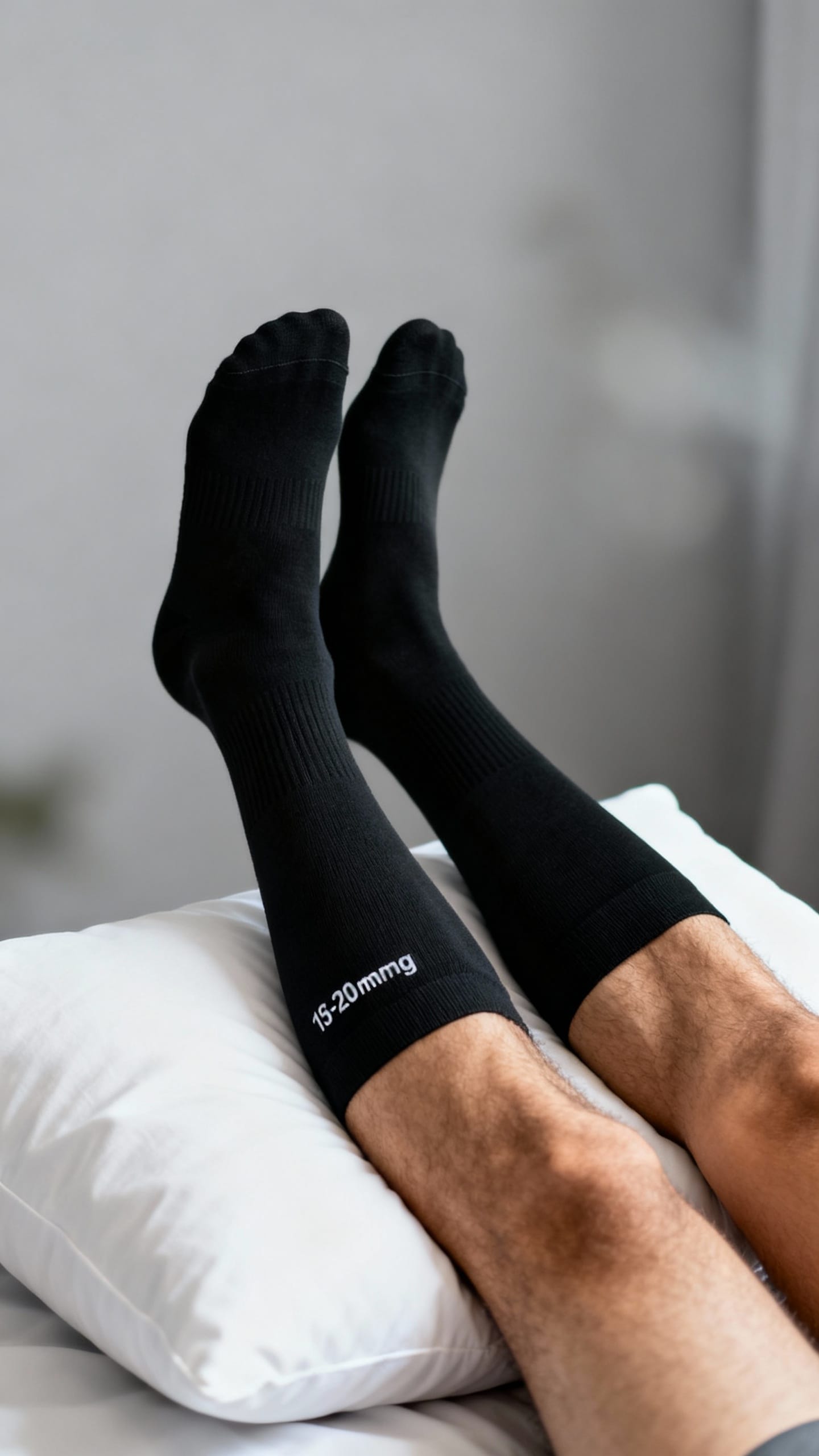
- Elevate: Kick your feet up above heart level for 15–20 minutes.
Netflix plus pillows = therapeutic.
- Compression socks: Graduated compression (15–20 mmHg to start) supports veins and reduces pooling.
- Salt sanity: You don’t need zero salt, just less. Swap processed foods for fresh options when you can.
- Hydration: Irony alert: drinking water actually helps your body release excess fluid.
- Temperature tweaks: Cool showers or compresses can soothe heat-related swelling.
- Review meds with your doctor: Some alternatives won’t cause as much swelling.
What About Diuretics?
Over-the-counter “water pills” look tempting, but proceed carefully. They can mess with electrolytes and sometimes make things worse if you use them for the wrong cause. Only use diuretics when your clinician recommends them.
When To Call Your Doctor (Or Head to Urgent Care)
Let’s make this super clear.
- Call your doctor soon if:
- Swelling lasts more than a week or keeps returning
- It affects one side only without an obvious cause
- You notice skin changes, open sores, or weeping fluid
- You have a history of heart, kidney, liver, or thyroid disease
- New swelling starts after a medication change
- Seek urgent care or emergency care if:
- One leg swells suddenly with pain, warmth, or redness (possible DVT)
- You have swelling plus chest pain, fainting, or trouble breathing
- Rapid swelling with sudden weight gain or severely decreased urination
How Doctors Figure It Out
Expect a few smart questions and some targeted tests.
Diagnosis usually follows your story.
- History and exam: Timing, symmetry, pain, medication review, and a quick pitting test.
- Blood tests: Kidney function, liver enzymes, albumin, thyroid levels, and sometimes BNP for heart failure.
- Urine tests: Protein in urine can point to kidney issues.
- Imaging: Ultrasound for DVT, echocardiogram for heart function, or venous Doppler for venous insufficiency.
What Treatment Might Look Like
Treatment depends on the cause. That might mean compression therapy, physical therapy for lymphedema, medication changes, diuretics for heart failure or kidney issues (under supervision), or procedures to fix vein problems. The plan should match the “why,” not just the swelling.
FAQs
Can dehydration cause edema?
Weirdly, yes—indirectly.
When you’re dehydrated, your body may hold on to sodium and water, which can increase fluid retention later. Stay consistently hydrated to help your body regulate fluids better.
Is pitting edema worse than non-pitting?
Not necessarily worse, just different. Pitting often ties to fluid overload, venous issues, or heart/kidney problems. Non-pitting can suggest lymphedema or thyroid-related causes.
The context and symptoms around it matter more than the pit itself.
Do I need special socks or can I buy any compression pair online?
Start with light-to-moderate pressure (15–20 mmHg). If you have varicose veins, significant swelling, or a medical condition, ask your clinician about 20–30 mmHg. Pro tip: measure your legs in the morning when swelling is minimal for a better fit.
Will cutting carbs help with edema?
Low-carb diets can drop water weight quickly because glycogen stores bind water.
That’s not the same as fixing edema’s cause. Focus on balanced salt intake, movement, and medical evaluation if swelling persists.
What’s the deal with magnesium, dandelion tea, or “natural” remedies?
Some people feel better with these, but evidence varies and interactions exist. Dandelion has mild diuretic effects and can affect certain meds.
IMO, run supplements by your clinician if you have any health conditions or take prescriptions.
Can I exercise if my legs are swollen?
Yes—gentle movement often helps. Walking, swimming, cycling, and ankle pumps improve circulation and reduce pooling. If swelling comes with pain, redness, heat, or shortness of breath, stop and get checked first.
The Bottom Line
Edema ranges from “annoying but harmless” to “hey, we need a doctor now.” If swelling shows up after salty meals, long trips, or hot days, simple fixes like movement, elevation, and compression often handle it. But new, one-sided, persistent, or symptom-packed swelling deserves a proper workup. Trust your gut, keep track of patterns, and loop in your clinician when anything feels off.
FYI: your body usually whispers before it shouts—listen early and you save yourself drama later.