


OCD doesn’t just mean you like a tidy desk. It’s a brain-based condition that can hijack your time, spike your anxiety, and make you question your own thoughts. The science behind it?
Surprisingly fascinating—and way more hopeful than you might think. Let’s unpack what researchers know about obsessive-compulsive disorder (OCD): where it comes from, how it shows up, and what actually helps.
So… what exactly is OCD?

OCD centers on two things: obsessions (intrusive, repetitive thoughts, images, or urges) and compulsions (behaviors or mental rituals you feel driven to do to reduce anxiety). You don’t need both to struggle, but they often tag-team.
Common themes include:
- Contamination: fear of germs or illness, endless cleaning
- Checking: locks, stoves, emails sent three times already
- Symmetry/order: things must feel “just right”
- Harm/violence thoughts: intrusive “what if I hurt someone?” fears
- Religious/sexual intrusive thoughts: taboo content you don’t endorse
You can’t “logic” yourself out of OCD. The anxiety system goes rogue, and your brain throws false alarms like it’s trying to meet a quota. FYI: intrusive thoughts happen to everyone—OCD sticks when you give them meaning and build rituals around them.
What’s happening in the brain?
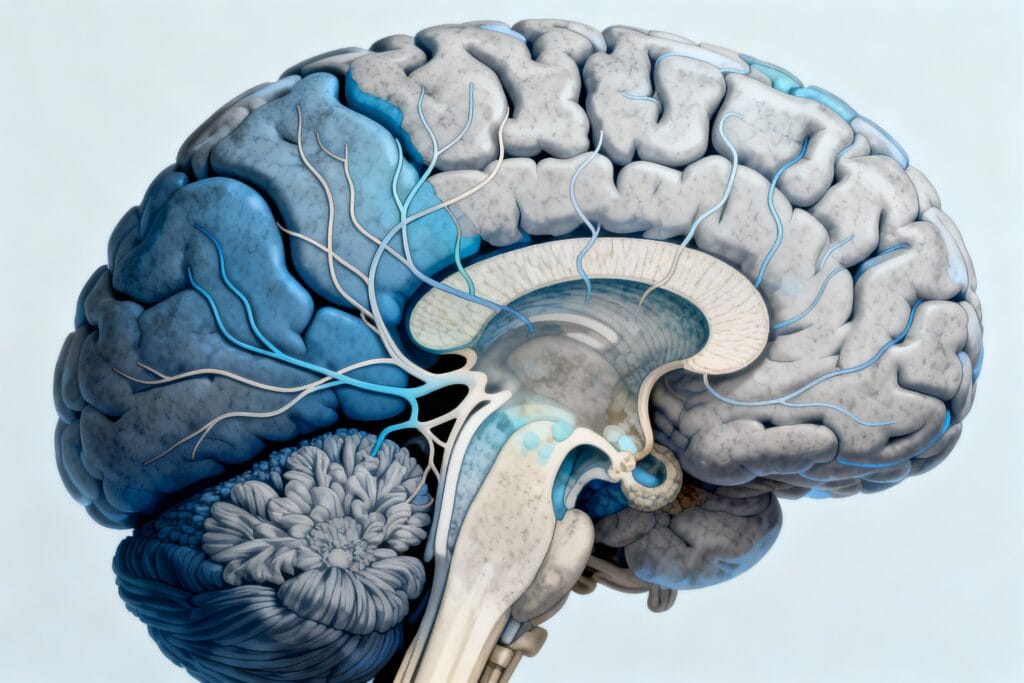
Researchers consistently point to a loop in the brain that gets overactive: the cortico-striato-thalamo-cortical (CSTC) circuit.
Think of it as a worry highway that never closes for construction.
The usual suspects
- Orbitofrontal cortex (OFC): flags “something’s wrong.” In OCD, it over-flags.
- Anterior cingulate cortex (ACC): tracks errors and conflict. It can scream “danger” even when you’re fine.
- Striatum (especially the caudate): controls habits and gating. It can let repetitive loops run wild.
- Thalamus: relays signals back to the cortex, completing the anxiety loop.
Not just wiring—chemistry too
The neurotransmitter serotonin plays a big role, which explains why SSRIs help many people.
But dopamine, glutamate, and GABA also influence the “stickiness” of thoughts and habits. IMO, thinking of OCD as a network issue plus chemical imbalance gives the most realistic picture.
So what causes OCD?
No single smoking gun. It’s more like a squad of risk factors that sometimes roll together.
- Genetics: OCD runs in families.
If a first-degree relative has it, your odds rise. Not destiny—just risk.
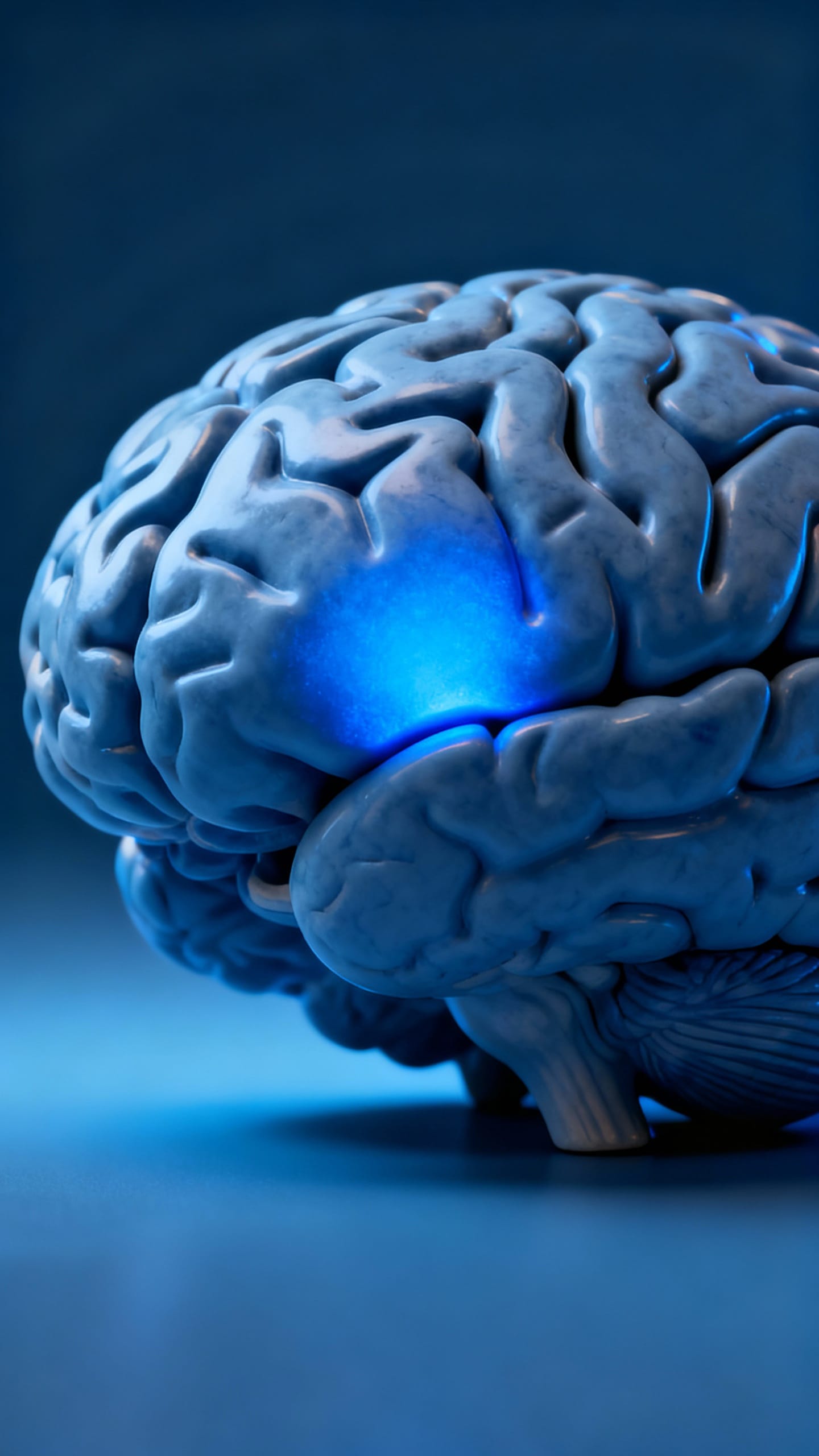
- Brain differences: Subtle structure and connectivity differences show up on scans, but you can’t diagnose OCD with an MRI.
- Learning and habits: If a ritual reduces anxiety, your brain rewards it. Boom—habit loop.
- Stress and life events: Big stressors can trigger or worsen symptoms.
Sleep debt doesn’t help either.
- PANDAS/PANS (rare, pediatric): Sudden-onset OCD after infection in some kids. Specialized care required.
How OCD feels day to day
OCD steals time. People can lose hours to checking, cleaning, or mental review.
It can wreck routines and relationships. And yes, OCD loves to attack what you value most—morals, loved ones, identity.
Key signs to watch
- Intrusive thoughts that feel alien to you and won’t stop
- Rituals (overt like washing, or covert like repeating phrases) to neutralize anxiety
- Excessive reassurance seeking: “Are you sure I didn’t offend them?” x 47
- Avoidance: people, places, or stuff that triggers obsessions
- Functional impairment: late for work, can’t finish tasks, relationships strained
If you’re wondering, “But what if I’m actually dangerous because of my thoughts?”—that’s classic OCD bait. Thoughts ≠ intentions.
Your distress signals the opposite.
Diagnosis: how clinicians figure it out
Clinicians use interviews and rating scales like the Y-BOCS to assess symptom types and severity. They rule out lookalikes like generalized anxiety, autism-related repetitive behaviors, tic disorders, psychosis, or OCD-like symptoms from substances or medical conditions. Expect questions about:
- Time spent on obsessions/compulsions
- How much distress/impairment they cause
- Triggers, avoidance patterns, and reassurance cycles
No blood test, no CT scan.
Just a detailed, compassionate detective story.
Treatment that actually works
Good news: OCD responds to targeted, evidence-based care. The gold standard blends therapy and medication when needed.
Therapy: ERP is king
Exposure and Response Prevention (ERP) teaches your brain new rules. You face triggers (exposure) while you resist rituals (response prevention).
Over time, anxiety drops and your brain learns, “Oh, I survive this without the compulsion.” What it looks like:
- Build a fear ladder: rank triggers from easy to hard
- Start small, work upward
- Stay with the urge without ritualizing until anxiety peaks and falls
- Rinse, repeat, celebrate tiny wins
Cognitive work helps too—especially around misinterpretations like “thinking it means I’ll do it.” But ERP does the heavy lifting.
Medications: SSRIs lead the pack
SSRIs (like sertraline, fluoxetine, fluvoxamine) and clomipramine help many people. Doses often go higher than for depression and need 8–12 weeks to show full benefits. Side effects happen, but clinicians can manage them.
If response lags, doctors may augment with low-dose antipsychotics or glutamate-targeting agents. Always work with a prescriber; no DIY pharmacology, please.
When symptoms feel severe
For treatment-resistant cases:
- Intensive Outpatient/Partial Hospitalization: daily ERP boot camp
- rTMS: noninvasive brain stimulation with growing evidence
- DBS (Deep Brain Stimulation): for the most severe, after multiple failures
Everyday strategies (that don’t backfire)
You can support recovery with smart habits. Just avoid feeding rituals.
- Ritual blocking: delay compulsions by a few minutes; build tolerance gradually
- Limit reassurance: set rules with loved ones (e.g., “I won’t answer repeat safety questions”)
- Sleep, nutrition, movement: boring but powerful for anxiety baseline
- Trigger scripts: write and read short statements that accept uncertainty (“Maybe I left it unlocked”)
- Track wins: tally exposures done, not anxiety felt
And yes, mindfulness helps—but aim for willingness to feel discomfort, not relaxation perfectionism.
Perfectionism is… kind of the problem.
What about kids and teens?
OCD often starts young. ERP works brilliantly for kids too, with family involvement. Parents learn to stop accommodating rituals (kindly) and coach exposures.
If symptoms explode suddenly, clinicians consider PANS/PANDAS and coordinate medical care.
FAQ
Can OCD go away on its own?
It can wax and wane, but most people need treatment to break the cycle. With ERP and, if needed, meds, many folks reach remission or manageable levels. Waiting it out usually strengthens rituals.
Isn’t OCD just about cleaning?
Nope.
Cleaning is one flavor. OCD can focus on harm, relationships, sexuality, religion, numbers, symmetry—you name it. If it matters to you, OCD can target it.
Annoying, right?
Do intrusive violent or sexual thoughts mean I’m a bad person?
No. Intrusive thoughts are ego-dystonic—you hate them because they violate your values. People with OCD show lower risk of acting on them than average because they over-monitor morality.
The thoughts are noise, not intent.
How long does treatment take?
Many people see progress within 6–12 weeks of consistent ERP. Meds often need 8–12 weeks for full effect. Complex cases take longer, but momentum builds fast once rituals drop.
Can lifestyle fixes replace therapy?
Lifestyle helps, but it won’t replace ERP.
Think of sleep, exercise, and stress management as soil and water. ERP is the seed. You need both for growth, but without the seed, you’re just watering dirt.
Is online therapy effective for OCD?
Yes, if you work with an ERP-trained clinician.
Telehealth ERP can match in-person outcomes, and digital programs can provide structured support. Vet credentials and ask directly about ERP experience.
Bottom line
OCD lives in brain circuits that overestimate danger and reward ritual. That sounds grim, but it’s actually empowering: we have treatments that rewire those circuits. ERP changes behavior, meds change chemistry, and together they change lives. If OCD’s running the show, you don’t need more certainty—you need practice with uncertainty.
Start small, get good help, and reclaim your time. IMO, that’s a pretty solid trade.