


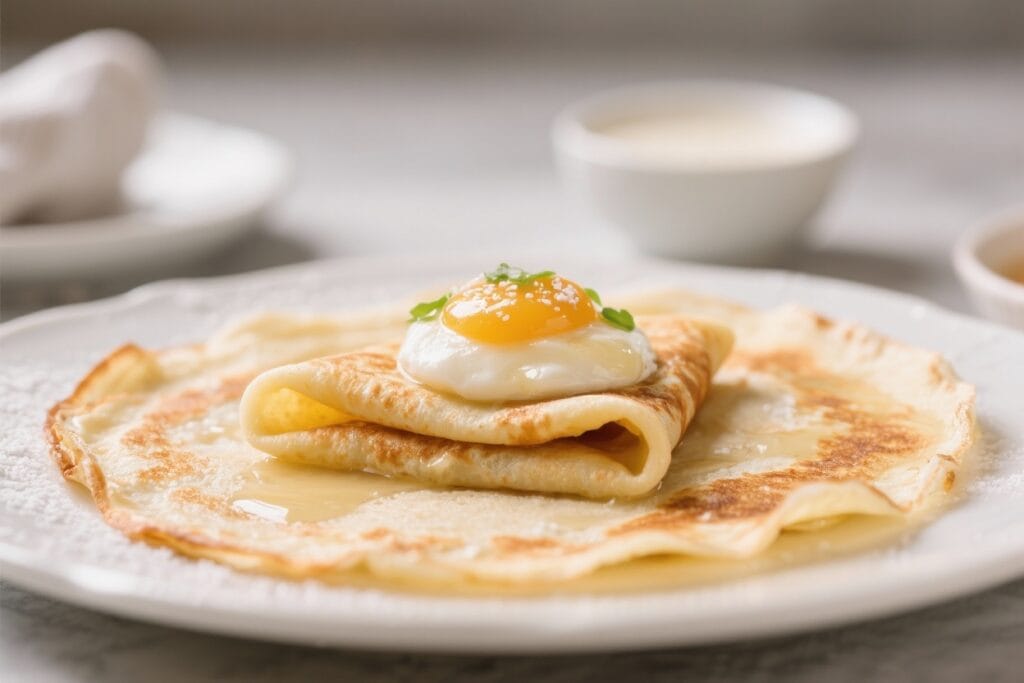
Crepes look fancy, but they’re actually easy once you know a few tricks. With a handful of pantry ingredients and a nonstick pan, you can make restaurant-style crepes at home in under an hour. They’re light, flexible, and just as good sweet as they are savory.
Think weekend brunch, a quick dessert, or even a weekday dinner with a simple filling. If you’ve ever been intimidated, this is the version that will make you feel confident fast.
What Makes This Special
This crepe recipe is reliable and forgiving, ideal for beginners. The batter comes together in minutes, and you don’t need special equipment beyond a blender or whisk.
The results are thin, tender crepes that won’t tear easily and fold beautifully around your favorite fillings. With clear steps and a few pro tips, you’ll get consistent, golden edges every time. It’s the kind of recipe you can master in one morning and keep using forever.
What You’ll Need
- 1 cup (120 g) all-purpose flour – spooned and leveled
- 2 large eggs – room temperature if possible
- 1 1/4 cups (300 ml) milk – dairy or unsweetened non-dairy
- 2 tablespoons (30 g) melted butter – plus more for the pan
- 1 tablespoon sugar – optional, for sweet crepes
- 1/4 teaspoon fine salt
- 1 teaspoon vanilla extract – optional, for sweet crepes
- Oil or butter for cooking – use a light coating
- Equipment: 8–10 inch nonstick skillet or crepe pan, blender or whisk, ladle or measuring cup, rubber spatula
Instructions
- Mix the batter: In a blender, combine milk, eggs, flour, melted butter, salt, and sugar/vanilla if using.
Blend until smooth, 15–20 seconds. No blender? Whisk the wet ingredients first, then add flour gradually to avoid lumps.
- Rest the batter: Let it sit for 15–30 minutes on the counter.
This relaxes the gluten and hydrates the flour, giving you tender, flexible crepes.
- Adjust consistency: The batter should be thin, like heavy cream. If it seems thick, whisk in 1–2 tablespoons of milk at a time until it pours easily and spreads quickly in the pan.
- Preheat the pan: Set a nonstick skillet over medium heat for 2–3 minutes. Lightly brush with butter or oil.
Too much fat will cause splotchy browning.
- Pour and swirl: Lift the pan off the heat. Pour about 1/4 cup of batter into the center, then tilt and swirl to coat the surface in a thin, even layer. Return to the heat.
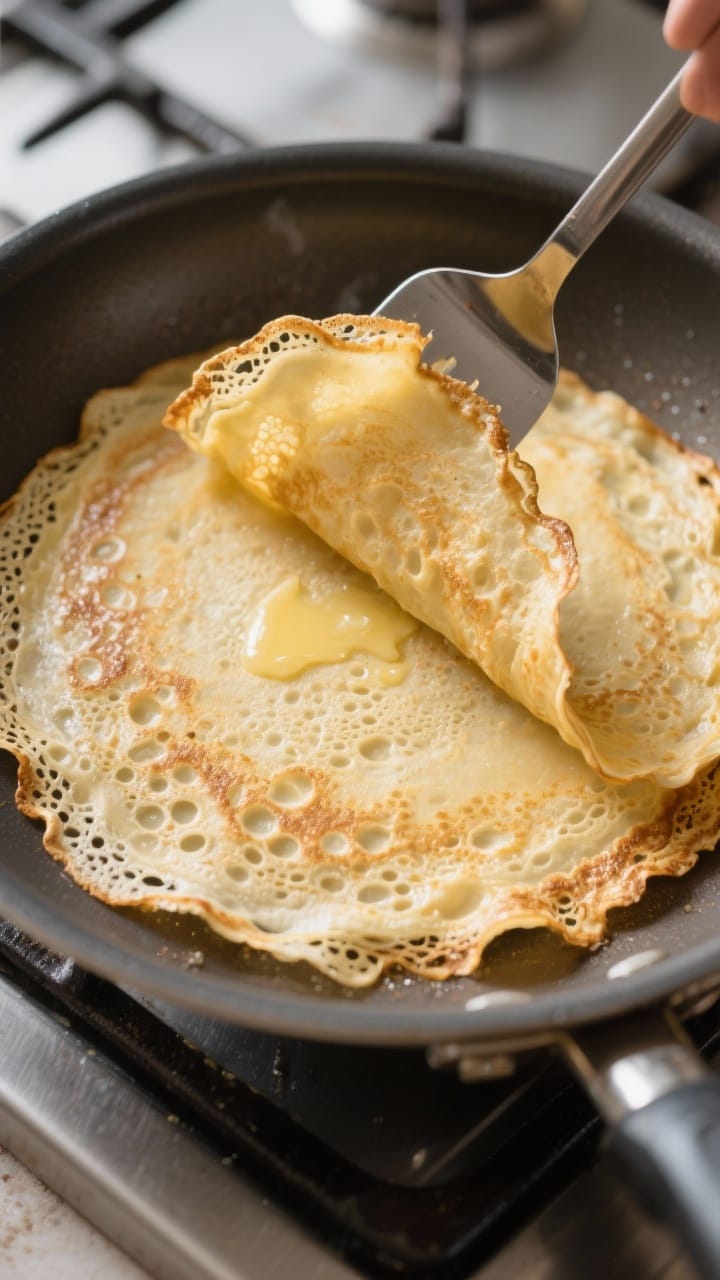
- Cook the first side: Cook for 45–60 seconds until the edges look dry and lightly golden and the surface loses its shine.
The crepe should release easily when nudged with a spatula.
- Flip gently: Slide a thin spatula under the edge, lift, and flip. Cook the second side for 15–30 seconds. This side will be lighter in color.
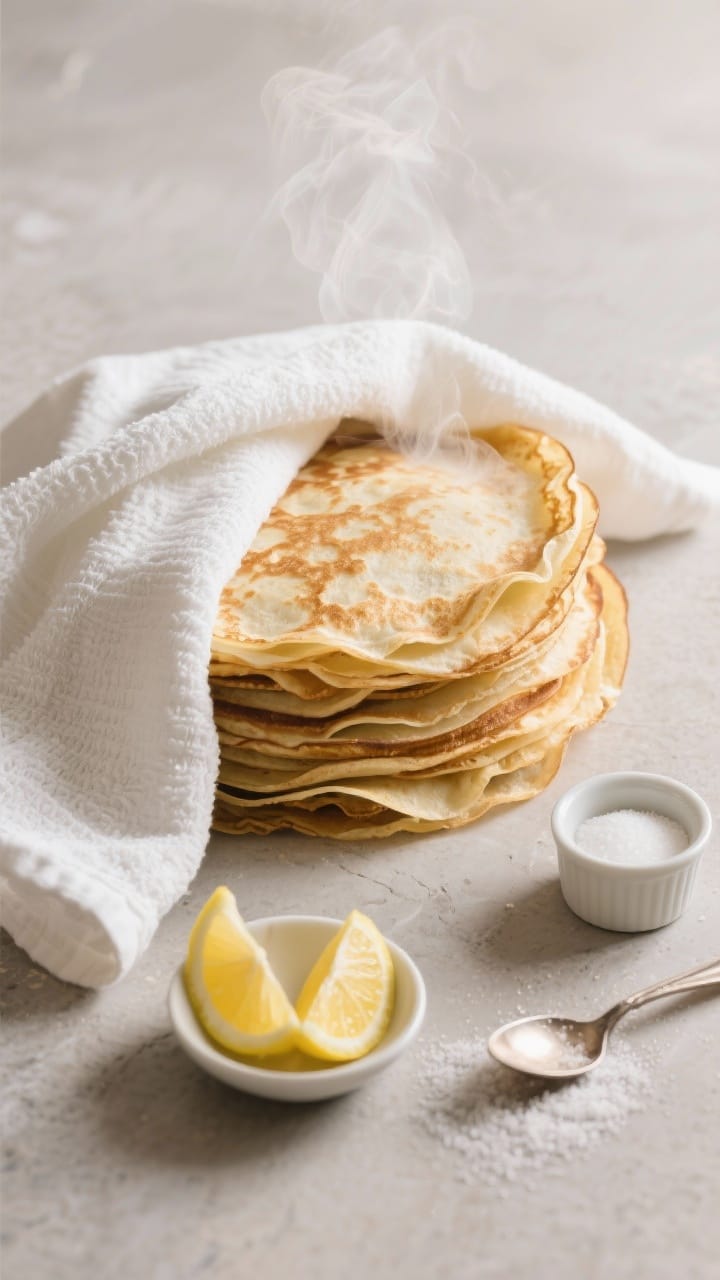
- Stack and cover: Transfer to a plate and cover loosely with a clean towel to keep them supple.
Repeat with remaining batter, brushing the pan with a touch more butter as needed.
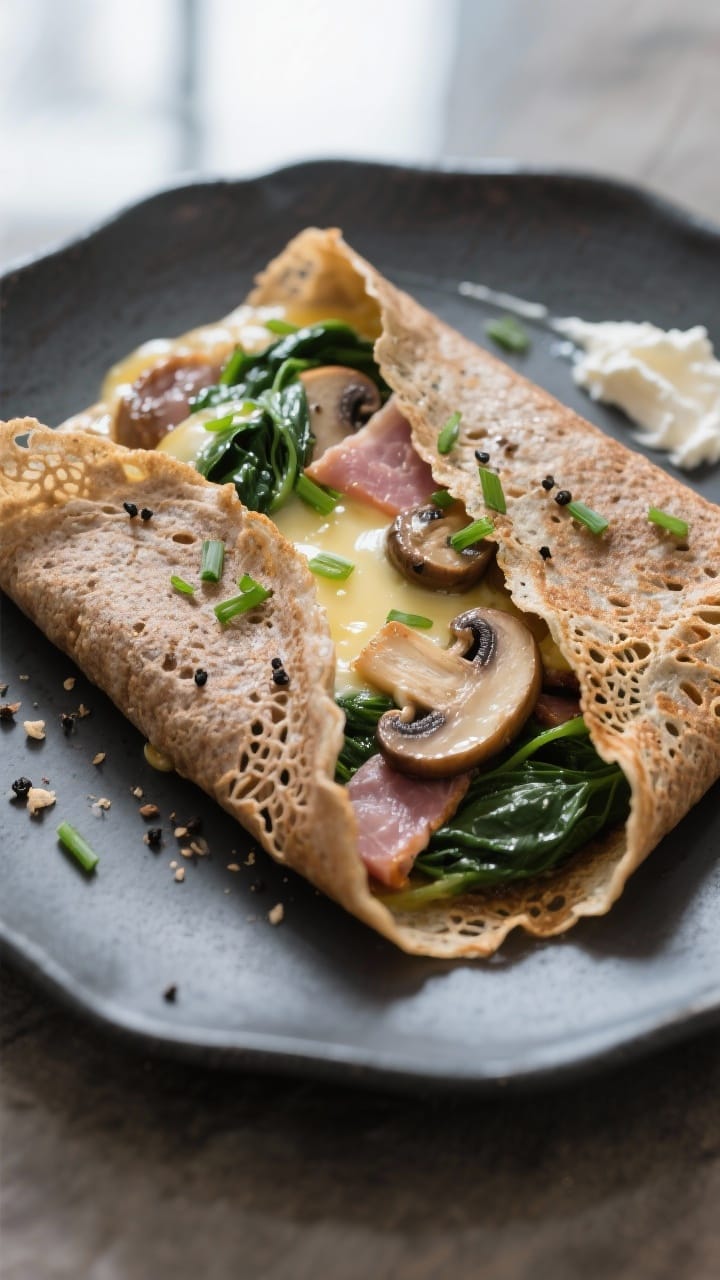
- Fill and serve: Spread with jam, lemon and sugar, Nutella, whipped ricotta, or go savory with ham and cheese, sautéed mushrooms, or eggs and spinach. Fold in quarters or roll into cigars.
Storage Instructions
- Fridge: Stack crepes with small pieces of parchment between each. Wrap tightly.
Store up to 3 days.
- Freezer: Stack with parchment, wrap well, and place in a freezer bag. Freeze up to 2 months. Thaw in the fridge overnight.
- Reheating: Warm in a nonstick pan over low heat for 15–30 seconds per side, or microwave in short bursts under a damp paper towel to keep them soft.
- Make-ahead batter: Refrigerate up to 24 hours.
Stir and thin with a teaspoon or two of milk before cooking if it thickens.
Health Benefits
Crepes are lighter than many pancakes, especially when you go easy on fillings and toppings. A basic crepe provides protein from eggs and some energy from complex carbs in the flour. Choose fresh fruit, yogurt, or nut butter for more fiber and healthy fats.
For a savory, balanced option, add eggs, smoked salmon, or cottage cheese with greens. You can also swap part of the flour for whole-wheat pastry flour to increase fiber without making the crepes tough.
Pitfalls to Watch Out For
- Thick batter: If it doesn’t spread quickly, your crepes will be heavy. Thin with a little milk until it flows like heavy cream.
- Cold pan: A lukewarm pan leads to sticking and pale crepes.
Preheat properly and keep the heat at medium.
- Too much fat in the pan: Excess butter causes uneven browning. Use a thin, even film.
- Overmixing by hand: Vigorous whisking can make crepes rubbery. Mix just until smooth, then rest.
- Skipping the rest: Resting relaxes gluten and reduces bubbles.
Even 15 minutes helps.
- Flipping too early: Wait until the edges look dry and the crepe releases easily. If it resists, give it another 10–15 seconds.
Variations You Can Try
- Buckwheat (savory): Replace half the all-purpose flour with buckwheat flour. Great for ham, cheese, and egg fillings.
- Gluten-free: Use a 1:1 gluten-free baking blend.
Add an extra tablespoon of milk if needed to keep the batter thin.
- Dairy-free: Use almond, oat, or soy milk and melted coconut oil instead of butter.
- Lemon sugar: Sprinkle hot crepes with sugar and fresh lemon juice. Fold into quarters.
- Cocoa crepes: Swap 2 tablespoons of flour with cocoa powder and add 1 extra tablespoon of sugar.
- Herb and pepper: Omit sugar and vanilla. Add chopped chives, parsley, and a crack of black pepper for savory crepes.
- High-protein: Add 1–2 tablespoons of powdered milk or collagen to the batter, thinning as needed.
FAQ
Do I really need to rest the batter?
Yes, even a short rest helps the flour hydrate and the bubbles settle, giving you smoother crepes that don’t tear as easily.
If you’re in a rush, give it at least 10–15 minutes while you heat the pan and set up toppings.
Why are my crepes sticking?
Usually the pan isn’t hot enough or the batter is too thick. Preheat the pan, use a light film of fat, and thin the batter slightly. A good nonstick pan makes a big difference, especially for beginners.
How thin should the batter be?
Think heavy cream—fluid and pourable, not gloopy.
When you pour and swirl, it should coat the pan quickly and evenly without leaving ridges.
Can I make them ahead for a party?
Absolutely. Cook, cool, and stack with parchment between crepes. Wrap and chill up to three days or freeze for longer.
Rewarm gently in a pan or oven at low heat and fill just before serving.
What size pan works best?
An 8–10 inch nonstick skillet is ideal for beginners. Larger pans make very thin crepes but are harder to flip. Start smaller and work up as you get comfortable.
How do I keep the first crepe from failing?
The first one is a tester.
It seasons the pan and helps you adjust heat and batter thickness. Expect it to be a little off; tweak from there and the rest will be great.
Can I make savory crepes with this same batter?
Yes. Just skip the sugar and vanilla.
Add herbs or spices if you like, and pair with fillings like cheese, ham, mushrooms, roasted vegetables, or eggs.
In Conclusion
Crepes are simple, fast, and endlessly versatile once you learn the basics. Keep the batter thin, the pan hot, and your flips gentle. With this method, you’ll go from first pour to a stack of golden crepes in under an hour.
Fill them sweet or savory and enjoy the kind of meal that feels special any day of the week.