


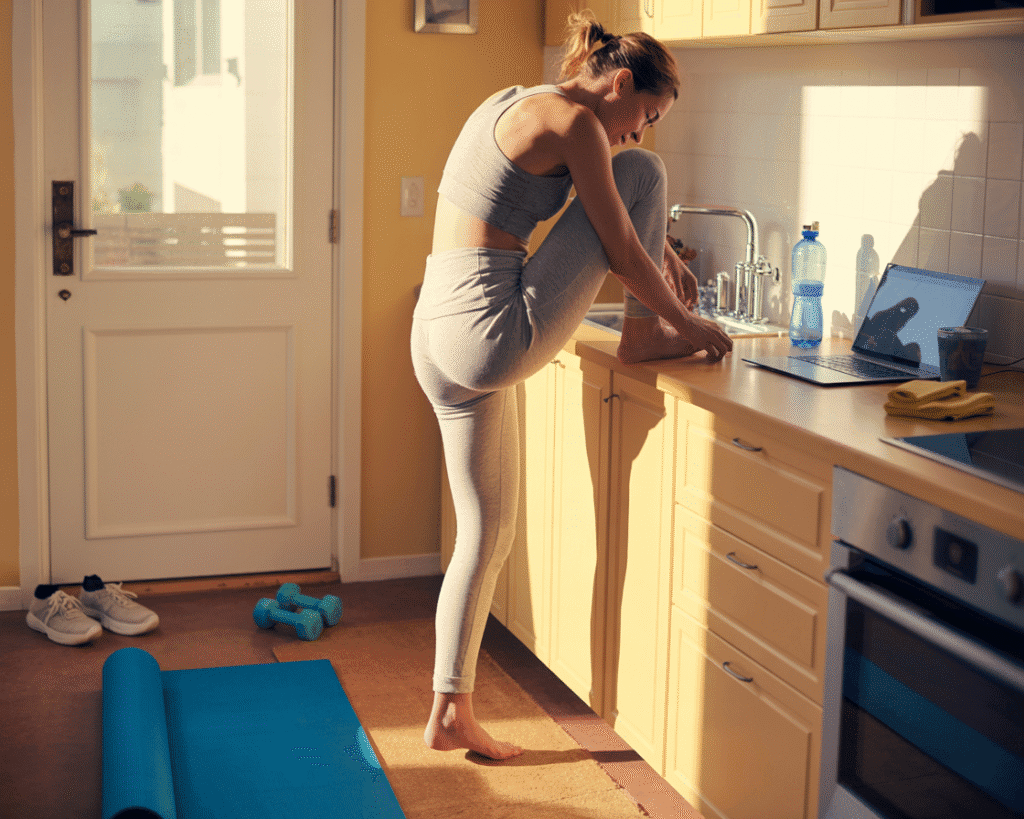
10 Simple Ways to Get Regular Exercise (Even When You’re Busy)
This post is focused on practical ways to fit exercise into real life—commutes, errands, home setups,
short routines, and easy substitutions that add movement without needing the gym or long blocks of free time.
How to use this list
Pick 2–3 ideas that actually match your schedule. The goal is to create repeatable “default options”
so you always know what to do when time is tight.
Turn one daily trip into a walking trip
Choose one place you go anyway—coffee shop, mailbox, store, your kid’s pickup line—and build walking into it.
Park farther away, get dropped off one stop early, or add a 10–15 minute loop before you head home. You’re not
“finding time,” you’re using time that already exists.
Make it specific: “I will park in the back row every time” or “I’ll walk the block twice before going inside.”
Those tiny, consistent rules add up fast.
Add a mini-walk at the start or end of your day
A short walk works like a mini “commute,” even if you work from home. Walk for 8–20 minutes before you sit down
to start your day, or after dinner to close the day out. It’s simple, low impact, and requires almost no setup.
If weather is bad, walk inside: laps in your home, stairs, or a big box store. The goal is movement, not perfection.
Convert phone time into movement
Calls, voice notes, and podcasts are “free exercise time.” Instead of sitting, pace your living room, walk your
driveway, or do hallway laps. You’re doing the same task—just standing and moving while you do it.
Simple rule: if it’s an audio-only activity, it becomes a walking activity. Over a week, this can add hours of
easy cardio without touching your schedule.
Create a 12–15 minute “default” strength routine at home
Strength training doesn’t need a gym. Build one short routine you can repeat: squats, pushups (wall or knees),
rows (band or towel), and a core hold. When it’s the same routine each time, you don’t waste time thinking.
Example: 3 rounds—10 squats, 8–12 pushups, 10 rows, 20–30 seconds plank. Rest as needed. Done.
Use stairs as your built-in cardio tool
If you have access to stairs (apartment, office, parking garage), you have a free workout station. Set a small
target: 5–10 minutes of steady stair walking, or a few trips up and down at a comfortable pace.
It’s efficient because it raises your heart rate quickly. Keep it safe: hold the rail, go slow, and focus on
smooth steps.
Make errands your workout (on purpose)
Grocery trips, Target runs, and pharmacy stops can be movement opportunities. Park far away, take the long route
inside the store, and add one extra lap around the perimeter before checkout. Carrying a few bags at a time also
adds a light strength element.
Bonus: choose a “walkable errand” once a week—somewhere close enough to walk there and back if possible.
Do “exercise snacks” throughout the day
Instead of one long workout, do tiny bursts: 2–5 minutes at a time, a few times per day. This is perfect if your
schedule is chopped up or unpredictable.
Example: morning—10 sit-to-stands; afternoon—10 wall pushups; evening—30 seconds plank. That’s real work + zero
planning.
Keep one piece of equipment “always ready”
You only need one simple tool to expand your options: a resistance band, a jump rope, or a single pair of
dumbbells. Keep it visible and accessible (not buried in a closet). When it’s out, it gets used.
A band alone can cover rows, presses, squats, and glute work—basically a full-body routine from one item.
Use fixed-time workouts (classes, sports, meetups)
If planning workouts is your problem, outsource the plan. A class gives you a start time, an end time, and someone
telling you what to do. That removes the biggest barrier for a lot of people: decision-making.
Even one class per week + a couple short walks is enough to build a routine that feels “real.”
Turn TV time into movement time
Keep your normal entertainment, but add easy movement: walk in place during the show, stretch on the floor,
or do light weights during episodes. Because you’re already committed to the TV time, exercise becomes an add-on.
Simple pattern: during commercials (or every 5 minutes) do 10 squats, 10 sit-to-stands, or a 30-second plank.
By the end of an episode, you’ve done a full mini-session.
A simple weekly structure (easy to maintain)
For a solid baseline, aim for 2 short strength sessions (12–25 minutes) and 2–4 walks
(10–30 minutes). That’s enough to improve stamina and strength without needing long gym workouts.